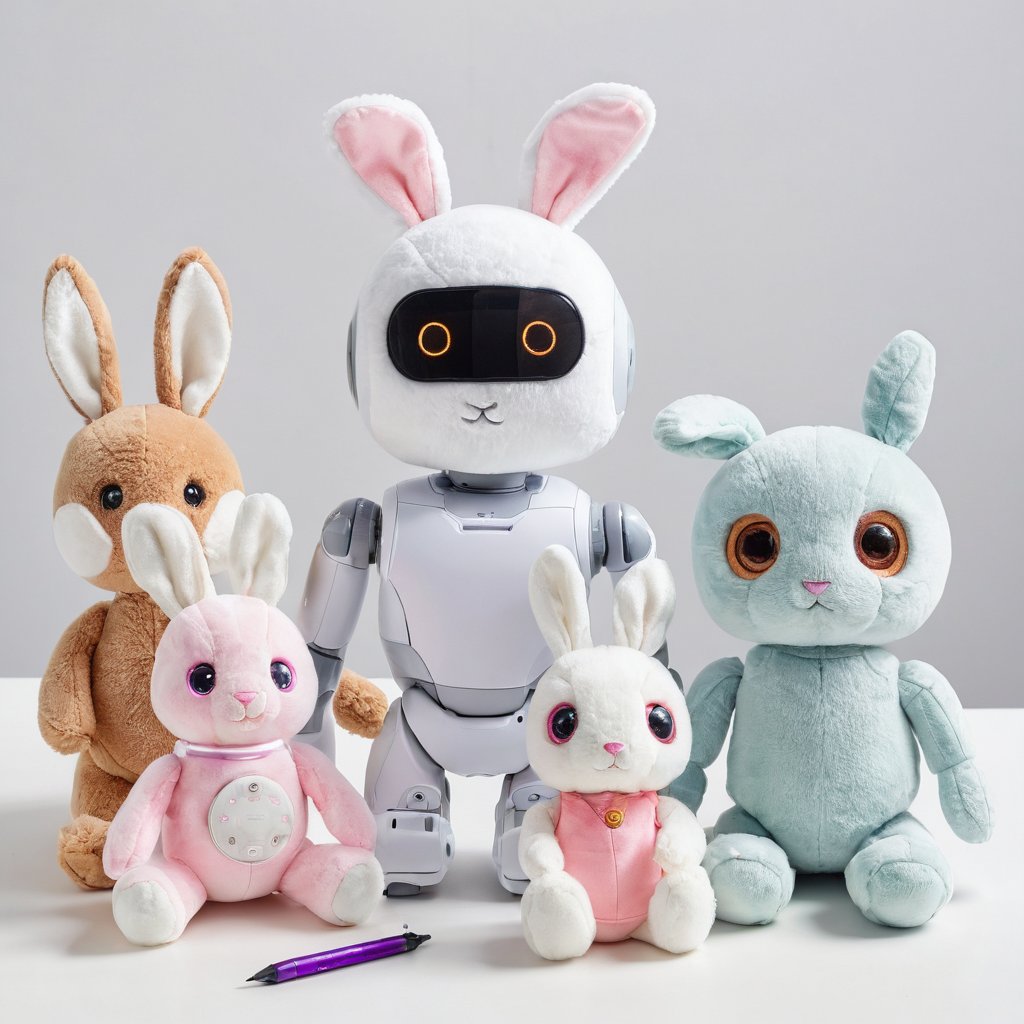
In February 2026, a seller I consult for launched an "AI story machine" sourced from a Shenzhen trading company at $5.20 FOB. The listing promised "unlimited AI-generated bedtime stories," and the samples sounded great in the showroom — a friendly voice, a screen with animated stars, a responsive-sounding "thinking" LED. He sold 9,000 units in six weeks at $34.99. Then the teardown reviews landed: inside was a $3 MP3 board, 20 preloaded tracks, and a reed switch wired to the LED. There was no microphone, no AI, no anything. Meanwhile, a competitor's "AI chat plush" — a real cloud-LLM toy — was quietly recording children's voice prompts and streaming them to a server in Guangzhou, a fact that surfaced in a privacy review and turned the listing into a flame war. The first seller's return rate hit 22% and Amazon suppressed the listing for misleading claims; the second seller got flagged in a children's-privacy complaint and spent two months and $40,000 on a privacy lawyer before the listing came back. Both failed for the same root cause: they bought the category word ("AI") without buying the capability — or the compliance that comes with a microphone in a children's product. This guide is the playbook for doing it right.
AI companion toys are the fastest-growing corner of the toy industry since the smartphone. The market is worth roughly $25–35 billion in 2026 — story machines, plush companions, reading pens, learning tablets, desktop robots, kids' smartwatches — and analysts project it roughly doubles by 2030. The economics are the best in toys: a $5 FOB story machine retails at $34.99, a $9 plush companion at $49.99, a $15 learning tablet at $99, and the gifting window (Q4) can sell a year's inventory in eight weeks. But this is also the only toy category where the "intelligence" is a claim you cannot see in a photo, where the microphone turns every unit into a data-collection device, and where the compliance stack spans two regulators (CPSC and FCC) and now a third (FTC under COPPA) before you even get to the EU. This guide maps the clusters and chip platforms, benchmarks 2026 FOB prices across 12+ product types, decodes the full US and EU compliance stack, delivers the 7-test verification battery, and lays out the 8-step sourcing SOP.
Why China Wins AI Toys (And Where the Capability Actually Lives)
China's AI-toy advantage is not one factory — it is a vertical chain that only Shenzhen and its satellite cities can assemble. Chenghai district in Shantou, Guangdong, is the Toy Capital: a town of roughly 150,000 people hosting tens of thousands of toy enterprises that produce around half of China's toy exports — the plush shells, story-machine housings, injection-molded bodies, and mass-market toys. Shenzhen is the brain: the world's densest ecosystem of voice-chip and SoC designers, offline-ASR module makers, microphone and speaker vendors, and NPU hardware, all within an hour of Huaqiangbei, the components market where a complete BOM for a smart toy can be sourced 20–40% cheaper than anywhere on earth. Dongguan — China's electronics factory floor — does the mid-to-high-volume assembly of the circuit-heavy products: learning tablets, robots, smartwatches. Hangzhou contributes the software layer, hosting the LLM ecosystem (including the Qwen family) from which most toy vendors distill the small models that run on-device or in the cloud. No other country has the chips, the molds, the plush, the assembly, and the model weights in one supply chain — which is why roughly 90% of the world's connected toys are made in China and why Vietnam and India, competitive in plush and basic electronics, still cannot assemble a $15 learning tablet at this quality.
The chip platform is the single most important sourcing decision, because it fixes the tier of AI you can honestly sell:
- MP3/recorded tier (no AI). A $0.50–1.50 MCU with an audio decoder and a microSD slot. Plays preloaded tracks. This is what most "AI story machines" under $6 FOB actually are. Nothing wrong with it — but it is not AI, and selling it as AI is exactly the "AI washing" the FTC has spent 2024–2026 warning sellers about.
- Offline ASR tier (real AI, no internet). Voice SoCs from Bluetrum (中科蓝讯) and Actions (炬芯), plus Espressif's ESP32-S3 for wake-word and lightweight command recognition, run speech recognition and language understanding entirely on-device. This tier powers the best-selling Chinese story machines and plush companions: no WiFi required, no app, no server. Latency is ~300–800ms, vocabulary is limited, and responses are template-generated — but it is genuinely AI, and it collects nothing.
- NPU/edge-LLM tier (small model on-device). SoCs with NPUs — Rockchip's RK3562/RK3576, Allwinner, and Amlogic parts — run distilled 0.5B–3B models (Qwen, MiniCPM, Llama, Gemma variants) at 5–15 tokens per second on a battery budget. This is the 2026 frontier: a toy that genuinely converses with zero connectivity, which turns COPPA exposure to zero and makes "0 data leaves the toy" an honest marketing claim. Costs $2–6 more in BOM than the ASR tier.
- Cloud LLM tier (big model, big obligations). WiFi/BT toy + companion app + a cloud backend (usually a distilled Qwen or Gemini behind an API). Best conversation quality, but requires FCC/RED certification for the radio, a server that stores kids' voice data (COPPA/GDPR-K exposure), an app-store presence, a subscription or backend cost of $0.50–2.00/unit/month, and a privacy policy that a regulator can read. This is the tier that got $199 flagship companion robots grilled over cloud voice-data handling — and the tier where a server located in China storing US children's voice data is a strategic, not just legal, problem.
The margin structure that makes AI toys attractive in 2026:
- AI story machine, no screen, 8GB (Shenzhen / Chenghai): $3.50–8.00 FOB, retails $24.99–49.99 — the highest-volume AI toy SKU on Amazon; check the "AI" claim honestly (most are recorded-tier)
- AI story machine with 4" screen + offline ASR (Shenzhen): $8–18 FOB, retails $49.99–99.99 — the fast-growing mid tier
- AI plush companion, huggable, offline ASR (Chenghai / Dongguan): $5–14 FOB, retails $34.99–79.99 — button-cell battery risk lives here
- AI pendant / bubble-watch companion, cloud LLM + app (Shenzhen): $7–18 FOB, retails $39.99–69.99 — the BubblePal-style segment; subscription revenue on top
- AI reading pen, OCR + TTS, offline (Shenzhen): $4–12 FOB, retails $24.99–59.99 — education angle, low privacy load
- Kids' AI learning tablet, 7–10" (Shenzhen / Dongguan): $15–35 FOB, retails $79.99–149.99 — certification-heavy (battery + radio + content)
- Desktop AI companion robot, edge LLM (Dongguan / Shenzhen): $12–30 FOB, retails $59.99–129.99 — the 2026 gifting frontier
- Kids' AI camera / vision toy (Shenzhen): $12–35 FOB, retails $59.99–129.99 — the heaviest privacy load; camera + child = maximum scrutiny
- Kids' smartwatch with AI voice assistant (Shenzhen / Dongguan): $8–22 FOB, retails $39.99–89.99 — GPS and camera variants add telecom and privacy layers
- AI story projector (Chenghai / Shenzhen): $6–15 FOB, retails $29.99–69.99 — strong Q4 gift item
- AI board-game robot (chess/checkers, edge AI) (Dongguan): $25–70 FOB, retails $99–299 — thin volume, fat margin, excellent reviews when done well
- Kids' AI headphone with ANC (Shenzhen): $6–15 FOB, retails $29.99–59.99 — volume play, with toy sound-level limits (ASTM F963 in the US, EN 71-1 acoustic limits in the EU) applied to anything marketed as a children's toy
The Four Kinds of "AI" — And How to Tell Them Apart Before You Order
The single most important skill in this category is distinguishing marketing AI from engineering AI, because the FTC, Amazon, and your customers are all doing it now. "AI-powered" is a substantiated claim in 2026 — regulators on both sides of the Atlantic have spent two years warning about AI washing, and Amazon's listing-review systems flag unverifiable AI language. The four tiers above map to four honest labels, and the tests below expose them all:
- The airplane-mode test. Switch the toy to airplane mode / disable WiFi and Bluetooth, factory-reset it, and use it for 30 minutes. A recorded or offline-ASR toy keeps working; a cloud-LLM toy degrades to error messages or canned fallbacks. This one test tells you which tier you actually bought.
- The novel-question test. Ask 20 questions that could not possibly be preloaded — about the child's own day, absurd invented scenarios, follow-ups on the follow-ups. Recorded tier fails immediately; scripted tier repeats itself within three turns; edge and cloud LLM tiers keep coherent context. Grade each answer, not the demo script.
- The latency test. Measure time from end of speech to start of response. Recorded: instant, identical every time. Offline ASR: 300–800ms. Edge LLM: 1–4 seconds. Cloud: 1.5–6 seconds, and it varies with server load and geography — a China-hosted model answering a US child can add a full second of latency.
- The teardown test. Open the sample. An MP3 board with a microSD slot and no mic is not AI. Look for the microphone (a real AI toy has at least one, plus an ADC or audio codec), the SoC part number (search it — Bluetrum/Actions/ESP32 = ASR tier; RK3562/RK3576/Allwinner-with-NPU = edge LLM tier), and the radio module (a WiFi/BT module means FCC/RED work and a cloud or app path).
The pricing tells the same story from the other direction: at $3.50–6.00 FOB you are buying the recorded tier; at $6–14 you can get offline ASR; at $12–30 you can get edge-LLM hardware. Anyone quoting edge-LLM prices for recorded-tier hardware is either ignorant or hoping you are.
Inside the Bill of Materials: Chips, Batteries, and the Hidden Software Half
A $9 plush companion is a surprisingly rich machine: a voice SoC (or MCU + audio codec), one or two MEMS microphones, a 4Ω speaker, a lithium cell or two CR2032 button cells, a charging/protection circuit, LEDs, a plush shell with a molded face, and — in the cloud tier — a WiFi/BT module, a companion app, and a backend. Three cost and risk centers matter more than the shell:
The battery. Lithium cells (the story machines, tablets, and robots) must ship with UN 38.3 test reports for transport and typically UL 2054/UL 1642 certification to pass Amazon's battery policy; check the cell brand and the protection circuit (a $0.10 saving on a protection IC is how toys catch fire). Button cells — the classic plush-toy and pendant power source — are now a regulatory category of their own: the CPSC's Reese's Law rule (16 CFR 1263) requires child-resistant battery compartments, warning labels, and performance testing (UL 4200A is the recognized standard), because coin cells kill children when swallowed. A plush with a screw-less, tool-accessible CR2032 compartment is a recall waiting to happen.
The software half. Nobody on Alibaba will volunteer this, but for the ASR and LLM tiers, 50% of the product is firmware and (in the cloud tier) the app and backend. Ask four questions before you commit: (1) Who owns the firmware — does the factory deliver the source or an un-updatable blob? (2) Who owns the app — a white-label app means your brand on someone else's privacy policy and data pipeline; (3) Where does the cloud server live — a China-hosted backend serving US children is a COPPA and data-residency problem even when the contract says the vendor is responsible; and (4) What happens when the vendor's backend shuts down — the fastest way to a 1-star avalanche is a "smart" toy that becomes a brick because the vendor's trial cloud died. The edge-first architecture (ASR/LLM on-device, optional cloud tier) neutralizes all four questions at once.
The Compliance Stack: Three US Regulators and a European Layer
An AI toy is simultaneously a toy, a radio device, and — if it has a microphone and a connection — a children's data device. That is three compliance regimes stacked on one SKU, and the 2024–2026 enforcement wave has made the certificate stack the most-faked paperwork in the category. Here is the full map:
United States — the toy part. Children's products require a CPC (Children's Product Certificate) and testing to ASTM F963-23 under the CPSIA, plus the tracking label (source, batch, date) that Amazon now enforces mechanically. Button cells add 16 CFR 1263 (Reese's Law) with UL 4200A testing; lithium packs add UL 2054/UL 1642 for Amazon's battery policy and UN 38.3 for transport. California adds Prop 65 for lead, phthalates, and other chemicals in wiring, solder, and soft PVC.
United States — the radio part. Any WiFi/BT device needs FCC Part 15 certification with a searchable FCC ID on the product and in the FCC database — and the FCC ID is how customers and regulators find your device. "FCC approved" without a searchable FCC ID is a fake. Note that FCC compliance covers the radio emissions, not the privacy behavior — that is the FTC's job now.
United States — the privacy part (COPPA 2025). The FTC's updated COPPA Rule — finalized April 2025 and effective June 2025, the first major update in a decade — changed the category's risk math permanently. Under the new rule, children's voice recordings are classified as biometric identifiers, which means a toy that records a child's voice and streams it to a cloud service must obtain separate, verifiable parental consent for that collection, provide direct notice to parents, minimize and delete the data, and follow stricter retention limits. Enforcement has teeth: COPPA penalties run into the tens of millions, and the FTC has shown it will use them. The structural escape hatch is edge computing: if the microphone, ASR, and LLM all run on-device and no audio ever leaves the toy, there is no collection, no consent flow, and no deletion obligation — which is why "0 data leaves the toy" is not just a privacy talking point, it is the category's cheapest compliance strategy.
European Union. The toy part falls under the Toy Safety Directive 2009/48/EC with EN 71-1/2/3 testing and CE marking; the radio part under RED 2014/53/EU (plus EMC and LVD); the chemicals under RoHS and REACH; the battery under the new Battery Regulation (EU) 2023/1542; the waste stream under WEEE; and the safety gatekeeper under GPSR (EU 2023/988), in force since December 2024, which requires an EU responsible person on every product — a requirement that has been catching US sellers who assumed CE was enough. Children's data in the EU/UK means GDPR (Article 8) and GDPR-K in the UK, with the same consent logic as COPPA. Plan on an EU responsible person service ($500–1,500/year) and keep the full technical file for ten years.
The 7-Test Verification Battery
Before you commit to a factory, put its samples through this battery. It costs a few hundred dollars and a week, and it is the difference between a category win and a recall:
- The airplane-mode test. Disable all connectivity and factory-reset the toy. Works? You bought offline capability. Degrades? You bought a cloud toy — budget for the privacy stack.
- The novel-question test. 20 unscripted questions with follow-ups, graded for coherence. This is the AI-washing detector.
- The packet-capture privacy test. Run the toy on a test network you control (a phone hotspot or a router with logging) for 48 hours. Capture DNS queries and connection attempts while idle and while talking. A toy that phones home when idle, or streams audio to an unknown server when you talk, is a data leak you are about to own. Check the server's jurisdiction: a US child's voice landing on a Guangzhou IP is a headline.
- The battery teardown. Open the battery compartment and the pack. Cell brand (known names vs. no-name), protection circuit present, charger current sane, compartment child-resistant (16 CFR 1263), and UN 38.3/UL reports on paper. Weigh the plush's battery door: if it opens with a fingernail, redesign before you order.
- The compliance-file check. Demand the FCC ID and verify it in the FCC database; demand the CPC, ASTM F963 and EN 71 reports, the UN 38.3 summary, the UL 4200A report for button-cell products, and the EU responsible person details for GPSR. Verify every document online — the fakes are common and the verification is free.
- The burn-in test. Run three units continuously for 72 hours: charge/discharge cycles, 1,000 button presses, 500 wake-word activations, and a week of daily use by actual children (the best testers on earth for firmware crashes). A toy that locks up on day 3 is a return-rate disaster at retail.
- The acoustics test. In a noisy room and in a quiet room, measure wake-word accuracy and comprehension with a child's voice (higher pitch, softer volume) and an adult's. Cheap ASR modules tuned for adult male voices fail on children — the #1 complaint in this category's reviews is "it doesn't understand my kid."
The 8-Step AI Toy Sourcing SOP
- Pick your lane honestly. Story machines and reading pens are the lowest-risk entries: mature supply chains, offline-friendly architectures, gifting-shaped price points. Plush companions add button-cell and soft-goods QC. Tablets, robots, and smartwatches are engineering projects — budget 8–12 weeks of development and a certification budget of $3,000–15,000 per SKU family. Camera toys and cloud-LLM toys are the highest-risk tier; enter only with a privacy lawyer on retainer or an edge-first architecture.
- Match the product to its cluster. Plush and story-machine shells to Chenghai (Shantou); voice modules, SoCs, and BOMs to Shenzhen; electronics assembly, tablets, robots, and smartwatches to Shenzhen/Dongguan; components from Huaqiangbei; edge-LLM software and model distillation from Shenzhen or Hangzhou-based firmware houses. A "factory" quoting smart-toy prices from a non-cluster city is a trader stacking 30–50%.
- Vet the factory and the software vendor separately. Business license, export history, brand customers, a video call onto the actual line — and then a separate due-diligence pass on whoever writes the firmware and runs the app/cloud: ask for the privacy policy, the server locations, the data-retention settings, and a contract clause that the toy must keep working (or degrade gracefully) if their backend shuts down. In 2026, the software vendor is the more dangerous counterparty than the injection molder.
- Order 2–3 samples from 2+ factories and run the 7-test battery. A week of airplane-mode tests, novel questions, packet capture, teardown, compliance-file checks, burn-in, and acoustics settles the tier and the vendor list. Keep the sample that passes under lock — it is your reference standard for production QC.
- Lock the compliance file before the PO. CPC + ASTM F963-23 testing, FCC ID (searchable), UN 38.3, UL 2054/UL 1642 or UL 4200A as applicable, Prop 65 assessment, GPSR EU responsible person, EN 71 + RED + RoHS/REACH for the EU, and a written COPPA/GDPR-K position for anything with a microphone. Production units — not samples — must carry the certifications; the certificate file is a launch gate, not a shipping nicety.
- Negotiate MOQ and BOM smartly. Typical MOQs: story machines 500–1,000 units, plush 1,000–3,000, electronics 500–2,000; OEM branding adds ~15%. Standardize on one SoC platform across your line (fewer FCC filings, one firmware team), buy the microphone and speaker from the factory's own trusted vendors, and push for a battery with a real protection IC — the $0.10 that separates a recall from a reorder.
- Third-party QC on every batch. Inline checks at SMT, battery install, and final assembly; final random inspection at AQL 2.5; spot re-runs of the airplane-mode test, wake-word accuracy, charge/discharge, and a firmware-version audit (factories have shipped old firmware to "save time"). Check the tracking labels and the packaging against the compliance file — a missing CPC reference on the box is an Amazon suspension.
- Launch privacy-first, then listen to the reviews. Market the honest tier: edge toys get "works with no app, no WiFi — your child's voice stays in the toy"; cloud toys get a plain-language privacy policy link on the listing. Track return reasons from day one: "doesn't understand my kid," "stopped working," and "app requires subscription" are the three early-warning signals of this category, and each one maps to a test in this guide.
AI companion toys are the rare category where the China supply chain, the retail price points, and the gifting demand all line up — a $5 FOB story machine retailing at $34.99, a $9 plush at $49.99, a $15 tablet at $99, with Q4 doing most of the year's heavy lifting. But this category punishes shortcuts faster than any toy category in history: the AI-washing teardown, the privacy headline, the button-cell recall, and the bricked cloud toy are all waiting at the exact point where a seller bought a word instead of a product. The sellers who win in 2026 are the ones who pick an honest tier, buy edge-first, run the 7-test battery, ship the full compliance file, and treat "0 data leaves the toy" as their best marketing asset. Do that, and the 55–75% gross margins this category offers become yours to keep — instead of the FTC's, the FCC's, or the returns department's.