Sample approval is a decision about a prototype. It is not a decision about a production line — and the gap between those two things is where most first orders go wrong.
The sample arrived, it looked right, the dimensions were close, your customer or your listing photos approved it. You wired the deposit on 20,000 units. Six weeks later the cartons land and something is off in a way that is hard to name: the parts fit, but they feel lighter; the colour is a half-shade off; two out of a hundred have a hairline sink mark that the sample never had.
None of that is usually sabotage. It is what happens when a product moves from a sample cell to a running line, and nobody tested the line before it started producing your money.
This guide is about the step that closes that gap: the pilot run, and the documents and commercial terms that make it mean something.
Why the approved sample is not evidence about production
In most Chinese factories, the sample you approve is built under conditions that will never be repeated. Understanding exactly how it differs tells you what the pilot run has to test.
It was built by the people who care most. Samples are typically assembled by the engineering team or a senior technician, not by the line operators who will make the order. A technician compensated for craftsmanship produces a different part than an operator compensated for pieces per hour.
The tool may be different. For injection moulding, die casting and stamping, the sample is often made from a prototype tool or a single-cavity trial tool, while production runs on a multi-cavity tool. Multi-cavity tools do not fill identically across cavities; the difference shows up as dimensional spread and occasional short shots on the outer cavities. Our guide to injection mould making in China covers this in detail: a sample from cavity one proves nothing about cavity eight.
No fixtures, no jigs, no line balance. A sample can be assembled on a bench with hand tools over twenty minutes. Production uses fixtures, pneumatics and a station sequence timed to the slowest step. The moment cycle time is compressed, torque values drop, adhesive cure times get skipped and connectors get pushed in by feel instead of by tool.
Materials were sourced for one unit, not for 20,000. The sample batch may use virgin resin from a small lot. Production buys tonnage, and tonnage invites regrind, alternate suppliers and grade substitution.
If you have read our guide to product sampling, you already know how to run the sample stage properly. The pilot run is the next gate, and it asks a different question: not "can they make one good unit" but "can they make ten thousand identical ones, at the quoted price, on the quoted date".
What a pilot run actually is
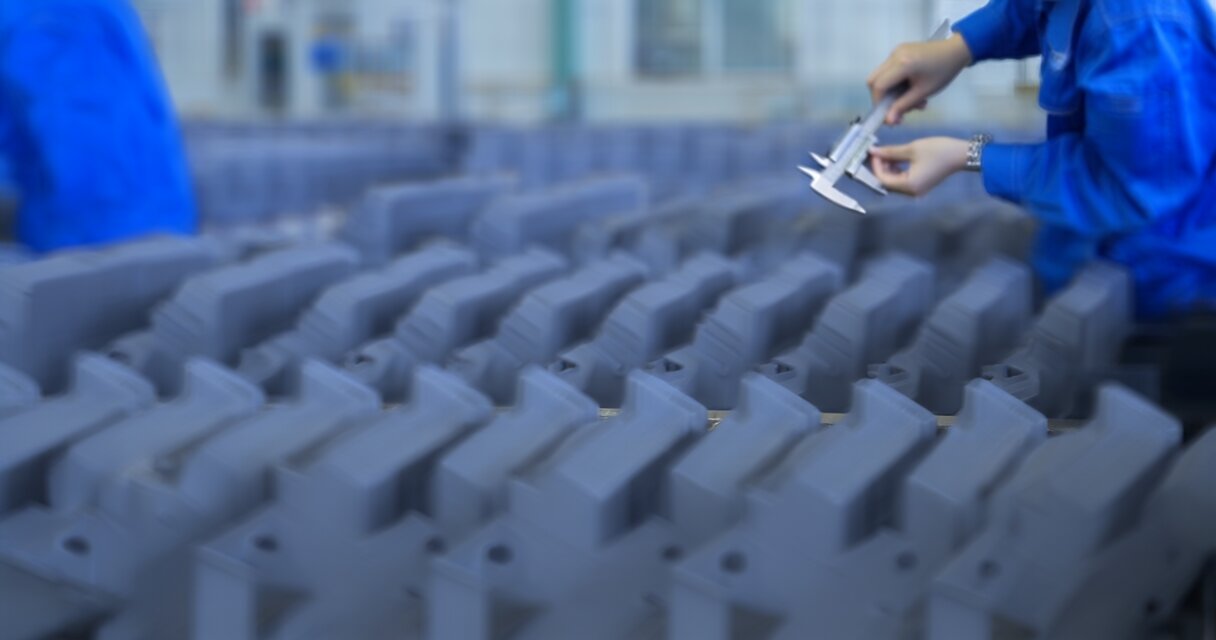
A pilot run is a bounded production run using the production tool, the production fixtures, the production material lot, the production packaging and the actual line operators — producing units at or near production rate, which are then measured rather than shipped.
It is not a re-sample. It is not a "we will check the first 50 pieces" promise. And it is not a pre-production sample made by engineering while the line is busy elsewhere. If the run does not use the line that will make your order, it is not a pilot run — it is a second sample with better marketing.
The output of the pilot run is normally not sold. You are buying information: yield, defect pattern, cycle time, dimensional spread, packaging behaviour. Treat the pilot units as inspection stock and scrap, and budget for it.
Four documents that carry the scale-up
Factories respond to paper, not to intentions. These four artefacts are what you fall back on when a shipment arrives wrong and a supplier says the specification was never agreed.
1. The golden sample
A golden sample is a physical unit, signed and dated by both sides, sealed in a bag or a small box, and stored in two places — one at the factory, one with you. It should be accompanied by a photo sheet with caliper readings on the five to eight dimensions that actually matter, plus colour reference under stated lighting.
Two details matter. It must come from the pilot run, not the sample stage — otherwise you sealed a prototype. And the seal must be tamper-evident, signed by someone with authority to bind the factory, with a company chop.
2. The frozen specification
One document, one revision number, one date. It lists material grades with the supplier's own designation, tolerances on critical dimensions, surface finish, colour standard, packaging construction, carton mark, and every accessory. Any change after freezing requires a written change note with a new revision number and your written approval.
Most substitution disputes are not about whether the material changed — they are about which version of the specification was in force when the PO was issued.
3. Pre-production meeting minutes
Sixty minutes, before the pilot run, with the people who will actually be responsible: production manager, QC lead, tooling engineer, purchasing, and the packaging supplier if packaging is custom. The minutes record who owns which open point and by when. Attendance without names and dates is theatre.
4. The pilot run report
This is the document that decides whether you release the balance of production. It should contain, at minimum:
- Quantity run and quantity good, so first-pass yield is a number rather than an impression.
- Defect pareto — the top five defect modes with counts, not a list of categories with no quantities.
- Cycle time per unit and per station, against the cycle time the quotation assumed.
- First article inspection on the critical dimensions, with the actual readings and the tool or gauge used.
- Material evidence — lot number, grade, and the regrind ratio actually used.
- Packaging trial result — drop test outcome, carton dimensions, gross weight, and whether the inner insert survived.
- Corrective actions with owners and dates, for every defect mode above an agreed threshold.
Ask for it before the run, in that format. A factory that knows the report is coming runs a different pilot.
Sizing the pilot run
There is no universal percentage. The right size is the quantity that exposes the failure modes you cannot see in ten units: the first tool warm-up, the first cavity imbalance, the first material top-up, the first shift change, the first packaging line changeover.
In practice that means a run of a few hundred to a low few thousand units, scaled by unit cost and by how many processes are stacked in the product. A single-process plastic part needs less exposure than a product with moulding, plating, electronics assembly, sewing and retail packaging in sequence — because each process adds its own ramp and its own subcontractor.
Do not let the factory talk the pilot down to 20 pieces to save money: the pilot costs a fraction of a wrong container.
The five gates, and what "pass" looks like
| Gate | The question it answers | Evidence required | Failure signal |
|---|---|---|---|
| 1. Specification freeze | Is there one agreed definition of the product? | Dated spec sheet with revision number, material grades, tolerances, packaging construction | Spec exists only as a WeChat thread or as "same as sample" |
| 2. Tool trial (T1) | Does the production tool make a conforming part at all? | Parts from every cavity, dimensional report, short-shot and warp photos | Only one cavity sampled, or parts hand-finished after ejection |
| 3. Pilot run | Does the production system hold quality at rate? | Pilot report: quantity, yield, defect pareto, cycle time, FAI readings | Pilot run done at half speed, or on a different line than the order |
| 4. Golden sample sign-off | Is there a sealed physical reference both sides accept? | Signed, dated, sealed unit plus measurement photo sheet, two copies | Sample kept only at the factory, unsigned, or replaced later |
| 5. Ramp and release | Can they hold it for the full order, on schedule? | Production schedule with dates, capacity confirmation, inspection plan | Vague "about 30 days" with no line allocation |
Gate 3 is the one buyers skip, and it is the only one that tests the system rather than the artefact.
Where scale-up actually breaks
After enough of these, the failure patterns stop being random. They cluster into a handful of substitutions that are individually reasonable and collectively expensive.
Regrind ratio creep
Virgin resin costs money; sprues and rejects are free material. A factory that runs 10% regrind in the sample may run 25–30% in production once the scrap pile grows. The part still looks like the part. It is measurably weaker at the same wall thickness, more brittle in cold weather, and slightly different in colour. Ask for the regrind ratio in writing in the spec, and verify it through part weight and a drop or flex test on pilot units against the golden sample.
Tolerance drift from tool wear and cycle-time compression
Moulds wear. More commonly, cooling time gets cut to hit a cycle-time target, and parts eject warm and warp. The dimension that was in tolerance at piece 50 is out at piece 5,000. This is why dimensional checks belong at the start, middle and end of a production run, not only at first article — our guide to AQL sampling and its limits covers why a single inspection pass cannot catch a drifting process.
Second-tier substitution
Plating, anodising, printing, sewing, PCB assembly, magnets, batteries and labels are frequently subcontracted. The factory you audited may be excellent; the anodiser two villages away is a different company with a different rinse discipline. Ask which processes are in-house, and require written notice before any subcontractor change.
Labour ramp on a new line
A new line staffed with new operators is slower and less consistent for the first days, and quality typically sags late in a long shift. If your order is scheduled immediately after a hiring push, plan for a higher defect rate in the first production days and inspect that window harder, not uniformly.
Packaging degradation at volume
The sample carton is often hand-made from better board than the production run. Inserts get thinner, the printing registration slips, the tape changes, the polybag thickness drops a grade. None of this affects the product and all of it affects damage rates and retail presentation. Approve packaging from a production-lot carton, not from a sample carton.
| Silent substitution | How it hides | How to catch it |
|---|---|---|
| Higher regrind ratio | Identical appearance, slightly lighter parts | Unit weight tolerance in spec; drop or flex test against golden sample |
| Resin grade downgrade | Same family name, different grade or supplier | Material certificate per lot, tied to the grade named in the frozen spec |
| Thinner wall or rib | Only visible on a sectioned part | Section one unit per lot; measure wall thickness |
| Plating or painting moved to a subcontractor | Colour match holds in daylight, fails adhesion later | Written subcontractor list; cross-hatch adhesion and salt-spray on pilot units |
| Component or firmware substitution | Functionally similar, different BOM line | BOM revision control; firmware version read from pilot units and recorded |
| Downgraded carton board | Looks the same until it is stacked in a container | Board grade and GSM in spec; measure a production carton, not a sample |
The commercial mechanics that make the gates real
A pilot run with no money attached is a favour, and favours have a short half-life. Four terms do most of the work.
Split the tooling payment across the gates. A common split is a deposit on PO, a second payment on T1 parts, and the balance on pilot acceptance rather than on "tool finished". Tool completion is the factory's definition of done; pilot acceptance is yours.
Bill the pilot at the production unit price. If pilot units are quoted at a premium, the factory is pricing your risk back to you. Pilot quantity at mass-production price, paid as part of the order value, is the normal arrangement.
Put capacity and ramp dates in writing. Not "30 days after deposit" but a schedule: pilot date, corrective action window, production start, weekly output, ship date. If your order lands in the run-up to Chinese New Year, this becomes the single most important clause on the page — see our Chinese New Year production planning guide for why the calendar compresses earlier than most buyers expect.
Release the balance after inspection, not after production. Final payment triggers on an inspection result at the factory, with the inspection booked before the last production day, not after the goods are already in a container.
Keep any penalty clause modest and enforceable. A credit of a few percent per week of delay, capped, is more likely to be honoured than a punitive figure the factory will simply refuse to sign.
A realistic scale-up calendar
For a product with a new tool and moderate complexity, the sequence below is typical. Weeks are working weeks, and the compressible parts are the gaps, not the gates.
- Week 1 — Specification frozen at revision 1. Tooling PO issued with payment tied to gates. Packaging artwork released.
- Weeks 2–4 — Tool build. T1 parts shot, measured across all cavities, corrected.
- Week 5 — Pre-production meeting. Pilot run executed at production rate on the production line.
- Week 6 — Pilot report reviewed. Corrective actions closed or re-run. Golden sample sealed and shipped to you.
- Weeks 7–9 — Production ramp. Inspection at first article, mid-run and pre-shipment.
- Week 10 — Booking, loading, documentation.
If a factory tells you all of this can happen in three weeks for a new tool and a new product, one of those steps is going to be skipped. Ask which one, and get it in writing.
What to do this week
- Pull out your current specification. If it does not have a revision number and a date, it is not a specification yet.
- Ask your supplier which line and which tool will make your order, and whether the sample came from that same tool. The answer usually changes the plan.
- Request a pilot run at production rate, billed at production price, with the report format specified in advance.
- Reserve one unit from the pilot run as a golden sample, signed, dated and sealed in two copies.
- Rewrite your payment schedule so the last tooling instalment and the balance payment both sit behind a gate you control.
The Bottom Line
The sample proves the product is possible. The pilot run proves the factory can make it repeatedly, at the price and the date you agreed. Buyers who skip it are not saving a step — they are buying the step later, at container scale, with no leverage left.
Get the Pre-Production Checklist
The gate list, the pilot run report template and the specification freeze sheet — the same documents we use before releasing any production order in China.
Download the Free Guide