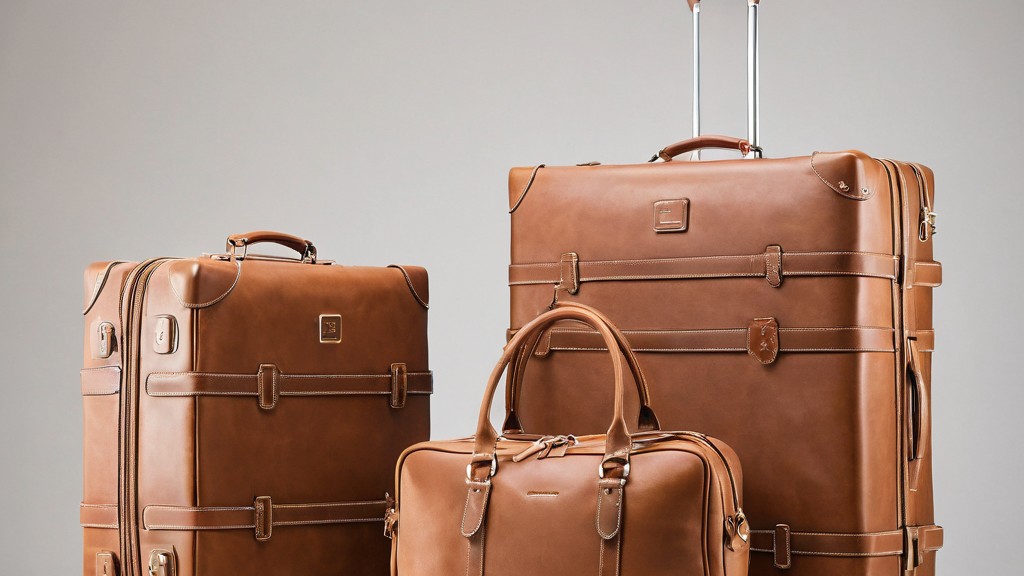
In March 2026, a Shopify seller I consult for ordered 3,000 "genuine leather" crossbody bags from an agent who promised a Guangzhou factory at $8.40 FOB. The samples were stunning — real leather, YKK zippers, brass hardware, neat 10-SPI stitching. The production run arrived in June: 2,900 bags with PU-coated split leather uppers, generic zippers that jammed by week three, and zinc-alloy hardware that tarnished and turned customers' skin green. The listing's 4.6-star rating collapsed to 3.1 in five weeks, the return rate hit 22%, Shopify Payments froze her account over the chargeback ratio, and the agent's phone number had been recycled by July. She had skipped exactly three steps: origin-cluster sourcing, a written material spec with verification, and production-unit inspection. This guide is the version of that lesson you don't have to pay $61,000 to learn.
Bags and luggage are among the most accessible private-label categories in e-commerce — 50–70% gross margins are normal on a $3.20 PU tote that retails for $34.99 — and China still manufactures the overwhelming majority of the world's bags and suitcases. But it's also the category where downgrades are the easiest to hide and the most expensive to discover, because a bag's quality lives in materials and construction details your listing photos can't show: the leather that isn't leather, the zipper that fails at 2,000 cycles, the stitching that pops at the seam, the wheels that die after 20 airport miles. Your customers discover those details for you — in the reviews. This guide closes that gap.
Why China Still Wins Bags & Luggage (And Where the Margins Actually Live)
Vietnam and India have made real inroads into bags and footwear, but China remains the world's bag factory for the same reason it dominates every other soft-goods category: the complete supplier ecosystem. In Baigou you can walk from the fabric cutter to the zipper supplier to the hardware workshop to the stitching line to the box printer in a single afternoon. In Huadu, the leather market, the hardware market, and 5,000+ workshops share the same district. That ecosystem is what makes China's 15–30 day sample cycles and $1.50–45 FOB range possible. Vietnam can sew bags; China can sew your bag — with your pattern, your materials, your hardware, your branding, in your MOQ, in weeks.
The margin structure that makes bags attractive in 2026:
- PU tote / fashion handbag (Baigou or Huadu): $2.80–8.50 FOB, retails $24.99–49.99 — the classic entry-level private-label category
- Canvas tote (Cangnan / Yiwu): $1.60–3.80 FOB, retails $14.99–29.99 — highest margin-per-dollar in the category
- Polyester backpack (Baigou / Guangdong): $4.00–9.50 FOB, retails $29.99–59.99
- Laptop / commuter backpack (Guangdong): $7.50–15 FOB, retails $49.99–89.99
- Genuine leather handbag (Shenzhen / Huadu): $18–48 FOB, retails $89–249
- 20" PC/ABS trolley case (Pinghu / Wenzhou): $14–28 FOB, retails $59.99–129.99
- 28" spinner suitcase (Pinghu): $22–45 FOB, retails $99–199
The catch: those margins are only real if your return rate stays under 5–8%, and bag returns are driven by exactly four things — materials, zippers, hardware, and construction — which are precisely the four things a factory will quietly downgrade if your spec sheet leaves any room to. A $0.30 zipper downgrade on a 3,000-piece order saves the factory $900 and costs you thousands in returns and reviews.
China's 7 Bag & Luggage Manufacturing Clusters: Who Makes What, and Where to Source
Bags are even more cluster-concentrated than footwear. Every major base specializes, and the specialization determines your price, quality ceiling, and risk profile. Here's the map:
| Cluster | Specialty | FOB Range (2026) | Typical MOQ |
|---|---|---|---|
| Baigou (Baoding, Hebei) | The world's mass-market bag capital — "China's Luggage Capital." 7,000+ manufacturers, 1+ billion pieces a year, exported to 200+ countries. PU totes, fashion bags, backpacks, trolley cases, travel sets. Unbeatable price, mid-range quality ceiling | $1.50–12 | 500–2,000 pcs |
| Guangzhou Huadu / Shiling (Guangdong) | "China's Leather Capital" — 5,000+ leather-goods enterprises. Premium PU and genuine-leather handbags, totes, crossbodies, wallets. Strong ODM design capability, fast sampling | $5–25 | 300–1,000 pcs |
| Shenzhen (Guangdong) | High-end OEM/ODM for Western brands — boutique genuine-leather work, small-batch, design-forward. The "Italianate" quality tier of Chinese bags; most expensive, most controllable | $15–48 | 200–800 pcs |
| Pinghu (Jiaxing, Zhejiang) | The travel-luggage capital — 400+ enterprises, 420M+ units a year, contract manufacturing for Prada and COACH. Suitcases, spinner trolleys, travel bags, briefcases. The quality benchmark for hard luggage | $14–45 | 300–1,000 pcs |
| Wenzhou (Zhejiang) | Luggage and trolley cases with a strong export history — soft-side luggage, wheeled duffles, business travel sets. Solid mid-tier alternative to Pinghu with slightly softer pricing | $10–32 | 500–1,500 pcs |
| Cangnan (Wenzhou, Zhejiang) | Canvas, synthetic, and casual handbags — totes, beach bags, weekenders, cosmetic bags. Strong on fabric bags and print work; ~25% of China's leather-bag output originates in the Zhejiang group | $1.60–9 | 500–2,000 pcs |
| Yiwu (Zhejiang) | The budget tier — small bags, cosmetic pouches, novelty and promotional bags, lunch bags, fanny packs. Lowest prices on earth, quality varies wildly; inspect every batch | $0.60–4 | 100–1,000 pcs |
A quick rule of thumb: if it's a fashion handbag under $12 FOB, Baigou is your price king and Huadu is your quality upgrade. If it's genuine leather or premium work, Shenzhen and Huadu. If it's a suitcase or trolley, Pinghu (quality) or Wenzhou (value). If it's canvas or fabric, Cangnan. If it's a $2 cosmetic pouch, Yiwu. And if a quote arrives from a city that isn't the cluster for your product type — say, a "leather handbag factory" in Ningbo or a "luggage factory" in Chengdu — you're talking to a trading company. Negotiate accordingly (20–40% padding is standard) or walk.
⚠️ The Trading-Company Tax in Bags
Bags are one of the most middleman-heavy categories on Alibaba, because the barrier to entry is low and the visual difference between a factory and a trading company is invisible in a listing photo. The standard tell: a supplier that lists 400+ bag styles across every material and price point is a trader sourcing from dozens of workshops. A real factory has a narrower range, can name its material suppliers, and will happily video-call you onto the stitching floor. If you buy through a trader anyway, budget 20–40% into the FOB and — critically — get the actual manufacturing workshop's name and address in the contract, because that's who you'll need for QC and for the factory audit your compliance program may demand.
Materials: The Downgrade Playbook, Decoded
In bags, the material is the product — and material substitution is the industry's favorite margin trick. Here's exactly what gets swapped, and how to catch each swap cheaply:
1. "Genuine Leather" That Is PU or Split Leather
The most common fraud in the category. A $9 "leather" handbag is almost always PU (polyurethane) with an embossed grain, or split leather with a painted finish. Catch it in 60 seconds: the water-drop test (genuine leather absorbs water within 10–15 seconds and darkens; PU beads it up), the burn test on a hidden edge (leather smells like burnt hair and leaves ash; PU melts, drips, and smells like plastic), and the edge check (genuine leather has a fibrous, suede-like back and edge; PU has a fabric or foam backing). If the factory claims full-grain, ask for the hide's origin and a cross-section photo — full-grain shows the natural grain surface with no correction.
2. Fabric Denier and Fiber Substitution
"1680D ballistic nylon" is a premium backpack material; "600D polyester" is a budget one — and they look nearly identical in a photo. Catch it: weigh a measured square meter of the fabric (1680D nylon runs ~470 g/m², 600D polyester ~220 g/m²), and do the burn test on a loose thread (nylon melts into a hard bead and smells like celery/plastic; polyester produces black soot; cotton burns to ash and smells like paper). Cotton canvas labeled as "poly-cotton" or polyester is the other classic swap — the burn test catches it instantly.
3. The Zipper Downgrade
Zipper quality is 80% of a bag's perceived quality, and it's the easiest thing to downgrade invisibly. YKK #5 zippers are rated to 10,000+ open/close cycles; generic zinc-alloy sliders fail at 1,500–3,000 and jam, skip teeth, or split. Catch it: spec the zipper brand and model in writing (YKK, SBS, or a named equivalent), check the zipper tape for the brand marking, and run a cycle test — 500 open/close cycles on the sample should show zero hesitation. The $0.30–1.20 per-bag cost of a real YKK is the best money you'll spend.
4. Hardware That Turns Green
Painted zinc-alloy hardware tarnishes, chips, and leaves green marks on skin and clothing within weeks; brass and stainless steel don't. Catch it: spec the hardware material and finish (solid brass, stainless steel, or zinc alloy with a specified plating — e.g., 3-layer plating), ask for the plating spec, and run a simple salt-spray or salt-water soak test on the sample. Weight is a tell: real metal hardware is heavy; zinc alloy with hollow construction is suspiciously light.
5. Lining, Straps, and Webbing
The lining is where factories save $0.20 by switching from 210D nylon to 150D polyester that rips at the seam. The shoulder strap is where they save another $0.30 with 38mm webbing instead of 50mm, or 600D instead of 1680D. Catch it: put every material with its grade in the spec sheet, verify the lining's fabric on delivery (burn test), and test strap webbing strength — a loaded strap should hold 30kg+ without stretching or seam creep.
Construction QC: The Four Tests That Predict a Bag's Lifespan
- Stitch density and tension: spec 8–12 SPI (stitches per inch) on load-bearing seams depending on material — below 8 SPI, seams fail within months. Check for skipped stitches, loose tension, and thread that's not nylon-bonded (polyester thread with UV protection for outdoor bags).
- Seam-strength test: the single best predictor of bag lifespan. Clamp the seam and pull until it pops. A properly constructed bag should withstand 3–5x its rated load before seam failure. If a tote's handles pop at 10kg, the bag will fail in month one.
- Zipper and closure cycle tests: 500+ open/close cycles on zippers, 10,000 cycles on magnetic snaps and buckles. Half of "my bag broke" reviews are zipper and closure failures — test them before your customers do.
- Drop, wheel, and handle tests for luggage: the ASTM-style 60cm edge drop test (drop the loaded case on each corner; the shell must not crack and the wheels must stay attached), the wheel-rolling test (a 20" case with decent wheels should survive 10+ km of loaded rolling — cheap wheels die in the first 2), and the handle cycle test (telescopic handles are rated to 5,000+ extension cycles; test them). Also check shell material honesty: "PC" cases are 100% polycarbonate; "ABS" is cheaper and more brittle; "PC/ABS blend" is the middle tier. A case labeled PC that's actually ABS is a $2-per-unit material fraud that shows up as cracking shells in reviews.
This battery costs a few hundred dollars per style, most of it in your own time. It's less than the return shipping on a single bad batch — and it tells factories you know what you're buying, which is the cheapest quality control in China.
The Compliance Stack: US, EU, and Amazon (2026 Edition)
Bags sit in a compliance gray zone that trips up more sellers than any rule itself: most adult bags carry no mandatory federal testing requirement in the US, so sellers skip testing entirely — and then get blindsided when their "adult" bag is a children's product, or when they sell into California or the EU.
United States
- CPSIA (children's bags only): if your bag is marketed to or sized for children 12 and under — kids' backpacks, lunch bags, diaper bags are borderline (diaper bags are adult products, but kids' backpacks are children's products) — it's a children's product with mandatory third-party testing: lead in paint and substrate (90 ppm), phthalates in vinyl/PVC (DINP, DBP, DEHP, DIBP, DnOP, DnHP at 0.1%), small parts, and a CPC (Children's Product Certificate). A kids' backpack without a CPC cannot legally be sold in the US.
- Prop 65 (California): vinyl/PVC bags, printed designs, and coated fabrics can expose users to lead, cadmium, and phthalates (DEHP, DBP, BBP) — all on the Prop 65 list. If your bag exceeds the safe-harbor levels, you need either reformulation or a Prop 65 warning label, which itself suppresses sales. Testing the materials at the source is cheaper than labeling.
- FTC textile labeling: bags with textile components must carry accurate fiber-content labels (the "nylon" label on a polyester bag is a mislabeling violation).
- Smart luggage: bags with built-in lithium batteries face IATA rules (batteries must be removable in flight) and Amazon's restricted-product review. Spec removable batteries at the design stage — non-removable smart luggage is effectively unsellable in 2026.
European Union
- REACH: azo dyes in textiles and leather (restricted amines), PAHs in zipper pulls, handles, and rubber components (entry 50), phthalates in PVC, and nickel release from metal hardware (entry 27 — the same rule that governs jewelry). One lab report covering all of these costs $300–600 and covers your entire bill of materials.
- GPSR (General Product Safety Regulation, in force Dec 2024): every bag sold in the EU needs an EU responsible person, a traceable manufacturer/importer identity, and product labeling. If you don't have an EU-based responsible person, your bags cannot legally enter the EU market — this is the most commonly missed requirement in 2026.
- Textile Regulation (EU) 1007/2011: fiber composition labeling for textile bags sold in the EU.
Amazon-Specific Requirements
Amazon requires general product safety compliance and, for categories like children's backpacks, documentation. In 2026 Amazon is actively requesting lab reports (not just certificates) for children's products and for any product with compliance flags — and bags with zippers, vinyl, or coatings get flagged for lead and phthalate review. The practical play: test the materials that actually go into your bag once, get a single consolidated lab report, and keep it on file. It costs $300–600 and makes you immune to most listing-suppression events.
✅ The One-Report Compliance Strategy
Because the same materials (PVC, coated fabrics, metal hardware, dyed textiles) trigger both US and EU rules, one consolidated lab test — lead, phthalates, azo dyes, PAHs, nickel release, plus fiber content verification — covers your bag across the US, California, and the EU. Ask your factory for the material supplier list, send the actual production materials to a CPSC-accepted lab (SGS, Bureau Veritas, TÜV, Intertek), and keep the report with your product records. This single $300–600 line item is the cheapest insurance in the category.
The 8-Step Bag & Luggage Sourcing SOP
- Write the full spec sheet first. Every material with grades (leather type and finish, fabric fiber and denier, lining, zipper brand and model, hardware material and plating, webbing width and material), stitch density, dimensions and tolerances, weight target, packaging. A factory that receives a complete spec knows you're a professional and quotes accordingly — incomplete specs attract trading companies and inflated quotes.
- Source from the origin cluster. Match your product and price tier to the cluster map above. Add 20–40% to any quote from outside the cluster to account for the middleman.
- Vet the factory. Business license, export history, brand customers, factory-floor video call, and — for genuine-leather work — verify they have cutting and stitching lines in-house rather than outsourcing to home workshops. Ask for the names of their material suppliers and cross-check a few.
- Order 2–3 samples from 2+ factories. Use-test them for 2 weeks minimum: load them to rated capacity, carry them daily, roll loaded luggage, open and close every zipper and clasp repeatedly. The bag that looks perfect in the showroom is not the bag that survives week two.
- Run the material verification battery. Leather vs. PU tests, denier and fiber burn tests, zipper brand check, hardware salt-spray test, seam-strength test. $300–600 now or a 20% return rate later.
- Negotiate MOQ smartly. A 500-piece MOQ across 4 colors is 125 per colorway — the real constraint is per-colorwork. Combine colorways on one production run, own your pattern and hardware molds, and lock the per-color breakdown in writing.
- Third-party QC on every batch. Inline checks at cutting, stitching, and hardware attachment, plus final random inspection at AQL 2.5 — materials vs. spec, zipper function on every inspected unit, seam and strap strength, hardware finish, and (for luggage) wheel and handle function. Never ship without final inspection on bags; the category's failure modes are invisible until they're in customers' hands.
- Test production units for compliance and keep certificates. Send production materials — not the sample materials — to the lab for lead, phthalates, azo dyes, PAHs, and nickel release. Store the reports; Amazon, customs, and your EU responsible person will all ask. Then ship, and start tracking return reasons from day one — zipper, hardware, and seam failures are your early-warning system for a downgraded batch.
Bags and luggage are a category where the supply chain is the product: the leather, the zipper, the hardware, the stitching, and the wheels are the entire customer experience, and every one of them is a place where a factory can — and often will — quietly save a few cents at your expense. The sellers who win in bags aren't the ones who found the cheapest quote; they're the ones who wrote the spec, verified the materials, tested the construction, and inspected the production run. Do that, and the 50–70% gross margins this category offers become yours to keep — instead of the returns department's.