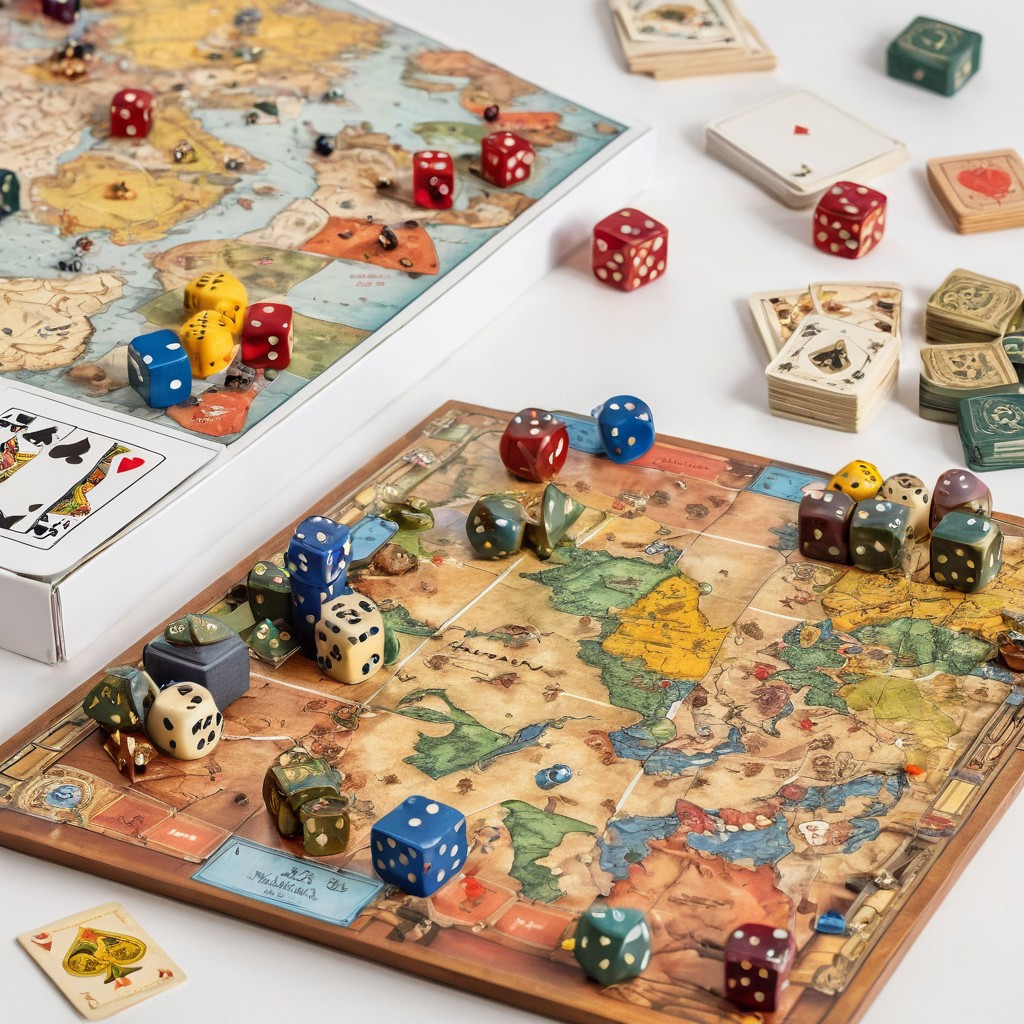
In early 2026, a first-time publisher launched a family party game on Amazon with a factory quote that looked too good to be true — and it was. The 1,000-unit production run arrived with three problems the quote had never mentioned: the cards were 280 GSM instead of the 330 GSM in the approved sample, the punchboard tokens tore instead of releasing cleanly, and 14 of the 1,000 boxes were missing the scorepad entirely. The returns started within a week of the first sales — "fun game, missing pieces" — and the listing was suspended before the second reorder. The publisher's mistake was not choosing a cheap factory; it was treating a board game as a single product instead of what it actually is: a 20-40 component project where every component is a separate quality risk, a separate specification, and a separate line item on the factory's quote. This guide is the complete 2026 playbook for sourcing board games and tabletop games from China — the clusters, the cost tiers, the compliance stack, the IP layer, and the verification battery that keeps the missing scorepad out of your customer's box.
Board games are one of the most China-concentrated categories in consumer goods. Industry estimates put China's share of world tabletop production at the large majority of everything sold — the printed games (cards, boards, boxes), the molded components, the wooden games, the puzzles, and most of the miniatures that make crowdfunded deluxe editions possible. The category has been compounding for a decade: the hobby tabletop boom turned niche German-style and American-style games into a global retail phenomenon, crowdfunding gave new publishers a way to fund 10,000-unit first runs without a distributor, and the pandemic-era board game resurgence never fully receded — families kept buying games, and the 2020s' streaming-driven "game night" culture kept expanding the audience. For importers the economics are attractive in every lane: a $2.50 FOB pocket card game retails at $12.99-19.99, a $5-8 FOB family game at $29.99-49.99, a $15-25 FOB hobby game at $59.99-99.99, and a $35 deluxe crowdfunded edition at $149-199 before stretch goals — with gross margins of 40-65% before freight, returns, and the compliance file. But the category punishes sloppy sourcing harder than most, because a game's quality is the sum of forty small things, and customers notice every one of them.
Why China Wins Tabletop (And Where Each Capability Actually Lives)
China's board game advantage is the same vertical density that wins toys and consumer electronics, applied to a product that is really five industries in one box: printing, paper conversion, plastic molding, small-parts manufacturing, and assembly. A premium board game needs offset printing at gallery quality, die-cutting precise enough that a punchboard token releases without tearing, card stock and coating that survive 200 shuffles, injection-molded trays and pieces with clean parting lines, miniature figures cast or molded to a standard that collectors photograph, custom dice, wooden tokens, and a box that survives freight — and China is the only place where all of it exists within a two-hour drive, with factories that have been running export game programs for Western publishers for decades. Shenzhen and its Dongguan neighbor are the center of gravity: the premium print-and-pack export belt that produces the bulk of the world's hobby and mass-market board games, home to the contract manufacturers behind most of the famous titles you can name. Guangzhou contributes large-scale offset printing and packaging. Zhejiang — especially the Yunhe county and Jinhua areas — is the world's wooden game and wooden puzzle capital, where small and mid-size workshops turn beech, birch, and rubberwood into educational games, 3D wooden puzzles, and classic wooden board games. Shantou's Chenghai district, the toy-manufacturing capital that already appears in every toy sourcing guide, produces kids' party games, electronic table games, and mass-market puzzles at toy-grade volumes and prices. And scattered through Shenzhen, Dongguan, and Zhongshan are the specialist component shops — miniature sculptors and molders, dice makers, neoprene playmat printers, metal coin stampers, custom card printers — that let a publisher assemble a deluxe edition from half a dozen suppliers without leaving the Pearl River Delta.
The mental model that fixes every sourcing decision in this category is the lane map. There are three lanes, and they use different factories, different pricing, and different compliance files:
- The mass-retail lane. Family party games, licensed kids' titles, evergreen strategy games, and anything headed for Target, Walmart, or Amazon's bestseller shelf. This lane runs through the large Shenzhen and Dongguan print-and-pack factories that quote 5,000-50,000 units, hold licenses, run multilingual editions, and handle compliance documentation in their sleep. The game here is print quality at scale, packaging that survives retail, and a compliance file that a buyer's legal team will actually read.
- The hobby and crowdfunding lane. Designer games, Kickstarter deluxe editions, and small-batch premium productions. This lane runs through the same export belt's project-driven shops — factories that quote 1,000-10,000 units, manage 30-60 component SKUs per game, and treat a campaign's art files as a manufacturing spec. The game here is component complexity, production flexibility for stretch goals, and miniature quality — and the MOQ floor is dramatically lower than mass retail, which is why crowdfunding works.
- The kids' game lane. Preschool and children's games, educational games, and electronic table toys, largely from Chenghai and the Zhejiang wooden cluster. This lane is toy manufacturing first and game publishing second: volumes are high, prices are low, and the compliance file (children's product testing in the US, EN 71 in the EU) is the actual product spec.
Two positioning decisions fix everything else about a game program, and both should be made before you contact a single factory. The first is the lane above. The second is the age decision — children's product or adult tabletop product — because it decides which compliance file you buy (detailed in the compliance section below). Trying to buy a crowdfunded deluxe edition from a Chenghai kids' game factory, or a 20,000-unit retail run from a 6-person wooden-game workshop, are the two most expensive category errors an importer can make.
Inside the Box: Anatomy of a Game's Cost and the 2026 FOB Benchmarks
A board game is a bill of materials with a personality. Take a mid-complexity family game: a rigid box with a printed wrap or litho label, a folded game board printed on 2-3mm greyboard with a paper laminate, 50-200 cards printed on coated card stock, punchboard sheets of tokens, a plastic or wooden insert, a rulebook, a handful of dice or wooden components, a plastic bag per component type, and shrink-wrap. Each of those is a separate process and a separate cost line — and the factory's quote only tells you the truth if the specification behind it is real. The five cost centers that move the total the most are the box construction, the card stock and coating, the board thickness and printing, the molded and cast components (trays, minis, dice), and the insert — and each has a cheap version that looks identical in a photo and feels different in the hand.
Real 2026 FOB benchmarks, lane by lane (prices per unit at typical MOQs, excluding molds and tooling):
| Game type | Typical contents | 2026 FOB / unit | Typical MOQ | Where it is made |
|---|---|---|---|---|
| Pocket / travel card game | 54-108 cards, tuck box or small rigid box, rules card | $1.50-3.50 | 1,000-3,000 | Shenzhen / Dongguan card printers |
| Card game, premium box | 100-200 cards, rigid box with insert, tokens or meeples, dice | $3.50-6.50 | 1,000-2,000 | Shenzhen / Dongguan export belt |
| Family / party board game | Folded board, 100-300 cards, punchboard tokens, dice, wooden pieces, insert, rulebook | $5.00-9.00 | 2,000-5,000 | Shenzhen / Dongguan mass-production factories |
| Mid-complexity hobby game | Double-sided board, 300+ cards, custom wooden or plastic pieces, custom dice, player mats | $8.00-15.00 | 1,500-3,000 | Shenzhen / Dongguan project-driven shops |
| Miniature-heavy deluxe / Kickstarter edition | 20-80 miniatures, thick boards, 500+ cards, metal coins, neoprene mats, custom insert | $18.00-38.00 | 1,000-3,000 | Shenzhen / Dongguan + specialist miniature, dice, and mat suppliers |
| Kids' / preschool game | Simple boards, chunky pieces, spinner or dice, molded plastic tray | $2.00-5.00 | 3,000-10,000 | Shantou Chenghai / Zhejiang wooden cluster |
| Wooden game / puzzle | Wooden boards, pieces, storage box | $2.50-8.00 | 1,000-3,000 | Zhejiang (Yunhe / Jinhua) |
Add the tooling reality: custom plastic trays, custom dice, and miniatures carry one-time mold costs — a simple injection mold for a tray or a custom die runs roughly $1,000-8,000 depending on cavity count and complexity, and a miniature mold set for a single figure runs $1,500-5,000. Molds are where the factory relationship is won or lost: who owns the mold, where it is stored, and what happens to it when you change factories are contract terms, not afterthoughts. Also budget the pre-production round (digital proof, physical pre-production sample, and often a pilot run) at 2-5% of the total program cost — the cheapest insurance in the category.
The Compliance Stack: Age Grading Decides the File
Here is the sentence that saves importers six figures: in board games, the compliance file is decided by age grading, and age grading is a positioning decision that you make — not a property of the cardboard. A game marketed for children under 12 in the United States is a children's product, full stop: it needs CPSIA compliance (lead and phthalate limits on every accessible material), compliance with the small-parts regulation 16 CFR 1501 (which is exactly why "not for children under 3" is printed on so many game boxes — the age grade and the small-parts rules are a matched set), ASTM F963-23 testing from a CPSC-accepted third-party laboratory, a Children's Product Certificate (CPC), and a permanent tracking label on the product and its packaging. Games with magnets add the magnet-safety requirements (16 CFR 1262 and the ASTM F963 magnet provisions) — small, powerful magnets that can be swallowed are a recall-class hazard, and the 2020s have seen exactly that in the toy category. If your game is a children's product, these are not optional documents: Amazon and other marketplaces require the test reports and the CPC before a toy listing goes live, and customs and CPSC spot-check at the border and in the marketplace alike.
The European Union runs the parallel stack: a children's game is a toy under Directive 2009/48/EC and needs EN 71-1 (mechanical and physical safety), EN 71-2 (flammability), and EN 71-3 (migration of certain elements), plus CE marking, a Declaration of Conformity, and technical documentation. Since 2024, the General Product Safety Regulation (GPSR, EU 2023/988) adds an EU-established responsible person for virtually every consumer product sold in the EU — games included — with the UK running its own equivalent for Great Britain. The same age logic applies: position and market the game as an adult tabletop product and you escape the toy directive's scope, but you still need the adult consumer-product file, and if you ship to California, Prop 65 warnings apply to any game whose materials can expose users to listed chemicals (lead in inks and paints, phthalates in plastics, and formaldehyde in some wood finishes are the usual triggers — a $0.02 warning label is cheaper than the litigation that follows its absence).
The practical takeaway is a two-part decision made before the art files go to the factory. First, choose the age grade deliberately — 3+, 6+, 8+, 14+, or adult — and let it drive the small-parts design, the component spec, and the testing budget. Second, never let the marketing drift from the paperwork: a game with an adult compliance file that is advertised with cartoon characters and "perfect for kids" has handed a plaintiff or a regulator the one fact they need. And because the toy stack is expensive (a full children's-game test program runs roughly $3,000-8,000 per SKU at a CPSC-accepted lab, plus the CPC and tracking labels), many publishers of hobby games deliberately design and market for 14+ to stay in the lighter adult-product lane — a legitimate choice, as long as it is made on purpose and documented in the listing, the box, and the factory's files.
The IP Layer: Licensed Landmines and the Factory Floor
Tabletop is an originality business with a copying problem. The legal map is straightforward once you know it: game mechanics themselves are generally not copyrightable (patents protect novel mechanisms and component inventions, and design patents protect novel ornamental designs), while the expression of a game — its art, text, graphic design, and rules wording — is copyrightable, and its title and logo are protectable as trademarks. That means a clone that copies your exact art and layout is an infringement case, while a game that borrows a popular mechanic with entirely new expression is the industry's normal way of doing business. The traps for importers are three: licensed games (anything using a movie, cartoon, or celebrity property needs a license from the rights holder — factories will sometimes print unlicensed runs of popular licenses, and selling them is how importers get sued, seized, or both); near-copies of proven hits (the factory floor knows what sells, and a Shenzhen trader can show you a catalog of lookalikes of every famous party game — buying one is a trademark and trade-dress complaint waiting for a lawyer); and your own unprotected design (the game you are proudest of is the one most worth registering).
The protection checklist for a publisher sourcing from China in 2026: register your trademark in the markets where you sell before you launch (US federal registration and an EU trademark are the two that matter most, and both are needed for Amazon Brand Registry, which is the enforcement tool that actually works on the marketplace); register copyright for your art and rulebook (US registration is what lets you sue and collect statutory damages, and it is cheap); file patents only for genuinely novel mechanisms or components you can defend — a utility or design patent is a weapon, not a decoration, and most games do not need one; and contract the factory floor: a manufacturing agreement with a no-clone clause, mold ownership and storage terms, an NDA, and a rule that your art files are delivered in split, watermarked batches so no single vendor employee holds your whole game. The factory-copy risk is real but manageable — the serious export factories protect their publisher clients because their business model depends on repeat work and their reputation with the global publishing community; the traders with the lookalike catalogs are the ones to walk away from.
QC Is a Component-Count Problem
Every quality failure in board games traces back to one of four sources: components missing or miscounted, print quality drifting from the approved proof, punch and die-cutting defects that turn tokens into confetti, and box and insert failures that arrive damaged. The first is the one that generates the returns — "missing piece" is the single most common board game complaint on Amazon, and a 1,000-unit run with a 2% missing-component rate is 20 angry customers, 20 returns, and a listing review score that takes 200 five-star ratings to repair. The fix is a manufacturing spec that treats every component as a line item: counts per deck, token counts per punchboard sheet, weights per bag, and an assembly instruction that the factory actually follows. The second failure — color drift — is the most expensive to catch late: a board printed 5% off the approved Pantone proof looks cheap to the customers who matter most (board gamers photograph their purchases and post them), and the fix is a signed physical pre-production sample, not an emailed PDF. The third — die-cutting — is where cheap factories save money: a punchboard that does not release cleanly, cards with fuzzy edges, and round corners cut inconsistently are the difference between a $5.50 FOB quote and a $7.00 quote from the factory whose die tolerances are worth the extra dollar. The fourth — the box — is freight's fault as much as the factory's, which is why the shipper carton and the box crush spec belong in the QC protocol, not the logistics department's.
Three structural rules make board game QC manageable. First, the pre-production sample is the real QC event: one physical sample, made from the actual production dies and materials, signed off against the digital proof and the component manifest, then kept under lock as the reference standard (the factory will try to ship you something cheaper than the sample — that is the oldest game in the industry). Second, inspection is count-based and weight-based: final random inspection at AQL 2.5, with opened-box component counts on a sample of every batch and a weigh-the-box check that catches a missing scorepad that counting might miss. Third, the rulebook is a component: grammar and translation errors, misprinted numbers, and rules that reference components by the wrong name generate the most embarrassing reviews in the category — have a native speaker proof the final PDF, and check the printed copy in the pre-production sample, not the screen version.
The 8-Test Verification Battery
Before you commit to a factory, put its pre-production sample through this battery. It costs a few hundred dollars and two weeks of calendar time, and it is the difference between a launch that compounds and a container of expensive lessons:
- The component-count and weight audit. Open the sample and count every single component against the manifest — every card in every deck, every token on every punchboard, every die, meeple, and miniature. Then weigh each bag and compare against the spec. Missing components are the #1 return reason in the category, and the audit that finds them in a sample costs nothing compared with the one that finds them in your customers' boxes.
- The print and color check. Hold the printed board, cards, and box against the approved digital proof under daylight: Pantone match, registration (colors aligned, no ghosting), ink coverage, and the coating finish (matte vs. gloss vs. linen texture). Color that drifts from the proof is the fastest way to make a premium game look cheap — and it is invisible in factory photos.
- The punch and die-cut test. Pop every token out of the punchboard sheets: clean release with no tearing, no fuzzy edges, consistent round corners. Then punch the same sheet a second time from a second sample to check die wear. A punchboard that fights the player is a quality defect in every box it ships.
- The card stock and durability test. Measure the GSM against the spec, then shuffle, bend, and riffle the cards 200 times: check for edge fraying, coating peel, and "card memory" (cards that stay bent). Check the corners for consistency and the finish for fingerprint resistance. Card feel is the first thing a board gamer notices, and the second thing they review.
- The box, insert, and freight test. Check the box crush strength (a loaded box should survive a stack), the lid fit, and the magnet or tuck closure. Then put every component in the insert, close the box, and shake it like freight — components that rattle loose in transit are components that arrive damaged. Confirm the shipper carton spec separately: most box damage happens between the factory and the warehouse, not inside the box.
- The components and miniatures test. Check molded pieces for flash, sink marks, and parting lines; check miniatures for mold quality, seam cleanup, and paint application if pre-painted; drop-test a sample of plastic and wooden pieces from table height; sniff-test for strong plastic or paint odor (a QC issue and a compliance signal); and roll the dice 100 times to check balance and legibility. Custom components are where the deluxe price lives — and where the cheap factory saves its money.
- The compliance document check. Demand the full file and verify it independently: for a children's game, the CPC with the ASTM F963-23 test report from a CPSC-accepted laboratory (look up the lab in the CPSC database), the CPSIA tracking label on the product and packaging, and the small-parts age-grade logic documented; for the EU, the EN 71 test reports, CE Declaration of Conformity, and the GPSR responsible person's name and contact on the product; for California, the Prop 65 assessment. Every document is verifiable online, and the fakes are common enough that verification is not optional.
- The playtest of the production copy. Play the actual production sample with the actual printed rulebook, with people who have never seen the game: check the rules for grammar, ambiguity, and errors; verify every component referenced in the rules exists in the box; test the setup time and the "first play" experience; scan the barcode and confirm the listing copy matches the box. A game is a promise of an experience — the production copy is where you check that the promise survives the factory.
The 8-Step Tabletop Sourcing SOP
- Pick the lane, the market, and the age grade before the art is finished. Mass retail, hobby/crowdfunding, or kids' games — and US, EU, or both — fix the factory type, the MOQ, and the compliance file. The age decision (children's product or adult tabletop product) fixes the testing budget and the small-parts design. Every expensive rework in this category starts with a decision that was made too late.
- Build the full component spec before you ask for quotes. Board thickness and core, card stock GSM and coating, box construction, insert design, token counts, piece counts, mold requirements, and the rulebook page count. Then send the same spec to 3-5 factories and compare like for like. A quote without a spec is a number with an opinion attached.
- Shortlist factories by lane and by evidence. Print-and-pack export factories in Shenzhen/Dongguan for retail and hobby games, the Zhejiang wooden cluster for wood, Chenghai for kids' volume. Demand from every shortlist: business license, export history with named Western publisher or brand clients (ask for references you can actually contact), the factory's own die-cutting, molding, and assembly capabilities (traders outsource everything), and a video call onto the production floor. Ask which famous games they have manufactured — the serious factories are quietly proud of the list, and the list is checkable.
- Order the pre-production sample and run the 8-test battery. One physical sample from the real production dies and materials, run through the full battery above, signed off against the digital proof and the component manifest, and kept under lock as the reference standard. Budget 2-5% of the program for this round; it returns ten times its cost in avoided rework.
- Resolve the tooling and IP terms in writing. Who owns the molds (you should), where they are stored, what happens on a factory change; the no-clone clause; the NDA; the split and watermarked art-file delivery. Register your trademark and copyright before launch, in the markets where you sell, and file patents only where a mechanism or component is genuinely novel and defensible.
- Lock the compliance file with the PO, not after it. The CPC and ASTM F963-23 reports for a US children's game, the EN 71/CE file and GPSR responsible person for the EU, the Prop 65 assessment for California — every one of them specified in the contract with the testing lab named. Never accept "we will provide the certificates" without naming the certificates, the standards, and the lab. And if you sell on Amazon, verify the documentation requirements for your category before the container sails — the marketplace is the enforcement arm that will actually stop your listing.
- Contract the QC terms that matter. Inline checks at printing and die-cutting, final random inspection at AQL 2.5 with opened-box component counts and weigh-the-box checks on a sample of every batch, a signed pre-production sample as the color and material reference, and a component-replacement commitment (spare cards, tokens, and pieces) baked into the PO for your after-sales program. Board game QC is counting, weighing, and comparing — not vibes.
- Plan the freight and the launch together. Games are volume-heavy relative to their weight — a container holds a surprisingly small number of deluxe boxes — so compare sea freight by cubic meter, budget the dimensional weight if you air-freight samples or launch stock, and consolidate LCL shipments with other products to keep the per-unit freight sane. For crowdfunded games, coordinate the production slot with the campaign's fulfillment promise (stretch goals are change orders — agree in writing how each one changes the price and the timeline), and for retail and Amazon, keep the shipper carton spec and the FBA inbound requirements in the same document. Launch with the file: the compliance documents, the component-replacement plan, and a rules PDF download that turns a lost-pieces complaint into a support ticket instead of a return.
Board games are the category where China's manufacturing depth is most visible to the end customer: a $6 FOB family game that retails at $34.99 and a $35 crowdfunded deluxe edition that retails at $179 are both the sum of dozens of small processes done exactly right — or quietly cut. The category rewards the publisher who treats a game as a project with a component manifest, a signed pre-production sample, a deliberate age grade, and a compliance file that matches the marketing — and it punishes the importer who buys "a board game" from the cheapest quote with missing scorepads, drifting color, tearing punchboards, and a listing suspended over a certificate the factory promised but never had. The winners in 2026 source from the real clusters, spec every component, own their molds and their IP, verify every certificate, and count every piece — because in tabletop, the difference between a hit and a return is often a single 2-cent token, and the customer always notices.