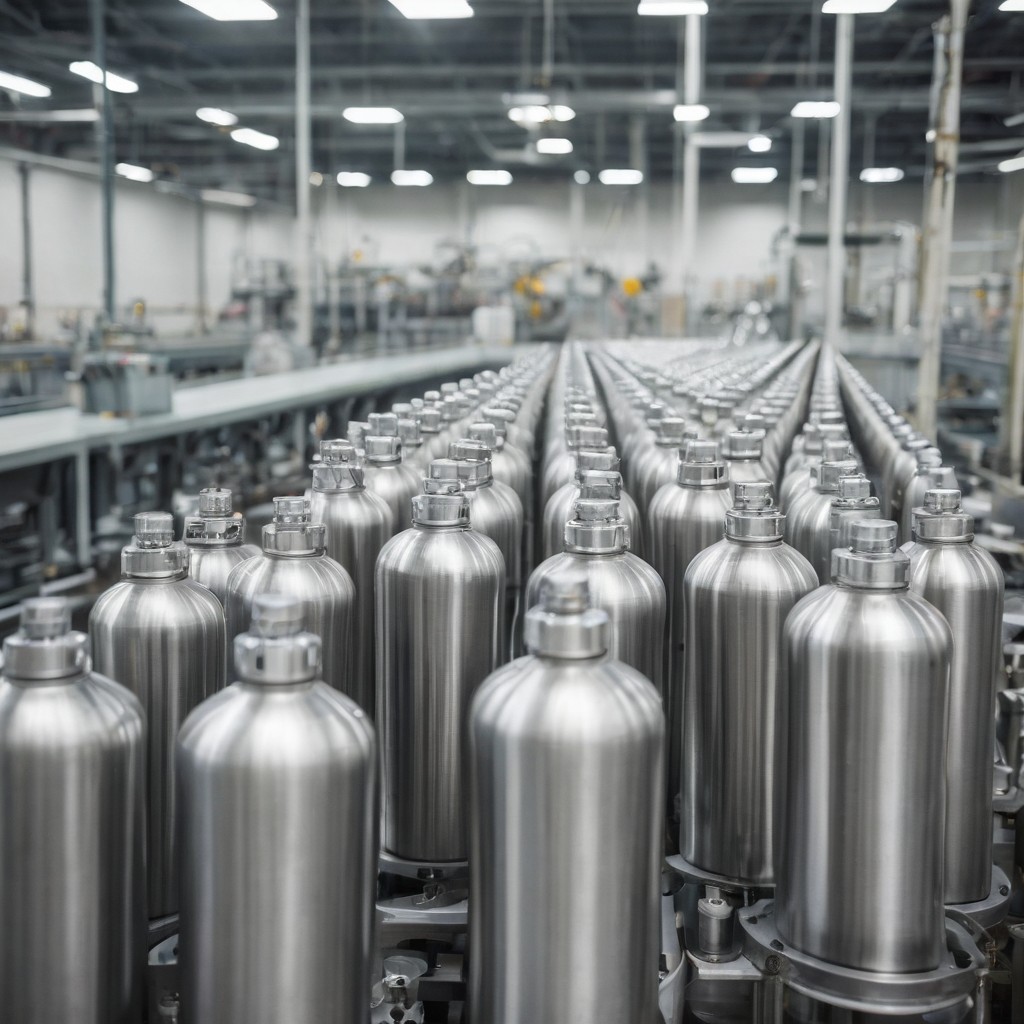
Two drinkware sellers came to me in the same month. The first sells a $34 insulated tumbler in three colours and clears about $900,000 a year on six ASINs, with a return rate under two percent and a customer who buys a second one as a gift. The second listed eleven tumblers across two brands, hit $70,000 in a quarter, and then watched four listings go down in a single week — one for a Proposition 65 exposure claim nobody had evaluated, one because a compliance audit asked for a food-contact declaration on the lid and he had a PDF of a certificate for the stainless shell, one because the powder coat started flaking in the dishwasher and the review wall collapsed, and one because the outer base disc on a returned unit had come off and the customer photographed what was underneath. Both sellers bought from the same belt of factories in Zhejiang. One of them understood something the other did not: in drinkware, you are not selling a vessel. You are selling a promise about what touches the mouth of the person using it, and in 2026 every one of those promises has a document, a test protocol and a specific line in the purchase order attached to it.
This is the category where the physical product is almost embarrassing in its simplicity — a sheet of stainless steel, a plastic lid, a silicone ring, a vacuum between two walls — and where the distance between a good business and a suspension notice is entirely made of specification. The good news is that the specification is knowable. The clusters are stable, the standards are public, the tests are cheap relative to a purchase order, and the factories that do this properly are not hiding. The bad news is that the category's most famous risk — the lead in the vacuum seal — is real, widely practised, and almost never explained to buyers by the people selling to them.
Why Drinkware Is a Better Category Than It Looks
The demand structure is unusually forgiving. Hydration is a habit product with daily use, so a bottle that survives its first month usually survives its first year and its second; insulated tumblers became a genuine gifting category that peaks hard in November and December; reusable bottles are now the default corporate-gifting, conference and brand-merchandise product, which gives you a B2B lane with forty percent gross margins and no advertising spend; and the TikTok and Instagram discovery loop is native to the product because pouring, icing, leaking and lid-clicking are all visual. Return rates sit far below consumer electronics, the average order value is high enough to absorb paid traffic, and the consumable-adjacent accessories — replacement lids, straws, straw brushes, bottle brushes, silicone boots, carry sleeves — create a second purchase from the same customer.
The supply side is where China is genuinely uncontested. The overwhelming majority of the world's vacuum-insulated drinkware comes out of one industrial belt in Zhejiang, and the supporting layers — moulds, lids, gaskets, coatings, decoration and packaging — sit within a two-hour drive of it. That means a buyer with a clear specification can go from concept to a tested, decorated, packaged unit in eight to ten weeks, which is a speed advantage that no domestic supplier in the United States or Europe can match on this product class.
What makes 2026 different is that the category's paperwork matured faster than its product did. Food-contact law stopped being a formality, the European bisphenol rules reached their deadline, packaging regulation became a compliance object with importer duties, and the entry environment stopped tolerating small informal test shipments. The product is easy. The file is the business.
Six Things That Changed for Drinkware in 2026
- Europe's BPA regime reached its main deadline. Regulation (EU) 2024/3190 prohibits bisphenol A in the manufacture of food-contact plastics and restricts other bisphenols and bisphenol derivatives, and its main transition period ended on 20 July 2026. The Commission's implementation guidance spells out what importers now have to hold: declarations of compliance covering the specific material, detection limits at the microgram-per-kilogram level for compliance demonstration, and a documented assessment of substitutes so that a supplier who simply swapped BPA for another bisphenol has not solved the problem. In a reusable bottle this touches the lid, the straw, the gasket, the sleeve and any coating — the polycarbonate lid that used to be the industry default is the first thing to interrogate, and polypropylene and copolyester (Tritan-type) materials with proper declarations are the safe replacement. Bisphenol rules outside the EU moved in the same direction, and the practical answer is the same everywhere: get the material declaration per component, not per product.
- Food-contact enforcement got specific rather than ceremonial. Both major markets have always required that food-contact articles be fit for purpose and documented, but 2026 is the year market surveillance and marketplace compliance teams started asking granular questions — which material, which regulation, which migration test, which laboratory, which date, and does the declaration name the component or the finished good. A supplier who answers a food-contact question with a certificate for the stainless steel only, when the question was about the lid, is telling you something about the rest of their file.
- Packaging became a legal object in the EU. The Packaging and Packaging Waste Regulation has applied since 12 August 2026 and puts verification, documentation and extended-producer-responsibility duties on the importer for all packaging placed on the EU market, regardless of material or origin — unit packaging, e-commerce packaging and transport packaging. Drinkware is packaging-heavy in exactly the way the regulation is designed to discourage: a rigid printed gift box, a moulded pulp or EPE insert, a polybag, a hang tag and a wrap for a product that is already a box-shaped object. Recyclability and empty-space caps arrive later in the decade, which means the pack you tool now should be designed for the rules that land in 2030.
- Entry stopped being casual for samples and small parcels. CBP's two 24 June 2026 interim final rules indefinitely suspended the $800 de minimis duty-free exemption for all modes of entry and created a postal informal entry and bonding process, with the postal DDP threshold moving to $2,500 and entry now required by the owner, purchaser or a licensed customs broker. A factory shipping twelve sample bottles to your address is an entry, not a gift.
- Compliance data started travelling with the shipment. The CPSC's eFiling programme became mandatory on 8 July 2026, requiring certificate data elements to be filed electronically through ACE at the time of entry regardless of value — which means a children's drinking bottle with a CPC obligation now has its certificate data in the customs pipeline on arrival rather than in a folder at home. Amazon's annual third-party TIC verification for children's products, in force since its September 2025 policy, is the marketplace half of the same shift.
- The tariff stack was rebuilt, twice, and then rebuilt again. The IEEPA tariffs were invalidated in February 2026, replaced by a Section 122 surcharge that expired by operation of law on 24 July 2026, and replaced the same day by a Section 301 forced-labor tariff of 12.5% on goods of Chinese origin on top of the existing Section 301 lists. Vacuum flasks under 9617.00, stainless tableware under 7323.93, plastic household articles under 3924.90 and ceramic tableware under 6912.00 all live inside that architecture, which is why your landed-cost sheet needs a tariff cell that is refreshed before every purchase order rather than a number typed once in 2024.
Where China Makes Drinkware (Cluster Map)
A drinkware SKU is four or five different products bolted together, and the factories that make the shell rarely make the best lid. Know which layer each supplier owns:
- Yongkang and Wuyi, Zhejiang — the vacuum-flask belt. This is the centre of gravity for stainless vacuum drinkware and one of the densest hardware manufacturing districts in China. Everything insulated — the 20oz tumbler, the 40oz handled tumbler, the slim sports bottle, the 1-litre food flask with a cup lid — is made here, along with the moulds, the polishing and the powder-coating lines. The belt's economics are driven by scale: a factory running millions of units a year will quote you a price that a generalist trading company cannot match, but it will also have a higher MOQ, a narrower lid catalogue and less patience for a five-hundred-piece order. The quality spread inside this belt is wider than buyers expect; the difference between the best and worst supplier is not the FOB price, it is the sealing method, the steel grade and whether the coated finish survives a dishwasher.
- Taizhou (Huangyan) and Ningbo, Zhejiang — moulds, lids and plastics. Huangyan is China's injection-mould capital and where you go to tool a proprietary lid; Ningbo and the surrounding belt supply the lid systems, flip mechanisms, straw assemblies, silicone gaskets, Tritan and polypropylene moulding, and the printing and finishing capacity. If your product idea is a differentiated lid rather than a differentiated bottle, this is where the defence of your product lives — and the tooling is yours to own.
- Dongguan, Shenzhen and the Pearl River Delta — plastics and electronics-adjacent drinkware. The Delta belt is where the more technical drinkware is built: copolyester sports bottles with time markers, silicone-sleeved shakers, vacuum bottles with temperature-display lids, and anything with a battery, a sensor or a Bluetooth module. If your product has a screen on the lid, it is a consumer electronic with an FCC certification, a UN 38.3 battery report and a food-contact question attached, and it belongs in this belt rather than in Yongkang.
- Chaozhou (Guangdong) and Liling (Hunan) — ceramic mugs and tumblers. The two ceramic centres supply stoneware and porcelain mugs, glazed travel cups and the printed promotional mug market. Ceramics carry a different chemistry risk from stainless: glaze and decoration heavy metals, which is exactly what lead and cadmium regulation targets, and where a supplier's raw-material control matters more than their kiln.
- Hejian (Hebei) and Qixian (Shanxi) — glass. China's glassware clusters supply soda-lime and borosilicate bottles, double-wall glass tumblers, and the silicone-sleeved glass bottle formats. Glass adds a different failure mode — thermal shock, chipping at the rim, and the difference between annealed and properly tempered product — and it is the one drinkware material where the visual inspection at final AQL matters most.
- Yiwu, Zhejiang — accessories, straws and gift packaging. Yiwu supplies the straws, cleaning brushes, silicone boots, sleeves, car-cup adapters, gift boxes, tags and polybags that turn a bottle into a retail SKU. It is also where the packaging cost lives, and where the EU packaging rules and the price of a custom box both get decided.
Materials: The Decision That Sets Your Whole File
Four material families, each with its own regulatory track and its own way of going wrong:
| Material | What you are actually buying | Where it goes wrong | Paperwork it triggers |
|---|---|---|---|
| 304 (18/8) stainless | The default liner and shell for insulated drinkware worldwide. Corrosion-resistant, food-safe, weldable, forms well. | Factories substituting 201-grade coil for the inner liner to save cost. 201 has lower nickel and higher manganese; it is not automatically unsafe, but it is a substitution you are paying for and did not get, and it changes corrosion behaviour over time. | 21 CFR 175.300 and 178.3297 where coated; GB 4806.9 traceability; XRF grade verification; migration test in 4% acetic acid. |
| 316 stainless | A higher-molybdenum grade sold as marine or premium. Often genuinely better against chloride, often sold as marketing. | Paying a 316 premium and receiving 304 — price difference is large enough that this happens, and it is invisible without testing. | Same as 304 plus the grade claim on your listing, which you must be able to substantiate. |
| Tritan-type copolyester | The BPA-free transparent plastic that replaced polycarbonate in premium bottles. Impact-resistant, dishwasher-tolerant, clear. | Suppliers describing generic copolyester as the branded material without a licence, and rivals substituting BPS or other bisphenols that the new European rules also capture. | Regulation (EU) 10/2011 declaration per material; EU 2024/3190 compliance statement; 21 CFR 177.1315-type authorisation or FCN reference in the US; BPA-free claim substantiation. |
| Polypropylene (PP) | The workhorse lid, sleeve and straw material. Cheap, light, heat-tolerant, easily recycled in principle. | Recycled PP content that is undocumented and inconsistent in colour and odour; pigment and additive packages that migration-test badly. | 21 CFR 177.1520; EU 10/2011 with overall and specific migration limits; recyclate documentation if you make a recycled-content claim. |
| rPET | Recycled PET bottles and shakers, attractive to buyers chasing recycled-content goals and European beverage rules. | Feedstock traceability and food-contact approval for the recyclate, plus wildly optimistic recycled-percentage claims. | Recyclate authorisation and its own food-contact documentation; substantiation for any percentage claim. |
| Silicone | Gaskets, sleeves, straw tips, lids. Platinum-cure silicone is the food-grade default. | Peroxide-cure or heavily filled silicone with volatile organic content that migrates; cheap silicone with an odour that shows up in reviews. | 21 CFR 177.2600 with extraction limits; EU 10/2011; odour and volatile-matter tests worth running regardless of the file. |
| Ceramic | Stoneware and porcelain mugs, and glazed travel cups. | Lead and cadmium in glaze and decoration, especially on the rim and on decorative prints; crazing that exposes the body. | Lead and cadmium release testing (the 4% acetic acid protocol), California Proposition 65 determination, EU 1935/2004 declaration for the specific glaze and decoration. |
| Borosilicate and soda-lime glass | Double-wall glass tumblers and glass bottles, often silicone-sleeved. | Thermal shock cracking, rim chipping, and annealed product sold as tempered. | Food-contact declaration plus a thermal-shock test protocol and packaging designed for glass freight. |
The decision to make deliberately is the lid, because the lid is where the material risk concentrates and where your differentiation is easiest to protect. A proprietary lid with your own tooling and a documented material declaration is a moat; a catalogue lid bought from three competitors' shared supplier is a race to the bottom with a compliance question attached.
The Lead Question: Understanding the Vacuum Seal
Every double-wall vacuum vessel has to be sealed after the air is drawn out, and the industry's standard method for decades has been to melt a metal sealing pellet into the base join — a lead-containing solder process. The material became nationally prominent when major brands confirmed that their insulated tumblers use exactly this method and that the sealing material contains lead, enclosed behind a stainless steel layer at the base. Consumer testing subsequently found lead on the exterior of some products and on accessible parts of the base assembly, and the practice was publicly defended on the same grounds the industry has always used: the lead is encapsulated, it is not in contact with the drink or the user, therefore exposure is not expected.
That argument is defensible only while the encapsulation holds. The failure modes are mechanical and mundane: the decorative outer disc or logo plate at the base is attached with adhesive, and adhesive fails. A tumbler that goes through a dishwasher fifty times, is dropped on concrete, or is used as a plant pot on a windowsill will eventually shed that disc. When it does, the buyer is holding a surface that contains lead on the outside of a product they drink from, and you are the seller of record. Recollections of that event have produced listing takedowns, refund walls and, in the worst version, a Proposition 65 claim, because a seller who has not evaluated the exposure cannot produce a defence.
Three practical conclusions follow, and they are worth more than the rest of this article:
- Specify the sealing method in writing before you quote. Lead-free sealing exists: lead-free solder alloys, laser-fused or otherwise welded sealing, and pellet-free structural designs. It costs more, and it is the single most valuable line item in your purchase order. Ask every candidate supplier, in writing, one question: "How do you seal the vacuum, and does any lead-containing material exist anywhere in the finished product?" A supplier who cannot answer precisely is not a supplier you can sign.
- Verify with XRF on a production unit, not on a golden sample. Handheld X-ray fluorescence screening on the base seam, the disc, and the internal liner is fast and inexpensive, and it is the only way to know what actually shipped. Test at least two units from the production run, and test one that has been through a dishwasher cycle and one that has been dropped — the enclosure is what you are validating, not the part number.
- Design the base so the risk cannot become visible. A welded or permanently integrated base, or a base finish with no separate disc, removes the failure mode entirely. If you keep the decorative disc, specify a mechanical retention or a high-tack adhesive with a documented dishwasher-cycle test, and put the base assembly through the same drop and leak testing as the body.
This is also where a claim becomes a liability. "Lead-free" and "non-toxic" are marketing statements that a regulator or a plaintiff will test against your product and your file. The defensible position is a stated specification — the seal is produced with a lead-free process, verified by XRF on production units, with the report in the file and the supplier's declaration in the contract — rather than an adjective on a listing. Substance over slogan, because in this specific category the slogan is discoverable.
The Compliance Stack, Market by Market
Read this as a file list rather than a reading list. Each market asks for a specific set of documents, and the fastest way to fail an audit is to hold a certificate for the wrong component.
United States
- Food contact. There is no general pre-market approval system and no such thing as an FDA-approved bottle; what exists is a set of authorisations for food-contact substances and the obligation that everything touching food comply with them. In practice your supplier's declaration should cite the specific sections for each component — 21 CFR 175.300 for the resinous coating on a coated vessel, 21 CFR 177.1520 for polypropylene lids and parts, 21 CFR 177.2600 for silicone and rubber articles intended for repeated use, and 21 CFR 178.3297 for colorants — or an effective Food Contact Notification, and it should name the component. Migration and extraction test data behind that declaration is what a serious buyer asks to see. The phrase "FDA approved" on your artwork or listing is a red flag to any reviewer and should never appear.
- California Proposition 65. Lead has a maximum allowable dose level of 0.5 micrograms per day for reproductive toxicity, and cadmium, DEHP and several other substances in coatings and plastics are also listed. For an insulated vessel the argument is either "lead is encapsulated and not accessible, therefore no exposure" — which requires documenting the enclosure — or a warning. A tumbler with a removable base disc, a printed exterior that wears, or a ceramic mug with a decorated rim is in the first category only if somebody did the work.
- Children's products. A drinking bottle, sippy cup or straw cup marketed to children twelve and under is a children's product: 100 ppm lead limit, phthalate limits, a CPC and a GCC where applicable, and Amazon's annual third-party TIC verification rather than a seller-uploaded report. The marketing decision creates the obligation, so decide whether the product is a child's item or a general hydration product before the artwork is drawn.
- Entry and certificate data. The de minimis suspension, the rebuilt tariff stack and CPSC eFiling as described above. For kids' drinkware, the CPC and its data elements are now part of the customs transaction, not a document in a drawer.
- PFAS and state chemical rules. Food-contact packaging restrictions in several states and the EU's packaging rules capture fluorinated grease barriers and some coatings. Ask your supplier what is in the insert and the box liner, and get it declared rather than assumed.
EU and UK
- Framework and GMP. Regulation (EC) 1935/2004 requires that food-contact materials not transfer constituents in quantities that endanger health or unacceptably change the composition of the food, and Regulation (EU) 2023/2006 imposes good manufacturing practice on the whole chain. Your declaration of compliance should name the regulation, the material, the specific migration limits applied and the conditions of use.
- Plastics. Regulation (EU) 10/2011 governs plastic components with an overall migration limit of 10 milligrams per square decimetre and specific migration limits per substance, tested under defined time-and-temperature conditions. This is where the lid, straw, gasket and sleeve are decided.
- Bisphenols. Regulation (EU) 2024/3190 and the Commission's implementation guidance: no BPA in the manufacture of food-contact plastics, restrictions on other bisphenols and derivatives, confirmed compliance rather than assumption, and material-specific transition periods that reached the main deadline on 20 July 2026. Your supplier's statement needs to cover the substitute chemistry, because swapping one bisphenol for another is not compliance.
- Packaging. The PPWR duties for importers since 12 August 2026 — documentation, verification declarations, heavy metals limits in packaging materials, restrictions on per- and polyfluoroalkyl substances in food-contact packaging, and EPR registration. Design the gift box for recyclability now.
- Reusable versus single-use. The Single-Use Plastics Directive's requirements, including the recycled-content rules for beverage bottles and the tethered-cap requirement for single-use plastic beverage containers, sit alongside your product if you sell pre-filled drinks or single-use formats. A reusable bottle is a different regulatory animal from a single-use bottle, and the accessory format matters — the industry's treatment of loose plastic straws is a live issue in several markets, so a reusable bottle supplied with a reusable straw should be sold and labelled as what it is.
- Germany and France. The German LFGB and BfR recommendation system and the French DGCCRF expectations are the two national regimes buyers get asked about most often in Europe, and test reports from recognised European laboratories in these frameworks are the simplest way to answer a marketplace questionnaire.
Classify it properly
Your duty starts with the correct subheading, and drinkware spreads across several: vacuum flasks and vacuum vessels under 9617.00, stainless steel table and kitchenware under 7323.93, other plastic household articles under 3924.90, ceramic tableware under 6912.00, and glassware in the 7013 group. The base MFN rates in this category are modest; the binding number in 2026 is the Section 301 layer that sits on top of them, which is why the classification decision is worth a conversation with your broker rather than a guess by your supplier. A tumbler classified as a plastic household article when the value is in the vacuum vessel is a duty and audit problem in both directions.
2026 FOB Benchmarks Across Fifteen Drinkware Tiers
Ranges below are what we see quoted for real 2026 programmes — 304-grade stainless, standard export packaging, no decoration unless stated, payment terms in the 30/70 range. Treat the spread inside each row as the signal: the low end is usually a thinner gauge, a 201 liner, a catalogue lid and a six-hour retention claim, and the high end is a heavier wall, a documented seal and a lid you can defend.
| Product | Typical specification | MOQ | 2026 FOB range | What actually moves the price |
|---|---|---|---|---|
| 20oz (590ml) vacuum tumbler | Double wall, 304 liner, press-in sliding lid, powder coat or raw | 3,000 | $2.20 – $3.20 | Steel gauge and grade, lid system, coating, seal method |
| 40oz (1.2L) handled tumbler | Double wall, carry handle, straw lid with gasket, matte finish | 2,000 | $3.80 – $5.60 | Lid complexity, handle tooling, finish durability, gift packaging |
| 500–600ml slim sports bottle | Vacuum insulated, flip or push-pull lid, one-hand use | 3,000 | $2.60 – $3.60 | Lid mechanism, leak-test yield, coating, custom shape |
| 750ml wide-mouth insulated bottle | Wide neck, screw lid with optional cup, silicone base sleeve | 2,000 | $3.20 – $4.40 | Neck tooling, sleeve, thread quality, retention grade |
| 1.0L vacuum flask with cup lid | EN 12546-1 / GB-T 29606 class retention, 18/8 liner | 2,000 | $4.20 – $6.50 | Volume, retention class, cup-lid engineering, carton weight |
| Tritan sports bottle | 750ml, copolyester body, time markers, flip lid | 3,000 | $1.60 – $2.40 | Material authorisation, mould quality, print method |
| rPET bottle | 500ml, recycled PET, screw cap, optional sleeve | 5,000 | $0.75 – $1.20 | Recyclate documentation, wall thickness, cap tooling |
| Kids' insulated bottle | 300–400ml, silicone straw, push-button lid, print | 3,000 | $1.80 – $2.90 | Children's-product testing burden, straw engineering, decoration |
| Glass bottle with sleeve | 500ml soda-lime, silicone or bamboo sleeve, PP cap | 2,000 | $1.90 – $3.10 | Sleeve material, glass thickness, breakage allowance in carton design |
| Borosilicate bottle or tumbler | Double-wall glass, 400–1,000ml, silicone base | 2,000 | $2.60 – $4.20 | Glass grade and annealing, double-wall yield, freight packaging |
| Ceramic travel mug | 350ml, silicone lid, matte glaze, printed or debossed | 2,000 | $2.10 – $3.40 | Glaze chemistry, decoration method, kiln yield, packaging |
| Promotional stoneware mug | 11oz blank, white or colour glaze, print or wrap | 3,600 | $0.85 – $1.60 | Glaze quality, print colour count, carton packing density |
| Insulated bottle with temperature-display lid | Vacuum body, LED or LCD lid, coin cell or rechargeable | 1,000 | $8.00 – $14.00 | Electronics BOM, battery compliance, firmware, FCC and UN 38.3 work |
| Fully decorated custom tumbler | Your artwork, powder coat plus print or laser engraving, gift box | 1,000 | Base FOB + $0.60 – $1.40 | Decoration method, colour count, setup amortisation, box spec |
| New proprietary shape | Custom moulded body and lid, your tooling | 5,000 | Tooling $3,500 – $12,000 + FOB $4.50 – $8.00 | Mould complexity, number of cavity sets, lid development cycles |
Two patterns are worth internalising. First, decoration is where the value is created and where the cost is lowest in relative terms: sixty cents to a dollar forty on a product selling for thirty dollars retail is the best-spent money in the whole BOM, provided the finish survives the dishwasher. Second, the difference between a $2.20 tumbler and a $3.20 tumbler is not primarily manufacturing cost — it is grade, gauge, lid quality, seal method and retention grade. Buyers who negotiate the last twenty cents off the FOB price and receive 201 steel and a lead-sealed base have saved the wrong twenty cents.
Landed Cost: A Worked Example
Take a 20oz tumbler bought at $2.85 FOB delivered by sea, five thousand units, decorated and boxed for retail:
| Cost line | Basis | Per unit |
|---|---|---|
| FOB unit price, decorated | 3,000+ units, 304 liner, documented seal, printed logo | $3.35 |
| Ocean freight and insurance | Carton weight and cube, mixed-pallet consolidation | $0.42 |
| Duty and tariff | Section 301 layers plus the 12.5% forced-labor tariff; refresh before each PO | $1.05 |
| Customs entry and broker | Formal entry now required on all modes | $0.09 |
| Drayage, port fees and 3PL receiving | Grouped freight, inland delivery | $0.18 |
| Compliance and testing amortised | XRF screening, migration test, retention report, 5,000-unit batch | $0.12 |
| Landed cost | $5.21 | |
| Amazon referral and FBA fees | Retail $29.99, standard-size fulfilment | $9.60 |
| Advertising at 15% of revenue | Steady-state, mid-page placement | $4.50 |
| Contribution | Before returns, storage and overhead | $10.68 (35.6%) |
The instructive part is the second row that most sellers never model properly: duty and tariff at over a dollar a unit, roughly a third of the FOB price. That is the cost of the 2026 entry environment, it is a larger number than any decoration decision you will make, and it is the reason your landed-cost sheet needs a tariff line that gets refreshed rather than inherited. It is also the reason a lighter, smaller, better-packing product wins: cube and weight are what freight and packaging compliance are charged on.
The Ten-Test Verification Battery
Run these on production units, not on the sample the factory hand-picked. The first three are non-negotiable in this category; the rest are what separate a listing that survives seventeen months from one that survives seventeen weeks.
| # | Test | Protocol | Pass criteria | Typical cost / days |
|---|---|---|---|---|
| 1 | XRF heavy-metal screen on the base seam | Handheld XRF on the base join, the outer disc, the liner interior and the rim | No lead detectable in the seal join or any accessible surface; documented sealing method matches the PO | $30–80 / 1–2 |
| 2 | Steel grade verification | XRF or spark analysis on the inner liner | Grade matches the specification (304 or 316); no 201 substitution | $30–80 / 1–2 |
| 3 | Migration / extraction test | 4% acetic acid, defined time and temperature, per component: liner, lid, straw, gasket | Overall migration within 10 mg/dm2 and specific limits per substance; no odour or discolouration | $250–500 / 5–10 |
| 4 | Thermal retention at 6, 12 and 24 hours | Fill to specification, ambient-controlled room, calibrated probe readings at each interval, per EN 12546-1 or GB/T 29606 as applicable | The declared retention is achieved at every interval, including on a unit that has been dishwasher-cycled ten times | $150–400 / 5–10 |
| 5 | Dishwasher cycle endurance | 50–100 standard home dishwasher cycles, checking coating adhesion, print, gasket integrity and lid function | No flaking, blistering, colour shift, print loss or gasket deformation; only reduce or remove claims that fail | $100–250 / 10–20 |
| 6 | Leak and drop test | Filled leak test inverted and shaken; 1.2m drop onto concrete, six orientations, filled | No leakage; lid remains seated; base disc intact; no deformation that breaks the vacuum | $80–200 / 3–5 |
| 7 | Lid life-cycle test | 500–1,000 open-close actuations; straw removal and reinsertion; gasket inspection | No cracking, no loss of seal force, no gasket distortion | $80–150 / 5–7 |
| 8 | Thermal shock (glass) or ceramic release test | Glass: boiling to ice bath cycling. Ceramic: lead and cadmium release on the rim and decoration | No cracking or crazing; release within limits with a Prop 65 determination on the file | $150–400 / 5–10 |
| 9 | Packaging and declaration audit | Carton drop and compression, empty-space ratio, material declarations for the box and insert, recycled-content evidence, importer-of-record markings | Passes transit testing; packaging documentation prepared for EU PPWR and EPR; no undeclared fluorinated barrier | $120–300 / 5–10 |
| 10 | File verification | Cross-check every claim on the artwork against a document: material declaration, migration test, retention report, BPA statement, electronics certification, children's testing where applicable | Each listing claim maps to a document; none of it is held only by the factory | Internal / same week |
The battery costs a few hundred to a few thousand dollars depending on scope, which is trivial against a purchase order, and it produces the only asset in this category that is genuinely hard to copy: a file. It also produces the retention number nobody else has, which is how you out-position a listing that claims twenty-four hours on a six-hour vacuum.
Decoration, Claims and the Amazon Layer
With the product settled, three decisions determine your listing's survival:
- Decoration method. Powder coating with a printed or debossed logo is the durable default and the finish that best survives a dishwasher; sublimation wrapping gives full-bleed colour with the weakest abrasion resistance; laser engraving is the most durable and the most premium-looking, and it cannot flake because there is nothing to flake. UV printing is fast and cheap and wears first. Ask for a dishwasher-cycle report for the finish method you choose, not for the supplier's favourite method.
- Claims. Your listing is a set of substantiated statements or it is a liability. "Keeps drinks cold 24 hours" must map to a retention report at 24 hours on the production unit. "BPA-free" must map to the material declaration for every plastic component — and the new European bisphenol rules mean the substitute matters as much as the original. "Lead-free" must map to the sealing specification and XRF evidence. "Eco-friendly" and "100% recyclable" require a life-cycle justification, not an adjective. Recycled-content percentages must map to recyclate documentation. Where the claim uses a competitor's brand name to position the product, expect trouble — describing your tumbler as compatible with a brand's lid system is a trademark question dressed up as a description.
- The children's line. The highest-margin drinkware is children's, and it is also the highest-obligation: a bottle or cup marketed to under-twelves carries children's-product testing, a CPC, and Amazon's annual third-party verification, plus the eFiling duty at entry under the CPSC programme that went mandatory on 8 July 2026. If you sell both a general and a kids' version, build separate files and separate artwork, because a children's claim on a general-product listing converts it.
The 8-Step Sourcing SOP
- Define the specification before you ask for prices. Volume, format, lid system, wall thickness, steel grade, sealing method, finish, decoration, packaging, market and the exact claims you intend to make. A quotation without a specification is a random number, and the factory will price to the lowest reading of your brief unless you write it down.
- Shortlist inside the cluster, not inside a platform. Source from the vacuum-flask belt for insulated product, from the mould belt for proprietary lids, from the ceramics centres for stoneware. Verify the business licence and the export record, and ask for the sealing method, the material declaration and the retention report before you discuss price at all. The answer to those three questions identifies the supplier you can work with.
- Sample from two or three factories, then test the samples. XRF and retention first: a sample that fails either is a conversation you do not need to have. Keep one unit sealed as the golden sample and use the others destructively.
- Put the file in the purchase order. Sealing method with a named process, steel grade with a verification clause, per-component food-contact declarations, migration test data, retention targets at 6, 12 and 24 hours, finish and dishwasher-cycle requirement, packaging specification and declarations, no-substitution clause at component level, batch traceability, and the IP and tooling ownership terms. A supplier who resists writing the seal specification into the contract has told you what the seal is.
- Own the tooling and the artwork. Moulds for proprietary lids and custom bodies, and the artwork files themselves. Files and moulds held by the factory mean your product is rentable, and the day a competitor offers them a bigger order is the day your differentiation moves next door.
- Run AQL inspection at final packing, plus the three tests nobody schedules. AQL 2.5 on appearance and function, then the retention test on a production unit, the XRF screen on the base seam, and the dishwasher cycle on the finish. These are cheap, they catch the substitutions that matter, and they are your evidence if a claim is ever challenged.
- Plan the calendar backwards from the peak. Insulated drinkware peaks in November and December on gifting, with a January restart on new-year hydration and a corporate-gifting wave in the first quarter that buyers usually miss. That means Q4 production booked by June and shipped by August or early September, tooling and testing finished a quarter earlier, and — critically — the last production window before Chinese New Year booked by mid-December, because the factory that reopens in late February cannot restock a listing that went out of stock in January.
- Build the second-year revenue deliberately. Replacement lids, gaskets, straws, boots, sleeves and brushes are the repeat-purchase layer of this category, they cost almost nothing to add to a purchase order, and they turn a one-time gift purchase into a customer relationship. Design the lid so it is serviceable and sell the parts.
The Bottom Line
Drinkware is the best risk-adjusted category in hardgoods e-commerce right now, and it is also the one where the substance of your product is invisible until something goes wrong. The physical product is a solved problem — the belt in Zhejiang makes millions of excellent vessels a year, the materials are commodity items, and the tooling costs are within reach of a two-person brand. What is not a commodity is the file: the sealing method written into the purchase order, the per-component food-contact declarations, the retention report at twenty-four hours, the finish that survives a dishwasher, the packaging that satisfies a European importer duty, and the classification that keeps your duty bill honest. Build the specification first, test what nobody else tests, verify the vacuum seal instead of trusting the brochure, and you are selling a product with a thirty-five percent contribution margin, a two percent return rate and a customer who buys a second one as a gift. Skip the file and you are selling a cylinder that a compliance sweep, a single viral base-disc photo, or a twenty-four-hour claim you cannot support can remove from sale in an afternoon.