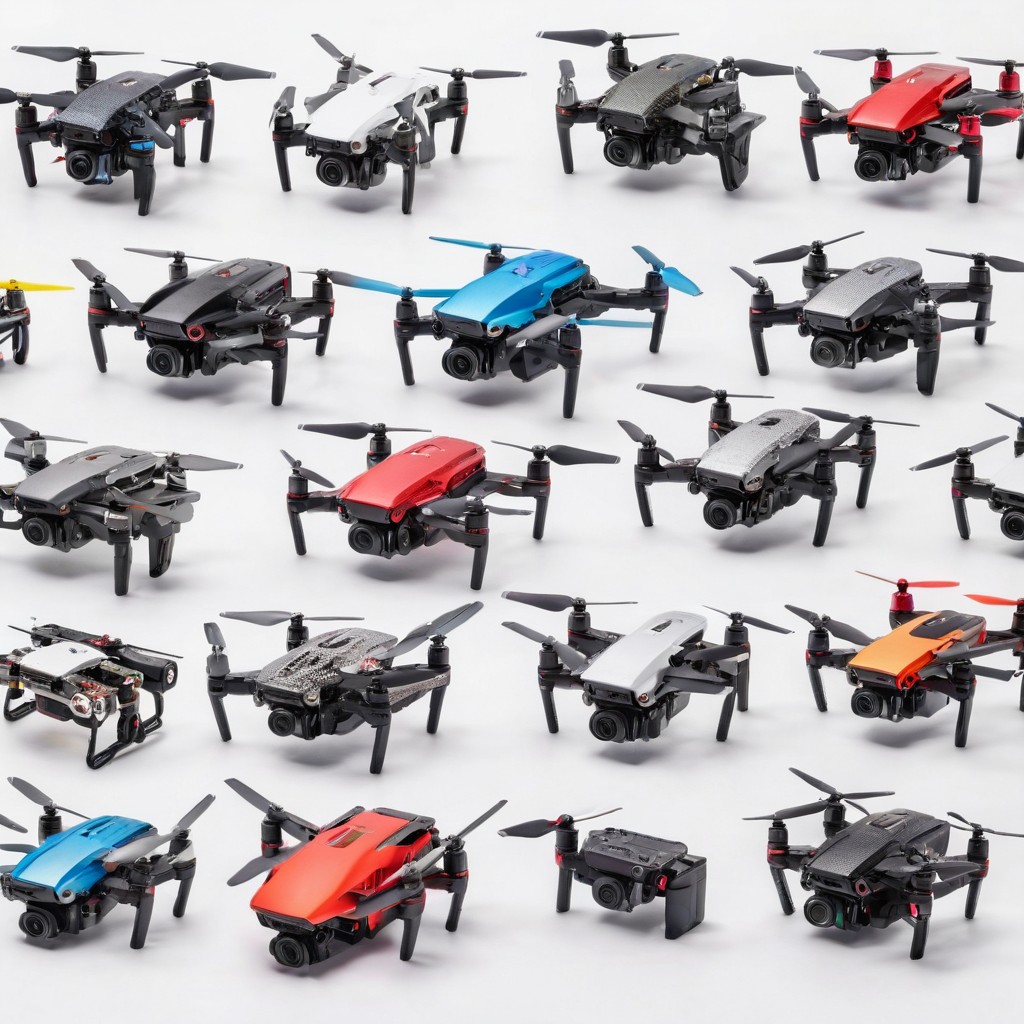
In early 2026, an e-commerce seller who had been drop-shipping a $39 "4K camera drone" from China for two years discovered the hard way that the rules had changed: a marketplace compliance sweep delisted the model for missing verifiable FCC equipment authorization, a customs broker flagged the next air shipment over the drone's lithium batteries and its radio import declaration, and the manufacturer — a trading company that had never filed anything — shrugged and offered a new listing with a new name. The seller had 4,000 units in a warehouse that could no longer be listed in the US and could not be shipped to the EU at all without a class mark and a technical file. In drones, the compliance floor is not a cost center you add at the end; it is the product's entry ticket, and 2026 is the year it got enforced. This guide is the playbook for sourcing drones from China profitably and legally — mapping the supply chain tier by tier, benchmarking real 2026 FOB prices, decoding the US and EU regulatory stacks, and delivering the verification battery that separates a real drone OEM from a trader who stacks 40% on someone else's factory.
Drones are the fastest-moving consumer electronics category of the decade, and nearly all of it is made in one city. Shenzhen and its surrounding Pearl River Delta corridor produce the large majority of the world's civilian drones — most industry estimates put the figure at eight to nine of every ten units — anchored by DJI's consumer dominance and surrounded by hundreds of smaller OEMs, FPV workshops, and component makers. The economics are the reason importers keep coming back: a $12 toy quad retails at $29.99–49.99, a $25 mini camera drone at $69.99–99.99, a $60 foldable gimbal quad at $199–299, and a $200 prosumer aircraft at $599–999, with 35–60% gross margins before returns. But drones are also the most regulatorily loaded consumer import of the decade — an aircraft, a radio transmitter, a lithium battery, a camera, and a data device in one 250-gram box — and 2024–2026 brought the enforcement wave: FAA Remote ID and registration, FCC database checks at import and on marketplaces, the EU's class-mark system under Delegated Regulation (EU) 2019/945, GPSR responsible-person obligations, and a US tariff and de-minimis regime that changed the economics of small parcels from China. This guide maps the tiers, the clusters, the compliance stack, and the 8-test verification battery that lets you buy drones the way the serious importers do.
Why China Wins Drones (And Where Each Capability Actually Lives)
China's drone advantage is the same vertical-density story as consumer robotics, but deeper: a drone is a brushless motor shop, a carbon-fiber shop, a PCB/SMT line, a camera and gimbal lab, a radio shop, a battery plant, and a firmware team within a one-hour drive of each other. Shenzhen is the brain and the assembly floor — the Nanshan and Bao'an districts host the densest concentration of drone OEMs on earth, from the global leader's campus to hundreds of small factories that design, tool, and assemble camera drones, FPV quads, and commercial aircraft in the same industrial parks, with Huaqiangbei an hour away for every component from flight controllers to VTX modules. Shantou's Chenghai district — the toy capital that produces a large share of China's toy exports — is the volume base for toy quads, kids' selfie drones, and indoor novelty fliers, where a molded toy-grade quad with altitude hold and headless mode is assembled for under $10. Dongguan and Huizhou supply the precision layer: carbon-fiber frames and arms, precision gears and gimbal mechanisms, and much of the contract manufacturing for mid-to-high-tier aircraft. Guangzhou contributes the commercial edge (agricultural and urban-air-mobility players that pushed Shenzhen's supply chain upmarket), and the FPV hobby ecosystem — the fastest-growing 2026 lane — is a Shenzhen specialty: frame, motor, ESC, flight controller, video transmitter, and radio vendors, almost all building on open-source flight stacks like Betaflight, ArduPilot, and INAV, which means the firmware layer is not a black box if you know how to buy it.
Two sourcing decisions fix everything else about a drone program, and both are cheaper to make early:
- The lane: toy, consumer camera, FPV, or commercial. Toy quads (Chenghai) are molded, cheap, and compliance-light when positioned correctly — but they carry the toy regulatory stack if sold for children. Consumer camera drones (Shenzhen OEM belt) are the gifting sweet spot: foldable airframes, gimbal cameras, GPS return-to-home, 20–35 minutes of flight. FPV quads are the hobby lane: no camera-drone gimmicks, modular builds, open-source flight stacks, and a parts business (frames, motors, props, batteries) that repeats every crash. Commercial aircraft are an engineering project, not an import product. Trying to buy one lane from a factory in another lane is the most common sourcing error in this category.
- The compliance lane: US, EU, or both — and toy vs. general consumer. A drone marketed for children inherits the toy stack (CPC, ASTM F963-23, FCC Part 15, and in the EU the Toy Safety Directive with EN 71) on top of the aviation rules; the same hardware positioned as a general consumer camera drone skips the toy stack but still needs FAA Remote ID, FCC authorization, and the EU class-mark/CE file. The EU's 2019/945 rules even carve toys out of the class-mark system entirely — a genuinely toy-classified drone under 250 g follows the Toy Directive instead of C0 labeling — so the positioning decision changes which certificates you buy, not whether you buy any.
The margin structure that makes drones attractive in 2026 — with real FOB benchmarks across the tiers:
- Toy RC quad, indoor, no camera or VGA (Chenghai): $6–14 FOB, retails $19.99–49.99 — the volume tier; altitude hold, headless mode, one-battery flights; QC risk lives in the battery and the props
- Kids' selfie/gesture drone, 480p–720p, propeller guards (Chenghai / Shenzhen): $12–22 FOB, retails $39.99–69.99 — the 2026 gifting fast-mover; positioning decides whether it is a toy (CPC + ASTM F963) or a consumer gadget
- Mini camera drone, 1080p, no gimbal, <250 g (Shenzhen): $18–35 FOB, retails $59.99–99.99 — the Remote ID gray zone (<250 g has lighter FAA duties) and the most crowded listing space on earth
- Foldable camera drone, 2-axis stabilized 4K, <250 g (Shenzhen): $40–80 FOB, retails $129.99–199.99 — the "Mini-class" tier; differentiation from the category leader's lookalikes is a legal issue, not a marketing one
- Camera drone, 3-axis gimbal, GPS + return-to-home, 250–900 g (Shenzhen / Huizhou): $65–150 FOB, retails $199–399 — the Q4 workhorse; FAA registration and Remote ID are mandatory at this weight
- FPV quad, analog starter RTF kit (Shenzhen FPV ecosystem): $30–70 FOB, retails $99–199 — beginner hobby lane; open-source stack, modular, parts-hungry
- FPV quad, digital HD video (O4/Walksnail-class), RTF/BnF (Shenzhen): $100–250 FOB, retails $299–599 — the premium hobby tier; digital video link licensing shapes the BOM
- Prosumer camera drone, 1-inch sensor, obstacle avoidance (Shenzhen OEMs): $180–450 FOB, retails $599–1,299 — flagship consumer tier; certification and firmware depth start to look like aerospace, not toys
The 2026 Regulatory Stack: Two Jurisdictions, Five Regimes, One Product
A drone is simultaneously an aircraft, a radio device, a lithium battery carrier, a camera, and a data device. That is five regimes stacked on one SKU, and the 2024–2026 enforcement wave made drones the most certificate-sensitive consumer import since toys. Here is the map for a US/EU program:
United States — the FAA layer. Any drone over 250 g (0.55 lb) that flies outdoors must be registered with the FAA, and since the Remote ID final rule's manufacturer compliance date, drones produced for US sale must broadcast Remote ID — a digital license plate that enforcement and airports can read in flight. For an importer the practical questions are: does the model (or an add-on module) carry Remote ID out of the box, does the factory's documentation say so in terms a US authority accepts, and does your listing say who registers what? Selling "no registration needed" as a feature is a compliance trap: it is only true under 250 g and even then only for the operator, never for the manufacturer's obligations. Also note the weight-class gamesmanship: <250 g "selfie drones" avoid operator registration but not FCC authorization, not state and local rules, and not marketplace documentation demands.
United States — the FCC layer. Every drone with a radio (and they all have radios — control link, video link, Wi-Fi, or GNSS receiver with telemetry) needs FCC equipment authorization for import and marketing: an FCC ID for certified transmitters, searchable in the FCC database, printed on the product and its packaging. The FCC ID lookup is the single best counterfeit filter in the drone trade — the database shows the grantee, the filing date, and the exact model — and the 2025–2026 marketplace sweeps delist radio devices whose IDs do not verify. Customs importation of radio-frequency devices also triggers FCC import requirements (the electronic FCC declaration for RF devices), and the responsible-party question — whose name is on the authorization, the factory's or yours — decides whether you can legally market the drone under your brand. Modular grants (a camera/video module that already carries its own FCC ID and EU DoC) can shrink your incremental cost dramatically, but the shortcut only works if the module is genuinely the one in your production units.
European Union / UK — the aviation layer. The EU's UAS framework (Delegated Regulation (EU) 2019/945 for products, Implementing Regulation (EU) 2019/947 for operations) replaced "just CE" with a class-mark system: C0 (under 250 g, no camera or camera-limited rules), C1, C2, and up — each class with its own technical requirements, labels, and operator obligations. Drones genuinely classified as toys under the Toy Safety Directive sit outside the 2019/945 class system but inside EN 71 and, because they transmit, RED. The UK retains the same architecture post-Brexit with its own responsible-person and conformity requirements. GPSR (EU 2023/988) adds an EU responsible person on every unit, and the UK's GPSR equivalent does the same for Great Britain. A drone built for the US market is not automatically sellable in the EU — the class label, the technical file, and the responsible person are separate deliverables, and this is where most China-sourced drone programs quietly die.
The battery layer (both markets). Every drone flies on lithium polymer cells: UN 38.3 test reports are mandatory for transport and for most marketplaces, UL 2054 (or IEC 62133) reports gate Amazon and Walmart battery policies, and the air-freight rules shape the entire logistics plan — lithium batteries ship as declared cargo under IATA rules, loose spare batteries face strict quantity and packaging limits, and some lanes (especially sample shipments and small parcels) become ground-only or prohibitively expensive. If your freight plan assumed cheap air samples of battery-included drones, 2026 is the year to re-budget: sample shipping, MOQ, and landed cost all change when the battery is treated as what it is — dangerous goods.
The tariff and parcel layer. US Section 301 tariffs on Chinese drones (typically classified around 25% on top of the general rate, subject to the exclusion-and-reinstatement churn of 2024–2026), combined with the end of the $800 de-minimis exemption for China-origin parcels, rewrote the unit economics of small-parcel drone imports: the $39 drop-shipped drone now carries duty, entry costs, and customs friction that the price never anticipated. Serious importers responded the way they always do — containerize, file properly, and let the compliance file be the moat that keeps the drop-shippers out of their listing.
Inside the Bill of Materials: What You Are Actually Paying For
A $60 FOB foldable camera drone is a genuinely rich machine: four brushless motors with ESCs, a flight controller running sensor fusion (gyro, accelerometer, barometer, compass, GPS), a gimbal with two or three micro-motors, a camera module with a real or claimed sensor, a video transmission link, a radio receiver, a LiPo pack with a protection and balance circuit, a molded or carbon airframe, and firmware that ties it together. Five cost and risk centers matter more than the shell:
The flight stack. The flight controller and its firmware decide whether the drone hovers, holds position, returns home, and refuses to fly into restricted airspace — or drifts, drops, and flyaways. The credible OEM belt runs ArduPilot, Betaflight, INAV, or proprietary stacks with real tuning; the traders buy a $6 flight controller and call it AI. Ask which stack the factory runs, whether you get the firmware source or a locked blob, and whether the geofence and RTH behavior are tested in production. Firmware is 40% of a drone's value and 90% of its liability.
The camera and gimbal. This is the downgrade capital of the drone trade. A real 4K camera drone uses a Sony IMX-class sensor with a genuine bitrate and a motorized gimbal; a fake one upscales a 720p module, calls it 4K, and mounts the camera on rubber. The teardown test at the end of this guide — reading the actual sensor part number and measuring the video bitrate — is not QC theater; it is the difference between a 4.5-star listing and a 30% return rate from customers who flew their "4K" drone and got VGA.
The radio and video link. Range claims are the second most-faked spec in the category. A real control link (ELRS, Crossfire, or the proprietary 2.4/5.8 GHz systems) holds signal at the claimed distance; a cheap one drops at 50 meters and the drone does whatever gravity says. The radio also drives the FCC/RED authorization — the module's grant, not the factory's brochure, is what your FCC ID lookup will verify.
The battery. LiPo cells vary wildly in quality: a real 25C pack with a protection circuit holds voltage under load and survives 200+ cycles; a cheap cell sags in flight, swells in storage, and fails the UN 38.3 documentation check that your freight forwarder and marketplace both demand. Spec the cell brand, the capacity, and the C-rating in the contract, and demand the UN 38.3 summary and UL/IEC reports before the PO.
The app and data layer. Camera drones with companion apps collect flight logs, photos, video, and location data. Ask four questions before you commit: who owns the app (a white-label app means your brand on someone else's privacy policy), where the cloud lives (a China-hosted backend serving EU customers is a GDPR problem even when the vendor's contract says otherwise), what the app collects from children if you sell a kids' drone (COPPA and GDPR-K apply to camera toys aimed at minors), and what happens to the app and the drone's geofence data when the vendor's server shuts down — the fastest way to a 1-star avalanche is a "smart" drone that becomes a paperweight because its app store listing vanished.
Clusters, Factories, and the Trader Problem
The drone supply chain is real, but it is layered, and the layer you buy from decides your risk. At the base are the component makers — motor winders, ESC and flight-controller SMT lines, carbon-fiber frame shops, gimbal labs, battery packers — concentrated in Shenzhen, Dongguan, and Huizhou. Above them sit the OEMs: factories with R&D teams, tooling, production test rigs (motor balancing, gimbal calibration, range and hover testing), and — the rarest and most valuable asset in the industry — genuine FCC IDs and EU technical files on products they actually ship. Above the OEMs sit the trading companies: offices with catalogs, WeChat, and 40% margins on someone else's factory, who will happily sell you "their" drone, "their" certificates (often the factory's, sometimes a stranger's), and "their" QC (usually none). The trader filter is brutally simple and costs nothing: ask for the FCC ID and look it up in the FCC database, ask for the EU DoC and the EU responsible person's name, ask for the factory's business license and a live video call onto the production line, and ask which flight tests they run on every batch. Traders fail all four questions within ten minutes; real OEMs answer with documents.
The cluster map for a serious 2026 program looks like this: consumer camera drones and mini quads from Shenzhen's Nanshan/Bao'an OEM belt (with Huizhou and Dongguan contract manufacturing for higher-volume or higher-precision builds); toy quads and kids' drones from Shantou Chenghai; FPV frames, stacks, and complete RTF kits from the Shenzhen FPV ecosystem; carbon fiber and precision mechanical parts from Dongguan; and batteries from the established LiPo packers in Shenzhen and Huizhou who can produce UN 38.3 and UL documentation without flinching. A "drone factory" quoting all of it from outside these clusters is a trader with a website.
The 8-Test Verification Battery
Before you commit to a factory, put its samples through this battery. It costs a few hundred dollars and a week of evenings, and it is the difference between a category win and a regulatory-and-returns disaster:
- The hover endurance test. Charge fully, hover at a fixed altitude until low-battery warning, and measure actual flight time against the claimed spec — then repeat on a second unit. A 30-minute claim that delivers 12 is either a marketing lie or a battery downgrade, and it will be the #1 complaint in your reviews.
- The GPS and return-to-home test. Fly 10 missions: take off in GPS mode, fly 50–100 meters out, trigger RTH from the controller and from the low-battery failsafe, and measure where it lands versus where it took off. Watch what it does when GPS is lost mid-flight (the cheap controllers panic; the good ones hold position or land). RTH that does not work is not a feature gap — it is a flyaway lawsuit waiting for a park.
- The radio range and failsafe test. Fly the control link to its claimed range (use a clear field, within local rules) and measure where video and control drop. Then kill the transmitter and watch the failsafe: does it RTH, hover, or plummet? This test has killed more "great deals" than any other on this list.
- The camera and gimbal teardown. Open the camera module and read the actual sensor part number; measure the video bitrate and resolution in the file metadata; check whether the gimbal is motorized (two or three axis) or a rubber mount; compare a stabilized clip against an unstabilized one. "4K" is a marketing word — the sensor and the bitrate are facts.
- The FCC and EU document check. Demand the FCC ID and look it up in the FCC database — grantee, model, filing date must match your sample. Demand the EU DoC, the class label (C0/C1/etc. or the toy classification), the GPSR/UK responsible person details, and the RED/EN test reports. Verify every document online; the fakes are common, and the verification is free.
- The battery and charger audit. Read the cell brand and capacity, check the protection circuit, and demand the UN 38.3 summary and the UL 2054/IEC 62133 report before the PO. Test the charger for heat and for overcharge cutoff. Then re-read your freight quote with the battery correctly declared — the audit is also a logistics test.
- The durability and parts test. Drop the sample (with props removed) from 1 meter onto a mat, three times per axis; check arm flex, motor mounts, and battery clips. Then fly 10 battery cycles and watch for motor heat, prop balance, and firmware lockups. And order the spare-parts kit the factory offers — props, batteries, arms — because drone customers buy parts like no other electronics buyers, and a listing without spares is a listing with a ceiling.
- The app and privacy audit. Install the companion app on a clean phone and capture what it sends where (use a test network or a firewall log). Check the app store account ownership, the privacy policy, the cloud location, and what happens when you delete the account. If the product will be used by children, evaluate the COPPA/GDPR-K exposure as if the FTC were reading your listing. The app is not a feature — it is a data pipeline with your name on it.
The 8-Step Drone Sourcing SOP
- Pick the lane and the market before the factory. Toy, consumer camera, FPV, or commercial — and US, EU, or both. The lane fixes the factory type and the compliance stack; the market fixes the certificates. A drone program designed for the US and the EU simultaneously from day one costs marginally more in paperwork and dramatically less in rework than one that adds the EU after the first container.
- Shortlist vendors by cluster and by documents. Camera drones from the Shenzhen OEM belt, toys from Chenghai, FPV from the Shenzhen ecosystem. Demand from every shortlisted vendor: business license, export history, the FCC IDs of their current models (verify each one in the FCC database), their EU technical file, and a video call onto the actual line. Vendors who cannot produce documents at the shortlist stage never produce them at the PO stage.
- Order 2–3 samples from 2+ vendors and run the 8-test battery. A week of hovering, RTH, range, teardown, document, battery, durability, and privacy testing settles the vendor list. Keep the passing sample under lock — it is your reference standard for production QC, and the factory will try to ship you something cheaper.
- Resolve the authorization question in writing. Whose FCC ID is on the product, whose EU DoC, whose responsible person? If you market under your brand with the factory's existing grant, get written authorization and verify the grant covers the exact production configuration; if you file your own, budget the testing and TCB filing (modular grants can keep this in the $5,000–30,000 range depending on how much is already certified) and start early — FCC and EU filings take weeks, and the container does not wait.
- Lock the battery and the freight plan together. Spec the cell brand, protection circuit, and UN 38.3/UL documentation in the contract; get the freight forwarder's lithium-qualified quote (air vs. sea, sample vs. bulk, battery-included vs. battery-separate) before you negotiate MOQ. In drones, freight is not logistics — it is a compliance function with a price.
- Contract the QC terms that matter. Inline checks at motor install and gimbal calibration, final random inspection at AQL 2.5 with a hover test on a sample of every batch, a firmware-version audit (factories have shipped old firmware to save time), and a spare-parts commitment (props, batteries, arms) baked into the PO. Drone QC is flight testing, not counting boxes.
- Take ownership of the software layer. Your name on the app store account, your privacy policy, your firmware update pipeline, your geofence data. A vendor-owned app is a vendor-owned customer relationship and a vendor-owned liability — and the fastest brick in the category when the vendor's cloud dies.
- Launch with the file and the spares. Ship the certificate file (FCC ID, DoC, class label, battery reports, responsible person) to your listings, your forwarder, and your importer-of-record; answer the Remote ID and registration questions in the listing copy honestly; and stock props, batteries, and arms from the first PO. The drone sellers who win Q4 are the ones whose customers crash on Christmas morning and can buy a prop set on December 26 instead of writing a one-star review.
Drones are the only consumer category where China is both the factory and the regulator's favorite target — a $12 toy quad retailing at $39.99 and a $200 prosumer aircraft at $699, both carrying an aircraft registry, a radio authorization, a battery file, and a data policy before they reach a customer. The category punishes shortcuts at the border, on the marketplace, and in the air: the fake FCC ID, the upscaled "4K" sensor, the sagging battery, the vendor-owned app, the trader's 40% margin, and the Remote ID noncompliance that grounds a listing overnight are all waiting at the exact point where an importer bought a cheap quad instead of a compliant program. The sellers who win in 2026 buy from the real clusters, run the 8-test battery before the PO, own their certificates and their firmware, budget the battery into the freight, and stock the spares their customers will crash. Do that, and the 35–60% gross margins this category offers become yours to keep — instead of the returns department's, the regulator's, or the customs broker's.