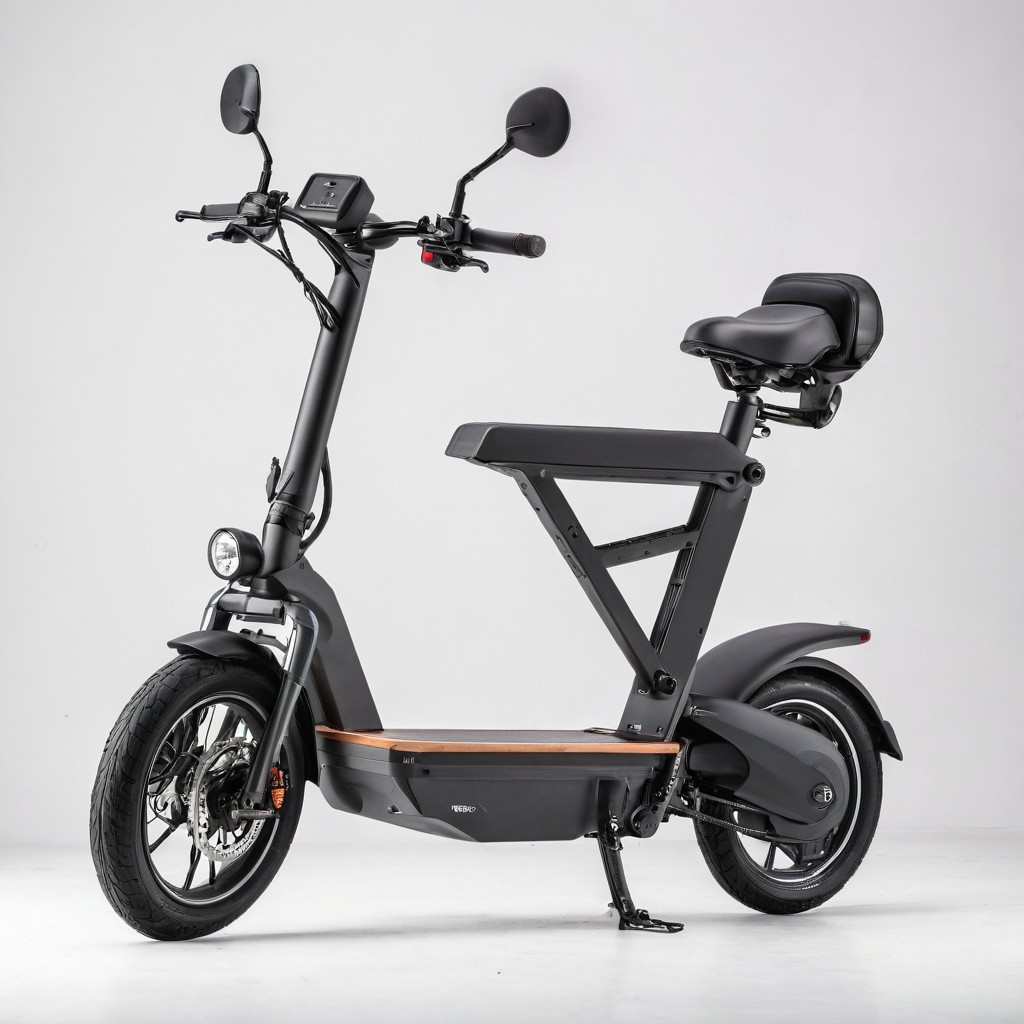
In October 2025, a client who had been selling bike accessories on Amazon for two years decided to graduate to full e-bikes. He found a Shenzhen trading company with a slick website, an impressive catalog, and a factory video that showed rows of shiny e-bikes under bright lights. The company quoted $310 FOB for a 500W fat-tire e-bike with a 48V 15Ah battery — $60 below every other quote — and promised "full UL 2849 certification, certificates included." The samples looked perfect in the photos: matte black frame, fat tires, a big battery integrated into the downtube. He ordered 300 units in November. The container landed at Long Beach in mid-January, just in time for the spring riding season. And then the physics of e-mobility caught up with him: the first customer reported the battery stopped charging after three weeks; a teardown video from a customer in Texas showed the pack contained cells branded "A123" that were actually relabeled Grade B cells with no date code; two customers reported the charger getting so hot it melted the prongs; one customer in San Diego filed a fire-safety complaint after the battery swelled inside the frame; the "UL 2849 certificate" he'd been sent turned out to be a Photoshop edit of a file belonging to a company in Taiwan — it wasn't in UL's database, and the marketplace delisted him in March; and in April, the CPSC announced a recall of the exact battery model for thermal-runaway risk, forcing him to refund 300 units and destroy the remaining inventory. The root cause wasn't one bad supplier. It was a category where the battery, the BMS, the charger, the motor, and the frame are the product — and where a fake certificate is not a paperwork problem, it's a fire hazard with your name on it. That story is why this guide exists.
E-bikes and electric scooters are one of the fastest-growing consumer categories in the world — a $45+ billion global e-mobility market spanning commuter e-bikes, folding e-bikes, fat-tire e-bikes, mountain e-bikes, cargo e-bikes, city e-scooters, performance scooters, kids' scooters, hoverboards, and self-balancing boards — and China manufactures roughly 70–80% of the world's e-bikes and the overwhelming majority of its e-scooters and hoverboards, from the same cluster system that built the bicycle, hardware, and electronics industries: Tianjin assembles more e-bikes than any city in China, Wuxi is the e-bike capital of the south with Yadea and Xinri in its orbit, Changzhou builds the smart e-scooters (NIU's home), Jinhua hosts Luyuan, Shenzhen is the battery and BMS brain plus the hoverboard capital, Yongkang forges the frames and hardware, and Suzhou winds the motors. The margins are attractive — a $220 commuter e-bike retails at $799.99, a $120 e-scooter at $399.99, a $45 hoverboard at $149.99, a $5 helmet at $29.99 — because e-mobility is a high-consideration, high-perceived-value category where customers pay for safety, range, and performance rather than for grams of steel. But e-mobility is also the category with the heaviest compliance gate in consumer e-commerce: UL 2849 for e-bikes and UL 2272 for scooters are marketplace requirements in the US, NYC has made certification a law, battery fires have killed people, and the certificate is the most-faked document in the industry — faked because it is invisible to the buyer until the listing is delisted or the battery ignites. This guide maps the clusters, the real 2026 FOB prices, the compliance stack on both sides of the Atlantic, the verification protocols that separate a real factory from an assembler, and the sourcing SOP that decides whether you have a riding season at all.
Why China Still Wins E-Mobility (And Where the Margins Live)
China's e-mobility advantage is the same as its bicycle, hardware, and electronics advantages: cluster manufacturing at a scale no other country can match — plus a battery supply chain that literally surrounds the assembly lines. An e-bike is rarely made in one place: the frame is welded in Tianjin or Yongkang, the motor is wound in Suzhou or Yongkang, the battery is assembled in Shenzhen from cells made in Jiangsu or Ningde (CATL and EVE are a few hundred kilometers away), the BMS is designed in Shenzhen, the controller and display are made in Shenzhen or Dongguan, and the final assembly happens wherever the coordinator is. The Chinese supply chain handles this coordination natively — a Western buyer trying to replicate it across countries would pay 4–6x in freight, tariffs, and management overhead. The result is a price structure that makes the category's retail margins possible: a kids' e-scooter at $40–90 FOB, a city e-scooter at $90–200, a performance dual-motor scooter at $250–600, a hoverboard at $35–90, a commuter e-bike at $180–350, a folding e-bike at $200–450, a fat-tire e-bike at $250–500, a mountain e-bike at $300–600, a cargo e-bike at $450–900, a 36V 10Ah battery pack at $60–120, a 48V 15Ah pack at $100–200, a 250W hub motor at $25–60, a mid-drive motor at $120–300, a controller at $8–25, a BMS at $3–15, a charger at $5–15, and a certified helmet at $3–15 — price points no other manufacturing country can match in the same season.
The margin structure that makes e-mobility attractive in 2026:
- E-bike helmets, certified (Yiwu / Guangzhou): $3–15 FOB, retails $19.99–59.99 — the accessory entry point; CPSC/DOT or EN 1078 certification, shell thickness, and strap hardware decide the tier
- Bike locks, lights, and accessories (Yiwu / Yongkang): $0.50–8.00 FOB, retails $9.99–34.99 — the margin layer; steel grade, lock mechanism, and LED quality decide the reviews
- Kids' e-scooters, 100–150W (Yongkang / Dongguan): $40–90 FOB, retails $129.99–249.99 — the entry e-mobility SKU; UL 2272, battery quality, and brake design decide the tier
- City e-scooters, 250W 36V (Changzhou / Shenzhen): $90–200 FOB, retails $299.99–599.99 — the volume scooter SKU; battery, controller, brakes, and folding mechanism decide the reviews
- Performance e-scooters, dual motor 1000W+ (Changzhou / Shenzhen): $250–600 FOB, retails $799.99–1,999.99 — the premium tier; suspension, battery depth, brakes, and controller cooling decide the tier
- Hoverboards, self-balancing (Shenzhen / Huizhou): $35–90 FOB, retails $99.99–299.99 — the volume self-balancing SKU; UL 2272, cell quality, and gyro calibration decide the reviews
- Commuter e-bikes, 36V 250W (Tianjin / Wuxi): $180–350 FOB, retails $599.99–1,099.99 — the volume e-bike SKU; UL 2849, battery platform, and assembly QC decide the tier
- Folding e-bikes, 36V (Wuxi / Tianjin): $200–450 FOB, retails $699.99–1,299.99 — the urban commuter tier; hinge quality, battery integration, and folding mechanism decide the reviews
- Fat-tire e-bikes, 500W 48V (Wuxi / Tianjin): $250–500 FOB, retails $799.99–1,499.99 — the volume off-road SKU; motor, battery depth, brakes, and frame welds decide the tier
- Mountain e-bikes, 750W mid-drive (Wuxi / Changzhou): $300–600 FOB, retails $1,299.99–2,499.99 — the premium tier; mid-drive motor, suspension, and battery integration decide the reviews
- Cargo e-bikes (Tianjin / Wuxi): $450–900 FOB, retails $1,799.99–3,999.99 — the delivery-tier SKU; frame strength, brake system, and payload engineering decide the tier
- Battery packs, 36V 10Ah (Shenzhen): $60–120 FOB, retails $199.99–349.99 — the margin-heavy spare-parts tier; cell brand, BMS, and weld quality decide the reviews
- Battery packs, 48V 15Ah (Shenzhen): $100–200 FOB, retails $299.99–499.99 — the e-bike range upgrade; cell consistency and thermal management decide the tier
- Hub motors, 250–750W (Suzhou / Yongkang): $25–60 FOB, retails $89.99–199.99 — the component tier; copper vs aluminum windings, magnet grade, and bearing quality decide the reviews
- Chargers, 2A (Shenzhen / Dongguan): $5–15 FOB, retails $24.99–49.99 — the accessory tier; UL 62368-1/UL 1310 certification and thermal design decide the tier
The catch: e-mobility margins are only real if your listing survives the compliance gate and your products don't catch fire — and in this category both are decided before the container sails. A battery that swells, a BMS that doesn't balance, a charger that overheats, a controller that dies, a motor that smokes on a hill, brakes that can't stop the machine, a frame that cracks at a weld, or a certificate that isn't in UL's database is not a 'not as expected' return; it is a delisting, a CPSC recall, a lawsuit, and in the worst case a fire in someone's apartment with your brand on the battery. A $2 saving on the BMS, $3 on the cells, $1 on the charger, or $0.50 on the weld wire costs the factory pennies — and costs you the entire category.
China's E-Mobility Clusters: Who Makes What, and Where to Source
E-mobility is a multi-cluster category — bikes, scooters, hoverboards, batteries, and components each have their own capital, and one finished vehicle often combines parts from four or five clusters. Match your product to its cluster and you get factory-direct pricing with real production depth; mismatch it and you're paying a trading company's markup on goods that were coordinated, not made, by the company you're paying. Here's the map:
| Cluster | Specialty | FOB Range (2026) | Typical MOQ |
|---|---|---|---|
| Tianjin | China's largest e-bike manufacturing base — the bicycle-industry heritage city where Aima, Fuji-ta, and hundreds of OEM assemblers build commuter, folding, and fat-tire e-bikes at scale | $180–500 e-bikes | 100–300 units |
| Wuxi (Jiangsu) | The e-bike capital of the south — Yadea's global HQ, Xinri, and a dense OEM ecosystem building commuter, folding, fat-tire, mountain, and cargo e-bikes for export brands | $180–900 e-bikes | 100–300 units |
| Changzhou (Jiangsu) | The smart e-scooter and e-mobility axis — NIU's home base; electric scooters, performance scooters, and connected e-mobility products | $90–600 scooters | 200–500 units |
| Jinhua (Zhejiang) | Luyuan's home — e-bike assembly and the Zhejiang e-mobility belt | $180–450 e-bikes | 100–300 units |
| Shenzhen | The battery, BMS, controller, and charger brain of the industry — BYD's home turf; also the hoverboard capital and the design center for smart e-scooters | $35–90 hoverboards; $60–200 battery packs | 200–1,000 units |
| Huizhou–Dongguan | The hoverboard and scooter assembly belt — volume production of self-balancing boards, kids' scooters, and entry e-scooters | $35–150 boards/scooters | 300–1,000 units |
| Yongkang (Zhejiang) | The Hardware Capital — frames, handlebars, hubs, kickstands, locks, and the steel skeleton of the industry | $15–80 frames; $0.50–8 hardware | 200–500 units |
| Suzhou (Jiangsu) | The motor axis — hub motors, mid-drive motors, and motor controllers for e-bikes and scooters | $25–300 motors | 200–500 units |
| Yiwu (Zhejiang) | The accessory tier — helmets, lights, locks, mirrors, phone mounts, and repair parts by the container | $0.30–15 accessories | 500–2,000 units |
Two cluster rules that save sellers in this category: first, batteries belong to Shenzhen and cells belong to the big cell makers (CATL, EVE, BYD, CALB, Gotion) — a factory that assembles packs should be able to name its cell supplier and show the purchase invoices, and a factory that says it "makes its own cells" is a red flag (very few do); second, e-bike assembly lives in Tianjin and Wuxi, scooters and hoverboards live in the Changzhou–Shenzhen–Huizhou belt — a supplier in the wrong cluster for your product is either a trader or shipping someone else's production through their own paperwork.
The Compliance Stack: US and EU in 2026
E-mobility has the heaviest and most expensive compliance gate in consumer e-commerce — and the gate is enforced by the marketplaces themselves, not just customs. Here is the stack you are actually buying into:
| Market | Requirement | What It Covers | What Sellers Miss |
|---|---|---|---|
| US — e-bikes | UL 2849 | The complete electrical system: battery, BMS, motor, controller, wiring, and charger interface as an integrated system — the marketplace gate for e-bike listings on Amazon and Walmart | UL 2849 is a system standard, not a battery standard — a UL-listed battery alone does not make an e-bike UL 2849 compliant; verify the certificate in UL's Product iQ database, not the PDF the factory sends |
| US — scooters, hoverboards, self-balancing boards | UL 2272 | Electrical system safety for personal e-mobility devices, adopted after the 2015–2016 hoverboard fire wave | UL 2272 covers the device electrical system, not the mechanical parts — brakes, folding hinges, and welds are on you; Amazon delists scooters without a valid UL 2272 file |
| US — batteries | UL 2271 / UL 2054 | Battery packs for light EV use (UL 2271) and consumer batteries (UL 2054) | NYC Local Law 39 (in force since 2023, actively enforced) requires UL 2849/UL 2272/UL 2271 certification to sell, lease, or rent e-bikes, scooters, or lithium batteries in New York City — fines per unit |
| US — transport | UN 38.3 + Class 9 | Lithium battery transport safety: vibration, shock, thermal, short-circuit, and overcharge tests, plus proper Class 9 labeling and documentation | Without a UN 38.3 test report per battery model, FedEx, UPS, USPS, and air freight will refuse the shipment — and ocean carriers are auditing too; the report must match the exact cell and pack configuration |
| US — electronics | FCC Part 15 | Controllers, displays, Bluetooth modules, and chargers that emit RF | A display with Bluetooth needs FCC ID verification in the FCC database — many budget factories print an ID that belongs to another product |
| US — chargers | UL 62368-1 / UL 1310 | Charger safety — the piece that starts most e-bike fires while plugged in unattended | The charger is a separate certification from the bike; a "UL-listed e-bike" with an uncertified charger is a fire risk and a recall trigger (CPSC has recalled chargers repeatedly) |
| US — general | CPSC, Prop 65, state laws | Product safety, lead/DEHP/phthalate disclosure (California), and a growing patchwork of state e-bike regulations (age, speed, helmet, and registration rules) | Prop 65 applies to lead solder in the electronics and PVC in the wiring; CPSC is actively recalling e-bike and scooter batteries through 2026 — track the recall lists before you choose a battery platform |
| EU — e-bikes | EN 15194 (EPAC) + CE | Electrically power-assisted cycles: electrical safety, EMC, and mechanical requirements for pedal-assist bikes up to 25 km/h and 250W | EN 15194 is self-declared CE — but Amazon and EU retailers increasingly demand third-party test reports, and derestricting to 45 km/h voids the CE and makes the bike an unregistered moped |
| EU — scooters & hoverboards | EN 17128 (PLEV) + CE | Personal light electric vehicles: electrical, mechanical, and functional safety for scooters and self-balancing boards | Germany adds the eKFV regime — street-legal e-scooters need an operating permit (ABE) and insurance plate; many budget scooters are not street-legal in Germany at all |
| EU — batteries | Battery Regulation 2023/1542 + UN 38.3 | The new EU battery regime phasing in through 2027: carbon footprint declarations, recycled-content minimums, and the digital battery passport | The passport and carbon-footprint obligations start applying to e-mobility batteries in 2026–2027 — if your factory has no data trail on cell sourcing, you will be locked out of the EU market |
| EU — electronics & market access | RED, RoHS, REACH, WEEE, GPSR | Radio equipment (displays/BT), hazardous substances, chemicals, e-waste registration, and the General Product Safety Regulation requiring an EU responsible person | GPSR requires a named EU-based responsible person on the product and documentation — most Chinese factories have none, and EU customs and marketplaces are checking |
The budget reality: a first UL 2849 or UL 2272 certification with a recognized lab runs $10,000–40,000 including testing and file maintenance, plus $1,000–3,000 per battery model for UN 38.3, plus per-SKU testing for FCC, EN 15194/EN 17128, and the rest. That is the price of entry to the category — and it is why the "certificates included" quotes are the first red flag, because real certification files are never free and never instant.
⚠️ The Fake Certificate Problem
E-mobility has the most-faked certificates in consumer e-commerce. The classic pattern: the factory sends a "UL 2849 certificate" PDF that looks perfect — logo, file number, dates — but the file number does not exist in UL's Product iQ online database, or it belongs to a different company, or the scope line doesn't cover your model. Fake UN 38.3 reports, fake FCC IDs, and fake CE declarations are equally common. The verification is free and takes five minutes: search the UL file number at productiq.ulprospector.com, search the FCC ID at fcc.gov/oet/eas, and ask the factory for the lab's contact so you can confirm the report directly. A factory that hesitates on any of these is telling you everything you need to know. And remember: marketplace delisting and CPSC recalls don't care whether you were deceived — the liability lands on the seller of record, which is you.
The Failure Modes That Kill Listings (And Worse)
E-mobility fails fast, and the failures are dangerous in a way that no other consumer category matches:
- Battery fires and thermal runaway. The category-killer. Grade B or used cells (relabeled with fake brands and no date codes), BMS boards without balancing or over-current protection, packs with no gap between cells, chargers that overcharge, and physical damage that punctures cells are the classic causes. CPSC logged hundreds of e-bike and scooter battery fire incidents in 2023–2024 with multiple deaths, NYC's fire department counts e-mobility battery fires in the hundreds per year, and the recall wave through 2026 keeps growing. This is not a quality issue; it is a survival issue.
- BMS failures. The cheapest BMS boards balance nothing, protect nothing, and fail silently. A pack without cell balancing dies unevenly — the weakest cell hits over-discharge while the others are half full, and the next charge starts a fire. Bench-test the BMS for balancing, over-current cutoff, over-charge cutoff, and short-circuit protection before you ever order production.
- Chargers that overheat. Most residential e-bike fires start with the charger, not the bike: uncertified chargers run hot, lack over-current protection, and melt or ignite when left plugged in. The charger must carry its own certification (UL 62368-1/UL 1310 in the US, CE/LVD in the EU) and survive a thermal test.
- Aluminum windings sold as copper. The motor downgrade: copper-colored lacquer on aluminum wire. It runs hotter, delivers less torque, and fails on hills. A magnet test (copper is non-magnetic, aluminum is non-magnetic too — so check resistance per meter and weight) plus a thermal run test catches it.
- Brakes that can't stop the machine. A 30 kg scooter at 30 km/h needs real braking; budget builds ship undersized mechanical brakes that fade, or brakes with no certification. Stopping-distance testing from 25 km/h on a sample is mandatory.
- Frames that crack at the welds. Cheap steel, thin tube, and cosmetic welds. Pothole + weld defect = cracked frame at speed. Dye-penetrant testing and cut-and-etch weld inspection on samples, plus a fatigue test if the factory can run one.
- Waterproofing failures. IPX4 on paper, rain-death in practice: controllers and displays that die in the first storm, battery connectors that corrode. An IP test (water spray) on a sample is cheap and definitive.
- Derestricted speed limiters. The factory removes the 25 km/h limiter (EU) or 20 mph limiter (US) to make the product "more attractive" — turning a compliant bicycle into an illegal moped and voiding the certification. Verify the actual speed cap on a sample, in writing, before production.
- Counterfeit branding. Rad Power, Super73, Segway, Ninebot, NIU, Xiaomi — the brands that sell are the brands that get faked, and a counterfeit logo suspends the listing and seizes the container.
The Seven Tests That Separate Real E-Mobility Factories from Assemblers
Quality in e-mobility lives in the battery, the BMS, the charger, the motor, the brakes, the welds, and the certificate — none of which your listing photos can show. Run these tests on samples, then spot-check production units:
- The UL directory and certificate test. Take every certificate file number the factory sends — UL 2849, UL 2272, UL 2271, FCC IDs, UN 38.3 reports, EN 15194/EN 17128 reports — and verify each one in the public databases (UL Product iQ, FCC OET, and the lab's own system). This five-minute check is the highest-value test in the category; it kills 80% of the fake-certificate suppliers before you spend a dollar.
- The battery teardown and cell test. Open a sample pack: verify the cell brand, model, and date code against the spec; check for relabeling (fake brand stickers over real ones, missing or sanded date codes); verify the cell count and configuration match the label (36V 10Ah = 10S4P of 2500mAh cells, for example); measure pack capacity with a full discharge test (it should deliver ≥95% of rated); and check the welds on the nickel strips (cold welds and burn-through are the classic downgrade). Weigh the pack — real cells are heavy; an underweight pack means fewer or smaller cells.
- The BMS bench test. Bench-test the BMS for the four protections that matter: cell balancing (the pack should balance cells within a small mV spread), over-charge cutoff (charging must stop at the rated voltage), over-discharge cutoff (the pack must not run cells below the safe floor), and short-circuit protection (a dead short must trip the protection, not ignite the pack). A BMS that fails any of these is a fire risk, full stop.
- The motor and drive test. Check the motor windings: cut a sample or measure resistance and weight to detect aluminum windings sold as copper; run a thermal test on a hill-load profile (the motor must not overheat under rated load); check the hall sensors and controller communication; and verify the rated power against actual draw with a watt meter — a "500W" motor that draws 200W is a spec lie that kills hill performance and reviews.
- The brake and safety test. Stopping-distance test from 25 km/h (wet and dry) — the bike/scooter must stop predictably without fade or lockup; check brake certification (mechanical vs hydraulic, disc vs drum) against the spec; verify lights, horn, and reflectors meet the target market's requirements; and check the kickstand and folding hinge for play and failure.
- The frame and weld test. Inspect the welds — dye-penetrant testing on samples catches cracks invisible to the eye, and cut-and-etch inspection reveals weld penetration; check the tube thickness and steel grade against spec; and load-test the frame if the factory has the equipment. A cracked weld at speed is a serious injury event, and it's the second-most-common failure after batteries.
- The charger, IP, and speed-limit test. Test the charger for output voltage/current accuracy, over-charge protection, and thermal behavior (it must not exceed safe surface temperature in a continuous charge); run an IP water-spray test on the sample (IPX4 or better for e-bikes/scooters); and measure the actual top speed and pedal-assist cutoff against the certified limit — derestricted units fail this test and void the whole compliance file.
The 8-Step E-Mobility Sourcing SOP (With the Riding-Season Calendar)
- Pick your lane and your deadline. Start with accessories, helmets, locks, and lights — light compliance, fast cash cycle. Graduate to kids' scooters and hoverboards with a UL 2272 budget, to commuter and folding e-bikes with a UL 2849 budget, and to performance scooters, cargo e-bikes, and moped-style e-bikes only if you have insurance-grade QC and the legal appetite — the liability scales with the speed. Then set the calendar: the spring-summer riding season (March–August) runs on a production window of November–February, and the Q4 gifting season runs on a production window of June–September — with the lunar New Year factory shutdown (usually late January–mid February) and Golden Week (October 1) as hard calendar walls. For a Q4 launch, sourcing decisions land in January–February, samples and tests in March–April, UL and UN 38.3 testing in April–June, production in June–September, and freight booked before Golden Week.
- Match the product to its cluster. E-bikes to Tianjin or Wuxi (or Jinhua for the Zhejiang belt); smart and performance scooters to Changzhou; hoverboards, kids' scooters, and entry scooters to Shenzhen–Huizhou–Dongguan; batteries, BMS, controllers, and chargers to Shenzhen; frames and hardware to Yongkang; motors to Suzhou or Yongkang; accessories to Yiwu. A supplier outside the right cluster is either a trader or paying someone else's overhead — and for e-mobility specifically, ask who assembles the battery, who winds the motor, who welds the frame, and who owns the UL file, because the answer tells you who is really in charge of safety.
- Vet the factory. Business license with a vehicle or e-mobility scope, real export history (e-bikes to the US/EU have customs records), brand customers, the names of their cell, BMS, motor, and charger suppliers, their UL/EN certificate files with verifiable file numbers, their battery assembly and QC process (who welds the cells, what tests run on every pack), and a video call onto the actual assembly floor — especially the battery line. E-mobility attracts more coordinators than any other category, and a "factory" that can't show you its battery line is a trading company.
- Order 2–3 samples from 2+ factories and run the seven-test battery in the spring. The UL directory check, the battery teardown and cell test, the BMS bench test, the motor and drive test, the brake and safety test, the frame and weld test, and the charger/IP/speed-limit test. This is the window that decides whether your compliance investment lands on a real product.
- Run the compliance tests on the samples. UL 2849 or UL 2272 through a recognized lab (the $10,000–40,000 price of entry), UN 38.3 per battery model, FCC Part 15 for electronics, UL 62368-1/UL 1310 for chargers, EN 15194/EN 17128 + CE + RED + RoHS + REACH + GPSR for the EU — on the samples, in the spring, before the container sails. Budget for per-model testing on every SKU family and keep the lab reports on file; the marketplaces and customs both ask.
- Negotiate MOQ and the mixed-SKU strategy. E-mobility economics run on container utilization and platform standardization: combine bikes, scooters, hoverboards, and accessories in one container, standardize on one battery platform (one cell supplier, one BMS, one configuration), one motor platform, one controller, and one charger across your whole line, and own your frames and tooling on the repeatable SKUs. Fewer platforms mean fewer UN 38.3 reports, one UL file to maintain, and one spare-parts ecosystem for your customers.
- Third-party QC on every batch. Inline checks at battery assembly (cell brand and weld quality on the line), frame welding, motor assembly, and final assembly, plus a 100% electrical safety test on every unit (insulation resistance, short-circuit check, charge test) and final random inspection at AQL 2.5 with random battery-teardown, brake, weld, and water-resistance spot checks. Never ship e-mobility without a full electrical safety test per unit — the failures are invisible until a battery is swelling in a customer's kitchen.
- Book freight and lock the sailing date before production finishes. Lithium batteries move under Class 9 rules with limited carrier options — the battery-compliant freight capacity out of Shenzhen and Shanghai is a real constraint, and Q3–Q4 peak season plus Golden Week make vessel space the bottleneck. Confirm the booking, the sailing date, the battery documentation, and the transit time in writing; the seller with a locked booking has a riding season while the seller with "a forwarder somewhere" watches the spring demand climb from a warehouse.
E-mobility is one of the biggest and fastest-growing categories in e-commerce when you respect its physics: a $45+ billion global market, a spring-summer riding season and a Q4 gifting season every year, and margins that make a $220 e-bike into a $799.99 sale and a $120 scooter into a $399.99 sale. But it is also the category where safety is the product — where the battery is the most dangerous component in consumer e-commerce, where the certificate is the most-faked document in the industry, and where every shortcut (the Grade B cells under a fake brand sticker, the BMS with no balancing, the uncertified charger, the aluminum windings lacquered copper-color, the undersized brakes, the cosmetic weld, the missing IP rating, the derestricted speed limiter, the certificate PDF that isn't in UL's database) turns into a delisting, a recall, a lawsuit, or a fire with your brand on the battery. The sellers who win the category aren't the ones who found the cheapest quote; they're the ones who verified the UL file number in the public database, tore down a sample pack and weighed the cells, bench-tested the BMS for the four protections, cut a motor and checked the windings, measured the stopping distance, dye-penetrant-tested the welds, ran the charger and the IP test, measured the actual top speed against the certified limit, and locked the freight before the container was full. Do that, and the 40–60% gross margins this category offers become yours to keep — through the season that pays for your year.