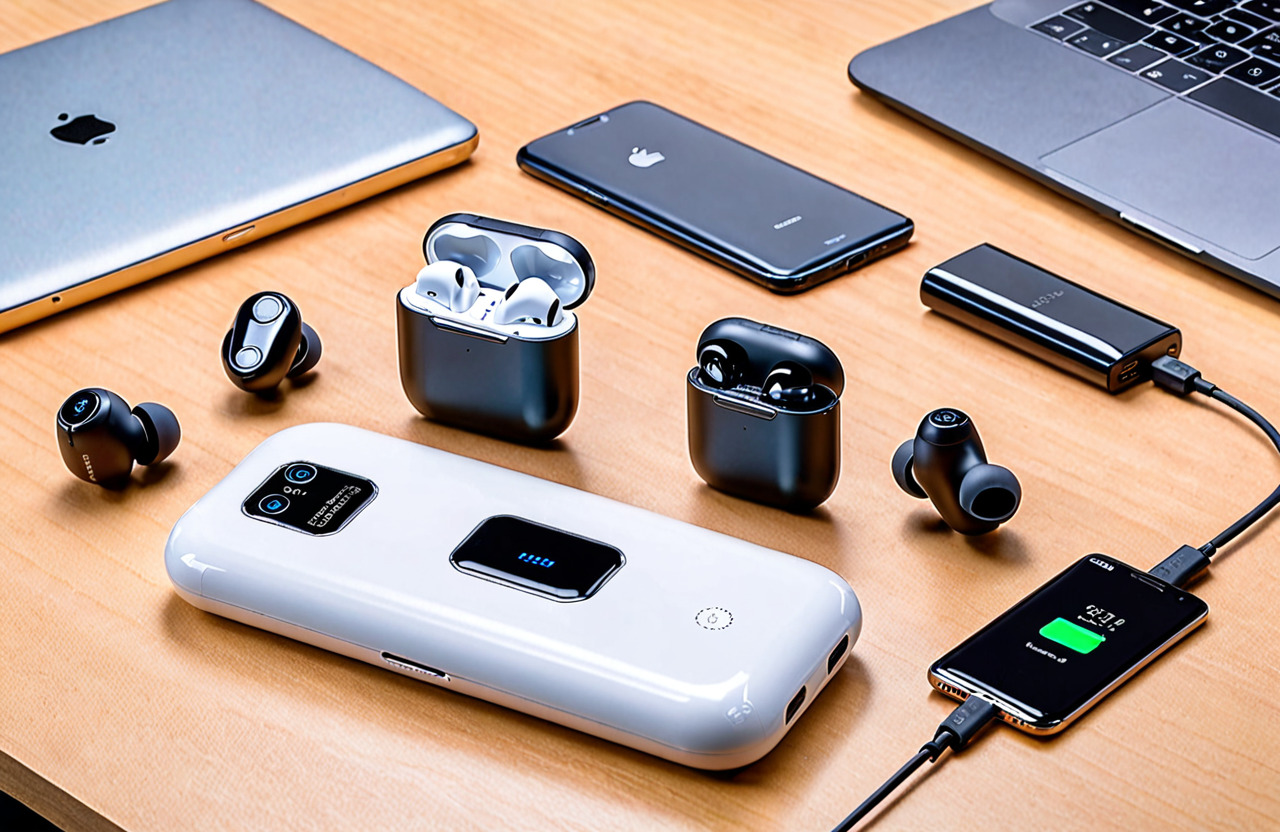
In January 2024, a Shopify brand owner I know — let's call him Marcus — launched a "premium wireless charging station" on Amazon. 3-in-1: phone, watch, earbuds. Sleek aluminum housing, soft-touch silicone pad, 15W fast charging. His Shenzhen supplier quoted $9.80 FOB for 1,000 units with custom packaging. The gold sample worked perfectly. He ordered 1,000 units at $9,800. Two months after launch, the reviews started: "stopped charging after 3 weeks," "overheating — burned my nightstand," "makes a buzzing sound." Then the Amazon safety team flagged his listing. His supplier had swapped the certified GaN charging IC for a $0.40 cheaper clone chip from a different manufacturer — functionally identical on the spec sheet, catastrophically different in thermal performance. Marcus lost $9,800 in product cost, $4,200 in Amazon FBA fees and advertising, and 6 months of momentum. His mistake wasn't the product idea — it was trusting a single gold sample without component-level verification and without specifying IC part numbers in the purchase order.
I've spent 21 years sourcing from China, and electronics is the category where I've seen the most money lost — and the most money made. Electronics from China is not like sourcing t-shirts or dog beds. It's a category defined by component supply chains, certification requirements that can change mid-production, and a factory ecosystem where the difference between a $6 product with 4.7 stars and a $6 product that catches fire in someone's bedroom is often a single component substitution that nobody caught.
This guide covers everything: the Shenzhen-Pearl River Delta electronics ecosystem mapped district by district, 7 sub-categories with distinct supply chains and factory profiles, the complete electronics compliance stack by market (FCC, CE, RoHS, UL, RED, UN38.3, WEEE, Prop 65), component-level verification protocols, battery safety management, real 2026 FOB price benchmarks across 15+ product categories, and the 7-step electronics sourcing SOP that catches the problems before your container leaves Shenzhen.
Part 1: The Shenzhen Electronics Ecosystem — A District-by-District Map
Shenzhen and the surrounding Pearl River Delta (PRD) — including Dongguan, Huizhou, and parts of Guangzhou — form the densest electronics manufacturing ecosystem on Earth. An estimated 90% of the world's consumer electronics pass through some part of this region during development, component sourcing, assembly, or distribution. The ecosystem is not one thing — it's a layered supply chain where each district specializes in a different stage of electronics production:
| District / City | Specialization | What Happens There | When You Need It |
|---|---|---|---|
| Huaqiangbei (Futian, Shenzhen) | Components, prototyping, B2B wholesale | 50,000+ vendors across 30+ malls. Every electronic component ever manufactured is available here — MCUs, sensors, connectors, displays, batteries, PCBs. This is where engineers come to source components for prototypes. Also home to thousands of small-batch assembly shops that can build 10-100 units in 48 hours. | Prototyping phase. Sourcing niche components. Small-batch production (under 500 units). Finding reference designs. Validating component availability before committing to a BOM. |
| Bao'an District (Shenzhen) | OEM/ODM consumer electronics factories | The factory belt. Thousands of mid-to-large electronics factories producing finished consumer products: Bluetooth speakers, earbuds, power banks, smart home devices, cameras, IoT products. Most factories here do SMT (surface-mount technology) PCB assembly in-house and handle final assembly, testing, and packaging. | Production phase. Orders of 500-10,000+ units. When you need a factory that can handle the entire process: PCB assembly → enclosure injection molding → final assembly → QA testing → packaging. |
| Longhua District (Shenzhen) | Accessories, peripherals, cables | Phone cases, screen protectors, charging cables, USB hubs, laptop stands, phone mounts, car chargers. Lower-complexity electronics and accessories. Many factories here started as phone case manufacturers and expanded into basic electronics. | Phone accessories, computer peripherals, simple electronics with minimal certification requirements (no radio, no high-voltage, no battery — or battery from an approved supplier list). |
| Nanshan District (Shenzhen) | R&D, IoT, software, design | Shenzhen's Silicon Valley. Home to Tencent, DJI, and thousands of hardware startups. This is where the engineering happens — product design, firmware development, app development, industrial design. Factories in Bao'an execute; Nanshan designs. | When your product needs custom firmware, IoT connectivity (WiFi/BLE/Zigbee), app integration, or complex industrial design. Work with a Nanshan design house + Bao'an factory combination. |
| Dongguan | PCB fabrication, injection molding, high-volume assembly | 40-60 minutes north of Shenzhen. Where Shenzhen designs go to be manufactured at scale. Massive PCB fabrication plants (multi-layer, HDI, flexible PCBs). Large-scale injection molding. Foxconn and other mega-contract-manufacturers have major campuses here. Labor costs ~15-20% lower than Shenzhen. | Orders above 5,000 units. Products requiring complex multi-layer PCBs. When you need volume pricing and can handle the 60-minute commute from Shenzhen for factory visits. |
| Huizhou | Battery manufacturing, audio components | 90 minutes east of Shenzhen. Home to major lithium battery manufacturers (including BYD's battery division). Also a hub for speaker drivers and audio transducers. Lower labor costs than both Shenzhen and Dongguan. | When battery cost is a significant portion of your BOM. For products with large battery packs (portable power stations, e-bike batteries, large power banks). |
⚠️ The Huaqiangbei Trap
Many first-time electronics importers start at Huaqiangbei, find a vendor with a product they like, and assume that vendor is a factory. 80-90% of Huaqiangbei vendors are trading companies — they buy from factories in Bao'an and Dongguan, add a 15-30% markup, and sell to you. They're useful for prototyping, small batches, and component sourcing. They're a margin-killer for production orders. The rule: Huaqiangbei for components and prototypes; Bao'an, Longhua, and Dongguan for production. When a Huaqiangbei vendor tells you "we have our own factory," ask for the factory address and visit it. If they can't produce a factory address within 30 minutes, they're a trading company.
Part 2: 7 Electronics Sub-Categories — Each With Its Own Supply Chain
The most expensive mistake in electronics sourcing is treating "electronics" as one category. It's not. The factory that makes excellent TWS earbuds has completely different equipment, certifications, supplier relationships, and testing infrastructure than the factory that makes power banks or smart plugs. Here are the 7 major sub-categories and what you need to know about each:
1. Audio Products (TWS Earbuds, Bluetooth Speakers, Headphones)
Primary cluster: Bao'an and Nanshan, Shenzhen. China produces an estimated 80%+ of the world's wireless audio products. The supply chain is mature and highly competitive — but certification is the differentiator. Any Bluetooth product requires FCC Part 15.247 (US) or RED Directive 2014/53/EU (EU) certification. The Bluetooth SIG also requires qualification and Declaration ID registration. Key ask: "Please provide your Bluetooth SIG Declaration ID and FCC ID for this exact model." Cross-reference both in their respective public databases. If the supplier "needs to check" or "will provide after the order," they don't have certification — they're selling uncertified products with a fake label.
2. Charging & Power Products (Power Banks, Chargers, Cables, Wireless Chargers)
Primary clusters: Longhua (Shenzhen) for cables and basic chargers; Bao'an for power banks; Dongguan for high-volume. This category has the highest safety risk because it involves lithium batteries and AC-to-DC power conversion. Mandatory certifications: UL 2056 (power banks, US), UL 62368-1 (power supplies, US/CA), UN38.3 (lithium battery transport safety), MSDS (Material Safety Data Sheet for batteries), and for EU: EN 62368-1. GaN (Gallium Nitride) chargers are the fastest-growing sub-segment — verify the GaN IC manufacturer (Navitas, Innoscience, TI, Power Integrations) and specify the exact IC part number in your BOM to prevent substitution.
3. Smart Home Devices (Smart Plugs, Bulbs, Sensors, Hubs, Cameras)
Primary clusters: Nanshan (R&D/design) + Bao'an (manufacturing), Shenzhen. Smart home products combine WiFi/BLE/Zigbee/Z-Wave radios with cloud connectivity and app integration — which means triple certification: FCC/CE (radio), UL/ETL (electrical safety), and cybersecurity considerations (especially for cameras). Key difference from other electronics: the software and cloud backend are as important as the hardware. If your Chinese factory is providing the app and cloud platform, you need to verify: (a) where is the cloud server hosted (AWS US/EU is better than a Chinese server), (b) who owns the app source code, (c) what happens to your customers if the factory discontinues the product. Many smart home importers get 2-3 years into a successful product only to find the factory's cloud platform shutting down with no migration path.
4. Phone & Tablet Accessories (Cases, Screen Protectors, Stands, Mounts, Styluses)
Primary cluster: Longhua, Shenzhen. The lowest barrier-to-entry electronics category — and the most competitive. Certification requirements are minimal for passive accessories (no radio, no battery, no high voltage means no FCC/RED/UL requirement in most cases). The challenge is differentiation and IP protection — designs are copied within 2-4 weeks of a successful launch. Strategy: Compete on speed and branding, not on the product itself. Your moat is your brand, your Amazon listing quality, and your ability to launch new SKUs faster than copycats. For active accessories (Bluetooth styluses, mag-safe chargers), all the radio/power certifications apply.
5. Computer Peripherals (Keyboards, Mice, Webcams, USB Hubs, Docking Stations)
Primary clusters: Dongguan and Longhua. Mechanical keyboards have a dedicated sub-cluster in Dongguan with specialized switch manufacturers (the same factories that make switches for gaming brands). USB hubs and docking stations involve USB-IF certification and increasingly involve GaN power delivery. Quality verification: For any product with data transfer (USB hubs, docking stations), require throughput testing at the rated speed (USB 3.2 Gen 2 = 10Gbps). Many "USB 3.0" hubs actually deliver USB 2.0 speeds because the factory used cheaper controller ICs.
6. IoT & Wearables (Smartwatches, Fitness Trackers, GPS Trackers, Health Monitors)
Primary clusters: Nanshan (R&D) + Bao'an (assembly). Wearables combine Bluetooth/BLE, sensors (heart rate, SpO2, accelerometer), batteries, displays, and firmware — making them among the most complex consumer electronics to source. The certification stack: FCC Part 15.247 (BLE), EN 301 489 (EMC, EU), EN 300 328 (radio, EU), IEC 62304 (medical device software — if you make health claims), and battery certifications. Health claim warning: If your wearable claims to "monitor heart health" or "detect irregular heartbeats," the FDA may classify it as a medical device (FDA Class II, 510(k) clearance required). Even on Amazon, health-monitoring wearables face increased scrutiny. Either avoid health claims or budget $20,000-50,000+ and 6-12 months for medical device clearance.
7. Kitchen Electronics (Air Fryers, Blenders, Coffee Makers, Electric Kettles)
Primary clusters: Shunde and Zhongshan (Guangdong province), not Shenzhen. Kitchen electronics are a distinct category with different factories, different safety standards (UL 982 for motor-operated kitchen appliances, UL 1026 for cooking appliances), and food-contact material requirements (FDA 21 CFR for any parts touching food). Key cluster note: Shunde is China's kitchen appliance capital — home to Midea, Galanz, and thousands of smaller OEM/ODM factories. Don't source kitchen electronics from Shenzhen generalists; go to Shunde where the supply chain is built for it.
Part 3: The Electronics Compliance Stack — What You Actually Need
Electronics compliance is the most confusing and most expensive part of sourcing — and it's also the part that gets your shipment seized at customs or your product recalled if you get it wrong. Here's the complete stack, by market:
| Certification | Market | Applies To | Cost Range | What You Must Verify |
|---|---|---|---|---|
| FCC Part 15 (Subpart B) | USA | All electronic devices (unintentional radiators) | $1,500–$3,000 | FCC SDOC (Supplier's Declaration of Conformity). Your product must be tested by an FCC-recognized accredited lab. The test report must be for YOUR product model — not a "similar" product. Look up the FCC ID at fcc.gov/oet/ea/fccid. |
| FCC Part 15 (Subpart C) | USA | Devices with intentional radiators (Bluetooth, WiFi, RFID, any radio transmitter) | $3,000–$8,000 | More rigorous than Subpart B. Requires FCC certification (not just SDOC) from an FCC-recognized TCB (Telecommunication Certification Body). Must have a unique FCC ID. Testing includes radiated emissions, conducted emissions, bandwidth, and output power. |
| CE Marking (EMC + RED) | European Union | All electronics sold in EU/EEA. RED for wireless products. | $2,000–$6,000 (EMC); $3,000–$10,000 (EMC+RED) | CE is a self-declaration (you declare conformity), but you MUST have the Technical File — test reports, risk assessment, design documentation. Without it, you're committing fraud. For wireless (RED): EN 301 489 (EMC), EN 300 328 (radio for 2.4GHz), EN 62368-1 (safety). Must have an EU Authorized Representative. |
| RoHS (Restriction of Hazardous Substances) | EU + UK (also California for some categories) | ALL electronic products sold in EU | $300–$800 per material test | Limits lead, mercury, cadmium, hexavalent chromium, PBBs, PBDEs, plus 4 phthalates (DEHP, BBP, DBP, DIBP) to 0.1% (0.01% for cadmium) in each homogeneous material. Every solder joint, every plastic housing, every cable insulation must comply. Chinese factories use leaded solder by default — you must explicitly specify lead-free (RoHS-compliant) solder in your BOM. |
| UL / ETL Safety | USA / Canada | Products that plug into mains power (chargers, appliances, power strips) | $5,000–$15,000+ | UL listing is NOT legally required in the US — but Amazon requires it for many categories, retailers won't stock products without it, and your liability insurance will demand it. ETL (Intertek) is functionally equivalent and often cheaper. The standard: UL 62368-1 for AV/IT equipment, UL 2056 for power banks, UL 1642 for lithium batteries. |
| UN38.3 (Battery Transport) | Global (IATA/IMO requirement) | ANY product containing a lithium battery (even a coin cell) | $500–$1,500 per battery model | 8 tests: altitude simulation, thermal cycling, vibration, shock, external short circuit, impact/crush, overcharge, forced discharge. Required for air and sea transport. Without it, your shipment cannot legally be transported. MSDS (Material Safety Data Sheet) is also required for shipping. |
| WEEE (Waste Electrical and Electronic Equipment) | European Union | All electronics sold in EU | Registration fee varies by country | Requires registration in each EU country where you sell. Germany (Stiftung EAR) is the most expensive and most enforcement-heavy. The crossed-out wheelie bin symbol on your product/packaging is mandatory. |
⚠️ The "Our Factory Has All Certifications" Lie
This is the most dangerous sentence in electronics sourcing. When a Shenzhen supplier says they have certifications, they usually mean one of three things: (1) They have a certification for a DIFFERENT product from 2023 with a different PCB design, different components, and different firmware — useless for your product. (2) They have a certification with a fabricated or copied FCC ID — you can verify this in 60 seconds at fcc.gov/oet/ea/fccid. (3) They have a "lab test report" from an unaccredited Chinese lab that the FCC or EU notified bodies won't recognize. The rule: your product needs its own certification, from a recognized lab, in your company's name, with your model number on the test report. Budget for this — it's $3,000-$15,000 per product depending on complexity (radio + safety + battery), and it's not optional.
Part 4: Component-Level Verification — The BOM Protocol
In electronics, the product you approve at sampling and the product you receive in production can be completely different devices — same enclosure, same packaging, different internals. Component substitution is the #1 cause of electronics quality failures, and it happens for one simple reason: factories buy components at spot-market prices, and if a cheaper equivalent is available when your production run starts, they'll use it.
The solution is a component-level Bill of Materials (BOM) specification in your purchase order:
Part 5: Battery Safety Protocol — The Part That Keeps You Off the News
Lithium battery fires make headlines. In 2024-2025, there were over 400 reported incidents of e-bike and e-scooter battery fires in New York City alone. Power banks, Bluetooth speakers, and earbuds with swollen batteries generate thousands of Amazon returns annually. If your product contains any lithium battery — even a small pouch cell in TWS earbuds — you need a battery safety protocol:
Pro Tip: The Battery Capacity Test
When you receive pre-production samples, immediately test the battery capacity. Chinese factories routinely overstate battery capacity by 20-50%. A "500mAh" earbud battery that actually delivers 320mAh — that's 40% less listening time, and your customers will notice. For your pre-shipment inspection, add battery capacity testing to the AQL checklist: the QC inspector randomly selects 20 units, fully discharges and recharges them using a USB power meter, and records the actual mAh delivered. Any unit below 90% of rated capacity = fail. More than 2 failures in 20 = reject the lot.
Part 6: Real 2026 FOB Price Benchmarks (Shenzhen/Dongguan)
These are realistic FOB price ranges for mid-volume orders (500-2,000 units) from Shenzhen-area factories, with compliant components and certifications, as of Q2 2026. Prices assume you're sourcing from Bao'an/Longhua factories (not Huaqiangbei trading companies):
| Product | Entry-Level FOB | Mid-Tier FOB | Certifications Included | What You Get at Mid-Tier |
|---|---|---|---|---|
| TWS Earbuds (Bluetooth 5.3, basic) | $4.50–7.00 | $9.00–15.00 | FCC, CE, RoHS, UN38.3 | Qualcomm/Realtek chipset, titanium drivers, ANC, wireless charging case, app support SDK |
| Bluetooth Speaker (portable, 10W) | $3.50–5.50 | $7.00–12.00 | FCC, CE, RoHS, UN38.3 | Dual drivers + passive radiator, IPX7 waterproof, 20hr battery, TWS pairing, USB-C |
| GaN USB-C Charger (65W) | $6.00–8.00 | $10.00–14.00 | UL/ETL, FCC, CE, RoHS | Navitas/TI GaN IC, multi-port with dynamic power allocation, foldable plug, UL-listed |
| Power Bank (10,000mAh, 22.5W) | $4.00–6.00 | $7.50–10.00 | UL 2056, UN38.3, MSDS, FCC, CE | Samsung/LG cells, digital display, passport form factor, USB-C PD + USB-A, airline-compliant |
| Smart Plug (WiFi, 16A) | $3.00–4.50 | $5.50–8.00 | FCC, ETL, CE, RoHS, RED | Tuya/Smart Life chipset, energy monitoring, scheduling, Alexa/Google Home, ETL-listed |
| Wireless Charging Pad (15W) | $2.00–3.00 | $4.00–6.00 | FCC, CE, Qi certified | Qi EPP certified, multi-coil design, aluminum + tempered glass, foreign object detection |
| USB-C Hub (7-in-1) | $5.00–7.00 | $9.00–14.00 | FCC, CE, RoHS | USB 3.2 Gen 2 (10Gbps verified), 100W PD pass-through, 4K@60Hz HDMI, SD/microSD, aluminum housing |
| Smartwatch (basic, BT calling) | $8.00–12.00 | $16.00–25.00 | FCC, CE, RoHS, RED, UN38.3 | AMOLED display, SpO2 + HR sensors, IP68, GPS, 7-day battery, companion app SDK |
| WiFi Security Camera (1080p) | $7.00–10.00 | $14.00–20.00 | FCC, CE, RoHS, RED, ETL | Sony/Samsung sensor, pan-tilt, AI motion detection, local SD + cloud, ONVIF, night vision |
| Mechanical Keyboard (wireless, 75%) | $14.00–18.00 | $24.00–38.00 | FCC, CE, RoHS, UN38.3 | Gateron/Kailh hot-swap switches, PBT keycaps, aluminum case, QMK/VIA firmware, 2.4GHz + BT + wired |
| Smart Home Hub (Zigbee + WiFi) | $10.00–14.00 | $18.00–28.00 | FCC, CE, RoHS, RED, ETL | Multi-protocol (Zigbee 3.0 + Thread + BLE + WiFi), Matter certified, local processing, Ethernet port |
| Bluetooth Receiver/Transmitter | $1.80–3.00 | $4.00–6.00 | FCC, CE, RoHS | aptX HD + LDAC, dual-link (2 devices), 10hr battery, 3.5mm + optical, low-latency mode |
Certification costs note: The "Certifications Included" column assumes the factory already has certification for a similar product and can extend it to your model at reduced cost. For a completely custom/new design, budget an additional $5,000–$15,000 for first-time FCC+CE+UL+UN38.3 certification. Certification costs are one-time — spread across your first production run, they add $0.50–$3.00 per unit at 5,000-unit volumes.
MOQs by category: Simple accessories (phone cases, cables): 200–500 units. Bluetooth audio / basic electronics: 500–1,000 units. Smart home / IoT / wearables: 1,000–3,000 due to certification amortization. Fully custom hardware design: 3,000–5,000 units minimum to justify the NRE (non-recurring engineering) costs of PCB design, firmware development, and tooling.
Part 7: The 7-Step Electronics Sourcing SOP
Part 8: The 5 Most Expensive Electronics Sourcing Mistakes
Final Word
China's electronics ecosystem is the most sophisticated manufacturing machine in human history. In Shenzhen, you can prototype a new hardware product in 48 hours, iterate through 5 design revisions in 3 weeks, and have 1,000 certified, packaged, and shipped units on a boat to Amazon FBA in under 60 days. That speed-to-market is unmatched anywhere on Earth — and it's the reason why Shenzhen will remain the world's electronics factory for the foreseeable future.
But that speed creates a dangerous illusion: that electronics sourcing is easy because it's fast. It's not. It's the hardest category to get right because the failure modes are invisible until it's too late. A bad foam in a dog bed = a flat bed. A bad capacitor in a power supply = a fire. The stakes are higher, the certification requirements are more complex, and the factory ecosystem is harder to navigate without local knowledge.
The importers who succeed in electronics from China share one trait: they don't treat their factory as a black box. They understand their BOM. They specify components. They verify certifications in public databases. They inspect at multiple stages of production. And they build relationships with factories that last years, not one order. This guide gives you the framework to do the same. The rest is execution — and the market is waiting.
Need Help Sourcing Electronics from China?
Our team has 21+ years of experience in Shenzhen's electronics ecosystem — from Huaqiangbei component sourcing to Bao'an factory production management. Whether you're developing a new electronic product or scaling an existing one, we can help with supplier identification, BOM optimization, certification management, and quality control.
Get Expert Sourcing Help →