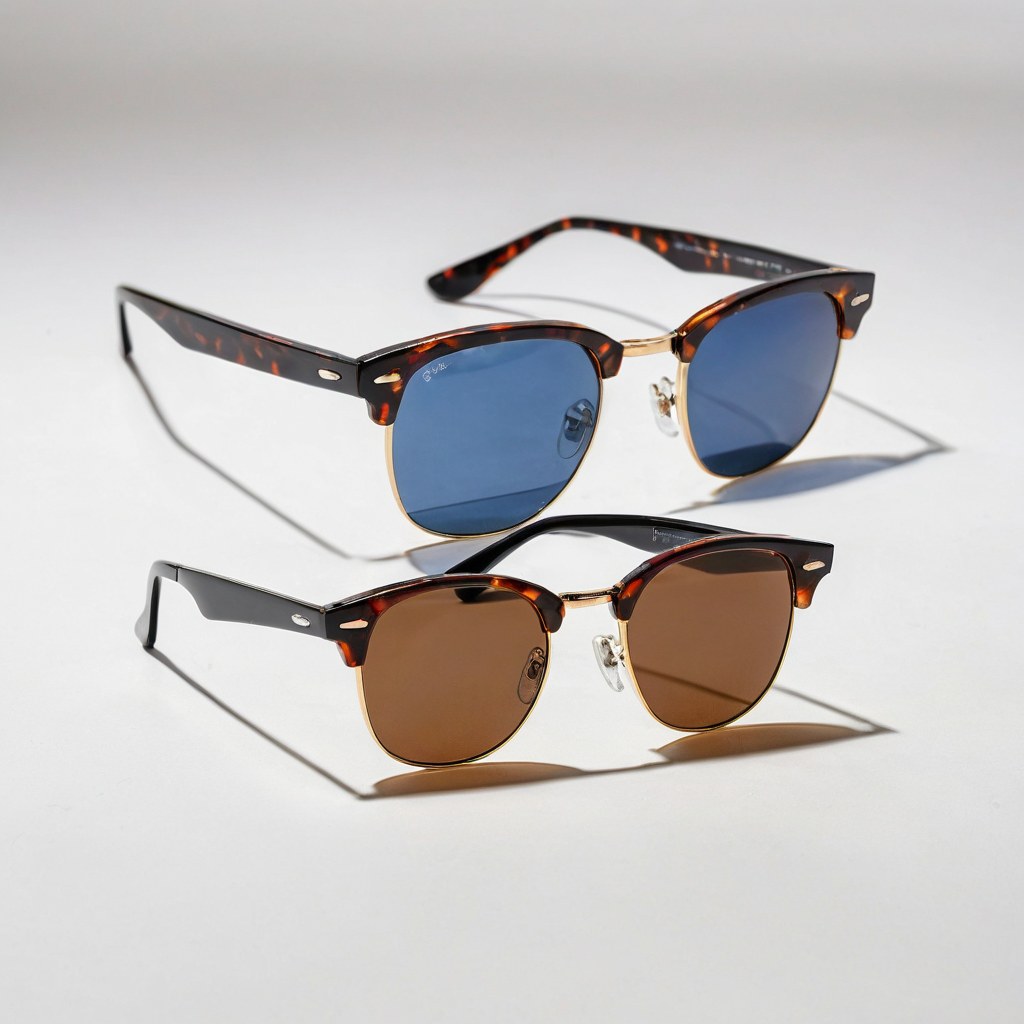
In January 2026, a client who had spent two years building a small accessories brand asked me to help him launch sunglasses for the summer season. He found a Xiamen supplier that described itself as a "sunglasses factory with 18 years of OEM experience" and quoted $4.80 FOB for a polarized acetate pair with a $1,200 MOQ, promising "UV400 protection, CR-39 polarized lenses, and a stainless-steel hinge." The samples looked great in the office: the acetate was glossy, the hinge felt solid, and the lens tint was a deep, even gray. He wired the deposit in March. The container landed at Long Beach in late May — right on time for the Memorial Day weekend launch. And then the summer did what eyewear always does to the unprepared: a customer posted a photo of her UV meter showing the "UV400" lenses passing almost all UV-A through — the listing said one thing and the lens did another; two more customers reported their skin turning green where the temple touched their face — the "stainless-steel" hinge and temple core were nickel alloy; three pairs came back with the lens popped out of the frame after a week of normal use — the lens retention was a cheap friction fit with no locking bead; and a fourth customer's "polarized" test card showed no polarization at all — the lens was tinted plastic. Amazon's compliance team flagged the UV claim, the listing was suspended in mid-June — through the entire summer — and by August he was clearing the remaining 800 units at 60% off to people who had already bought the competitor's pair. The root cause wasn't one bad supplier. It was a category where the lens, the coating, the frame material, and the hinge are the product — and every shortcut in any one of them turns into an allergy complaint, a safety flag, or a suspension during the six weeks that pay for your year. That story is why this guide exists.
Eyewear is one of the largest and most durable consumer categories in the world — a $170+ billion global market spanning optical frames, lenses, sunglasses, reading glasses, and the fast-growing smart-glasses tier — and China manufactures the overwhelming majority of the physical goods, from the same hyper-specialized clusters that built the furniture, hardware, and electronics industries: Wenzhou stamps and polishes the world's optical frames, Danyang grinds roughly half of the world's lenses, Xiamen assembles the polarized and premium sunglasses that carry global brands, Shenzhen builds the high-end acetate, titanium, and smart-glasses tier, and Yiwu floods the budget tier. The margins are attractive — a $2.00 acetate frame retails at $49.99, a $3.50 polarized sunglass at $39.99, a $1.20 blue-light frame at $24.99, a $0.40 pair of reading glasses at $9.99 — because eyewear is a high-consideration, high-perceived-value category where customers pay for vision, protection, and style rather than for grams of material. But eyewear is also the category with the most dishonest spec sheet in e-commerce: the claims — UV400, polarized, CR-39, titanium, TR90, blue-light blocking — are precisely the things that are faked, and they are faked because they are invisible to the buyer until the product is on their face, in the sun, and often already damaging their eyes or their skin. This guide maps the clusters, the real 2026 FOB prices, the compliance stack, the verification protocols that separate a real factory from a rebrander, and the sourcing SOP that decides whether you have a summer at all.
Why China Still Wins Eyewear (And Where the Margins Live)
China's eyewear advantage is the same as its furniture, hardware, and electronics advantages: cluster manufacturing at a scale, speed, and price no other country can match — plus the ability to coordinate three factories for one pair of glasses. A pair of sunglasses is rarely made in one place: the frame is stamped or injection-molded in Wenzhou, the lens is cast and coated in Danyang, the polarization film and lamination happen in Xiamen, and the assembly, QC, and packaging happen wherever the coordinator is. The Chinese supply chain handles this coordination natively; a Western buyer trying to replicate it across countries would pay 3–5x in freight and management overhead. The result is a price structure that makes the category's retail margins possible: a basic metal reading glass at $0.30–1.20 FOB, a fashion acetate sunglass at $0.80–3.00, a polarized acetate sunglass at $2.50–12.00, a stainless-steel optical frame at $1.50–6.00, a premium acetate frame at $4.00–15.00, a titanium frame at $8.00–30.00, a pair of 1.56 resin lenses at $0.80–3.00, a pair of high-index 1.67 lenses at $3.00–8.00, and a smart audio sunglass at $18–60 — price points no other manufacturing country can match in the same season.
The margin structure that makes eyewear attractive in 2026:
- Reading glasses, metal or acetate (Yiwu): $0.30–1.50 FOB, retails $6.99–14.99 — the category's highest-volume entry product; lens diopter accuracy and hinge quality decide the reviews
- Fashion sunglasses, non-polarized (Yiwu): $0.80–3.00 FOB, retails $12.99–24.99 — the impulse tier; the UV claim and frame durability decide the tier
- Blue-light blocking glasses (Yiwu / Wenzhou): $1.00–4.00 FOB, retails $19.99–39.99 — the fastest-growing office-SKU; measured attenuation and the yellow-tint appearance decide the reviews
- Kids' sunglasses (Yiwu / Xiamen): $1.20–5.00 FOB, retails $14.99–24.99 — CPSIA/CPC mandatory; lens impact resistance, small parts, and the strap decide the tier
- Polarized sunglasses, acetate (Xiamen): $2.50–12.00 FOB, retails $29.99–59.99 — the core summer SKU; real polarization, UV400, and hinge quality decide the reviews
- Polarized sports sunglasses, wraparound (Xiamen): $4.00–15.00 FOB, retails $39.99–79.99 — the active tier; impact-rated lenses (Z87-style), grip, and venting decide the tier
- Metal optical frames, stainless steel (Wenzhou): $1.50–6.00 FOB, retails $29.99–79.99 — the volume optical SKU; hinge construction and nickel-free plating decide the reviews
- Acetate optical frames (Wenzhou): $2.00–8.00 FOB, retails $39.99–99.99 — the style tier; acetate thickness, polish, and hinge blocking decide the tier
- TR90 / nylon frames (Wenzhou): $1.50–6.00 FOB, retails $29.99–69.99 — the lightweight tier; real TR90 vs low-grade nylon is the whole game
- Titanium frames, full or half-rim (Wenzhou / Shenzhen): $8.00–30.00 FOB, retails $99.00–249.00 — the premium tier; real titanium vs titanium-coated alloy decides the tier
- High-end acetate frames, hand-polished (Shenzhen): $12.00–40.00 FOB, retails $149.00–399.00 — the luxury OEM tier; Mazzucchelli-grade acetate, hinge quality, and finishing decide the reviews
- 1.56 resin lenses, single vision (Danyang): $0.80–3.00/pair FOB, retail $29.99–59.99 (with frame) — the volume lens SKU; base curve, coating, and the Abbe value decide the tier
- 1.60 / 1.67 high-index lenses (Danyang): $2.00–8.00/pair FOB, retail $79.99–149.99 — the thin-lens tier; index verification and coating quality decide the reviews
- Photochromic (transition-style) lenses (Danyang): $3.00–12.00/pair FOB, retail $99.99–179.99 — the premium lens tier; darkening speed, uniformity, and cycle life decide the tier
- Progressive lenses, mid-index (Danyang): $4.00–15.00/pair FOB, retail $129.99–249.99 — the Rx tier; corridor design and fitting tolerance decide the reviews
- Polarized sunglass lenses, CR-39 (Xiamen / Danyang): $1.50–6.00/pair FOB — the component tier; real polarization film vs tinted plastic decides everything
- Anti-reflective / hard coatings (Danyang): $0.50–3.00/pair FOB — the coating tier; adhesion, scratch resistance, and hydrophobicity decide the tier
- Smart audio sunglasses, Bluetooth (Shenzhen): $18–60 FOB, retails $99.00–199.00 — the fastest-growing tech tier; FCC/RED, battery UN 38.3, and audio quality decide the reviews
- Eyeglass chains, cords & cases (Yiwu): $0.10–1.50 FOB, retails $6.99–19.99 — the accessory tier; material quality and the metal findings (nickel risk) decide the tier
- Prescription-ready fashion frames, demo-lens (Wenzhou): $2.00–8.00 FOB, retails $39.99–89.99 — the online-Rx tier; lens-fitting tolerance and hinge durability decide the reviews
The catch: eyewear margins are only real if your return rate stays low — and in this category returns are driven by claim failures that surface in the sun, on the skin, and in the first month of wear. A lens that doesn't block UV, a 'polarized' pair that isn't, a frame that turns skin green, a hinge that snaps, a coating that delaminates, or an unverifiable 'CE' is not a 'not my style' return; it is a one-star review with a photo of a UV meter, an allergy complaint, an Amazon compliance flag on the claim, and — for counterfeit Ray-Ban, Oakley, or Persol branding — a suspended listing and a seized container. A $0.30 saving on the lens material, $0.20 on the polarization film, $0.15 on the hinge, $0.10 on the plating, or $0.05 on the coating costs the factory pennies and costs you the entire category.
China's Eyewear Clusters: Who Makes What, and Where to Source
Eyewear is a multi-cluster category — the frames, the lenses, the polarized sunglasses, the premium tier, and the budget tier each have their own capital, and one finished product often passes through two or three clusters. Match your product to its cluster and you get factory-direct pricing with real production depth; mismatch it and you're paying a trading company's markup on goods that were coordinated, not made, by the company you're paying. Here's the map:
| Cluster | Specialty | FOB Range (2026) | Typical MOQ |
|---|---|---|---|
| Wenzhou (Zhejiang) | The Glasses Capital of China: the bulk of the world's optical frames — metal, acetate, TR90, and titanium — is stamped, welded, injection-molded, and polished here, with a deep base of frame factories and the Wenzhou International Glasses City as the trading hub. The default for anything with a frame, a hinge, and a temple | $1.50–30 | 300–2,000 pcs |
| Danyang (Jiangsu) | The Lens Capital of China: produces an estimated 40–50% of the world's ophthalmic lenses — resin 1.56/1.60/1.67, photochromic, progressive, blue-light, and the AR/hard-coating lines behind most 'factory-direct' lens quotes. The default for anything optical that goes in front of the eye | $0.50–15/pair | 500–5,000 pairs |
| Xiamen (Fujian) | The world's sunglasses capital: polarized and premium sunglasses OEM'd for global brands, with mature polarization lamination, acetate processing, and assembly lines. The default for anything with a polarization claim or a retail price above $25 | $2.50–20 | 500–3,000 pcs |
| Shenzhen (Guangdong) | The premium and tech tier: hand-polished high-end acetate frames, titanium engineering, and the smart-glasses axis (Bluetooth audio sunglasses, AR glasses) with FCC/RED, battery, and app ecosystems. The default for anything above $99 retail or with electronics inside | $8–60 | 300–1,000 pcs |
| Yiwu (Zhejiang) | The budget tier and impulse tier: reading glasses, fashion sunglasses, blue-light office glasses, kids' novelty frames, and eyewear accessories (chains, cords, cases, cleaning cloths) that move by the container — plus thousands of trading booths that forward orders to factories they don't own | $0.10–5.00 | 1,000–50,000 pcs |
| Guangzhou (Guangdong) | The trading and wholesale layer: the optical wholesale markets, the Canton Fair eyewear halls, and the export traders who consolidate frames, lenses, and accessories into mixed containers. Useful for mixed-SKU consolidation, not for factory-direct claims | $0.50–15 | 500–10,000 pcs |
The cluster logic matters more in eyewear than in most categories because of what "factory-direct" hides: a sunglasses "factory" in Xiamen may assemble the pair but buy the frame from a Wenzhou molder, the lens from a Danyang grinder, the polarization film from a film supplier, and the hinges from a metal shop. That is normal and fine — the risk is when the supplier you are paying has none of those lines and is simply coordinating them at a markup. Ask who stamps the frame, who casts the lens, who does the coating, and who assembles; the answer tells you who is really in charge of quality, and it tells you where your QC checks need to go.
The Eyewear Compliance Stack: US, EU, and Platform Rules
United States
- FDA impact-resistance (21 CFR 801.410). All lenses sold in the US — prescription or non-prescription — must be impact-resistant unless the patient's prescription requires otherwise, and every finished lens must pass a drop-ball impact test (a 5/8-inch steel ball dropped from 50 inches). The regulation is enforced on the finished product; a lens supplier's "FDA registered" claim is not the same as impact-tested lenses, and the test must be verifiable on your actual SKU.
- ANSI Z80.1 (optical lenses) and ANSI Z80.3 (non-prescription sunglasses). Z80.1 covers prescription lenses — power tolerance, prism, base curve, and coating quality. Z80.3 covers non-prescription sunglasses — UV transmittance (lenses must block 99%+ of UV-A and UV-B to be labeled "UV400" or "100% UV protection"), impact resistance (a 1-inch steel ball drop for the higher-impact classes), and labeling. A "UV400" claim without a Z80.3-style test file is the single most common eyewear compliance failure on Amazon.
- CPSIA / CPC (kids' eyewear). Sunglasses and glasses marketed for children 12 and under are children's products: they need a Children's Product Certificate (CPC) backed by third-party testing to the applicable ASTM F963 requirements, CPSIA lead limits, small-parts rules, and — for sunglasses — the impact requirements. Kids' eyewear without a CPC is a listing suspension and a CPSC enforcement risk, not a paperwork detail.
- Prop 65. Metal frames, hinges, and temple cores often contain nickel, lead, or cadmium; plated frames risk lead in the plating; and cases and accessories risk phthalates in PVC. California Prop 65 exposure and labeling rules apply to eyewear sold into California — a missing warning on a nickel-alloy frame line is a real enforcement and suspension risk in 2026.
- FTC labeling and claim rules. "UV protection," "polarized," "blue-light blocking," and "impact-resistant" are all claims the FTC polices under the FTC Act's deception rules — the claim must be substantiated, and the substantiation (test files) must exist before you print the claim. "Blocks 99% of UV" on a lens that blocks 20% is a classic FTC sweep target and a fast way to lose a listing.
- FCC / UN 38.3 (smart glasses). Bluetooth audio sunglasses and AR glasses need FCC Part 15 certification for the radio, and the lithium battery needs UN 38.3 test reports naming the exact cell and pack — required for air freight and enforced by Amazon.
European Union
- CE under EN ISO 12312-1 (sunglasses and fashion eyewear). The EU standard for sunglasses and fashion eyewear — covers optical quality (power and prism tolerance), UV protection (UV400), transmittance categories, and impact resistance. A CE mark on sunglasses without the EN ISO 12312-1 technical file — test report, DoC, and the manufacturer's file — is the most common eyewear market-surveillance failure in the EU.
- EN 14139 (prescription eyewear) and EN ISO 12870 (ophthalmic frames). Prescription frames and lenses follow EN 14139, and all ophthalmic frames — metal, acetate, TR90, titanium — follow EN ISO 12870 for mechanical durability (hinge strength, flexing, corrosion resistance). The frame standard is where hinge and corrosion failures get caught.
- REACH and the nickel-release rule (EN 1811). Metal frames, hinges, and temple cores that contact skin must respect the REACH nickel-release limit of 0.5 µg/cm²/week, tested per EN 1811. Nickel-alloy frames sold without the test are the classic contact-dermatitis source — and a recall trigger in the EU.
- GPSR. Every eyewear product sold in the EU needs an EU responsible person and traceable labeling — frames, lenses, sunglasses, and smart glasses are all in scope. Budget ~$500–1,000/year for the EU rep service.
- RoHS (smart glasses). Bluetooth audio and AR glasses with electronics must comply with RoHS; the radio must meet RED requirements including cybersecurity rules in force since 2025.
- UK. Goods sold into Great Britain need UKCA marking (or CE accepted under current transition rules), UK REACH alignment, and GPSR-equivalent labeling.
Platform Rules (Amazon, Walmart, TikTok Shop)
- Amazon gates eyewear — prescription glasses, sunglasses, and reading glasses are restricted categories in whole or in part, and Amazon asks for compliance documentation (FDA/ANSI test files, CPSIA/CPC for kids', EN ISO 12312-1 files for EU) at audit. The audit window is spring, right when you need the listings live for the summer season; listings without verifiable documentation get suppressed at the worst possible moment.
- Claim enforcement is active: "UV400," "polarized," and "blue-light blocking" claims on listings without substantiation get flagged by both Amazon's compliance flags and competitor takedowns. The substantiation — a test report from an accredited lab naming your SKU — is part of the product.
- Counterfeit enforcement is aggressive: Ray-Ban, Oakley, Persol, Gucci, and other brand names in titles, logos on frames, or lookalike designs that trip brand reports get listings suspended and, for FBA inventory, destroyed. Assume any brand name or brand-shaped logo is a suspension; build your own brand.
- Walmart and TikTok Shop enforce the same documentation and gating flows; a compliance file built once covers all three.
⚠️ The Fake Claim and Downgraded Material Problem
In eyewear, the claim on the listing and the material under the finish are both part of the product — and both are the most-faked parts of it. Real UV400 lenses have a UV-transmittance test file; real polarized lenses pass the polarization card test and the two-lens cross test; real CR-39 sinks in a salt solution while acrylic floats (and real CR-39 smells like acetone when touched with it); real titanium is non-magnetic and passes the file test; real TR90 has the flexibility and density of premium nylon; real blue-light lenses show measurable attenuation on a spectrometer. Meanwhile, the classic downgrades are all measurable: tinted plastic sold as polarized, acrylic sold as CR-39, nickel alloy sold as stainless or titanium, low-grade nylon sold as TR90, "UV400" printed on lenses that block nothing, a 1.50-index lens sold as 1.67, coatings that fail adhesion after a month, hinges that snap at 3,000 flexes instead of 30,000, and plating that turns skin green. Before you place an order, verify every claim and every material independently — UV meter or spectrophotometer on the lens, polarization card on the lens, acetone/salt test on the material, magnet and file test on the frame, XRF on the metal, hinge-cycle testing on the frame, and EN 1811-style nickel-release testing on anything that touches skin — and budget $300–3,000 per SKU family for your own third-party testing through an accredited lab. It is the cheapest insurance in the category, and it makes your listings suppression-proof during the six weeks that pay for your year.
The Six Tests That Separate Real Eyewear Factories from Rebranders
Quality in eyewear lives in the lens, the coating, the frame material, and the hinge — none of which your listing photos can show. Run these tests on samples, then spot-check production units:
- The UV and polarization test. Measure UV-A and UV-B transmittance with a UV spectrophotometer (or a calibrated UV meter at 365 nm and 400 nm) — a real UV400 lens blocks 99%+ of UV up to 400 nm, and a "UV400" claim without the measurement is a lie. Test polarization with a polarization test card or by stacking two lenses at 90° — real polarized lenses go dark at 90° (the classic cross test), tinted plastic does not. This single test kills 80% of the fake claims in the category.
- The impact and lens-retention test. Run the FDA drop-ball test (5/8-inch steel ball from 50 inches) and the ANSI Z80.3 1-inch ball test on non-prescription sunglasses; verify the lens is seated with a real locking mechanism (bead or screw), not a friction fit — then drop the assembled pair from waist height and check whether the lens stays in the frame. Lens-pop is one of the most common eyewear returns and it is 100% preventable.
- The lens-material and index test. Identify the material: CR-39 sinks and reacts to acetone, polycarbonate is lighter and passes the acetone test without dissolving, acrylic floats in salt water and scratches easily, glass is heavy and shatters. Verify the index with a lensometer or caliper-and-curve measurement — a 1.56 sold as 1.67 is a 30% thickness difference you can measure. Check the coating: AR/hard-coating adhesion with the cross-hatch tape test, scratch resistance with a steel-wool rub, and hydrophobicity with a water droplet.
- The frame-material and hinge-cycle test. Verify the frame material: stainless steel and titanium are non-magnetic (nickel alloy and steel are magnetic — the magnet test), titanium passes the file test (file bites into titanium, not into plated alloy), and TR90 has the flexibility and low density of premium nylon (weigh it, flex it). Then cycle the hinge 10,000+ times and flex the temple arms — real hinges survive 30,000+ cycles; cheap hinges snap at 3,000. Check the plating: nickel-free or hypoallergenic claims need the test file, not the sticker.
- The nickel-release and skin-contact test. For anything that touches skin — metal frames, hinges, temple cores, chains, cords, metal findings on cases — run the EN 1811-style nickel-release test (0.5 µg/cm²/week limit in the EU) and check for lead/cadmium with XRF (Prop 65). The "my skin turned green" review is the single most common eyewear one-star, and it is 100% preventable with a $50–200 test.
- The optics and durability test. For optical frames and reading glasses: verify the diopter power with a lensometer (a +2.00 reader that measures +1.75 is a return), check prism and axis tolerance against ANSI Z80.1, and check the blue-light claim with a spectrometer (real blue-light lenses show a measurable attenuation dip in the 400–450 nm band). For smart glasses: verify the FCC ID in the FCC database, test the Bluetooth pairing and audio over 30 minutes, and verify the battery's UN 38.3 report matches the actual cell.
The 8-Step Eyewear Sourcing SOP (With the Summer-Season Calendar)
- Pick your lane and your deadline. Start with accessories, reading glasses, and fashion sunglasses — light compliance, fast cash cycle. Graduate to polarized sunglasses with a UV/polarization verification budget, to optical frames with an ANSI and hinge-testing budget, to premium acetate/titanium with a material-verification budget, to kids' eyewear only with a CPSIA/CPC budget, and to smart glasses only with an electronics, FCC, battery, and app budget. Then set the calendar: for the summer sunglasses season, containers need to sail by March–April, which means sourcing decisions in October–December, samples and tests in January–February, production in February–March, and freight booked before production finishes. For the back-to-school optical season, production runs April–June and containers sail June–July. Q4 gifting inventory runs on the August–September calendar.
- Match the product to its cluster. Optical frames to Wenzhou; lenses to Danyang; polarized and premium sunglasses to Xiamen; high-end acetate, titanium, and smart glasses to Shenzhen; budget tier and accessories to Yiwu; mixed-SKU consolidation through Guangzhou. A supplier outside the right cluster is either a trader or paying someone else's overhead — and for eyewear specifically, ask who stamps the frame, who casts the lens, who does the coating, and who assembles, because the answer tells you who is really in charge of quality.
- Vet the factory. Business license with an eyewear scope, export history, brand customers, the names of their lens, coating, hinge, and acetate suppliers, their certification files (ANSI Z80.1/Z80.3 test reports, FDA impact files, CPSIA/CPC for kids', EN ISO 12312-1 files, EN 1811 nickel reports), and a video call onto the actual production floor. In eyewear, confirm the lens line, coating line, and assembly line exist — the category attracts more coordinators than any other in China.
- Order 2–3 samples from 2+ factories and run the six-test battery in the winter. The UV/polarization test, the impact and lens-retention test, the lens-material test, the frame-material and hinge-cycle test, the nickel-release test, and the optics test. This is the window that decides whether your summer survives.
- Run the compliance tests on the samples. FDA impact-resistance and ANSI Z80.1/Z80.3 for the US, CPSIA/CPC for kids' SKUs, EN ISO 12312-1 and EN 14139 plus EN 1811 nickel for the EU, Prop 65 for frames and accessories, and FCC/UN 38.3 for smart glasses — through accredited labs, on the samples, in the winter rather than after the container sails.
- Negotiate MOQ and the mixed-SKU strategy. Eyewear economics run on container utilization and spec standardization: combine 20–40 SKUs in one container, standardize on one lens material, one coating system, one hinge, one acetate/nylon grade, and one plating system across your whole line, and own your molds on the repeatable SKUs. Fewer platforms mean fewer failure modes and one certification stack to renew.
- Third-party QC on every batch. Inline checks at stamping/molding, lens mounting, coating, assembly, and packing, plus final random inspection at AQL 2.5 with random UV-meter, polarization-card, hinge-cycle, magnet, and XRF spot checks. Never ship eyewear without final inspection — the failures are invisible until they are on a customer's face, in the sun, and on the skin.
- Book freight and lock the sailing date before production finishes. March–June is peak season out of China for summer goods — the sunglasses inventory for every seller collides with the spring rush, and vessel space is the constraint. Confirm the booking, the sailing date, and the transit time in writing; the seller with a locked booking has a summer while the seller with "a forwarder somewhere" watches the UV index climb from a warehouse.
Eyewear is one of the biggest and most durable categories in e-commerce when you respect its physics: a $170+ billion global market, a summer sunglasses season and a back-to-school optical season every year, and margins that make a $2.00 frame into a $49.99 sale and a $3.50 sunglass into a $39.99 sale. But it is also the category where the product sits on the customer's face, where the claims are the product, and where every shortcut — the tinted plastic sold as polarized, the acrylic sold as CR-39, the nickel alloy sold as titanium, the "UV400" printed on lenses that block nothing, the unmeasured blue-light claim, the unverified CE file, the friction-fit lens, the 3,000-cycle hinge — turns into an allergy complaint, a safety flag, a one-star review with a photo of a UV meter, or a suspension during the six weeks that pay for your year. The sellers who win the summer aren't the ones who found the cheapest quote; they're the ones who ran the UV meter on the lens, stacked two lenses at 90° to prove polarization, dropped the steel ball, dissolved a lens in acetone, filed the titanium, cycled the hinge ten thousand times, XRF'd the metal, lab-tested the nickel release, verified every ANSI and EN ISO file online, and locked the sailing date before the container was full. Do that, and the 60–80% gross margins this category offers become yours to keep — through the season that pays for your year.