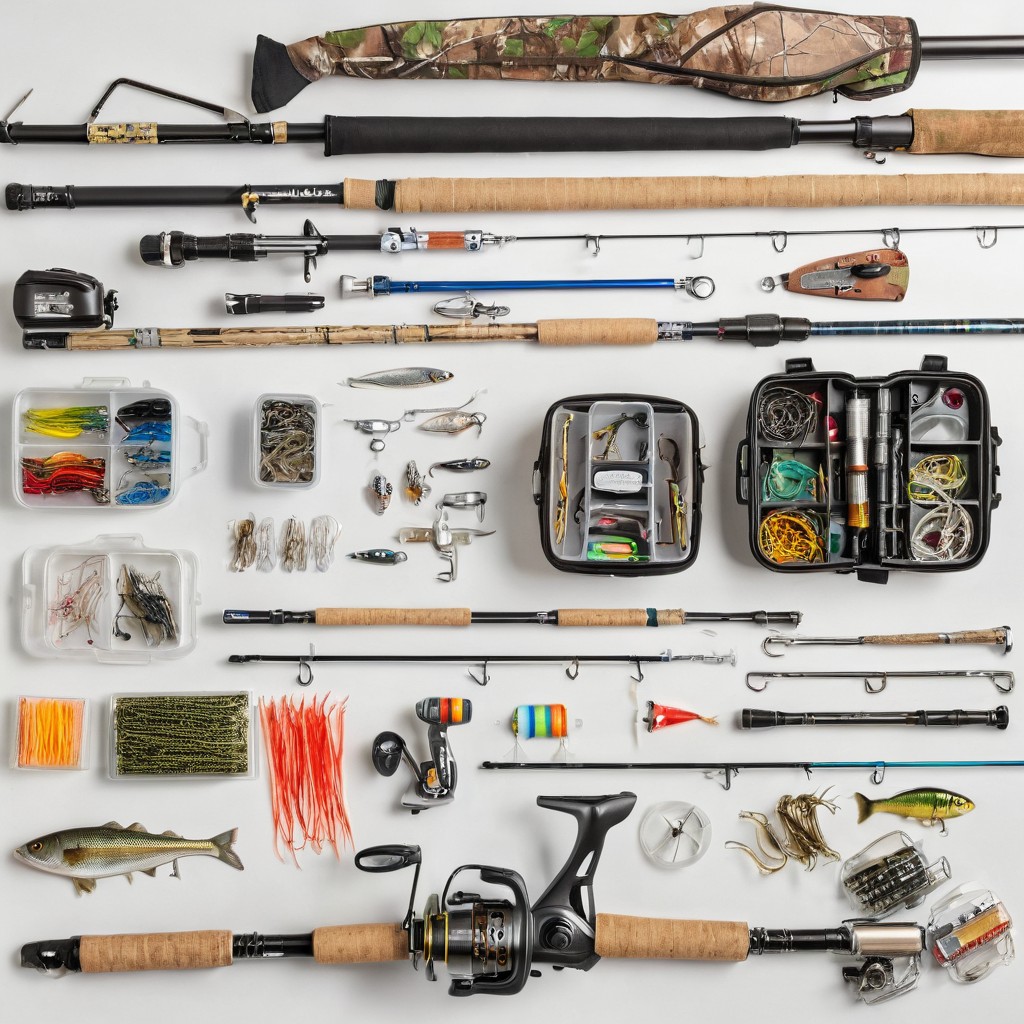
In March 2026, a seller I consult for launched a 7-foot spinning rod and reel combo sourced from a Guangzhou trading company at $11.80 FOB. The listing photos showed a glossy black blank with carbon weave visible under the finish, a reel with a machined-aluminum look, and the words "carbon fiber construction — 20 lb drag." He sold 4,800 combos in six weeks at $59.99. Then the teardown reviews landed: the blank was fiberglass painted black — the "carbon weave" was printed film under clearcoat — and the reel's drag slipped at 6 lb of pressure, not 20. Return rate hit 19% and the listing's rating dropped from 4.6 to 3.2 in a month. Meanwhile, a competitor selling a $49.99 kids' fishing set sourced from a Weihai factory was quietly shipping jigs with lead-based paint and lead sinkers — in a state where lead tackle is restricted — and spent the summer and $35,000 on a Prop 65 defense after the state attorney general's office flagged the listing. Both failures had the same root cause: they bought the category word ("carbon," "lead-free," "20 lb drag") without verifying the material — or the compliance that comes with lead in a children's product. This guide is the playbook for doing it right.
Fishing is one of the most loyal categories in e-commerce. US anglers spend more than $50 billion a year on fishing — licenses, gear, and trips — and tackle sells online year-round with three demand waves that structure the whole sourcing calendar: the spring opener (March–June), the summer season (June–August), and Q4 gifting (November–December), when rods, combos, and tackle sets are among the most-gifted outdoor items on Amazon. The economics are generous — a $4 carbon spinning rod retails at $49.99, a $6 spinning reel at $59.99, a $0.40 lure at $12.99, a $3 kids' fishing set at $29.99 — but fishing tackle is a category built on claims you cannot see in a listing photo: the "carbon" in the rod, the "stainless" in the hook, the "20 lb" on the drag, the "braided" on the spool, and the "lead-free" on the package. This guide maps China's fishing gear clusters, benchmarks real 2026 FOB prices across 20+ product types, decodes the full US and EU compliance stack, delivers the 8-test verification battery that separates a real factory from an assembler, and lays out the 8-step sourcing SOP timed to the fishing calendar.
Why China Wins Fishing Gear (And Where the Capability Actually Lives)
China manufactures roughly three-quarters of the world's fishing tackle, and the industry is hyper-clustered the way Chinese manufacturing always is — every component has a hometown, and the hometown decides your price, your quality ceiling, and your risk:
- Weihai (威海), Shandong — the Fishing Tackle Capital. Weihai produces roughly 60% of China's fishing tackle exports and is the largest fishing-rod manufacturing base on earth — thousands of tackle companies, dozens of rod blank factories, and the OEM capacity behind many global brand rods. Weihai Guangwei Group (光威集团), the world's largest fishing rod manufacturer, runs its carbon-fiber prepreg and blank plants here. If your product has a rod blank, it comes from Weihai or a factory pretending to be from Weihai.
- Ningbo (宁波), Zhejiang — the reel axis. Ningbo and its satellite towns machine the spinning reels, baitcasting reels, and reel components — the gears, spools, and drag systems that decide whether a reel actually delivers its claimed drag. Ningbo is also a major base for tackle accessories and hard goods.
- Panyu–Guangzhou (番禺–广州), Guangdong — lures and terminal tackle. The Panyu district of Guangzhou and its neighbors mold the hard-body crankbaits, soft plastic baits, jigs, spinnerbaits, hooks, sinkers, and terminal tackle. This is where the "lead vs lead-free" decision is actually made — the same molds run lead and bismuth/tungsten versions.
- Shenzhen (深圳) — the electronics. Fish finders, electric reels, bite alarms, underwater cameras, and the new generation of smart fishing electronics are designed and assembled in Shenzhen's consumer-electronics ecosystem, often with the same suppliers that build dash cams and smart home gear.
- Rugao (如皋), Jiangsu — the nets. Rugao is China's fishing-net hometown (中国渔网之乡) — landing nets, dip nets, cast nets, and net accessories sewn and knotted at scale.
- Yiwu (义乌) — the budget tier. Yiwu floods the market with tackle boxes, multi-tools, rod holders, cheap combos, and novelty fishing gifts by the container. Fine for gift-tier and impulse SKUs; not where the "carbon" lives.
Outside these clusters, "fishing tackle factories" are trading companies stacking a 30–50% markup on goods they buy from Weihai, Ningbo, or Panyu. The cluster test is your first filter: ask for the factory's production address, ask which parts they make in-house (blanks? reels? molds?), and video-call the actual line. A Weihai rod factory shows you prepreg and curing ovens; a trader shows you a showroom.
The 2026 FOB Price Map: 20+ Product Types
Real FOB benchmarks (Shenzhen/Weihai/Ningbo port, September 2026, standard MOQs of 500–1,000 units for rods and reels, 2,000–5,000 for lures and terminal tackle). Treat any quote 40% below these numbers as a material downgrade, not a bargain:
- Spinning rod, fiberglass, 6'–7' (Weihai): $2.50–6.00 FOB, retails $19.99–39.99 — the volume entry; fine for combos and kids' sets
- Spinning rod, carbon fiber (carbon composite) blank (Weihai): $4–15 FOB, retails $39.99–99.99 — the core of the rod market; the price gap is the carbon content (30T vs 24T vs 18T carbon cloth, or none)
- Baitcasting rod, carbon (Weihai): $6–20 FOB, retails $59.99–149.99 — bass-fishing lane, fast-growing
- Ice fishing rod, short 24"–36" (Weihai): $2–6 FOB, retails $14.99–34.99 — the winter lane, ships June–August for the northern season
- Spinning reel, 2000–4000 size (Ningbo): $3.50–12 FOB, retails $29.99–89.99 — check the drag claim and the gear material (the $3.50 reel has nylon gears; the $12 reel has metal)
- Baitcasting reel, low-profile (Ningbo): $6–25 FOB, retails $59.99–199.99 — the highest-margin reel lane and the most downgrade-prone: 6 bearings claimed, 2 installed
- Rod + reel combo, spinning (Weihai + Ningbo): $6–18 FOB, retails $39.99–79.99 — the #1 gifting SKU in the category
- Hard-body crankbait, 2–4" (Panyu): $0.40–1.50 FOB, retails $7.99–16.99 — check the hooks (the hook is 40% of the cost and 100% of the rust complaints)
- Soft plastic baits, 10-pack (Panyu): $0.60–2.00 FOB, retails $6.99–14.99 — check the plasticizer (non-phthalate or you hit REACH and Prop 65)
- Jigs, lead-free (bismuth/tungsten) (Panyu): $0.50–2.00 FOB, retails $6.99–16.99 — the compliant lane; lead jigs are 30–50% cheaper and increasingly illegal
- Spinnerbait / spoon (Panyu): $0.30–1.20 FOB, retails $5.99–12.99 — blade metal and paint are the failure points
- Fishing hooks, 25-pack (Panyu): $0.30–1.00 FOB, retails $4.99–9.99 — "stainless" vs plated carbon steel lives here
- Sinkers / split shot, lead-free (Panyu): $0.20–0.80 FOB, retails $3.99–8.99 — the state-ban-compliant version
- Fishing line, monofilament spool (Ningbo / Weihai): $0.50–2.50 FOB, retails $6.99–19.99 — the label lies most often here (diameter vs lb-test)
- Braided line, 8-strand PE spool (Ningbo): $0.80–3.50 FOB, retails $9.99–24.99 — the most faked product in the category; cheap "braid" is nylon with a rough texture
- Tackle box, hard plastic (Yiwu / Ningbo): $1.50–8.00 FOB, retails $12.99–39.99 — check hinges and latch (the #1 return reason)
- Tackle backpack / bag (Ningbo / Guangzhou): $4–15 FOB, retails $24.99–69.99 — the fashion lane of the category; zippers decide the reviews
- Landing net, telescopic (Rugao / Ningbo): $1.50–8.00 FOB, retails $9.99–29.99 — net mesh and handle locks are the failure points
- Fillet knife, 6"–9" (Yangjiang / Guangdong): $1.50–6.00 FOB, retails $14.99–39.99 — Yangjiang is China's knife capital; check the steel (3Cr13 vs 5Cr15MoV) and the sheath
- Waders, neoprene / breathable (Jiangsu / Shandong outdoor belt): $8–35 FOB, retails $49.99–199.99 — seam sealing is everything; the $8 wader leaks at the knee by month two
- Fish finder / portable sonar (Shenzhen): $5–40 FOB, retails $29.99–149.99 — FCC Part 15 for the radio, battery rules for the lithium pack, and the waterproofing IP rating is the claim to verify
- Kids' fishing set, rod + reel + tackle (Weihai / Ningbo): $2.50–8.00 FOB, retails $19.99–49.99 — the fastest-growing lane and the compliance-heavy one: CPSIA, CPC, ASTM F963, lead-free everything, small-parts rules
The Compliance Stack: US, EU & the Lead Trap
Fishing tackle has a quiet regulatory profile — until it doesn't. The trap is lead, and it sits exactly where the margins are: sinkers, jigs, and painted lures are the cheapest products in the category, and lead is the cheapest way to make them heavy.
United States — the lead rules. A growing list of states restricts or bans lead tackle — Vermont and New Hampshire ban lead sinkers and jigs under one ounce, Washington restricts lead in certain waters, Maine restricts lead sinkers, Massachusetts restricts lead jigs and sinkers, and more states are legislating every session. There is no single federal ban on lead fishing tackle, but the product-level exposure is worse than a ban: California's Prop 65 requires warnings (or removal) for products exposing users to lead, and it is enforced by private lawsuits — the classic "we got sued by a Prop 65 plaintiff's firm" scenario that hit the kids' fishing set market in 2024–2026. For kids' fishing sets, the CPSIA applies in full: children's products need a CPC (Children's Product Certificate) based on testing from a CPSC-accredited lab, compliance with ASTM F963-23 (including the lead limits: 100 ppm in paint and substrates), tracking labels, and small-parts testing for children under 3. A "kids' fishing set" with lead sinkers or lead-painted jigs is simultaneously a CPSIA violation, a Prop 65 exposure, and in some states a lead-tackle violation — three regulators on one $4 product.
United States — everything else. Fish finders and any electronic tackle need FCC Part 15 compliance (searchable FCC ID) and, if battery-powered, the lithium battery rules (UN 38.3 for transport, UL 2054/UL 1642 for Amazon's battery policy). Fillet knives: no federal rule for general-purpose knives, but blade laws vary by state and locality — and some jurisdictions restrict "folding" or "assisted-open" knives, so check your target states before you import a knife SKU. FTC rules govern country-of-origin labeling: "Made in China" must appear on the product or its packaging, and unverifiable claims like "carbon fiber" or "stainless steel" are deceptive-practice exposure if they fail in testing.
European Union. The big one is REACH: lead in fishing weights is restricted under REACH Annex XVII (entry 63 covers lead in consumer articles — weights, sinkers, and jigs are squarely inside), and phthalates in soft plastic baits are restricted too (entry 51/52). Electronic tackle needs CE marking — EMC and LVD, plus RED if it transmits (fish finders with sonar/Bluetooth are radio devices) and RoHS for the electronics. And the General Product Safety Regulation (GPSR, EU 2023/988) has been in force since December 2024: every product sold into the EU needs an EU responsible person, documented traceability, and a technical file — the requirement that has been quietly catching US sellers who thought CE was enough. Plan for an EU responsible person service ($500–1,500/year) if you sell into the EU.
Amazon. Fishing is not a gated category on Amazon, but the platform enforces the underlying rules mechanically: kids' fishing sets require CPC documents before listing approval; lithium-battery products need battery documentation; and Prop 65-sensitive listings (anything with lead exposure claims) draw review. The compliance file is a launch gate, not a shipping nicety — and the certificate stack is, as in every category in 2026, the most-faked paperwork in the supply chain. Every document is independently verifiable online, and the verification costs nothing.
The 8-Test Verification Battery
Before you commit to a factory, put its samples through this battery. It costs a few hundred dollars and a week, and it is the difference between a category win and a 20% return rate:
- The rod-blank test. Weigh the rod and flex it. A true carbon (carbon composite) blank is dramatically lighter than fiberglass at the same power — a 7' carbon spinning rod weighs 90–130g; a fiberglass rod of the same length is 180–280g. Tap the blank: carbon rings with a crisp, higher-pitched tone; fiberglass thuds. Scratch the finish near the butt cap: printed "carbon weave" film scratches off and reveals solid paint. Then ask for the blank's carbon grade (24T/30T/40T) and the prepreg source — a Weihai factory answers in seconds; a trader hesitates.
- The guide-ring test. Run the line through every guide 50 times under tension, then inspect the ring inserts. Real guides use ceramic/SiC/zirconia inserts that stay smooth; painted or plain-metal rings groove, and grooved rings fray line — the #1 rod review complaint. The test costs five minutes and a $3 spool of line.
- The drag test. Attach the reel to a rod, spool it, tie the line to a luggage scale, and pull until the drag slips. Claimed 20 lb? It should slip between 17 and 20 lb. The cheap-reel tell: claimed 20 lb, slips at 6. Also count the bearings honestly — open the side plate; the claimed "9 bearings" reel with 3 bearings (and 6 spacers) is the industry's favorite lie.
- The line test. Measure the diameter with a micrometer and compare to the labeled lb-test: a "20 lb braid" that measures like 40 lb mono is a lie (diameter vs strength tables are published for every line type). Burn-test the "braid": real PE braid melts into a hard bead and doesn't stretch under load; nylon melts soft and stretches. For mono, check stretch and abrasion by rubbing a section across a nail file 20 times.
- The hook and lure metal test. Magnet test: stainless steel is weakly magnetic (or not at all); plated carbon steel grabs hard. If the factory claims "stainless" and the magnet sticks hard, you have plated carbon steel — which rusts in salt water in weeks. Salt-spray the sample: 48 hours in a 5% salt solution separates stainless from plated in one glance. For lures and jigs, an XRF gun (rent one or use a lab, ~$30–60 a test) answers the lead question in one minute: paint, body, and split rings.
- The lead-free verification. This is the compliance gate, not a quality test. XRF the sinkers, jigs, and lure paint — and get the test report in writing from a recognized lab, not a factory self-declaration. For kids' sets, the CPC, ASTM F963 report, and small-parts testing are non-negotiable before the PO. Remember: "lead-free" on the package is a claim; the XRF reading is a fact.
- The compliance-file check. Demand the FCC ID for electronics and verify it in the FCC database; demand the UN 38.3 summary and UL reports for battery items; demand the Prop 65 assessment, the REACH declaration (with the lead entry), and the GPSR EU responsible person details. Verify every document online — the fakes are common and the verification is free.
- The burn-in and QC test. Run the reel through 500 cranks under load and check for gear wear and noise; flex the rod 200 times to the claimed power and check for delamination; open/close the tackle box latch 200 times; dunk the fish finder per its IP rating and check the seal. Then pack a full carton as it will ship and drop it from 1 meter — the "retail-ready" test that catches crushed boxes, broken latches, and bent rod tips before your customers do.
The 8-Step Fishing Gear Sourcing SOP
- Pick your lane honestly. Rods & combos and lure multi-packs are the lowest-risk entries: mature supply chains, gifting-shaped price points, and verification tests that are cheap and fast. Tackle storage and backpacks add soft-goods QC (zippers, seams). Kids' sets are the fastest-growing lane but the compliance-heavy one — budget for the CPC/ASTM F963 testing stack. Electronics (fish finders) are engineering projects: 8–12 weeks of development and a certification budget of $2,000–8,000 per SKU family.
- Match the product to its cluster. Rods to Weihai, reels to Ningbo, lures and terminal tackle to Panyu–Guangzhou, electronics to Shenzhen, nets to Rugao, knives to Yangjiang, budget tier to Yiwu. A "factory" quoting rod prices from outside Weihai is a trader stacking 30–50%. Ask for the production address and video-call the line.
- Vet the factory like a tackle buyer, not a general buyer. Business license, export history, brand customers (a real Weihai factory names its OEM customers — NDA-protected, but they can show production photos without logos), and a video walkthrough of the blank shop, the molding floor, or the reel assembly line. Then ask the two questions that expose traders: "Which parts do you make in-house?" and "Can you show me the prepreg/mold/CNC line?"
- Order 2–3 samples from 2+ factories and run the 8-test battery. Rod-blank, guide-ring, drag, line, hook-metal, lead-free, compliance-file, and burn-in tests settle the tier and the vendor list in a week. Keep the winning sample under lock — it is your reference standard for production QC.
- Lock the compliance file before the PO. Lead-free XRF reports for sinkers/jigs/lures, CPC + ASTM F963-23 for kids' sets, FCC ID for electronics, UN 38.3/UL for battery items, Prop 65 assessment, REACH declarations for the EU, GPSR EU responsible person if you sell into Europe — and state lead-tackle compliance mapped to your target states. Production units, not samples, must carry the certifications.
- Negotiate MOQ and BOM smartly. Typical MOQs: rods 500–1,000, reels 500–1,000, lures 2,000–5,000, terminal tackle 5,000–10,000, kids' sets 1,000–3,000; OEM branding adds ~15%. Standardize on one rod blank supplier and one reel platform across your line, spec the hook brand (the hook is 40% of a lure's cost and 100% of its rust complaints), and push for lead-free terminal tackle as the default SKU — the $0.10–0.20 unit cost difference is cheaper than one Prop 65 letter.
- Third-party QC on every batch. Inline checks at the blank shop, molding floor, and assembly; final random inspection at AQL 2.5; spot re-runs of the drag test, guide-ring test, and XRF lead check on production units (factories have shipped lead versions of "lead-free" SKUs to hit a price). Check the country-of-origin labels, the tracking labels on kids' sets, and the packaging against the compliance file.
- Time the containers to the calendar, then listen to the reviews. Spring opener demand (March–June): containers ship January. Summer season: ship April. Q4 gifting: ship August — the same calendar as Halloween and Christmas decor, and just as unforgiving. Track return reasons from day one: "rod tip broke," "reel drag weak," "hooks rusted," and "line snapped" are the four early-warning signals of this category, and each one maps to a test in this guide.
Fishing gear is the rare outdoor category where the China supply chain, the retail price points, and the gifting demand all line up — a $4 carbon rod retailing at $49.99, a $6 reel at $59.99, a $0.40 lure at $12.99, with three demand waves a year instead of one. But it is also a category where the claims are invisible, the lead is cheap, and the returns are brutal: the painted-fiberglass "carbon" rod, the 6-lb "20-lb" drag, the rusting "stainless" hook, and the lead-loaded kids' set are all waiting at the exact point where a seller bought a word instead of a material. The sellers who win in 2026 are the ones who buy from the clusters, run the 8-test battery, ship lead-free and labeled, and time their containers to the calendar. Do that, and the 50–70% gross margins this category offers become yours to keep — instead of the returns department's, the Prop 65 plaintiff's, or the state attorney general's.