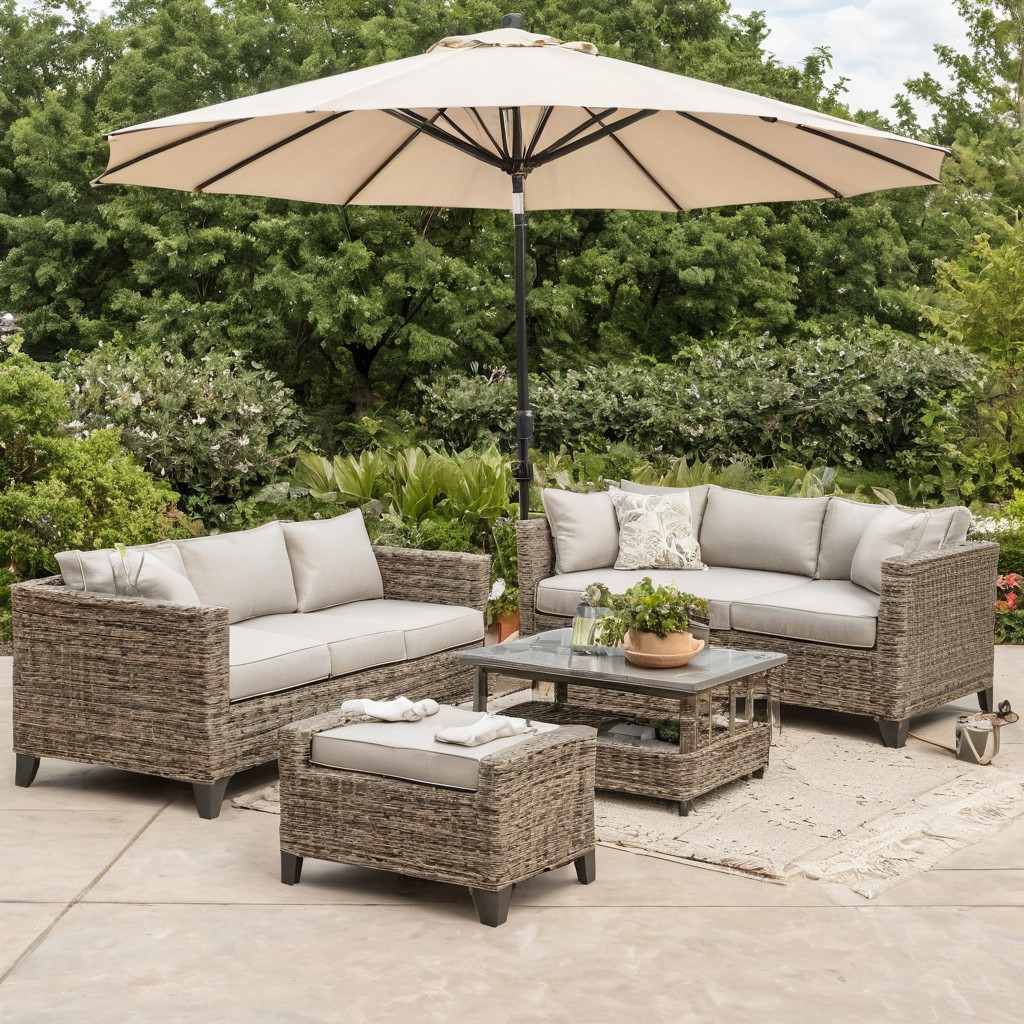
In September 2025, a client who had spent four years building a year-round home-and-kitchen brand asked me to audit his first outdoor-living season: 5,000 PE-rattan sofa sets, 8,000 solar path-light sets, 3,000 ceramic planters, and 2,000 gas grills — sourced from a Foshan supplier that described itself as a "factory with 20 years of export experience." The samples were impressive: the rattan weave was tight, the cushions felt thick, the solar lights charged in a day, and the grill's burners roared. He wired the deposit in mid-October. The container sailed on January 12 and landed at Long Beach on February 18 — on time for the spring window. And then the season did what outdoor goods always do to the unprepared: the "aluminum" frames rusted within six weeks because they were steel with a painted skin — a magnet stuck to the armrest; the wicker faded from espresso to gray by June and split at the corners; the cushions mildewed after the first rain because the fabric was untreated polyester over foam that never dried; the solar lights lasted three nights before the batteries died, and customers' photos of dark garden paths went straight to the review section; a glass-topped dining table shattered when a customer set down a watermelon — the glass was not tempered; and a customer's grill regulator leaked propane, which triggered a safety complaint and an Amazon investigation that suspended the listing for a month. His return rate hit 21%, Amazon suppressed two listings, and by June he was discounting what was left at 60% off — to people who had already spent their spring outdoor budget somewhere else. The root cause wasn't one bad supplier. It was a category where the outdoors is the test lab: every invisible compromise in material, coating, and construction — the alloy, the paint, the weave, the foam, the cell, the glass, the regulator — is exposed within a single season. That story is why this guide exists.
The US lawn and garden market is worth well over $120 billion a year, and Patio, Lawn & Garden is one of Amazon's largest categories — a permanent fixture in the top five by GMV, with a spring season (March–June) that accounts for the majority of annual sales and a second, smaller surge in the fall for lighting, fire pits, and decor. China manufactures the overwhelming majority of the physical goods, from the same hyper-specialized clusters that built the furniture, lighting, textile, and toy industries: Foshan–Shunde welds and weaves the outdoor furniture, Anji builds the chairs, Nantong sews the cushions and umbrellas, Ningbo–Cixi and Zhongshan Guzhen light the yard, Yiwu grows the artificial greenery, Linhai and Yongkang forge the tools and grills, Chaozhou and Dehua fire the pottery, Xiamen–Quanzhou casts the resin, and Puning welds the inflatables. The margins are attractive — a $48 PE-rattan bistro set retails at $199, a $22 charcoal kettle grill at $89.99, a $3 solar path-light set at $19.99, a $2.80 ceramic planter at $24.99, a $4.50 folding camp chair at $24.99 — because the perceived value of outdoor living is emotional (the patio, the party, the summer) and the physical goods are bulky, so shipping economics favor sellers who plan containers, not air freight. But outdoor is also the category with the most honest failure surface in e-commerce: the product lives outdoors, where the sun, the rain, the wind, and the customer's phone camera expose every shortcut within a season. This guide maps the clusters, the real 2026 FOB prices, the compliance stack, the verification protocols that separate a real factory from a rebrander, and the sourcing calendar that decides whether you have a spring at all.
Why China Still Wins Outdoor Living (And Where the Margins Live)
China's outdoor-living advantage is the same as its furniture, lighting, and textile advantages: cluster manufacturing at a scale, speed, and price no other country can match — plus one thing that matters more in this category than any other: the ability to coordinate four factories for one product. A patio sofa set is not made in one place: the aluminum or steel frame is welded in Foshan or Yongkang, the PE rattan is extruded and woven in the same or a nearby plant, the cushions are sewn in Nantong or a Foshan textile shop, and the powder coating, packaging, and cartons come from yet another layer. The Chinese supply chain handles this coordination natively; a Western buyer trying to replicate it across countries would pay 3–5x in freight and management overhead. The result is a price structure that makes the category's retail margins possible: a complete 5-piece aluminum-and-rattan dining set at $140–260 FOB, a 4-seat steel wicker sofa set at $110–220, a 10-foot tilt umbrella at $18–42, a 3-burner gas grill at $58–120, a solar path-light 4-pack at $2.40–6.00, a 12-inch plastic planter at $1.20–3.50, and a potted artificial plant at $1.80–6.00 — price points no other manufacturing country can match in the same season.
The margin structure that makes outdoor living attractive in 2026:
- PE-rattan bistro set, 3-piece (Foshan–Shunde): $42–85 FOB, retails $159–249 — the category's entry product; the frame alloy and the weave density decide the reviews
- Aluminum-frame PE-rattan dining set, 5-piece (Foshan–Shunde): $140–260 FOB, retails $499–899 — the premium tier; the aluminum grade, the coating, and the glass top are the three failure points
- Steel-frame wicker sofa set, 4-seat (Foshan / Yongkang): $110–220 FOB, retails $399–699 — the volume tier; steel means rust risk, so the coating system is the whole game
- Acacia wood Adirondack chair (Anji / Foshan): $26–52 FOB, retails $99–179 — the classic; wood grade, joinery, and finish decide whether it survives two summers
- Zero-gravity recliner (Anji): $16–32 FOB, retails $69–129 — the Chair Capital's workhorse; the locking mechanism and the fabric are the failure points
- Folding camp chair (Anji / Yongkang): $4–9 FOB, retails $19.99–39.99 — the volume item; load rating and frame welding decide the return rate
- Patio umbrella, 10 ft with tilt (Nantong / Foshan): $18–42 FOB, retails $79–159 — the canopy fabric (solution-dyed vs printed), the rib gauge, and the wind rating are the three failure points
- Umbrella base, 40 lb (Yongkang / Foshan): $8–18 FOB, retails $39.99–69.99 — a cheap base under a big umbrella is a wind-load accident waiting for a review
- Gas grill, 3-burner (Foshan / Zhongshan): $58–120 FOB, retails $199–399 — the compliance king: ANSI Z21.58, regulator, and hose certification are the listing's life support
- Charcoal kettle grill, 22" (Yongkang): $10–22 FOB, retails $49.99–99.99 — the classic entry; steel gauge, porcelain-enamel quality, and vent mechanics decide the tier
- Pellet grill / smoker (Foshan / Qingdao belt): $85–180 FOB, retails $299–599 — the fast-growing premium tier; electronics, auger, and temperature control are the engineering
- Fire pit, steel 36" (Yongkang): $22–55 FOB, retails $89.99–199 — the backyard centerpiece; steel gauge, powder-coat quality, and spark-screen design matter
- Solar path light, 4-pack (Ningbo–Cixi / Guzhen): $2.40–6.00 FOB, retails $19.99–39.99 — the category's biggest unit mover; the cell, the battery, and the LED driver each fail independently
- Solar string lights, 100 LED (Ningbo–Cixi): $1.80–5.00 FOB, retails $16.99–29.99 — verify the runtime and the UL 8750 file before you order
- Plastic planter, 12" (Huangyan / Yiwu): $1.20–3.50 FOB, retails $9.99–24.99 — the volume tier; UV-stabilized resin vs cheap recycled plastic is the difference between one season and five
- Ceramic planter, 10" (Chaozhou / Dehua): $3–10 FOB, retails $19.99–49.99 — the fragile tier; packaging engineering and frost-resistance (low-porosity glaze) are half the product
- Resin planter / urn (Xiamen–Quanzhou): $3.50–9 FOB, retails $24.99–59.99 — the lightweight premium look; UV-stable resin and even wall thickness decide the tier
- Artificial potted plant (Yiwu): $1.80–6 FOB, retails $12.99–39.99 — the biggest decor mover; UV-treated foliage vs cheap dyed plastic is the difference between one summer and three
- Artificial tree, 6 ft (Yiwu): $14–45 FOB, retails $59.99–149.99 — trunk realism, foliage density, and UV treatment decide the price tier
- Garden hose, 50 ft PU (Ningbo / Taizhou): $5–12 FOB, retails $24.99–44.99 — the fittings (brass vs plastic) and the kink resistance are the whole game
- Pruning shears (Linhai): $1.20–4.50 FOB, retails $9.99–24.99 — blade steel, heat treatment, and the spring mechanism decide the tier
- Garden tool set, 5-piece (Linhai / Yongkang): $6–16 FOB, retails $29.99–59.99 — powder-coat quality and handle ergonomics decide the reviews
- Wheelbarrow, steel tray (Yongkang): $16–32 FOB, retails $69.99–119.99 — tray steel gauge, tire type (pneumatic vs solid), and the axle bearing decide the tier
- Outdoor cushion set, 4 pcs (Nantong): $7–18 FOB, retails $39.99–89.99 — solution-dyed fabric, water-repellent finish, and quick-dry foam are the three must-haves
- Outdoor rug, 5x8 (Nantong / Yiwu): $8–22 FOB, retails $49.99–99.99 — polypropylene with UV stabilizers and a latex-free back is the spec that prevents curling
- Hammock with stand (Anji / Nantong): $14–32 FOB, retails $59.99–119.99 — fabric weight, spreader bar, and the stand's tube gauge decide the tier
- Inflatable pool, 10 ft (Puning): $9–28 FOB, retails $39.99–89.99 — PVC gauge and seam welding decide whether it survives the season; the pump is a separate SKU with its own compliance
- Trampoline, 10 ft (Yongkang / Ningbo): $75–150 FOB, retails $249–399 — ASTM F381 / F2225 compliance, frame gauge, and the enclosure net are the listing's life support
- Pop-up canopy, 10x10 (Foshan / Ningbo): $24–55 FOB, retails $99.99–179.99 — the frame's steel gauge and the canopy's water and UV rating decide the tier
- Steel storage shed, 7x7 (Foshan / Linyi): $110–240 FOB, retails $399–699 — galvanized steel gauge, the coating, and the anchor kit decide wind survival
- Hardtop gazebo, 10x12 (Foshan / Ningbo): $240–480 FOB, retails $799–1,499 — the engineering tier; roof construction, wind rating, and the anchor system decide whether it survives a storm
The catch: outdoor margins are only real if your return rate stays under 6% — and in this category returns are driven by functional failures that surface during the season when you cannot restock. A rusted frame, a faded weave, a mildewed cushion, a dead solar light, a shattered glass top, or a leaking grill regulator is not a "not my style" return; it is a one-star review with a photo, a suppressed listing, and — in the worst cases — a safety complaint or a recall, all during the eight weeks that pay for your year. A $1.50 saving on the alloy, $0.80 on the coating, $0.60 on the cushion fabric, $0.30 on the solar cell, or $0.50 on the glass costs the factory pennies and costs you the entire season.
China's Garden & Outdoor Living Clusters: Who Makes What, and Where to Source
Outdoor living is a multi-cluster category — the furniture, the chairs, the textiles, the lighting, the decor, the tools, the pottery, the resin, the grills, and the inflatables each have their own capital, and one finished product often passes through three or four clusters. Match your product to its cluster and you get factory-direct pricing with real production depth; mismatch it and you're paying a trading company's markup on goods that were coordinated, not made, by the company you're paying. Here's the map:
| Cluster | Specialty | FOB Range (2026) | Typical MOQ |
|---|---|---|---|
| Foshan–Shunde (Guangdong) | The outdoor furniture capital: Shunde is one of the world's largest furniture production bases, and the Foshan belt around it welds, weaves, and pads a huge share of the planet's aluminum-frame and PE-rattan wicker sofa sets, dining sets, bistro sets, loungers, and outdoor structures. The default for anything with a frame, a weave, and a cushion | $42–480 | 50–300 sets |
| Anji (Zhejiang) | The Chair Capital of China: a staggering share of the world's chairs come from this county — outdoor leisure chairs, Adirondack-style seats, rocking chairs, zero-gravity recliners, folding chairs, and bamboo furniture, plus the bamboo material itself. The default for anything that sits, rocks, or reclines | $4–52 | 500–5,000 pcs |
| Yiwu (Zhejiang) | The artificial greenery and garden-decor axis: a large share of the world's artificial flowers, plants, trees, and greenery is grown, molded, and assembled here, alongside garden flags, wind chimes, fairy lights, stakes, and the budget tier of planters and solar decor — plus thousands of trading booths that forward orders to factories they don't own | $0.20–45 | 1,000–100,000 pcs |
| Linhai (Zhejiang) | The garden-tools export base: pruners, shears, loppers, hedge trimmers, sprayers, and hand-tool sets are forged and assembled here by a dense network of tool factories. The default for anything that cuts, trims, or sprays | $1.00–15.00 | 1,000–20,000 pcs |
| Yongkang (Zhejiang) | The Hardware Capital of China: wheelbarrows, carts, charcoal grills, fire pits, umbrella bases, metal furniture frames, and every forged or pressed steel part in the outdoor aisle. The default for anything made of steel that gets heavy use | $8–150 | 500–10,000 pcs |
| Ningbo–Cixi (Zhejiang) | The solar and outdoor-lighting axis: solar path lights, solar string lights, garden lanterns, landscape lighting, and LED outdoor fixtures are designed and assembled here (Ningbo is one of China's biggest lighting export bases), with the solar cells, batteries, and LED drivers in the same metro area | $1.80–30.00 | 1,000–50,000 pcs |
| Zhongshan Guzhen (Guangdong) | The Lighting Capital of China: landscape lights, path lights, floodlights, fountain and pond pumps with lights, and string lights — with the UL and CE test houses in the same city. The default for anything that glows, blinks, or pumps water with a light | $2.00–35.00 | 1,000–20,000 pcs |
| Nantong (Jiangsu) | The outdoor-textile town: outdoor cushions, patio umbrella canopies, hammocks, outdoor rugs, garden flags, and shade fabrics are woven, sewn, and finished here, fed by the region's home-textile industry. The default for anything fabric that lives outdoors | $0.60–32.00 | 500–20,000 pcs |
| Chaozhou / Dehua (Guangdong / Fujian) | The ceramics kilns: ceramic planters, pots, bird baths, garden ornaments, and pottery — Chaozhou for volume and Dehua for quality porcelain. The fragile tier — frost-resistance, glaze quality, and packaging engineering are half the product | $2.00–28.00 | 500–10,000 pcs |
| Xiamen–Quanzhou (Fujian) | The resin and craft belt: resin planters, garden statues, bird feeders, fountain figures, and decorative garden crafts are cast and painted here — the lightweight, UV-treated tier that looks like stone at a fraction of the weight | $1.50–40.00 | 500–10,000 pcs |
| Huangyan–Taizhou (Zhejiang) | The plastic-goods press: plastic planters, watering cans, pots, trays, and every molded plastic garden item — a dense injection-molding cluster that also feeds the garden-tool handles and hose fittings. UV-stabilized resin vs recycled regrind is the invisible difference | $0.30–8.00 | 5,000–100,000 pcs |
| Puning (Guangdong) | The inflatable capital: inflatable pools, pool floats, loungers, and water toys are PVC-welded and fan-tested here. The default for anything that inflates — and the place where the pump and repair-kit supply chain lives | $2.00–28.00 | 1,000–20,000 pcs |
| Foshan / Zhongshan grill belt (Guangdong) | The gas-appliance axis: gas grills, pellet grills, smokers, and their regulators, hoses, and burners are fabricated and certified here — the compliance tier where ANSI Z21.58, CSA, and CE documentation decide whether a listing lives or dies | $58–180 | 200–2,000 pcs |
Two trading layers sit on top of these clusters and deserve a warning label. The first is Yiwu's trading-booth ecosystem — thousands of booths in International Trade City that sell garden goods they don't make, at 30–60% markups over the factory price, with no quality control and no liability. Fine for cash-and-carry test orders and trend-spotting; terrible for margin, compliance, and consistency at volume. The second is the online "factory" that is really a trading company coordinating four real factories — or, worse, buying white-label goods and slapping your logo on them without your knowledge. In outdoor living this matters more than in most categories because a single product — a sofa set, a gazebo, a grill — is rarely made in one place: the frame, the weave, the cushion, the coating, and the carton each come from a different workshop, and a middleman has no incentive to verify the alloy, the fabric, or the regulator. When you find a candidate supplier, confirm the production floor exists — a video call onto the welding, weaving, or sewing line settles it in five minutes — and ask for their customer list and certification files before you order a single unit.
The Lanes: Decor, Textiles & Shade, Tools & Watering, Lighting, Furniture & Structures, and Grills
Outdoor living splits into six sourcing lanes with very different risk profiles, lead times, and compliance loads. Most sellers should enter through lane one and graduate deliberately — and every lane has a different ordering deadline for the spring window, which should drive your calendar:
- Garden decor and artificial greenery — the lowest-risk entry: artificial plants, flowers, trees, garden flags, wind chimes, stakes, and small decor. Light compliance (Prop 65/REACH for paints and plastics, CPSIA when kids handle items), fast production, and the easiest mixed-container fill. The failure modes are UV degradation, paint chemistry, and packaging — all testable in days.
- Outdoor textiles and shade — cushions, umbrellas, hammocks, outdoor rugs, and garden flags: the fabric tier. The failure modes are UV fading, water absorption, mildew, and seam failure — and the specs (solution-dyed vs printed, water-repellent finish, quick-dry foam) are invisible in photos. Lead time is longer (weaving + sewing), so order earlier.
- Garden tools and watering — pruners, shears, tool sets, hoses, nozzles, sprinklers, wheelbarrows: the steel-and-brass tier. The failure modes are blade steel, heat treatment, coating quality, and brass-vs-plastic fittings, all checkable with a magnet, a file, and a salt-spray cabinet.
- Lighting and solar — solar path lights, string lights, landscape lighting, fountain pumps: the certification tier. UL 8750/UL 588 and FCC in the US, CE LVD/EMC + EN 60598 in the EU, California Title 20 for energy — and the solar cell, the battery, and the LED driver each fail independently. This is where the category's safety headlines and listing suppressions come from.
- Furniture, structures, and kids' outdoor — sofa sets, dining sets, chairs, gazebos, sheds, canopies, trampolines, playhouses: the engineering tier. Structural safety (load, tip-over, wind), materials verification (aluminum vs steel, stainless grade, tempered glass), and — for kids' items — CPSIA/ASTM F963, ASTM F381/F2225 for trampolines, and CPCs. Highest margin, highest complexity, longest lead time.
- Grills, smokers, and fire pits — the gas tier: ANSI Z21.58/CSA certification for gas appliances, regulator and hose compliance, UN 38.3 for battery-powered pellet grills, and the strictest platform gating in the category. Never source gas grills from a supplier without a live certification file — the regulator is the product.
New sellers should start with lane one — decor and artificial greenery has the lightest compliance load, the fastest cash cycle, and the gentlest learning curve — and graduate to textiles and lighting in year two with a testing budget and a factory that has done UL and Prop 65 before. Save furniture and structures for year three with a structural-testing budget, and treat gas grills as a certification decision, not a sourcing decision.
The Compliance Stack: US, EU, and Platform Rules
United States
- California Prop 65. The outdoor aisle is a Prop 65 minefield: lead in brass hose fittings and painted metal, lead and cadmium in stained wood, lead in PVC and wicker coatings, and PFAS in treated fabrics. Every product sold nationwide via Amazon can draw a Prop 65 lawsuit (the private-enforcement bar is active in this category). XRF-screen every painted, plated, or stained SKU — the classic surprises are lead in brass fittings and in the paint under a powder coat.
- UL 588 / UL 8750 and FCC. Solar lights, string lights, landscape lighting, and any outdoor electronic item fall under UL 588 (seasonal lighting) or UL 8750 (LED equipment) and FCC Part 15 for radio/emissions — and these categories are Amazon-gated. A UL file number that matches the actual product and an FCC ID searchable in the FCC database are the difference between a listing and a suppression.
- CPSC 16 CFR 1201 (safety glazing). Glass tabletops — the classic on dining sets and coffee tables — must be tempered (or laminated) safety glass under CPSC rules for hazardous glazing. Tempered glass carries a corner stamp and shatters into pebbles, not shards; the category's most common fraud is annealed glass sold as tempered, and the category's most dangerous review is a shattered tabletop.
- ANSI Z21.58 / CSA (gas grills). Gas grills sold in the US must meet ANSI Z21.58 (CSA Z21.58 in Canada) for outdoor cooking gas appliances, covering the regulator, the hose, the burners, and the leak paths. Amazon gates gas grills on this documentation — and a leaking regulator is both a safety complaint and a suspension.
- Tip-over and stability. There is no federal mandatory tip-over rule for outdoor furniture (yet), but CPSC has recalled and Amazon has pulled patio sets that tip over under load. Test your furniture for stability: a 50-lb load on the armrest and a 30-degree tilt test on the assembled set, and design wide footprints, cross-bracing, and ballast — and for umbrellas, require a base that matches the wind rating.
- CPSIA / ASTM F963 (kids' outdoor items). Playhouses, kids' garden tools, water toys, and anything intended for children under 12 fall under CPSIA (lead, phthalates, small parts, third-party testing, CPC) and ASTM F963 — and trampolines carry their own standards (ASTM F381 for the frame and mat, F2225 for enclosures). A "decorative only" label does not immunize a product that is obviously a kids' item.
- California Title 20. Outdoor lighting and solar products sold into California must meet Title 20 energy-efficiency standards — and many national sellers simply comply with the strictest state rule to avoid a patchwork.
- Textile flammability and claims. Outdoor cushions and fabrics sold in the US must not make untraceable "flame retardant" claims — and many flame-retardant finishes now face PFAS scrutiny (Maine, Minnesota, and other states have phased out PFAS in textiles; the EU's universal PFAS restriction under REACH is in progress). Treat "waterproof," "UV-resistant," "flame retardant," and "weatherproof" as claims that require a test report.
- FTC material claims. "Teak," "acacia," "aluminum," "stainless steel," "bamboo," and "leather" are FTC-regulated material claims. The outdoor aisle's classics: rubberwood stained to look like teak, 201-grade stainless sold as 304, steel sold as aluminum, and rayon labeled "bamboo" without the rayon disclosure. Every material claim must trace to a specification sheet and a verification test.
- Batteries (UN 38.3). Solar lights, pellet-grill electronics, and anything with a rechargeable battery need UN 38.3 transport test reports, are gated on Amazon, and must follow IATA/IMDG rules for air and sea freight.
European Union
- CE (LVD/EMC) and EN 60598 / EN 60335. Outdoor lighting needs CE marking under the Low Voltage and EMC Directives with EN 60598 for luminaires; electrical outdoor appliances (pumps, electric grills, lights with drivers) fall under EN 60335. The common failure is a "CE" logo with no technical file behind it.
- EN 581 (outdoor furniture). Outdoor seating and tables sold in the EU are assessed against EN 581 (safety requirements, mechanical safety of seating and tables). A full technical file, stability testing, and load testing are expected — and EU market surveillance is active on cheap imported outdoor furniture.
- RoHS and REACH. Electronic and light-up items must comply with RoHS; REACH restricts PAHs in soft plastics and rubber, phthalates in PVC, chromium VI in leather and coatings, and arsenic in treated wood (CCA-treated wood is banned for residential use in the US and restricted in the EU — a classic China-export failure). Test the actual materials.
- EU Deforestation Regulation (EUDR). Since the regulation entered into force, every wood, rattan, bamboo, and rubber product sold into the EU — garden furniture, planters, bamboo decor, rubber hoses, wooden tool handles — requires geolocation coordinates of the production plots, a due-diligence statement, and traceability documentation. Enforcement is ramping through 2026, and garden furniture is squarely in scope: a container of acacia Adirondack chairs without EUDR documentation is a container that does not clear. Budget for the documentation and the EU responsible person before you order, not after.
- GPSR. Every product sold in the EU needs an EU responsible person and traceable labeling — outdoor goods are squarely in scope. Budget ~$500–1,000/year for the EU rep service.
- EN 71 (kids' outdoor items). Playhouses, kids' garden tools, and water toys need EN 71 testing and CE marking as toys, including mechanical, chemical, and flammability requirements.
- Textile labeling. Cushions, umbrellas, hammocks, and outdoor fabrics need fiber-content labeling under EU textile regulations.
- UK. Post-Brexit, goods sold into Great Britain need UKCA marking (or CE accepted under current transition rules), UK REACH alignment, and GPSR-equivalent labeling.
Platform Rules (Amazon, Walmart, TikTok Shop)
- Amazon gates gas grills (ANSI Z21.58/CSA documentation), solar and LED lighting (UL 588/UL 8750), battery-powered items (UN 38.3), and children's outdoor items (CPC); listings without verifiable documentation get suppressed the moment the category is audited — and the outdoor audit window is February–April, right when you need the listings live for spring.
- Prop 65 compliance is enforced on Amazon through both California's private-attorney general bar and Amazon's own compliance flags on outdoor categories — a missing warning on a brass-fittings product is a real suspension risk in 2026.
- Tip-over and safety complaints on furniture are policed by both Amazon and the CPSC — a "set tipped over and injured my child" review with a photo is the fastest way to lose an outdoor-furniture listing, and a pattern of them triggers a recall-style investigation.
- Amazon's long-term storage and removal fees punish outdoor overstock hard: bulky furniture and structures that sit past the season accrue storage fees fast, and removal orders cost more than the goods are worth. Order for the window, not for the year — and never hold Q4 decor inventory into January.
- Walmart and TikTok Shop enforce the same documentation and gating flows; a compliance file built once covers all three.
⚠️ The Fake Certificate and Fake Material Problem
In outdoor living, the certificate on the listing and the material under the paint are both part of the product — and both are the most-faked parts of it. Real UL 588/UL 8750 files are listed with a file number you can verify online; real FCC IDs are searchable in the FCC database; real ANSI Z21.58 grill certifications carry a report from an accredited lab naming the actual model; real UN 38.3 reports name the exact cell and pack; real EUDR statements carry geolocation coordinates; and real CPCs name the actual lab. Meanwhile, a magnet can expose painted steel sold as aluminum, a scratch test can expose 201 stainless sold as 304, a corner stamp can expose annealed glass sold as tempered, and a salt-spray cabinet can expose the difference between a 200-hour and a 1,000-hour coating. Before you place an order, verify every certificate and every material claim independently, and budget $300–3,000 per SKU family for your own third-party testing through an accredited lab. It is the cheapest insurance in the category — and it makes your listings suppression-proof during the eight weeks that pay for your year.
The Outdoor Failure Modes: Six Tests That Separate Serious Factories from Rebranders
Quality in outdoor living lives in the alloy, the coating, the weave, the foam, the fabric, the cell, the glass, and the regulator — none of which your listing photos can show. Run these tests on samples in the fall, then spot-check production units:
- The magnet and material test. Put a magnet on every metal part: if it sticks to a "aluminum" frame, the frame is painted steel or an aluminum-clad steel tube — a fail. Then verify the stainless grade (201 is magnetic and rusts; 304 is not), check the glass for the tempered corner stamp, and confirm the wood species from the end-grain (acacia, teak, and rubberwood are not the same price or the same lifespan).
- The salt-spray test. Run coated frames, hardware, and fittings through 72–200 hours of neutral salt spray per ASTM B117 (or a practical outdoor exposure test on the actual sample). A coating that rusts at 72 hours is a one-season product; a proper outdoor powder coat or anodized finish survives 500+ hours. This is the single most predictive test in the category — rust is the outdoor review killer.
- The UV and water test. Expose wicker, fabric, and plastic samples to direct sunlight for 2–4 weeks (or a xenon-arc weatherometer) and check fading, chalking, and splitting; soak cushion fabric and check water beading and dry time; and inspect PE rattan for flex-cracking at the weave. Solution-dyed fabric and UV-stabilized resin are the specs that separate one season from five.
- The load and stability test. Load every seat to 250 lb for 24 hours and check for sag and weld failure; apply a 50-lb lateral load to armrests and check tip-over; tilt the assembled umbrella and gazebo and verify the base and anchor system hold; and for structures, check the wind rating against the product's claims — a gazebo that claims a 30-mph rating must survive a 30-mph fan test with the anchors in place.
- The solar runtime and weather test. Charge solar lights for 8 hours of full sun and measure runtime — a proper unit runs 8–12 hours; check the battery type (NiMH vs cheap NiCd vs lithium), the LED driver, and the water-sealing of the housing after rain exposure. The category's most common downgrade is a smaller cell and a smaller battery than the spec sheet claims — and it is invisible until the third night.
- The grill leak and burn test. For gas grills, leak-test every fitting and the regulator with soapy water under pressure, verify the ANSI Z21.58 report matches the actual model, and run a full burn test checking flame distribution and heat-up times; for charcoal grills and fire pits, check steel gauge, porcelain-enamel coverage, and the spark screen. Never ship a gas appliance without the leak test — the regulator is the product.
The 8-Step Outdoor Sourcing SOP (With the Spring-Season Calendar)
- Pick your lane and your deadline. Start with decor and artificial greenery — light compliance, fast cash cycle. Graduate to textiles and lighting with a testing budget and UL/Prop 65 experience, to furniture and structures with a structural-testing budget, and to gas grills only with a certification plan. Then set the calendar: for the US spring window (March–June), containers need to sail by late January–February, which means sourcing decisions in September–November, samples and tests in October–December, production in December–February, and freight booked before production finishes. Fall decor (lighting, fire pits) runs on the Q4 calendar — order by June–July, sail by August–September.
- Match the product to its cluster. Furniture to Foshan–Shunde; chairs to Anji; artificial greenery and decor to Yiwu; tools to Linhai; steel goods and grills to Yongkang; solar and lighting to Ningbo–Cixi and Guzhen; textiles and shade to Nantong; ceramics to Chaozhou/Dehua; resin to Xiamen–Quanzhou; plastic to Huangyan; inflatables to Puning; gas appliances to the Foshan/Zhongshan grill belt. A supplier outside the right cluster is either a trader or paying someone else's overhead — and for outdoor goods specifically, ask who makes the frame, who weaves, who sews, and who coats, because the answer tells you who is really in charge of quality.
- Vet the factory. Business license, export history, brand customers, the names of their alloy, fabric, cell, and regulator suppliers, their certification files (UL numbers, FCC IDs, ANSI reports, UN 38.3, CPCs, EUDR documentation), and a video call onto the actual production floor. In outdoor goods, confirm the welding, weaving, and sewing lines exist — the category attracts more coordinators than any other in China.
- Order 2–3 samples from 2+ factories and run the test battery in the fall. The magnet test, the salt-spray run, the UV/water exposure, the load and stability test, the solar-runtime test, and the grill leak test. This is the window that decides whether your spring survives.
- Run the compliance tests on the samples. Prop 65 and material verification for everything painted, plated, or stained; UL 588/UL 8750 and FCC for lighting; ANSI Z21.58 for gas grills; CPSC 16 CFR 1201 for glass tops; CPSIA/CPC and ASTM F381/F2225 for kids' and trampoline items; EN 581, CE, RoHS, and EUDR documentation for the EU — through accredited labs, on the samples, in the fall rather than after the container sails.
- Negotiate MOQ and the container strategy. Outdoor economics run on container utilization: combine 30–50 SKUs in one container, standardize on one aluminum alloy, one coating system, one wicker grade, one stainless grade, one solar cell, and one battery across your whole line, and own your molds on the repeatable SKUs. Fewer platforms mean fewer failure modes and one certification stack to renew.
- Third-party QC on every batch. Inline checks at welding, weaving, sewing, assembly, and packing, plus final random inspection at AQL 2.5 with random magnet, salt-spray, load, solar, and leak spot checks. Never ship outdoor goods without final inspection — the failures are invisible until they are under the sun, the rain, or a customer's watermelon.
- Book freight and lock the sailing date before production finishes. January–February is peak season out of China — spring inventory for every category collides with the post-holiday rush, and vessel space is the constraint. Confirm the booking, the sailing date, and the transit time in writing; the seller with a locked booking has a spring while the seller with "a forwarder somewhere" watches the season from a warehouse.
Outdoor living is one of the biggest and most forgiving categories in e-commerce when you respect its physics: $120+ billion in US spending, a spring window that pays for the year, and margins that make a $48 bistro set into a $199 sale. But it is also the category where the product lives outdoors, where the material is the product, and where every shortcut — the painted steel under the "aluminum" claim, the 201 stainless, the annealed glass, the untreated cushion fabric, the undersized solar cell, the unverified regulator — is exposed to the sun, the rain, the wind, and the customer's camera within a single season. The sellers who win spring aren't the ones who found the cheapest quote; they're the ones who ran the magnet test, watched the salt-spray cabinet, soaked the cushion, loaded the seat, timed the solar light, leak-tested the regulator, verified every UL file and FCC ID and ANSI report and EUDR statement online, and locked the sailing date before the container was full. Do that, and the 50–70% gross margins this category offers become yours to keep — through the season that pays for your year.