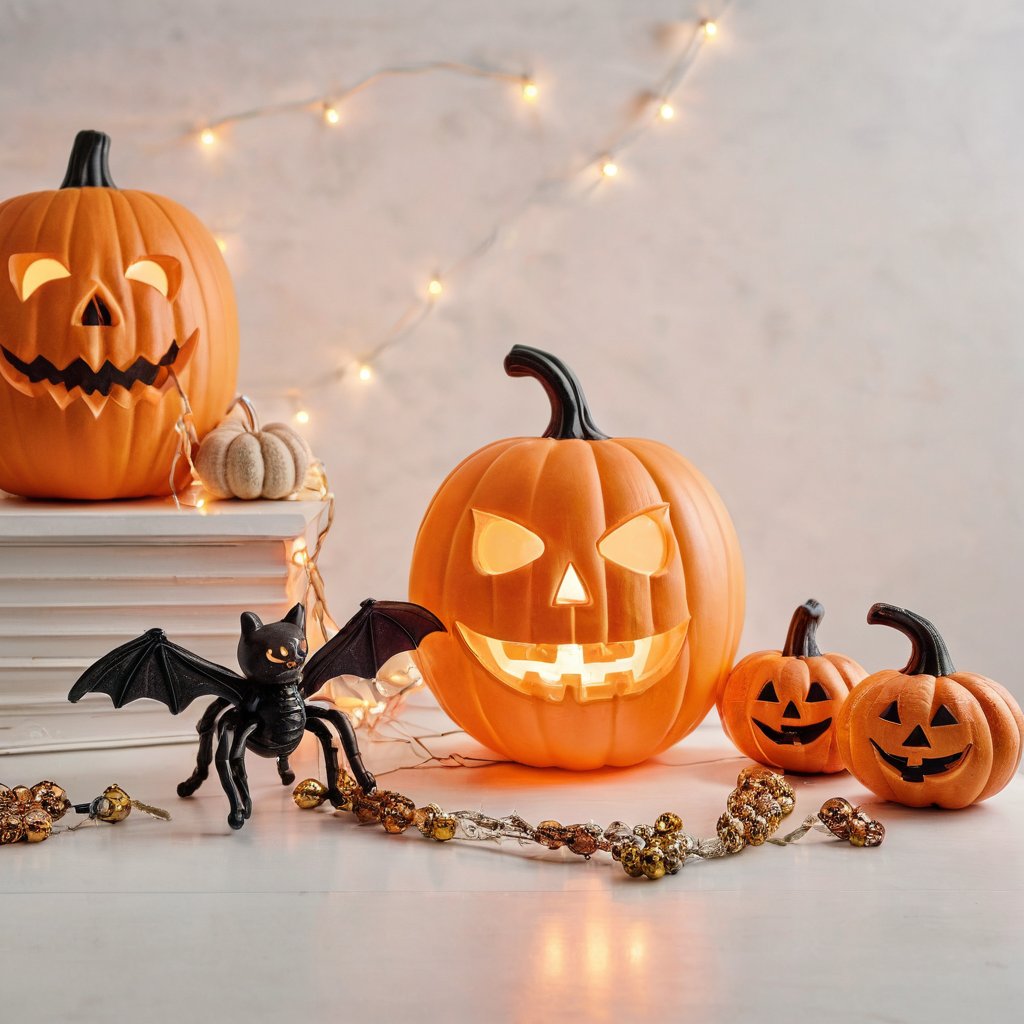
In early August 2025, a client who had spent three years building a year-round home-decor brand asked me to audit his first Halloween season: 6,000 inflatable pumpkins and ghosts, 10,000 LED string lights, 4,000 animatronic skeletons, and 8,000 kids' costumes — sourced from a Yiwu trading company that promised "factory-direct, certified, ships in 30 days." The samples were charming: the pumpkin inflated in eleven seconds, the skeleton's arms waved convincingly, and the costume fabric felt thicker than the $3.90 FOB price suggested. He wired the deposit in mid-August. The container sailed on September 12 and landed at Los Angeles on October 2. And then the season did what Halloween always does to the unprepared: the inflatable's air pump died after 40 hours of continuous use, and one customer's pumpkin deflated at a Halloween party with 30 children watching; the string lights — which never saw a UL 588 lab — overheated at the plug end, and a homeowner's video of a smoking strand went viral in a mom group; the skeleton's motor seized in week two and the batteries swelled in the box; and a customer posted a photo of a "Disney" princess costume — purchased from a third-party listing that his brand name was attached to via a hijacked buy box — next to a CPSC recall notice. His return rate hit 19%, Amazon suppressed two listings, and by October 20 he was discounting what was left at 70% off — to people who would have bought it at full price two weeks earlier, except they'd already spent their Halloween budget somewhere else. The root cause wasn't one bad supplier. It was a category where the calendar is the product: six weeks of demand, an absolute October 31 deadline, and a supply chain that hides every failure mode — the motor, the pump, the LED driver, the paint, the seams, the licensed characters — until the box is opened in September. That story is why this guide exists.
Halloween is the second-biggest seasonal spending event in American e-commerce: the National Retail Federation puts annual Halloween spending north of $12 billion, with roughly $4 billion of it on costumes and the rest split across decorations, candy, and party goods — and Amazon's Halloween season now starts in earnest in mid-September. China manufactures the overwhelming majority of the physical goods, and it does so from the same hyper-specialized clusters that produce Christmas, because the holiday-goods supply chain is built on seasonal machinery that runs twice a year: Yiwu's holiday districts, Puning's inflatable workshops, Shenzhen's LED and electronics studios, Dongguan's animatronic assembly lines, Zhongshan's lighting factories, Chaozhou's kilns, Chenghai's injection presses, Yangzhou's sewing lines, and the Guangdong apparel belt that cuts the world's polyester costumes. The margins are the best in seasonal retail — a $0.30 plastic spider retails at $9.99, a $1.80 LED string light at $14.99, a $3.50 inflatable pumpkin at $39.99, a $9.00 animatronic skeleton at $79.99, a $4.00 kids' costume at $24.99 — because the perceived value of a holiday item is emotional, not functional. But Halloween is also the category with the least room for error: the demand window is six weeks, the deadline is absolute, and every failure mode is invisible at purchase time — the motor, the pump, the LED driver, the battery, the paint chemistry, the seam strength, the flammability of the fabric, and the legality of the character printed on it. This guide maps the clusters, the real 2026 FOB prices, the compliance stack, the verification protocols that separate a real factory from a rebrander, and the shipping calendar that decides whether you have a season at all.
Why China Still Wins Halloween (And Where the Margins Live)
China's Halloween advantage is the same as its Christmas advantage: seasonal manufacturing at a scale and speed no other country can match. Yiwu alone — the holiday-goods capital of the world — produces a large share of the planet's Halloween ornaments, novelties, props, and mixed lots, and its International Trade City holiday districts turn over hundreds of millions of dollars of Halloween goods every season, from plastic spiders and skeleton garlands to full store-display programs. The rest of the chain is layered around it: Puning's factories inflate the blow-up pumpkins, ghosts, and yard displays that anchor American front lawns; Shenzhen builds the LED projection lights, fiber-optic ghosts, and app-controlled effects that are the fastest-growing decoration segment; Dongguan assembles the animatronics — the moving, talking, motorized skeletons and witches that are the premium tier; Zhongshan's Guzhen town molds the string lights, glowing garlands, and light-up props (and tests them against UL 588 in the same city); Chaozhou fires the ceramic jack-o'-lanterns and skulls; Chenghai extrudes the plastic novelties by the tens of millions; Yangzhou sews the plush; and the Guangzhou–Shantou–Quanzhou apparel belt cuts the polyester costumes that dominate the costume segment. The result is a supply chain where a branded plastic spider costs $0.15–0.60 FOB, an LED string light $1.20–4.00, an inflatable pumpkin $3.00–8.00, a kids' costume $3.50–8.00, and a motorized animatronic $8.00–30.00 — price points that make the category's retail margins possible, and that no other manufacturing country can match in the same season.
The margin structure that makes Halloween attractive in 2026:
- Plastic novelties — spiders, rats, skulls, eyeballs (Chenghai / Yiwu): $0.10–0.60 FOB, retails $4.99–14.99 for multi-packs — the volume tier; the margin lives in the pack count and the display, not the piece
- Polyester tablecloths and window clings (Yiwu): $0.30–1.50 FOB, retails $6.99–14.99 — cheap, light, repeatable, and the easiest way to fill a mixed container
- LED string lights, 10m (Zhongshan Guzhen): $1.20–4.00 FOB, retails $12.99–19.99 — the category's biggest unit mover; UL 588 is the whole game
- LED pumpkin / ghost lanterns (Shenzhen / Zhongshan): $1.80–5.00 FOB, retails $14.99–24.99 — verify the LED driver and the battery compartment, not just the glow
- LED projection light, Halloween scenes (Shenzhen): $6.00–18.00 FOB, retails $29.99–59.99 — the fastest-growing segment; the lens, the motor, and the power supply each fail independently
- Fiber-optic ghost / angel with light base (Shenzhen): $3.00–9.00 FOB, retails $19.99–39.99 — the light source and the base motor decide the return rate
- Inflatable pumpkin, 6ft (Puning): $3.00–8.00 FOB, retails $29.99–49.99 — the yard-display workhorse; the air pump is the product
- Inflatable arch / inflatable graveyard set (Puning): $8.00–25.00 FOB, retails $59.99–149.99 — the premium yard tier; bigger pump, bigger stakes, bigger return risk
- Animatronic skeleton, motorized (Dongguan): $8.00–22.00 FOB, retails $59.99–99.99 — the category's margin king; the motor, the battery, and the joints all fail independently
- Talking witch / animatronic with sensor (Dongguan): $15.00–35.00 FOB, retails $89.99–199.99 — sensor triggers, audio, and motion all need the 100-cycle test
- Ceramic jack-o'-lantern / skull (Chaozhou): $1.50–6.00 FOB, retails $12.99–29.99 — the fragile tier; packaging engineering is half the product
- Kids' costume, licensed-look polyester (Guangzhou / Shantou): $3.50–8.00 FOB, retails $19.99–34.99 — the biggest single segment by dollars; flammability, small parts, and IP are the three landmines
- Adult costume, deluxe (Guangzhou): $8.00–25.00 FOB, retails $39.99–89.99 — higher margin, higher quality expectations, same flammability rules
- Plush bats / ghosts (Yangzhou): $0.80–3.50 FOB, retails $9.99–24.99 — the soft tier; stuffing density and seam strength decide the reviews
- Mixed lot of novelties (Yiwu): $0.50–3.00 per dozen FOB — fine for trend-testing and store-display programs, terrible for margin and compliance at volume
The catch: Halloween margins are only real if your return rate stays under 5% — and in this category returns are driven by functional failures that surface during the six-week window when you cannot restock. A pumpkin that deflates at a party, a string light that overheats, a skeleton whose arm stops waving, a costume that fails a flame test, or a "Disney" character that triggers an IP complaint is not a "not my style" return; it is a one-star review with a photo, a suppressed listing, and — in the worst cases — a recall or a customs seizure, all during the only six weeks that matter. A $0.20 saving on the air pump, $0.30 on the LED driver, $0.50 on the motor, or $0.10 on the paint costs the factory pennies and costs you the entire season.
China's Halloween & Fall Decor Clusters: Who Makes What, and Where to Source
Halloween is a multi-cluster category — the novelties, the inflatables, the lights, the electronics, the ceramics, the plush, and the costumes each have their own capital. Match your product to its cluster and you get factory-direct pricing with real seasonal production depth; mismatch it and you're paying a trading company's markup on goods that were made somewhere else. Here's the map:
| Cluster | Specialty | FOB Range (2026) | Typical MOQ |
|---|---|---|---|
| Yiwu (Zhejiang) | The holiday-goods capital of the world: the same city that produces a large share of the planet's Christmas decorations runs the Halloween season twice a year through its International Trade City holiday districts. Ornaments, novelties, plastic props, tablecloths, window clings, garlands, party goods, and mixed lots — plus thousands of trading booths that forward orders to factories they don't own. The default for anything small, plastic, and seasonal | $0.10–3.00 | 500–10,000 pcs |
| Puning (Guangdong) | The inflatable capital: the blow-up pumpkins, ghosts, arches, and full yard displays that anchor American front lawns are sewn, welded, and fan-tested here. The default for inflatables of any size — and the place where the air-pump supply chain lives | $3.00–25.00 | 500–5,000 pcs |
| Shenzhen (Guangdong) | The electronics and effects axis: LED projection lights, fiber-optic ghosts, app-controlled props, light-up masks, and sound-effect modules. The fastest-growing segment of the category — and the one with the most invisible engineering (lens quality, motor life, power supply, battery) | $3.00–18.00 | 1,000–10,000 pcs |
| Dongguan (Guangdong) | The animatronics belt: motorized skeletons, talking witches, sensor-triggered figures, and premium electronic props. The premium tier of the category — the motors, gearboxes, batteries, and audio modules are all engineered here, and the failures are all mechanical | $8.00–35.00 | 500–5,000 pcs |
| Zhongshan Guzhen (Guangdong) | The Lighting Capital of China: string lights, glowing garlands, light-up pumpkins, and LED props — with the UL 588 test houses in the same city. The default for anything that glows, blinks, or strings | $1.20–5.00 | 1,000–20,000 pcs |
| Chaozhou (Guangdong) | The ceramics kilns: ceramic jack-o'-lanterns, skulls, candle holders, and decorative bowls. The fragile tier — packaging engineering is half the product, and breakage in transit is the category's silent margin killer | $1.50–6.00 | 500–5,000 pcs |
| Chenghai (Guangdong) | The plastic novelties press: spiders, rats, eyeballs, teeth, fangs, and every small plastic thing that fills the candy-bowl and party aisles. Injection molding at staggering volumes — and the cluster where toy-safety compliance (CPSIA, EN 71) matters most when kids handle the goods | $0.10–2.00 | 5,000–100,000 pcs |
| Yangzhou (Jiangsu) | The plush and soft-goods town: plush bats, ghosts, pumpkins, and decorative pillows. Stuffing density, seam strength, and fabric flammability decide the quality tier | $0.80–3.50 | 1,000–10,000 pcs |
| Guangzhou–Shantou–Quanzhou (Guangdong / Fujian) | The costume belt: polyester kids' and adult costumes, capes, hats, and accessories. The biggest single segment by dollars — and the one with the most legal exposure (flammability, small parts, licensed characters) | $3.50–25.00 | 1,000–20,000 pcs |
Two trading layers sit on top of these clusters and deserve a warning label. The first is Yiwu's trading-booth ecosystem — thousands of booths in International Trade City that sell holiday goods they don't make, at 30–60% markups over the factory price, with no quality control and no liability. Fine for cash-and-carry test orders and trend-spotting; terrible for margin, compliance, and consistency at volume. The second is the online "factory" that is really a trading company forwarding orders to a real factory — or, worse, buying white-label goods and slapping your logo on them without your knowledge. In holiday goods this matters more than in most categories because the entire product is invisible: the air pump, the motor, the LED driver, the battery, the paint chemistry, and the fabric are hidden until the box is opened in September — and a middleman has no incentive to verify any of it. When you find a candidate supplier, confirm the production floor exists — a video call onto the molding, sewing, or assembly line settles it in five minutes — and ask for their customer list and certification files before you order a single unit.
The Lanes: Novelties, Inflatables, Lights & Effects, Animatronics, and Costumes
Halloween splits into five sourcing lanes with very different risk profiles and lead times. Most sellers should enter through lane one and graduate deliberately — and every lane has a different last-possible-sailing-date, which should drive your ordering calendar:
- Novelties, ornaments, and party goods — the lowest-risk entry: small plastic and polyester items, light compliance (CPSIA/EN 71 when kids handle them, Prop 65/REACH for paint and plastisol), fast production, and the easiest mixed-container fill. The failure modes are paint chemistry, small parts, and packaging — all testable in days.
- Inflatables — the yard-display tier: the air pump is the product, and the product is the pump. Continuous-run testing, seam and weld checks, and battery/plug compliance for the fan units decide the return rate. Lead time is longer (sewing + welding), so order earlier.
- Lights, projection effects, and electronic props — the fastest-growing segment and the most certification-heavy: UL 588 for string lights, FCC for anything with a radio or driver, CE LVD/EMC + EN 60598 for the EU, and battery rules for portable units. This is where the category's fire-safety headlines come from.
- Animatronics — the premium engineering tier: motors, gearboxes, batteries, sensors, and audio modules all fail independently. Highest margin, highest complexity, longest lead time — and the lane where a bad first launch is the most expensive.
- Costumes and accessories — the biggest segment by dollars and the most legally loaded: CPSC 16 CFR 1610 flammability, CPSIA small parts and lead for kids' sizes, and licensed-character IP everywhere. Never source costumes with licensed characters without written authorization — counterfeit Disney, Marvel, DC, and Nickelodeon goods are the category's most common customs seizure and the fastest way to lose a listing.
New sellers should start with lane one — novelties and party goods have the lightest compliance load, the fastest cash cycle, and the gentlest learning curve — and graduate to inflatables and lights in year two with a testing budget and a factory that has done UL 588 and CPSIA before. Save animatronics for year three, and treat costumes as a licensed-brand decision, not a sourcing decision.
The Compliance Stack: US, EU, and Platform Rules
United States
- CPSIA (Consumer Product Safety Improvement Act). Anything marketed to children under 12 — kids' costumes, plush toys, plastic novelties kids will handle — falls under CPSIA: lead limits (90 ppm in accessible parts), phthalate limits (8 substances restricted), and mandatory third-party testing with a Children's Product Certificate (CPC). A "for decoration only, not a toy" label does not immunize a product that is obviously a kids' Halloween item.
- CPSC 16 CFR 1610 (textile flammability). Costumes and textile decorations sold in the US must meet the Standard for the Flammability of Clothing Textiles. Polyester costumes are typically fine, but cheap trims, capes, and synthetic fur fail regularly — and the test must be run on the actual production fabric, not the sample.
- Small parts (16 CFR 1501). Any item intended for children under 3 — and many Halloween accessories that end up in kids' hands — must not shed small parts. Sequins, buttons, eyes, and snaps that pop off in the wash are the category's classic failure.
- UL 588 (seasonal decorative lighting). String lights, garlands, and light-up decorations sold in the US are required (and Amazon-gated) to be tested to UL 588 — the standard that exists because of the fires seasonal lights have caused. The burn-in and temperature-rise tests are the category's signature QC gate; a UL 588 file number is the difference between a listing and a suppression.
- FCC Part 15. Electronic props, projection lights with radios or remotes, and anything with a driver that generates RF emissions needs FCC Part 15 compliance. Verify the FCC ID in the FCC database before you order.
- California Prop 65. Lead, cadmium, and phthalates in painted plastics, plastisol, and costume accessories trigger Prop 65 warning requirements — including for goods sold nationwide via Amazon. XRF-screen every painted SKU; the classic surprise is lead in "glow-in-the-dark" coatings and phthalates in soft PVC novelties.
- Battery rules (UN 38.3). Inflatables with fan units, animatronics, projection lights, and any battery-powered prop needs UN 38.3 transport test reports, is gated on Amazon, and must follow IATA/IMDG rules for air and sea freight. A carrier that rejects your battery shipment in September is a season-ending event.
- FDA food-contact. Candy bowls, treat buckets, and anything food touches fall under FDA food-contact rules (21 CFR). Most decorated bowls and buckets fail on the coating, not the base plastic — confirm the paint is food-safe or sell the item as decor-only with clear labeling.
- Licensed IP. Disney, Marvel, DC, Nickelodeon, and the classic horror franchises are the category's legal landmines. Counterfeit licensed costumes and decorations trigger listing suppression, customs seizure, and legal exposure. Never source licensed characters without written authorization — sell your own original designs and compete on quality.
- Product claims. "UL listed," "flame retardant," "non-toxic," and "glow-in-the-dark" are claims that regulators, platforms, and competitors all police. Every claim must trace to a test report; a claim without a file is a suppression risk.
European Union
- CE (LVD/EMC) and EN 60598. String lights, LED props, and electronic decorations need CE marking under the Low Voltage and EMC Directives, with EN 60598 for luminaires — plus a full technical file. The common failure is a "CE" logo with no file behind it.
- RoHS. Electronic and light-up items sold in the EU must comply with RoHS restrictions on lead, cadmium, mercury, and other hazardous substances.
- REACH. PAHs (polycyclic aromatic hydrocarbons) in soft plastics and plastisol, plus phthalates and heavy metals in paints and coatings, are restricted under REACH — and Halloween novelties are one of the most-tested product groups in the EU's RAPEX alert system. Test the actual materials; the classic failure is PAHs in the soft PVC of a skeleton or spider.
- EN 71 (toy safety). Anything that is a toy — or that a child will treat as one — needs EN 71 testing and CE marking as a toy, including mechanical, flammability, and chemical requirements.
- GPSR. Since December 2024, every product sold in the EU needs an EU responsible person and traceable labeling — Halloween goods are squarely in scope. Budget ~$500–1,000/year for the EU rep service.
- EU Battery Regulation (2023/1542). Battery-powered inflatables, animatronics, and props fall under the regulation — labeling, due diligence, and, from 2027, digital battery passports for portable batteries in devices.
- Textile labeling. Costumes sold in the EU need fiber-content labeling under EU textile regulations, and the garment must carry the right care labels.
- UK. Post-Brexit, goods sold into Great Britain need UKCA marking (or CE accepted under current transition rules), UK REACH alignment, and GPSR-equivalent labeling.
Platform Rules (Amazon, Walmart, TikTok Shop)
- Amazon gates seasonal lighting (UL 588 file required), battery-powered items (UN 38.3 required), and children's items (CPC required); listings without verifiable documentation get suppressed the moment the category is audited — and the seasonal audit window is August–September, right when you need the listings live.
- Children's costume listings on Amazon require the CPC and often trigger the "children's product" classification, which carries its own documentation and liability structure. A costume sold as adult but obviously sized for kids is a classification risk, not a workaround.
- Licensed characters are policed by both Amazon and the rights holders: counterfeit Disney/Marvel/DC listings are suspended with the buy box transferred and, increasingly, legal demands sent to the seller of record.
- Amazon's seasonal storage and removal fees punish Halloween overstock hard: inventory that sits past October 31 into November accrues long-term storage fees, and removal orders in December cost more than the goods are worth. Order for the window, not for the year.
- Walmart and TikTok Shop enforce the same documentation and gating flows; a compliance file built once covers all three.
⚠️ The Fake Certificate and Fake License Problem
In Halloween, the certificate on the box is part of the product — and it is the most-faked part of it. Real UL 588 files are listed by UL with a file number you can verify online; real FCC IDs are searchable in the FCC database; real UN 38.3 reports come from accredited labs and name the exact cell and pack; real CPSIA testing is third-party and the CPC names the actual lab; and real licensed-character agreements are written, signed, and auditable — a supplier who "can do Disney" without a license agreement is selling you a seizure. Before you place an order, verify every certificate and every license independently, and budget $300–2,000 per SKU family for your own third-party testing through an accredited lab. It is the cheapest insurance in the category — and it makes your listings suppression-proof during the six weeks that pay for your year.
The Halloween Failure Modes: Five Tests That Separate Serious Factories from Rebranders
Quality in Halloween lives in the pump, the motor, the LED driver, the battery, the paint chemistry, the seams, and the fabric — none of which your listing photos can show. Run these tests on samples in the first week of August, then spot-check production units:
- The air-pump life test. Run the inflatable's fan continuously for 72 hours and cycle it on/off 100 times — the average inflatable will sit inflated for 3–6 weeks, and a pump rated for 40 hours is a deflated pumpkin at a party. Measure airflow, noise, and motor temperature; test the seam and weld integrity of the actual unit, not the sample.
- The light burn-in test. Run string lights and light-up props for 48 continuous hours and check plug-end and wire temperature rise — the UL 588 test exists because seasonal lights have started fires, and a strand that runs hot at the connector is a recall waiting to happen. Verify the UL 588 file exists and matches the actual product; the category's most common fraud is a file number that belongs to a different product.
- The paint and material screen. XRF-screen every painted, coated, or soft-plastic SKU for lead, cadmium, and phthalates — "glow-in-the-dark" coatings and soft PVC are the classic offenders, and the EU's RAPEX alerts on Halloween novelties are overwhelmingly PAH and phthalate hits. For costumes, run the 16 CFR 1610 flammability test on the actual production fabric and check every trim and cape.
- The animatronic 100-cycle test. Run motors, joints, sensors, and audio modules through 100 full cycles and check battery behavior (swelling, overheating, and the UN 38.3 report for the actual cell). The skeleton whose arm stops waving in week two is the category's most famous one-star review.
- The costume and plush construction test. Wash a costume sample per the care label and check for seam failure, color bleed, and shedding sequins that become small parts; check plush for stuffing density and seam strength; and drop-test the packaging — a crushed "box" that is really a polybag is a delivery-day refund.
The 8-Step Halloween Sourcing SOP (With the Shipping Calendar)
- Pick your lane and your deadline. Start with novelties and party goods — light compliance, fast cash cycle. Graduate to inflatables and lights with a testing budget and UL 588/CPSIA experience, to animatronics with a mechanical-testing budget, and to costumes only with a licensed-brand plan. Then set the calendar: containers to the US West Coast need to sail by early-to-mid September, and to the East Coast by late August to early September; anything after that is air freight on proven best-sellers only, or it is next year's inventory.
- Match the product to its cluster. Novelties and mixed lots to Yiwu; inflatables to Puning; lights to Zhongshan Guzhen; projection effects and electronics to Shenzhen; animatronics to Dongguan; ceramics to Chaozhou; plush to Yangzhou; costumes to the Guangzhou–Shantou–Quanzhou belt. A supplier outside the right cluster is either a trader or paying someone else's overhead.
- Vet the factory. Business license, export history, brand customers, the names of their motor/pump/LED-driver suppliers, their certification files (UL 588 numbers, FCC IDs, UN 38.3 reports, CPCs), and a video call onto the actual production floor. In Yiwu and the holiday belt specifically, confirm the line exists — the season attracts more middlemen than any other category in China.
- Order 2–3 samples from 2+ factories and run the test battery in the first week of August. The 72-hour pump test, the 48-hour light burn-in, the paint screen, the 100-cycle animatronic test, and the costume wash and flame tests. This is the week that decides whether your season survives.
- Run the compliance tests on the samples. UL 588 for lights, FCC for electronics, CPSIA/CPC for kids' items, 16 CFR 1610 for costumes, UN 38.3 for batteries, Prop 65/REACH for materials, FDA food-contact for candy bowls — through accredited labs, on the samples, in August rather than after the container lands.
- Negotiate MOQ and the mixed-container strategy. Halloween economics run on container utilization: combine 30–50 SKUs in one container, standardize on one air-pump motor, one LED driver, and one battery type across your whole line, and own your molds on the repeatable SKUs. Fewer platforms mean fewer failure modes and one certification stack to renew.
- Third-party QC on every batch. Inline checks at molding, sewing, assembly, and packing, plus final random inspection at AQL 2.5 with random pump, burn-in, paint, and seam spot checks. Never ship seasonal goods without final inspection — the failures are invisible until they're inflated, lit, or worn in September.
- Book freight and lock the sailing date before production finishes. The August–September vessel-space crunch is real and gets tighter every year as peak season collides with the Q4 rush. Confirm the booking, the sailing date, and the transit time in writing; the seller with a locked booking wins the season while the seller with "a forwarder somewhere" watches October arrive empty-handed.
Halloween is the second-biggest seasonal payday in e-commerce — $12+ billion in US spending, six weeks of demand, and margins that make a $0.30 spider into a $9.99 sale. But it is also the category where the calendar is the product and the failure modes are all invisible: the air pump, the motor, the LED driver, the battery, the paint chemistry, the seams, the fabric, and the licensed characters on the box. The sellers who win the season aren't the ones who found the cheapest quote; they're the ones who ran the 72-hour pump test, watched the burn-in, XRF-screened the paint, cycled the animatronic 100 times, washed the costume, verified every UL 588 file and FCC ID and license agreement online, and locked the sailing date before the container was full. Do that, and the 60–80% gross margins this category offers become yours to keep — through the six weeks that pay for your year.