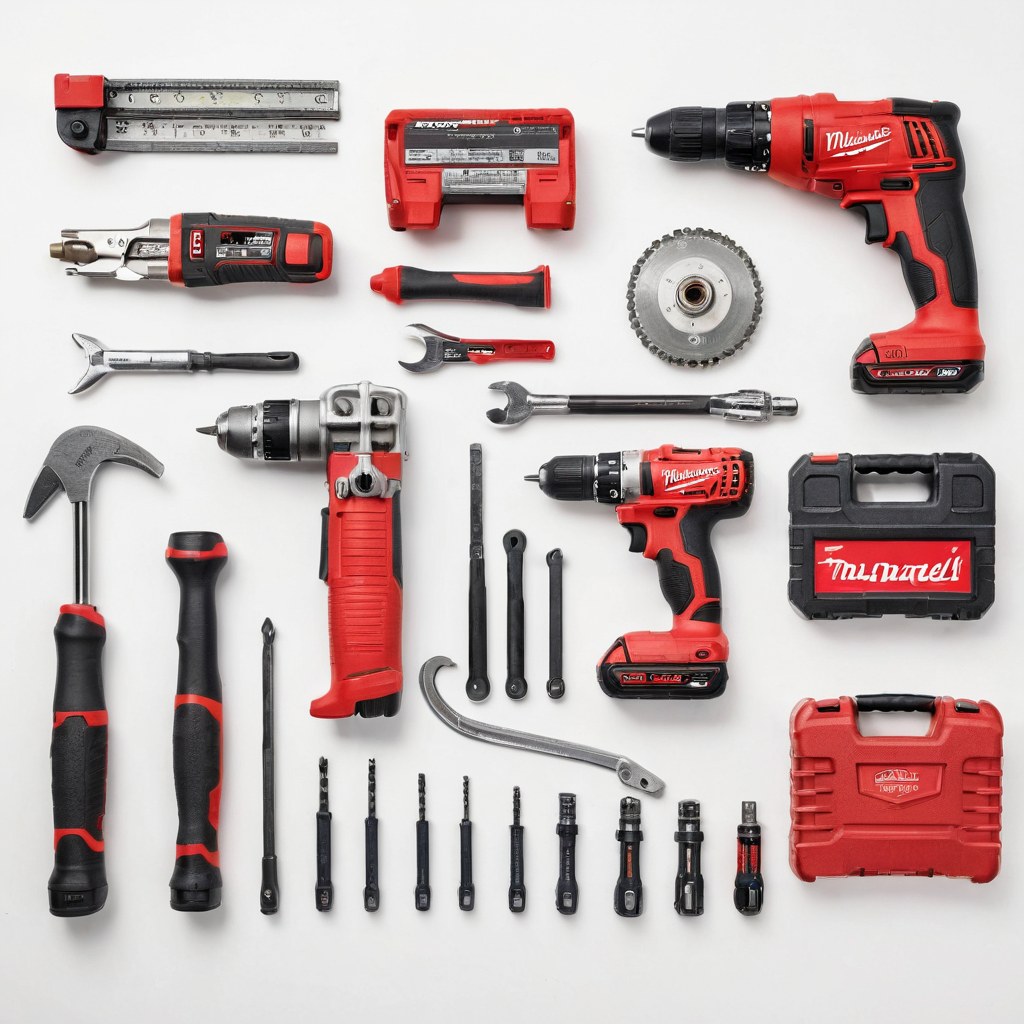
In March 2026, an Amazon seller I consult for launched a "20V brushless" cordless drill kit sourced from a Shenzhen trading company at $21 FOB — with a 4.0 Ah battery, two-speed gearbox, and a 60-piece accessory case. The samples felt solid in the hand. He sold 1,800 kits in five weeks at $79.99. Then the returns started: drills that smelled of burning electronics on the third use, batteries that died after eleven minutes under load, and one customer who posted a teardown video showing nylon gears and a brushed motor with aluminum windings inside a "brushless" housing. His return rate hit 19%, Amazon suppressed the listing after counterfeit-brand accessory complaints, and the carrier refused his second shipment at origin because the batteries had no UN 38.3 documentation. The root cause wasn't a single bad factory — it was a spec sheet that had never been verified against the steel, the motor, and the cells inside the box. That story is why this guide exists.
Hardware and tools are one of the most attractive import categories in cross-border e-commerce: a $1.20 forged claw hammer retails at $12.99, a $16 cordless drill kit retails at $79.99, and the accessory ecosystem — bits, blades, sockets, cases, batteries — multiplies every sale into repeat purchases. The category is also brutally spec-driven. Customers don't judge a wrench by how it looks; they judge it by whether the bolt rounds off. They don't judge a drill by its marketing; they judge it by the torque curve on a stalled screw. That is exactly why the supply chain is full of quiet downgrades: cheaper steel, thinner plating, aluminum instead of copper, nylon instead of metal, fantasy wattage, and counterfeit branding. This guide maps the clusters, the real 2026 FOB prices, the compliance stack, and the verification protocols that keep you out of the failure modes.
Why China Still Wins Hardware & Tools (And Where the Margins Live)
China's tool advantage is the same ecosystem story as every other category, but heavier. Yongkang alone — a county-level city in central Zhejiang — hosts roughly 40,000 registered hardware enterprises and is certified as a world-class hardware cluster, with output spanning hand tools, power tools, locks, cookware, fitness equipment, and electric scooters. Drive ten minutes in any direction from Yongkang's hardware city and you will pass forging shops, heat-treatment lines, electroplating plants, and injection-molding houses that feed each other. Qidong's power tools belt in Jiangsu — anchored by Dongcheng, one of China's largest electric tool manufacturers by volume — turns out drills, grinders, and impact drivers for some of the best-known brands on Western shelves. That vertical integration is why a forged hammer costs $1.20–3.50 FOB, a 24-piece socket set costs $8–20, and a cordless drill kit costs $16–38 — price points Vietnam, India, and Mexico cannot match at the same quality.
The margin structure that makes tools attractive in 2026:
- Forged claw hammer, fiberglass handle (Yongkang): $1.20–3.50 FOB, retails $9.99–19.99 — the classic entry SKU, enormous volume
- Screwdriver set, 6-piece (Yongkang / Ningbo): $1.50–4.00 FOB, retails $12.99–24.99
- Adjustable wrench 8" (Ningbo): $2.00–5.50 FOB, retails $14.99–29.99
- Socket set 1/2" drive, 24-piece (Ningbo / Yongkang): $8–20 FOB, retails $39.99–79.99
- Pliers set, 4-piece (Ningbo): $3–8 FOB, retails $19.99–39.99
- Tape measure 5m (Yongkang): $0.60–1.80 FOB, retails $6.99–14.99 — the fastest-moving tool SKU on Amazon
- Cordless drill/driver 12V kit with battery + charger (Qidong): $16–38 FOB, retails $69.99–129.99 — battery compliance required
- Angle grinder 4.5" (Qidong): $8–18 FOB, retails $34.99–69.99
- Impact driver 20V (Qidong): $14–30 FOB, retails $59.99–119.99
- Rotary hammer (Qidong): $25–55 FOB, retails $99–199
- Deadbolt lock set (Zhongshan Xiaolan): $4–15 FOB, retails $24.99–59.99
- Tool storage / rolling toolbox (Yongkang): $6–20 FOB, retails $29.99–79.99
The catch: tool margins are only real if your return rate stays under 5% — and returns in this category are driven by spec failure, not aesthetics. A customer who buys a hammer that sheds its head, a wrench that rounds bolts, or a drill that burns out is not leaving a "fit" review; they are leaving a one-star review with a photo, and they are never buying from you again. A $0.05 savings on steel grade or $0.20 on motor windings costs the factory pennies and costs you the listing.
China's Tool Clusters: Who Makes What, and Where to Source
Tools are among the most cluster-concentrated categories in Chinese manufacturing. Match your product to its cluster and you get factory-direct pricing with real quality control; mismatch it and you're paying a trading company's markup for a rebranded product. Here's the map:
| Cluster | Specialty | FOB Range (2026) | Typical MOQ |
|---|---|---|---|
| Yongkang (Zhejiang) | The Hardware Capital of China — a world-class cluster of ~40,000 hardware enterprises. Hand tools (hammers, pliers, wrenches, sockets), tape measures, utility knives, tool storage, hardware, locks, and even power tools and cookware. The deepest vendor density on earth for general hardware; the default starting point for almost any hand-tool SKU | $0.30–25 | 500–2,000 pcs |
| Qidong (Jiangsu) | The power tools belt — electric drills, angle grinders, impact drivers, rotary hammers, circular saws. Home to Dongcheng, one of China's largest electric tool manufacturers by volume, plus hundreds of OEM factories supplying global brands. The default for anything corded or cordless that spins, hammers, or cuts | $8–60 | 300–1,000 pcs |
| Ningbo (Zhejiang) | Hand tools and fasteners at export scale — pliers, wrenches, socket sets, screwdrivers, and the screws/bolts/anchors that complete any tool kit. Known for disciplined export-grade QC; a strong choice when you need consistent quality across large volumes | $1–20 | 1,000–5,000 pcs |
| Zhongshan Xiaolan (Guangdong) | The lock capital — Xiaolan town produces roughly 40% of China's locks, plus door hardware, hinges, and handles. The default for deadbolts, padlocks, smart-lock mechanical internals, and any lockable hardware | $1.50–15 | 500–2,000 pcs |
| Jinyun (Lishui, Zhejiang) | Band saws and cutting tools — saw blades, hacksaws, and cutting accessories. A specialty cluster for anything that cuts metal or wood | $0.50–15 | 500–2,000 pcs |
Two trading layers sit on top of these clusters and deserve a warning label. The first is Guangzhou and Yiwu — enormous wholesale markets where Yongkang and Qidong goods are resold at 30–60% markups. They are fine for low-volume test orders, terrible for margin. The second is the Alibaba.com trading company that claims to be "the factory" while forwarding orders to a real factory in a different city. In tools, this matters more than in most categories because the entire product is hidden inside the housing: the motor, the gears, the steel, and the plating are invisible until the tool fails. A middleman has no incentive to verify any of it. When you find a candidate supplier, always confirm the production floor exists — a video call onto the actual forging or assembly line settles it in five minutes.
The Three Lanes: Hand Tools, Power Tools, and Accessories
Tools split into three sourcing lanes with very different risk profiles. Most sellers should enter through lane one and graduate deliberately:
Lane 1: Hand Tools & Hardware (Lowest Risk, Fastest Entry)
Hammers, pliers, wrenches, sockets, screwdrivers, tape measures, utility knives, levels, tool storage, and general hardware. No motors, no batteries, no NRTL listing required for most SKUs — which means the compliance load is light (FTC origin marking, Prop 65, platform policies) and the failure modes are mostly metallurgical. Margins are healthy and volumes are enormous; the trade-off is that differentiation comes from quality claims you must actually prove (forged vs. cast, CR-V vs. carbon steel).
Lane 2: Power Tools (Higher Margin, Heavier Compliance)
Corded and cordless drills, grinders, impact drivers, saws, rotary hammers. Margins are the best in the category and the accessory ecosystem is a recurring-revenue machine — but every SKU carries a compliance stack (UL 62841 in the US, CE under the EU Machinery Regulation, EMC/RED, batteries under UN 38.3 and the EU Battery Regulation), Amazon gating that requires invoices and sometimes documentation, and a return profile that punishes spec exaggeration brutally. Enter only with a compliance budget ($800–2,500 per SKU family for UL/CE testing) and a factory that has done the certifications before — never a first-time exporter for your first power tool.
Lane 3: Accessories & Consumables (The Recurring-Revenue Layer)
Drill bits, saw blades, sanding discs, grinding wheels, screwdriver bits, hex keys, and consumables. Low unit prices, high repurchase rates, and the easiest path to a branded "system" once you sell a tool. Watch two things: material claims (HSS vs. HSS-Co vs. carbide on bits and blades — the substitution is rampant) and safety standards for consumables like grinding wheels (which carry their own certification requirements in both the US and EU).
The Compliance Stack: US, EU, and Platform Rules
Compliance in tools is a two-lane highway: power tools and batteries carry a heavy, well-defined stack; hand tools carry a light one that sellers still manage to fail.
United States
- UL 62841 (power tools). The successor to UL 745-1, UL 62841-1 (general) plus part-specific standards (62841-2-1 for drills, -2-3 for grinders, etc.) covers electric power tools. Certification must come through an NRTL — UL, Intertek (ETL), CSA, or TÜV — and includes construction review, testing, and factory follow-up. Retailers and commercial buyers increasingly ask for the listing; Amazon's gated power-tool categories may require it as part of approval.
- FCC Part 15. Any wireless feature — Bluetooth battery indicators, app-connected tools, radio receivers — triggers FCC Part 15 certification with a searchable FCC ID. A "smart" drill without an FCC ID is a suppression waiting to happen.
- Batteries. Cordless packs must meet UN 38.3 transport testing, cell-level UL 1642 or IEC 62133, and pack-level UL 2054, plus IATA/IMDG rules for air and sea freight. Ask for the UN 38.3 test summary and MSDS before paying a deposit — a real battery factory has them on hand; a rebrander does not.
- California Prop 65. Lead and cadmium in brass and zinc plating, phthalates in PVC grips, and lead in solder trigger Prop 65 warnings. Test the actual materials; the classic surprise is leaded brass in "lead-free" claims.
- FTC origin and content marking. Tools must be marked with country of origin, and metal-content or alloy claims ("chrome vanadium") are advertising claims — they must be true and substantiated, or you face FTC exposure.
- Laser levels. Laser products are regulated by the FDA under CDRH (21 CFR 1040); Class II and IIIa lasers need compliance documentation and proper labeling.
European Union
- CE under the Machinery Regulation (EU) 2023/1230. From January 20, 2027, the new Machinery Regulation replaces the Machinery Directive 2006/42/EC for new machinery — including most power tools. CE marking requires conformity with harmonized standards (EN 62841 for hand-held power tools), a technical file, risk assessment, and an EU Declaration of Conformity. If you're launching in 2026, design your file to the new Regulation from day one.
- EMC and RED. Electrical tools need EMC Directive (2014/30/EU) conformity; wireless features add the Radio Equipment Directive (2014/53/EU).
- RoHS and REACH. Electronics in tools fall under RoHS substance limits; REACH restricts substances across the product — including PAHs in rubber and plastic grips, phthalates in PVC, and nickel/cadmium in plating. Ask suppliers for test reports on actual materials.
- GPSR. Since December 2024, every product sold in the EU needs an EU responsible person and traceable labeling — tools are squarely in scope. Budget ~$500–1,000/year for the EU rep service.
- Battery Regulation (EU) 2023/1542. Cordless tool batteries face new labeling, documentation, and (for larger packs) carbon-footprint declaration requirements rolling out through 2026–2028. A compliant pack from a serious cell maker is a different product than a cheap rebranded pack — price accordingly.
- UK. Post-Brexit, tools sold into Great Britain need UKCA marking (or CE accepted under current transition rules) plus UK REACH compliance.
Platform Rules (Amazon & eBay)
- Amazon gates many power-tool subcategories — approval can require invoices, and sometimes UL/CE documentation. Plan 2–4 weeks of lead time for gating before launch.
- Counterfeit-branded tools (DeWalt, Makita, Bosch, Milwaukee, Stanley) trigger immediate suspension and legal exposure. Never source branded tools without written authorization — sell your own brand and compete on verified spec.
- Battery listings require UN 38.3 documentation on request; listings without it get suppressed the moment Amazon audits the category.
⚠️ The Fake Certificate Problem
In tools, the paperwork is part of the product — and it is the most-faked part of it. Real UL listings are publicly searchable on UL's online directory under the exact company name and model; real FCC IDs are searchable on the FCC database; real UN 38.3 summaries come with a test report from a recognized laboratory; real CE files reference a harmonized standard and an EU DoC signed by the manufacturer. Before you place an order, verify every certificate independently: ask for the certificate number and issuing body, then check it online or email the body. A supplier who "lost" the paperwork or sends a scanned PDF with a different company name on it is telling you everything you need to know. Budget $800–2,500 per power-tool SKU family for your own testing through a recognized lab — it is the cheapest insurance in the category, and it makes your listings suppression-proof.
The Verification & QC Protocol: Six Tests That Separate Serious Factories from Rebranders
Quality in tools lives in metallurgy, motor internals, and tolerances that your listing photos can't show. Run these six tests on samples, then spot-check production units:
- The steel test. For any forged hand tool, measure HRC hardness on the working surfaces — a forged CR-V hammer head, wrench jaw, or socket should read roughly 45–53 HRC; unhardened carbon steel reads in the 20s and rounds off on the first real job. A handheld hardness tester costs under $200. Add a spectrometer or spark test to verify alloy content, and a simple magnet test to check stainless claims. Weight is also a tell: zinc-alloy castings are dramatically lighter than forged steel.
- The motor bench test. For any power tool: measure real current draw, no-load speed, stall torque, and temperature rise over 15 minutes under load. Copper windings weigh more and run cooler than aluminum — weigh the armature and check winding color. A "brushless" drill with brushes visible through the vents, or a 500W motor labeled 1,200W, fails in twenty minutes on the bench.
- The gearbox teardown. Open the housing and check: metal vs. nylon gears (nylon strips under load and is the #1 failure point in cheap drills), tooth count and module, bearing quality, and grease. A $50 teardown on a sample tells you more than any spec sheet.
- The runtime and cycle test. Cordless tools must meet their claimed runtime under load and survive charge cycles on the actual cells. Run a full discharge at load and measure capacity vs. the label; a "4.0 Ah" pack that delivers 1.8 Ah is a rebranded 2.0 Ah pack. Verify cell brand (Samsung, LG, Murata, CATL vs. no-name) and check the BMS for over-discharge and thermal protection.
- The drop and impact test. Ten 1-meter drops onto concrete from different orientations — check housing cracks, battery retention, and switch integrity. Test ratchet engagement over 1,000 cycles, socket fit tolerance on reference fasteners, and grip material at low temperature (cheap PVC grips turn rock-hard at -10°C; TPR stays flexible).
- The salt-spray and plating check. Chrome and zinc finishes must survive corrosion exposure — 24–48 hours of salt-spray testing (ASTM B117-style) on samples separates a real plating line from a $0.02 dip. Measure plating thickness if you can; thin plating is the first thing to fail on customer garage shelves.
The 8-Step Tool Sourcing SOP
- Pick your lane. Start with hand tools and accessories — the compliance load is light and the failure modes are testable. Graduate to power tools only with a compliance budget allocated ($800–2,500 per SKU family) and a factory that has done UL/CE before. Skip counterfeit-branded tools entirely.
- Match the product to its cluster. Hand tools and hardware to Yongkang, power tools to Qidong, locks to Zhongshan Xiaolan, cutting tools to Jinyun, fasteners to Ningbo. A supplier outside the right cluster is either a trader or paying someone else's overhead.
- Vet the factory. Business license, export history, brand customers, ISO 9001 (and ISO 14001 for plating-heavy operations), a video call onto the actual production floor, and the names of their steel and cell suppliers. In Yongkang and Qidong, confirm the floor exists — the clusters are full of offices that forward orders to other people's lines.
- Order 2–3 samples from 2+ factories. Bench-test everything for 2 weeks minimum: steel hardness, motor draw, runtime, drops, ratchet cycles, salt spray. The sample that looks great in the showroom is not the sample that survives week two in a real workshop.
- Run the compliance tests on the samples. UL 62841, FCC, UN 38.3, and Prop 65 through a recognized lab for power tools and batteries; alloy and plating verification for hand tools. Now, not after the container lands.
- Negotiate MOQ smartly. Combine colorways and variants on one forging or molding run; own your injection molds for plastic housings and grips (Yongkang mold costs are among the industry's best); bundle accessory SKUs into kits that lift average order value instead of discounting.
- Third-party QC on every batch. Inline checks at forging, heat treatment, and assembly, plus final random inspection at AQL 2.5 — hardness spot checks, motor function, battery capacity, drop tests, plating, and packaging. Never ship tools without final inspection; the failure modes are invisible until they're in a customer's hand.
- Test production units for compliance and keep the file. Send production units — not samples — for the certifications that matter for your market, keep the certificates and test reports, and build the compliance file (EU responsible person, traceability, MSDS for batteries) before you launch. Then ship, and track return reasons from day one: "stopped working," "rounded off," and "battery died" are your early-warning system for a downgraded batch.
Hardware and tools are one of the last great margin categories in cross-border e-commerce — the cluster density, the FOB prices, and the demand are all there, and the accessory ecosystem turns one-time buyers into repeat customers. But more than almost any other category, the product is the spec: the steel grade, the motor internals, the plating, the cells, and the certificates are the entire customer experience, and every one of them is a place where a fast-buck supplier will quietly save a few cents at your expense. The sellers who win in tools aren't the ones who found the cheapest quote; they're the ones who bench-tested the motor, hardness-tested the steel, verified the batteries, and inspected the production run. Do that, and the 50–70% gross margins this category offers become yours to keep — instead of the returns department's.