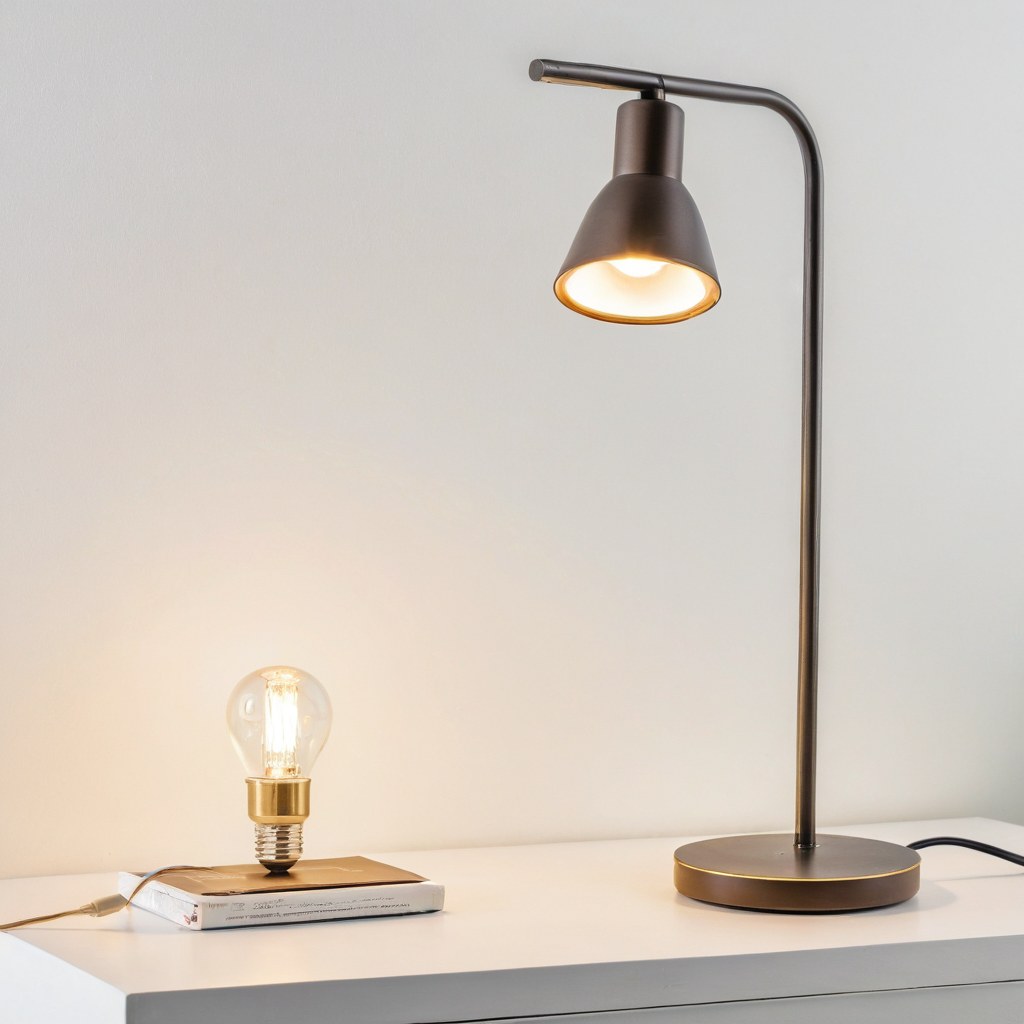
In January 2026, an Amazon seller I consult for launched a "60W-equivalent, 800-lumen, CRI 90" LED bulb four-pack sourced from a Zhongshan trading company at $0.85 FOB per bulb. The samples looked perfect — clean packaging, a believable "UL listed" logo on the box, a warm 2700K glow that made the living room look great. He sold 6,400 four-packs in eight weeks at $16.99. Then the reviews turned: customers measuring with phone apps reported 420–480 lumens — barely brighter than a 40W incandescent; two buyers posted videos of the bulbs flickering visibly on camera; three of the first hundred returns came back dead, opened up to reveal an 85°C capacitor and a driver with no isolation. His return rate hit 17%, Amazon suppressed the listing after a competitor flagged the missing FTC Lighting Facts label, and a wholesale buyer who had ordered 20,000 units walked away when the UL certificate couldn't be found in UL's online directory. The root cause wasn't a single bad factory — it was a spec sheet that had never been tested against a calibrated sphere, a watt meter, and a teardown. That story is why this guide exists.
LED lighting is one of the most attractive import categories in cross-border e-commerce: a $0.85 bulb retails at $4.25, a $2.50 LED strip retails at $12.99, a $9 panel light retails at $39.99, and the category's endless SKU variants — wattage, color temperature, shape, smart features, color — multiply every listing into a product family. The category is also brutally number-driven. Customers don't judge a bulb by how it looks; they judge it by whether it's as bright as the box claims, whether it flickers on camera, and whether it's still working in month six. That is exactly why the supply chain is full of quiet downgrades: rejected chips, cheaper drivers, thinner heatsinks, fantasy wattage, invented certificates. This guide maps the clusters, the real 2026 FOB prices, the compliance stack, and the verification protocols that keep you out of the failure modes.
Why China Still Wins LED Lighting (And Where the Margins Live)
China's lighting advantage is the same ecosystem story as every other category, but more vertically integrated. Guzhen alone — a town of roughly 300,000 people in Zhongshan, Guangdong — hosts around 30,000 lighting enterprises and produces approximately 70% of China's lighting products, from decorative chandeliers to commercial downlights. Ningbo is China's largest LED lighting export city, where bulb and luminaire factories run export-grade QC lines for some of the best-known brands on Western shelves. Shenzhen packs the LEDs themselves — the packaging houses and driver IC designers that turn bare die into the 2835 and 5050 packages inside your products — and has become the world's hub for smart lighting. Xiamen's Sanan grows the epitaxial wafers for high-power chips. That vertical chain — wafer, chip, package, driver, luminaire, smart module — is why a 9W A19 bulb costs $0.35–0.90 FOB, a 5-meter 5050 strip costs $1.50–4.00, and a 2x4 panel costs $6–14: price points Vietnam, India, and Mexico cannot match at the same quality.
The margin structure that makes lighting attractive in 2026:
- LED A19 bulb 9W, 800 lm (Ningbo): $0.35–0.90 FOB, retails $3.99–8.99 per bulb — the highest-volume lighting SKU on Amazon
- LED tube T8 4ft, 18W (Ningbo): $1.20–3.00 FOB, retails $9.99–19.99
- LED panel 2x4 ft, 40W (Ningbo / Guangdong): $6–14 FOB, retails $29.99–59.99 — the office and utility-channel workhorse
- LED strip 5m, 5050 60LED/m (Shenzhen): $1.50–4.00 FOB, retails $9.99–19.99 — enormous volume, brutal competition on spec
- LED downlight 6", 12W (Zhongshan Guzhen): $1.50–4.50 FOB, retails $12.99–29.99
- LED floodlight 50W (Yangzhou / Jiangmen): $3.50–8.00 FOB, retails $19.99–49.99
- Smart bulb A19, WiFi/BT, Matter (Shenzhen / Zhongshan): $2.50–6.00 FOB, retails $12.99–24.99 — FCC ID required
- LED desk lamp with wireless charging (Shenzhen / Zhongshan): $4–12 FOB, retails $24.99–59.99
- Pendant / chandelier, 3-light (Zhongshan Guzhen): $8–40 FOB, retails $49.99–199 — the margin king of the category
- LED grow light panel (Shenzhen): $10–60 FOB, retails $49.99–199 — fastest-growing niche of 2025–2026
- Solar garden light, 2-pack (Yangzhou / Ningbo): $1.50–6.00 FOB, retails $9.99–29.99
- String / fairy lights, 100 LED (Yiwu / Ningbo): $0.80–3.00 FOB, retails $6.99–16.99 — the seasonal volume play
The catch: lighting margins are only real if your return rate stays under 5% — and returns in this category are driven by spec failure, not aesthetics. A customer who buys a "60W-equivalent" bulb that's dimmer than their old 40W, a strip that flickers on video, or a fixture that dies in month three is not leaving a "not my style" review; they are leaving a one-star review with a photo, and they are never buying from you again. A $0.05 savings on chips, $0.15 on the driver, or $0.10 on the heatsink costs the factory pennies and costs you the listing.
China's Lighting Clusters: Who Makes What, and Where to Source
Lighting is among the most cluster-concentrated categories in Chinese manufacturing. Match your product to its cluster and you get factory-direct pricing with real quality control; mismatch it and you're paying a trading company's markup for a rebranded product. Here's the map:
| Cluster | Specialty | FOB Range (2026) | Typical MOQ |
|---|---|---|---|
| Zhongshan Guzhen (Guangdong) | The Lighting Capital of China — ~30,000 lighting enterprises producing ~70% of the country's lighting products. Decorative and residential luminaires above all: chandeliers, pendants, ceiling lights, wall sconces, downlights, and the world's largest lighting wholesale market. The default starting point for anything that hangs from a ceiling or mounts to a wall | $1.50–40 | 200–1,000 pcs |
| Ningbo (Zhejiang) | China's largest LED lighting export base — A19 and BR30 bulbs, T8/T5 tubes, LED panels, outdoor fixtures, and emergency lighting, with export-grade QC discipline and the deepest documentation culture in the category. The default for anything that screws into a socket or a troffer | $0.35–14 | 1,000–5,000 pcs |
| Shenzhen (Guangdong) | The technology layer of the category — LED packaging (2835/5050/COB), constant-current driver ICs, smart lighting modules (WiFi, Bluetooth, Zigbee, Matter), app ecosystems, grow lights, and UV/IR specialty lighting. The default for smart bulbs, strips, grow lights, and anything with an antenna | $1.50–60 | 500–2,000 pcs |
| Yangzhou (Jiangsu) & Jiangmen (Guangdong) | The outdoor belt — street lights, floodlights, landscape lighting, solar-powered fixtures, and highway lighting. Yangzhou is one of China's oldest outdoor-lighting clusters; Jiangmen adds a second deep vendor pool. The default for anything that lives outside and takes weather | $3–25 | 300–1,000 pcs |
| Xiamen (Fujian) | The semiconductor layer — epitaxial wafers, high-power LED chips (Sanan is headquartered here), and packaging for automotive and specialty lighting. Mostly a B2B component source; relevant when you need premium chips and can verify brand claims | Component-level | Negotiated |
| Yiwu (Zhejiang) | The budget tier — string lights, fairy lights, LED candles, novelty and seasonal lighting, resold from other clusters at 30–60% markups. Fine for low-volume test orders and seasonal one-offs; terrible for margin and consistency | $0.30–3 | 100–1,000 pcs |
Two trading layers sit on top of these clusters and deserve a warning label. The first is the Guzhen Lighting Market and Yiwu — enormous wholesale bazaars where cluster goods are resold at 30–60% markups; fine for cash-and-carry test orders, terrible for margin. The second is the Alibaba.com trading company that claims to be "the factory" while forwarding orders to a real factory in a different city. In lighting this matters more than in most categories because the entire product is hidden inside the housing: the driver, the chips, the thermal path, and the certificate are invisible until the fixture fails or the listing gets audited. A middleman has no incentive to verify any of it. When you find a candidate supplier, always confirm the production floor exists — a video call onto the actual assembly line settles it in five minutes.
The Three Lanes: Bulbs, Luminaires, and Smart Lighting
Lighting splits into three sourcing lanes with very different risk profiles. Most sellers should enter through lane one and graduate deliberately:
Lane 1: Bulbs & Strips (Lowest Risk, Fastest Entry)
A19/BR30 bulbs, T8 tubes, LED strips, and string lights. High volume, low unit price, and — for bulbs — a compliance path that is well-trodden: NRTL safety certification (UL 1993/UL 8750), FTC Lighting Facts labeling, and energy-efficiency programs where you want them. The failure modes are mostly spec inflation (lumen and CRI claims) and driver quality, both of which are cheap to verify. Margins are thinner per unit than luminaires, but the volume and repeat-purchase behavior are the best in the category.
Lane 2: Luminaires & Outdoor (Higher Margin, Heavier Compliance)
Panels, downlights, pendants, chandeliers, floodlights, and solar fixtures. Margins are the best in the category and design differentiation is real — but every mains-voltage SKU carries a safety-certification stack (UL 1598 in the US; CE LVD + EMC in the EU), and outdoor fixtures add IP-rating verification and corrosion requirements. Enter only with a compliance budget ($800–3,000 per SKU family for NRTL testing) and a factory that has done the certifications before — never a first-time exporter for your first mains-voltage luminaire.
Lane 3: Smart Lighting & Grow Lights (The Fastest-Growing Layer)
Smart bulbs, smart strips, app-connected fixtures, and LED grow lights. The highest margins and the fastest growth of 2025–2026 — and the heaviest technology load: FCC Part 15 certification with a searchable FCC ID in the US, RED conformity in the EU, app-store and ecosystem compatibility (Alexa, Google Home, Apple HomeKit, Matter), firmware security, and a support burden that cheap suppliers cannot carry. Grow lights add photon-flux claims (PPF/PPFD) that are as inflated as lumen claims in the bulb lane. Enter only with an engineering partner or a factory with proven smart-product history.
The Compliance Stack: US, EU, and Platform Rules
Compliance in lighting is a two-market stack with one shared trap: the certificates are the most-faked documents in the category. Every claim below is verifiable online, and you should verify all of them before paying a deposit.
United States
- NRTL safety certification. Mains-voltage lamps and luminaires must be certified by an OSHA-recognized NRTL — UL, Intertek (ETL), CSA, or TÜV — under the applicable standards: UL 8750 (LED equipment), UL 1598 (luminaires), UL 1993 (self-ballasted lamps), UL 2108 (low-voltage lighting systems). "UL listed" without a searchable listing in UL's public online directory — under the exact company name and model — is a fake. Amazon's gated lighting categories routinely require the certification as part of listing approval.
- FTC Lighting Facts. Any lamp sold with wattage-equivalence or lumen claims ("60W-equivalent", "800 lumens") must carry an FTC Lighting Facts label with real measured values. Labeling a 450-lumen bulb "800 lumens" is an FTC exposure — and the easiest suppression trigger in the category.
- FCC. Smart bulbs, app-connected fixtures, and anything with a radio need FCC Part 15 certification with a searchable FCC ID. Even basic LED drivers and adapters act as incidental radiators — a serious factory has the Part 15 data on hand; a rebrander does not.
- Energy efficiency. Energy Star covers lamps and luminaires for retail and utility-rebate channels; DLC (DesignLights Consortium) gates commercial projects; California Title 20 sets state-level efficiency requirements and Title 24 affects new construction. If you're targeting commercial buyers or California, budget for the testing (often combinable with NRTL testing at the same lab).
- California Prop 65. Lead in solder, DEHP in PVC cords, and lead in brass lamp parts trigger Prop 65 warnings. Test the actual materials; the classic surprise is leaded solder in "lead-free" claims.
- DOE and customs. The US Department of Energy's lighting standards and the Section 301 tariff schedule both change periodically — confirm the current tariff classification and any DOE compliance obligations for your exact product type before you commit.
European Union
- CE — Low Voltage Directive (2014/35/EU). Mains-voltage lighting must be designed and tested for electrical safety; conformity is documented in the technical file and EU Declaration of Conformity. This is the base layer of EU compliance for every luminaire and lamp.
- CE — EMC Directive (2014/30/EU). Emissions and immunity, including EN 61000-3-2 harmonics and flicker requirements — cheap drivers are the classic failure point here. Many "CE marked" budget fixtures carry a CE sticker that has never seen a test report.
- RoHS and REACH. Lead, cadmium, and phthalates in solder, cords, plastics, and finishes are restricted under both regimes. Ask suppliers for test reports on the actual materials — not a generic "we are RoHS compliant" sentence in an email.
- ErP / Energy Labelling (EU) 2019/2020 and 2019/2015. Ecodesign requirements and energy labels for light sources and separate control gears — including the EU energy-efficiency class (A–G) and the product database registration. An unregistered or mislabeled light source is non-compliant the moment it crosses the border.
- GPSR. Since December 2024, every product sold in the EU needs an EU responsible person and traceable labeling — lighting is squarely in scope. Budget ~$500–1,000/year for the EU rep service.
- WEEE. Electrical and electronic products must be registered with national WEEE schemes (the producer responsibility for e-waste). The registration is cheap; skipping it is a customs and marketplace risk.
- UK. Post-Brexit, lighting sold into Great Britain needs UKCA marking (or CE accepted under current transition rules), UK RoHS/REACH alignment, and UK WEEE registration.
Platform Rules (Amazon & Walmart & eBay)
- Amazon gates many lighting subcategories — approval can require invoices and sometimes the safety certification. Plan 2–4 weeks of lead time for gating before launch.
- Smart lighting listings require a valid FCC ID; listings without one get suppressed the moment the category is audited.
- Lumen and wattage claims are advertising claims — Amazon and competitors both police them. A "800 lumens" listing for a 450-lumen bulb is a suppression and suspension risk, not just a customer-service problem.
- Counterfeit-branded fixtures (Philips Hue, GE, Cree, Feit) trigger immediate suspension and legal exposure. Never source branded lighting without written authorization — sell your own brand and compete on verified spec.
⚠️ The Fake Certificate Problem
In lighting, the paperwork is part of the product — and it is the most-faked part of it. Real UL listings are publicly searchable in UL's online directory under the exact company name and model; real FCC IDs are searchable in the FCC database; real CE files reference the applicable directives and harmonized standards and are backed by an EU DoC signed by the manufacturer; real ErP registrations exist in the EU product database. Before you place an order, verify every certificate independently: ask for the certificate number and issuing body, then check it online or email the body. A supplier who "lost" the paperwork or sends a scanned PDF with a different company name on it is telling you everything you need to know. Budget $800–3,000 per SKU family for your own NRTL testing through a recognized lab — it is the cheapest insurance in the category, and it makes your listings suppression-proof.
The Verification & QC Protocol: Six Tests That Separate Serious Factories from Rebranders
Quality in LED lighting lives in the driver, the thermal path, and the chip — none of which your listing photos can show. Run these six tests on samples, then spot-check production units:
- The integrating-sphere and spectrometer test. Measure real lumen output, CCT, and CRI (Ra and R9) on a calibrated integrating sphere or spectrometer. This is the test that catches the entire category's signature fraud: "800-lumen" bulbs delivering 450, "CRI 90" strips measuring 62, "3000K" fixtures reading 4200K. A 1-meter sphere with a spectrometer costs a few thousand dollars at a lab — or a few hundred per test at a recognized laboratory. Never trust the number on the box; the number on the box is the sales pitch.
- The power test. Measure real wattage draw, power factor, and luminous efficacy (lm/W) with a watt meter. A "50W" floodlight that draws 18W is an 18W floodlight with a 50W sticker — and a thermal design that was never meant for 50W. Real efficacy for a decent bulb is 90–130 lm/W; anything claiming 200+ lm/W from an unknown factory is fiction.
- The driver teardown. Open the driver and check: constant-current topology (not a resistor-dropped "capacitive" driver), a recognizable driver IC, electrolytic capacitors rated 105°C from a known brand (85°C caps are the #1 early-failure point in cheap lighting), proper isolation (creepage distance, insulated transformer for mains products), and a real warranty. A driver that costs $0.30 more at the factory level is the difference between a 5-year product and a 3-month product.
- The flicker test. Measure percent flicker and the FFT spectrum with a flicker meter or a high-speed phone camera test as a first pass. Visible flicker causes headaches and migraines, shows up in phone-video reviews, and fails EN 61000-3-2 harmonics testing. Target under 5% percent flicker for residential products; the good factories publish their flicker data, the bad ones don't know what flicker is.
- The thermal test. Run the fixture at rated power in a warm environment (25–35°C ambient) and measure case temperature rise over 2–4 hours with a thermocouple or thermal camera. An undersized heatsink drives the junction temperature up, degrades the LEDs, and shortens lifetime from 50,000 hours to months. Weigh the heatsink: a 50W floodlight with a 200g die-cast body is a 50W floodlight; one with a 60g body is a 18W floodlight wearing a 50W sticker.
- The chip and lifetime audit. Identify the LED package brand (Bridgelux, Osram, Samsung, Lumileds, Cree, Sanan, NationStar vs. no-name reject bins), check the binning (flux and CCT bins), and demand the LM-80 data (LED lumen maintenance) and LM-79 photometric report behind any lifetime claim. Also check the IP rating honestly: a "IP65" solar light with no gasket and no conformal coating will be full of water by spring.
The 8-Step LED Lighting Sourcing SOP
- Pick your lane. Start with bulbs and strips — the compliance load is well-trodden and the failure modes are cheap to test. Graduate to luminaires only with a safety-certification budget allocated ($800–3,000 per SKU family) and a factory that has done UL/CE before. Skip counterfeit-branded fixtures entirely, and treat smart lighting as an engineering project, not a sourcing project.
- Match the product to its cluster. Bulbs, tubes, and panels to Ningbo; decorative and residential luminaires to Zhongshan Guzhen; outdoor and solar to Yangzhou and Jiangmen; smart lighting, drivers, strips, and grow lights to Shenzhen; budget seasonal strings to Yiwu. A supplier outside the right cluster is either a trader or paying someone else's overhead.
- Vet the factory. Business license, export history, brand customers, ISO 9001 (and ISO 14001 for plating-heavy operations), a video call onto the actual assembly line, and the names of their chip, driver, and capacitor suppliers. In Guzhen and Ningbo, confirm the line exists — the clusters are full of offices that forward orders to other people's factories.
- Order 2–3 samples from 2+ factories and test them for a week. Integrating sphere (lumens, CCT, CRI), watt meter (power draw, power factor), driver teardown, flicker measurement, and a 48-hour burn-in. The sample that looks great in the showroom is not the sample that survives week two on a customer's ceiling.
- Run the compliance tests on the samples. NRTL safety (UL 8750/1598/1993) for mains products, FCC Part 15 for smart, ErP/Energy Labelling for the EU, and Prop 65/RoHS material testing — through a recognized lab, on the samples, now rather than after the container lands.
- Negotiate MOQ smartly. Combine wattages and color temperatures on one production run, standardize on a single driver platform across your whole line (fewer drivers = fewer certification files = fewer failure modes), own your tooling for custom housings, and bundle bulbs with fixtures to lift average order value.
- Third-party QC on every batch. Inline checks at driver assembly, LED mounting, and final assembly, plus final random inspection at AQL 2.5 — lumen and CRI spot checks against your spec, power draw, flicker, thermal, packaging, and labeling. Never ship lighting without final inspection; the failures are invisible until they're on a customer's ceiling.
- Test production units for compliance and keep the file. Send production units — not samples — for the certifications that matter for your market, verify every certificate online (UL directory, FCC database, EU product database), and build the compliance file (EU responsible person, traceability, test reports) before you launch. Then ship, and track return reasons from day one: "stopped working," "not as bright as expected," and "flickering" are your early-warning system for a downgraded batch.
LED lighting is one of the last great margin categories in cross-border e-commerce — the cluster density, the FOB prices, and the demand are all there, and the SKU family structure turns one-time buyers into repeat customers. But more than almost any other category, the product is the number: the lumen output, the CRI, the wattage, the flicker, the driver's lifespan, and the certificate's validity are the entire customer experience, and every one of them is a place where a fast-buck supplier will quietly save a few cents at your expense. The sellers who win in lighting aren't the ones who found the cheapest quote; they're the ones who put the samples on an integrating sphere, tore down the driver, measured the flicker, weighed the heatsink, and verified the certificates online. Do that, and the 60–75% gross margins this category offers become yours to keep — instead of the returns department's.