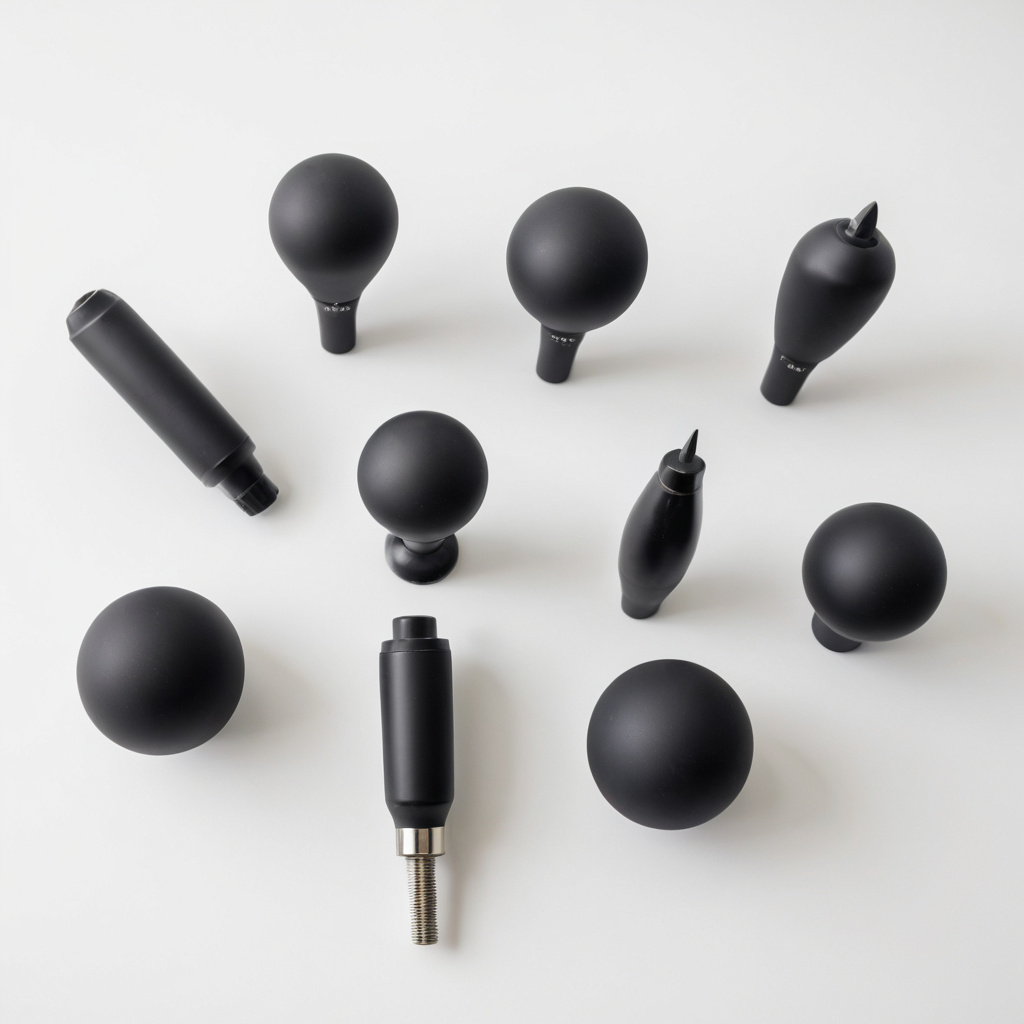
An importer I work with launched a percussion massage gun in September at $89.99. The samples were excellent: an aluminium shell that felt expensive, four interchangeable heads, a claimed 60 lb of stall force, a USB-C port, a 2,500 mAh cell and a quiet 45 dB motor. The listing was clean, the photography was his own, and the first month produced 1,400 orders and a 4.6 rating. By week six he was down to 3.9, and the reviews were all variations of the same four sentences: it dies after two days on one charge; it got much louder after three weeks; my physio says this is not the same model as the one in the video; the little pads on the neck attachment are burning my skin. His return rate reached 13%, and then the request he had not planned for arrived: a marketplace compliance team asking for the UL 1647 test report and the UN 38.3 transport documents for the ASIN, plus the battery and charger reports from the same laboratory. He had a certificate, of course — a PDF with a logo on it, issued for a different model number, from a laboratory that could not be found in any accreditation database, covering a charger he did not buy. Nothing about this story is about a dishonest factory. The factory built the product it was asked to build, at a price that made the sample feel premium and the thousandth unit feel cheap: a cheaper motor cage, a cheaper cell, a cheaper pad adhesive, a motor controller with no thermal derating, and firmware that reports a battery percentage that is a guess. The gap between the sample and the production run is the whole business in this category.
Wellness hardware — massage guns, neck and shoulder massagers, shiatsu pillows, foot and calf massagers, heated eye and scalp massagers, compression boots, TENS and EMS muscle stimulators, red and near-infrared light panels, and massage chairs — is where the best margins in hardgoods e-commerce currently sit, because the customer is not buying a specification. They are buying the feeling of being better. A device that costs $18 FOB retails at $89.99; an $9 shiatsu pillow retails at $49.99; a $30 pair of compression boots retails at $199; a $250 massage chair retails at $1,299. The physical product is mature, the supply chain is vertical and dense, and the branding opportunity is real: this is one of the few categories where the customer names the product by its function and still pays a premium for the box it came in.
The same concentration of value inside an invisible specification is what makes it dangerous. There is no way to see stall force, motor life, battery honesty, heat-limit behaviour, skin-contact chemistry or radiated power in a listing photo, and there is no way to see a regulatory classification at all. In 2026 the two halves of that risk moved in opposite directions: the FDA clarified in January that low-risk wellness products remain outside device regulation, and simultaneously put a tougher quality-system regulation into force in February that applies to anyone who does file as a device; marketplaces began enforcing lithium-battery appliance verification with a hard removal deadline in August; and in Europe the same product is either a self-declared consumer device or a Class IIa medical device with a notified body attached, decided entirely by the claims on the box. This guide is the buying process for a category where the specification, the claims and the paperwork are one decision.
Why the Margins Are Real — and Where They Live
Wellness devices are a margin category because the value is delivered by software, ergonomics and an electric motor rather than by material. That is the opposite of furniture or drinkware, where cost follows mass. A well-built percussion gun uses roughly $4–7 of components in a $14–20 factory price, and the customer's willingness to pay is set by how the device makes their back feel after the first use. In market terms, the massage guns segment is estimated at about $1.7 billion globally in 2026 growing at roughly 7.7% a year, with percussion devices holding around 61% of it and mini and compact devices the fastest-growing format — but the segments around it (eye massagers, compression boots, and the light-therapy tier) are growing faster still and are less crowded.
The margin structure that makes it attractive in 2026:
- Mini percussion gun (Shenzhen / Dongguan): $5.00–10.00 FOB, retails $24.99–44.99 — the best entry SKU in the category; cheap to ship, easy to gift, and the format growing fastest
- Standard percussion massage gun (Shenzhen / Dongguan): $12.00–24.00 FOB, retails $69.99–119.99 — the category's volume seller; the difference between tiers is motor, cell, noise and firmware, not plastic
- Premium gun with hot/cold head and app (Shenzhen): $25.00–45.00 FOB, retails $129.99–229.99 — the tier where connectivity and a documented spec justify the price
- Shiatsu back and neck pillow (Fujian / Zhejiang): $8.00–16.00 FOB, retails $39.99–69.99 — the easiest massager to sell and the easiest to build badly; motors and heat are the whole product
- Neck and shoulder massager, cordless with heat (Shenzhen / Dongguan): $12.00–22.00 FOB, retails $59.99–99.99 — the best-selling gift SKU in Q4 and the most common source of skin-reaction complaints
- Heated eye massager with Bluetooth audio (Shenzhen): $10.00–20.00 FOB, retails $49.99–99.99 — high emotional value, low cost, and heating limits are the compliance question
- Electric scalp and head massager (Shenzhen / Wenzhou): $6.00–12.00 FOB, retails $29.99–49.99 — the cheapest device in the category that still feels like a premium gift
- Foot and calf massager, air compression (Fujian / Zhejiang): $18.00–35.00 FOB, retails $99.99–199.99 — the strongest parental-gifting SKU and the one with the most mechanical failure points
- Foot spa with heat, bubbles and rollers (Zhejiang / Guangdong): $14.00–28.00 FOB, retails $69.99–129.99 — a water-and-electricity product; the safety file is not optional
- Compression boots, sequential (Shenzhen / Fujian): $40.00–90.00 FOB, retails $199.99–499.99 — the fastest-growing recovery SKU and a category where pressure accuracy is the specification
- OTC TENS / EMS stimulator (Shenzhen): $8.00–18.00 FOB, retails $39.99–79.99 — a Class II device needing a 510(k) for the claims; only source against an existing clearance you can legally sell under
- Red light therapy panel, small desk format (Shenzhen / Guangzhou): $18.00–40.00 FOB, retails $89.99–189.99 — marketed as wellness, not as a cleared device; the claim discipline is the product
- Red light therapy panel, full-body (Shenzhen): $120.00–300.00 FOB, retails $499.99–1,299.99 — where irradiance and wavelength claims are tested by customers with meters
- Massage chair, basic shiatsu (Fu'an / Pingyang): $180.00–350.00 FOB, retails $699.99–1,499.99 — heavy, freight-dominated, and impossible to sell without local support
- Massage chair, SL-track zero-gravity (Fu'an / Pingyang): $450.00–900.00 FOB, retails $1,799.99–3,999.99 — a logistics business with a massage function attached
- Vehicle massager, 12V (Fujian / Zhejiang): $6.00–14.00 FOB, retails $29.99–59.99 — a steady Amazon and TikTok lane with a simple compliance profile
- Gua sha and heat-therapy beauty device (Shenzhen / Guangzhou): $5.00–12.00 FOB, retails $24.99–59.99 — the fastest-moving impulse SKU and the one closest to cosmetic claim risk
- Budget mixed lot (Yiwu): $2.00–6.00 FOB — usable for trend-testing only; no documentation, no repeatability, no future
The catch is that in this category returns are driven by engineering honesty, not by taste. A customer whose gun dies on day three, whose neck massager gets hot against skin, whose eye massager plays a grinding noise, whose boots leak air at the ankle or whose stimulator's pads burn is not leaving a three-star review about packaging — they are leaving a one-star review with a photograph, and in the device categories they may also be filing a marketplace safety report. Nothing a factory can do to save $0.50 on a motor, $0.40 on an adhesive or $0.80 on a cell is worth a single point of rating, and no negotiation at the end of the quarter wins back what a bad batch costs. The specification you sign is the review you get.
China's Wellness Device Clusters: Who Makes What
Wellness hardware is not one supply chain; it is three overlapping ones — consumer electronics, small appliances with motors and heating elements, and mechanical furniture. Matching your product to the cluster that owns its hardest component is the difference between a factory price and a trading company's price.
| Cluster | What it owns | Typical FOB (2026) | Typical MOQ |
|---|---|---|---|
| Shenzhen (Guangdong) | The electronics core of the category: brushless motors and motor drivers, battery management, PCBA and firmware, Bluetooth connectivity, app and cloud platforms, and the design houses that take a reference design to a branded product in weeks. Massage guns, EMS/TENS units, light-therapy panels and smart wellness gadgets are all designed here, often assembled elsewhere | $5–45 | 300–1,000 |
| Dongguan (Guangdong) | Silicone and soft-touch components, injection moulds, motor assembly and the mechanical sub-assembly that makes a device feel solid: overmoulded handles, silicone massage heads, pads, straps and the tooling for custom housings | $4–30 | 500–2,000 |
| Fu'an (Fujian) | The massage chair capital of the world and the base for shiatsu pillows, kneading back massagers and vehicle massagers: mechanical linkage design, air-pump systems and the electromechanical know-how that the pure electronics clusters do not have | $8–900 | 100–500 |
| Pingyang and Wenzhou (Zhejiang) | The second massage-equipment cluster: chairs, foot and calf massagers, roller and vibration devices, plus the leather, foam and upholstery supply chain that chairs need | $14–500 | 200–1,000 |
| Cixi, Yuyao and Ningbo (Zhejiang) | Small motors, pumps, heating elements, power supplies and the small-appliance assembly discipline: foot spas, heating massagers, corded pillows, and the AC-powered tier where safety certification matters most | $6–40 | 500–2,000 |
| Jiangsu (Suzhou, Nantong, Changzhou) | Health and personal-care electronics, precision motors, batteries and the more medical-adjacent end of the market: stimulator hardware, sensor modules and the cleaner production environments that device work requires | $8–60 | 500–2,000 |
| Guangzhou and Foshan (Guangdong) | Beauty and personal-care devices, light-therapy hardware, and the cosmetic-device supply chain: LED modules, laser diodes and the appearance-led SKUs that sell on TikTok before they sell on Amazon | $5–120 | 300–1,000 |
| Zhongshan (Guangdong) | Appliance-grade power supplies, adapters, chargers and the certification-friendly electrical components — the tier of the supply chain that decides whether your USB-C charger passes or fails | component level | 1,000+ |
Two practical consequences. First, a "massage gun factory" in Shenzhen that cannot tell you which motor, which cell and which charger it uses is an assembly and sales office, not a manufacturer — and the factories that genuinely own the design will answer with part numbers. Second, your product's hardest component decides the cluster: if the hard part is the battery and the motor driver, source in Shenzhen and mould in Dongguan; if the hard part is the linkage and the air pump, source in Fu'an or Pingyang; if the hard part is the mains-powered heating element, source in Cixi or Ningbo and pay for the certification that the AC tier requires.
What Actually Fails in a Massager
Every one of these failure modes is invisible in a sample and common in a production run, and each has a test that costs far less than the returns it prevents.
- Stall force and amplitude claims. A gun sold as "60 lb stall force" that measures 32 lb on a force gauge is not a small exaggeration, it is a different product — and it is the single most common complaint from buyers who own a premium device already. Measure it yourself, on production units, at the same battery state the customer will use.
- Motor life and thermal behaviour. A brushed motor rated for 3,000 hours of intermittent use that fails at 300 hours of realistic duty cycle is the "it got loud after three weeks" review. The causes are a cheaper cage, no thermal derating in the controller, and a bearing that was specified as optional. Ask for the motor's endurance test and the controller's thermal cut-off behaviour — then run 48 hours of continuous duty on three units.
- Battery honesty. Claimed 2,500 mAh that is 1,400 mAh, claimed four hours that is seventy minutes, and a battery indicator that is a timer wearing a percentage costume. Discharge-test the production run, check the cell marking against the datasheet, and verify the protection circuit — the cheapest cell on the market is also the one that turns a warranty claim into a fire report.
- Noise. A claimed 45 dB measured at 62 dB is the second most common one-star theme. Measure at a defined distance and load, and treat anything the factory quotes without a measurement protocol as marketing.
- Heat limits on skin-contact devices. Neck massagers, eye massagers and heating pads fail here: surface temperature above the product's own limit, no thermal cut-off, or a control strategy that holds heat too long against skin. This is the failure that produces injuries, and the one where "we tested it in our own lab" is not an answer.
- Skin-contact chemistry. Electrode gels and adhesives, silicone softeners, nickel release from metal studs, and plasticisers in straps are all visible to a customer's dermatologist and to a Proposition 65 plaintiff. Specify the material, ask for the migration test, and never let the pad supplier change without re-testing.
- Connectivity and app behaviour. Pairing failures, an app that loses its device on update, a firmware update that bricks the gun and a cloud backend that stops answering in month nine. If your product has an app, the app is a supply chain dependency you have to own: ask who hosts it, who maintains it, and what happens to your customers if the factory's platform disappears.
- Irradiance and wavelength claims on light therapy. Customers in this niche own power meters. A panel advertised as a specific wavelength at a specific power density that delivers a third of it at the specified distance is a refund with proof attached. Ask for a third-party optical report, then verify one unit independently.
- Pumps, valves and seals on compression and air devices. The failure modes are leaks, stuck valves, and pressure drift across the session — all of which appear between week two and month two, and none of which appear in a sample. Run a leak-down and a repeated-cycle test on production units.
- The charger, which nobody specifies. In this category the charger is where certification goes to die: an unlisted adapter, a USB-C port that does not negotiate, or a phone charger the customer already owns being asked to deliver current it cannot supply. Specify the charger as a separate line item with its own certification, and test the device with the chargers customers actually have.
Claims Decide Your Regulatory Path
This is the part of the category that most sellers learn about from a marketplace compliance email. In the United States a therapeutic electric massager is a Class I device under product code ISA (21 CFR 890.5660) and is exempt from 510(k) — but exemption from premarket notification is not exemption from regulation: the manufacturer still has to register its establishment, list the device, label it correctly, keep complaint records and run a quality system. A TENS unit is different: transcutaneous electrical nerve stimulators for pain relief sit in Class II under product code GZJ (21 CFR 882.5890), require a 510(k), are not GMP-exempt, and are reviewed against AAMI NS4 and IEC 60601-2-10. A red or infrared therapeutic lamp is Class II under product code ILY (21 CFR 890.5500) and is 510(k)-exempt within the specific claims that classification permits: temporary relief of minor muscle and joint pain and stiffness, temporary relief of minor arthritis pain, relaxation of muscle spasm, and temporary increase of local circulation where heat is indicated.
The FDA reissued its General Wellness guidance on 6 January 2026, replacing the 2019 version and keeping the same core position: a product intended only for general wellness use that presents a low risk to users is not a regulated device — including, in the new language, certain non-invasive products that measure physiologic parameters — provided it does not diagnose, cure, mitigate, prevent or treat disease, does not substitute for an FDA-authorised device, and does not present clinical-management outputs or values that mimic clinical ones. That is a genuine advantage for a massage gun that says "helps your muscles feel better after training". It evaporates the moment the same gun says "relieves sciatica" or "reduces inflammation" — and the moment it does, you own the obligations of a device you never filed for. In parallel, the FDA's Quality Management System Regulation took effect on 2 February 2026, aligning the device quality system with ISO 13485, so any supplier claiming to build medical devices has a new set of expectations to meet.
| Product | US pathway (2026) | EU pathway | Practical consequence |
|---|---|---|---|
| Massage gun, shiatsu pillow, foot massager, scalp massager — wellness claims only | Not a device under the General Wellness policy: no registration, no listing, no 510(k). Still subject to consumer-product safety, FCC if wireless, and marketplace requirements | Not a medical device: LVD 2014/35/EU, EMC 2014/30/EU, RoHS, RED 2014/53/EU if wireless, GPSR with an EU responsible person | The cheapest and fastest path — but the claim discipline must be enforced across listing, packaging, manual, A-plus, ads and influencer scripts |
| Therapeutic electric massager sold with therapeutic intent | Class I device, product code ISA, 21 CFR 890.5660, 510(k)-exempt — registration, device listing, labelling and quality system still required | Medical device if the claims are therapeutic: Class I or IIa under MDR 2017/745 depending on claims and risk | You need a US agent, a listing under the correct product code, and a file that matches the label |
| TENS / EMS muscle stimulator for pain relief | Class II, product code GZJ, 21 CFR 882.5890, 510(k) required for the claims, not GMP-exempt | Class IIa under MDR with a notified body: ISO 13485, EN ISO 14971 risk management, clinical evaluation, UDI and EUDAMED registration | Do not private-label a stimulator from a factory's clearance unless the clearance, the labelling and the owner of record are contractually correct |
| Red / near-infrared light therapy panel | Class II, product code ILY, 21 CFR 890.5500, 510(k)-exempt within the permitted indications; "FDA approved" is never accurate and "FDA registered" is not the same as cleared | Wellness if claims stay cosmetic and general; medical device if pain-treatment claims are made | Stay inside the four permitted indications or accept the device pathway with clinical data |
| Anything with Bluetooth, Wi-Fi or an app | FCC Part 15 certification for the intentional radiator, with an FCC ID that must be findable in the FCC database; if a pre-certified module is used, verify the module grant and the integration conditions | RED 2014/53/EU, including the cybersecurity requirements that now apply to a wide range of radio equipment | Check the FCC ID yourself, on the FCC site, for the exact model you are importing |
| Anything with a lithium cell | UN 38.3 test summary for transport, plus US DOT requirements for the shipment mode; marketplaces now verify device, charger and battery reports | UN 38.3, EU Battery Regulation duties for the producer of the cell or the embedded battery, plus EMC and safety | Own the transport documents and the battery declaration; they are requested at booking, not at landing |
| Anything that plugs into the wall | UL 1647 (revised 1 July 2026) for motor-operated massage machines, or the applicable appliance standard; a listed product from an NRTL is what a marketplace reviewer expects | IEC/EN 60335-1 with 60335-2-32 for massage appliances and EN 55014 for EMC | Test to the standard that actually covers the product: heated massage devices have triggered requests for heating-appliance standards as well |
Two further 2026 developments belong in the same conversation. First, marketplaces have moved from holding compliance documents to demanding them: a lithium-battery appliance verification programme that testing labs reported running through the middle of 2026 required UL test reports covering the device, the charger and the battery from an ISO 17025-accredited laboratory, together with UN 38.3 transport documentation, with ASIN removal for products that did not comply — while pure AC plug-in devices and NiMH or disposable-battery products fell outside it. Second, Amazon's electrical-product compliance checks expect a UL 1647 report for electric massage equipment when an ASIN is flagged, which means the report should exist before the flag, not after. Sellers have also reported being asked for electric heating pad standards on heated massage devices, which is the practical lesson of the category: the reviewer applies the standard the listing looks like, so keep the claims and the product family consistent.
The Ten-Test Verification Battery
Run these on production units, not on the sample the factory demonstrated. Total cost is a fraction of a single container's return exposure, and the first six are what a marketplace, a regulator and a plaintiff will all eventually ask about.
| # | Test | Protocol | Pass criteria | Typical cost / days |
|---|---|---|---|---|
| 1 | Stall force and amplitude | Measure peak stall force and amplitude at defined battery states (full, mid, low) across at least five units from the run, not one demo unit | Within 10% of the specification at mid charge; consistent across units; no meaningful drop below the marketing claim | $150–400 / 2–4 |
| 2 | Motor endurance and thermal derating | 48 hours of continuous duty with temperature logging at the motor, controller and housing; then a duty-cycle run to the claimed life curve | No thermal shutdown inside normal use, surface temperatures within limits, output degradation within the specified band, no bearing noise | $300–800 / 5–10 |
| 3 | Battery discharge and cell audit | Full-cycle discharge at the rated load, capacity compared with the cell datasheet, protection board behaviour under over-discharge and short circuit, cell marking verified against the declared supplier | Delivered capacity at or above the declared minimum, protection functions verified, cell traceable to a documented supplier | $200–500 / 4–7 |
| 4 | Noise | Measure dB(A) at a defined distance and load across three speed settings on five units, in a low-background room | Within the specified level at every setting; unit-to-unit variation within 3 dB | $100–250 / 2–3 |
| 5 | Skin-contact temperature and time limits | Thermocouple mapping on the contact surface of every heated model for a full session, with the cut-off and the control loop tested, plus an abnormal-use test (blocked airflow, folded pad, no auto-off) | Surface temperature below the limit for the contact duration, cut-off verified to act, no abnormal-use excursion; document the control strategy | $250–700 / 4–8 |
| 6 | Materials and skin-contact chemistry | Migration and nickel-release testing on pads, gels, silicone parts and metal studs; plasticiser screening on straps; a Proposition 65 lead and phthalate determination on the materials that touch skin or are held | Within applicable migration and release limits, with reports naming the exact materials in the bill of materials | $300–900 / 5–10 |
| 7 | Connectivity and app behaviour | Pairing time and success rate over 50 attempts, reconnection after a restart, behaviour across two phone generations, firmware update and rollback on production units, and a packet inspection of what the app sends where | Pairing under the declared time with a high success rate, updates recoverable, no unexpected data transmission; a documented privacy and update policy | $200–600 / 5–10 |
| 8 | Mechanical durability and ingress | Drop tests from the declared height, port and switch cycle life, water and dust exposure against the declared IP rating, and cable strain relief on corded models | No functional failure or exposed conductors after the specified drops; IP rating demonstrated, not claimed | $250–600 / 4–7 |
| 9 | Electrical safety and certification verification | Full test to the applicable standard — UL 1647 for motor-operated massage machines, the relevant appliance standard for heated models, IEC/EN 60335-2-32 and EN 55014 for the EU — plus verification of every FCC ID, every listing and every charger report against the model numbers you are importing | Report names the exact model and covers the charger and battery; every ID resolves in the issuing database; the certificate holder is your supplier and the report is recent | $1,500–5,000 / 15–25 |
| 10 | Claims, label and manual review | A regulatory-literate read of the listing, A-plus content, packaging, manual and warranty against the intended-use position, with a check that no therapeutic, curative or clinical-mimicking claim has slipped in through marketing translation | Every claim inside the chosen pathway, warnings present in the languages of sale, manual and label consistent, medical disclaimers where required | Internal / same week |
That battery costs a few thousand dollars and about a month, which for a first order of 1,000 units is roughly the value of two or three returned units per hundred — the cost of the returns it prevents is almost always larger. It also produces the material you cannot otherwise obtain: a stall force you can print without dread, a battery capacity you can defend, a motor life curve, a skin-temperature record, and a certification file whose model numbers match the cartons.
The Landed Cost and the Return-Rate Math
A $18 FOB massage gun sounds like a 70% margin. The arithmetic that matters is the one after duty, freight, marketplace fees and returns. Here is an illustrative model — these are planning figures, not quotes, and the tariff line on this product has moved more than once in 2026, so verify the rate for your entry date rather than trusting a number from any guide.
| Line | Basis | Amount (1,000 units) |
|---|---|---|
| Goods at FOB | 1,000 × $18.00 | $18,000 |
| Testing, certification and UN 38.3 documentation | Amortised over the run | $700 |
| LCL sea freight | 7 CBM × $155 | $1,085 |
| Marine insurance | 0.5% of goods and freight | $95 |
| US duty | 12.5% Chapter 99 action on a free-MFN heading | $2,250 |
| MPF, HMF, brokerage, port fees | Entry-level charges | $497 |
| Inland delivery | Port to 3PL | $400 |
| Total landed | $23,027 | |
| Landed cost per unit | $23.03 |
Against an $89.99 retail price, a 15% referral fee, a $6.10 fulfilment fee and a provision for returns, the contribution looks like this at three return rates:
| Return rate | Contribution per unit | Contribution margin | Annual contribution at 1,000 units/month |
|---|---|---|---|
| 5% (well-managed) | $41.71 | 46.4% | $500,520 |
| 8% (typical for a mid-quality launch) | $38.32 | 42.6% | $459,840 |
| 12% (the story at the top of this guide) | $33.80 | 37.6% | $405,600 |
Two conclusions follow from that table. The first is that a $3 saving per unit at the factory is worth about 7% of contribution — a real but modest win, and one that is usually bought by removing exactly the motor, cell or pad quality that drives returns. The second is that moving from a 12% return rate to a 5% return rate is worth nearly $8 per unit, which is larger than the entire factory negotiation and compounds in reviews, organic rank and advertising efficiency. In this category quality is the cheapest growth lever available, and it is bought before production rather than after.
The 8-Step Sourcing SOP
- Decide the claim position before anything else, because it determines the product. Write down what the device will say it does, on the box and in the listing, and pick the pathway that matches: a wellness device outside device regulation, a registered and listed massager, a 510(k)-involved stimulator, or an EU Class IIa medical device. This decision changes the factory you can use, the tests you must buy, the app you can ship and the price you can charge — and it is nearly impossible to reverse cheaply once artwork is printed.
- Match the product to its cluster. Electronics and battery-first products to Shenzhen with moulding in Dongguan; mechanical and air-based devices to Fu'an or Pingyang; mains-powered heated devices to Cixi, Yuyao or Ningbo; beauty and light devices to Guangzhou or Shenzhen. Verify the business licence and the export record, and ask which motor, which cell and which charger before you ask for a price — a supplier who answers with part numbers is a different company from one who answers with adjectives.
- Write the specification as a purchase order, not a wish list. Motor brand or equivalent with endurance data, cell supplier and capacity with datasheet, controller behaviour including thermal derating, claimed noise with a measurement protocol, contact-surface temperature limit and cut-off, materials for every skin-contact part, IP rating with a test basis, charger as a separate certified line item, firmware update policy and app ownership, packaging artwork and instructions in the languages of sale, and a no-substitution clause at component level. In wellness hardware the purchase order is the review you will receive.
- Buy samples from two or three factories and abuse them for two weeks. Discharge the battery fully and count the minutes, measure the noise, weigh the device, run it until it gets hot, drop it, use it on an ache for twenty minutes, and pair the app on an older phone. The sample that survives that week is worth more than a certificate, and the factories that survive the questions are your shortlist.
- Buy the certification before the production run, not after the flag. UL 1647 or the applicable appliance standard for the electrical safety file, FCC certification with a verifiable ID for wireless, UN 38.3 and a transport test summary for every lithium cell, the EU set — LVD, EMC, RED, RoHS, GPSR — and MDR only where the claims demand it. Confirm the report names the exact model, covers the charger and the battery, is issued by an ISO 17025-accredited laboratory, and has not been superseded.
- Define the app and the cloud or refuse them. If the device has an app, decide who owns the code, who hosts the backend, who pays for updates, what data leaves the device, and what happens to your customers if the supplier stops answering. A connected device without an app ownership plan is a subscription to someone else's roadmap — and a privacy document that does not match the app's behaviour is a compliance problem on its own.
- Run AQL inspection at final packing plus the abuse tests on production units. AQL 2.5 on function, appearance, accessories and artwork, then stall force, noise, discharge capacity, thermal behaviour and skin-contact temperature on a sample drawn from the finished batch rather than from the pilot run. Add a 48-hour burn-in on a percentage of units before packing, because the failures in this category cluster in the first days of use.
- Build the after-sales layer as part of the product. A manual that is actually translated, a warranty that is honoured with a replacement part, a spare-pad and spare-head SKU that turns a consumable into a repeat purchase, a spare-charger SKU, and a support script that answers the eight questions your return data will produce. In a category where the customer is buying a feeling, the after-sales experience is not overhead — it is the second half of the product, and the reason a $89.99 device earns a review that sells the next thousand.
Seasonality: Q4, New Year and the February Window
Wellness hardware has the best gifting profile in hardgoods and the most compressed production calendar. Q4 carries the year: the tier that sells from late October through December is the mid-price gun, the neck massager, the eye massager and the compression boots — gifts that feel expensive to receive and cost less than $30 to make. The second peak is the New Year resolution window in January and February, which sells recovery and fitness devices to people who just bought a gym membership, and the third is Mother's Day and Father's Day, which sell foot and calf massagers and shiatsu pillows with almost no price sensitivity. Production for a Q4 launch has to be committed by June or July, and the last realistic shipping window for a holiday restock closes in early October. Chinese New Year falls on 6 February 2027, which means the last production gate for a spring order is mid-January and the factories — and the motor and battery suppliers behind them — are effectively closed for two to three weeks after that. A battery or motor problem discovered in November cannot be fixed until March, so the samples you abuse in July are the season you have in December.
The Bottom Line
Wellness hardware is the best margin available to a small brand in 2026 and the category that punishes optimism fastest. The product is not a commodity — it is a specification dressed as a feeling, and the parts that deliver the feeling (motor, cell, controller, thermal behaviour, contact materials, app, charger) are exactly the parts a factory can cheapen without changing the photograph. The compliance position is not paperwork — it is the claim you write, and the same device is either a wellness product outside device regulation or a medical device with a notified body attached, decided by a sentence on a box. What is buyable here is genuinely buyable: the clusters in Guangdong, Fujian and Zhejiang are dense and competitive, the motors and cells are available to a real specification, the tests cost hundreds to a few thousand dollars, and the factories that build the devices you already own will build yours under your label. What is not buyable is a second chance at a bad first batch, because the reviews in this category are technical, permanent, and written by people who bought the product to solve a real problem. Specify it properly, test it before it ships, keep the claims inside the pathway you chose, and the arithmetic in this guide holds: about $42 of contribution on an $89.99 device, a return rate set by your quality plan rather than by the factory's price, and a Q4 that pays for the year.
Keep Reading
If this is the category you are building, these are the guides that carry the rest of the process: the product compliance guide for the marketplace documentation layer, the customs clearance and landed cost guide for the 2026 entry environment, the injection moulding guide for the tooling and MOQ decisions behind a custom housing, the product labelling and packaging compliance guide for the warning artwork and the manual, the quality control and factory inspection guide for the inspection protocol, and the Chinese New Year production planning guide for the calendar this category runs on.
Building a Wellness Device Line for the Next Season?
Start with the free China sourcing guide — the same framework we use to screen factories, benchmark FOB prices, verify certification and build compliance files for importers.
Get the Free Sourcing Guide