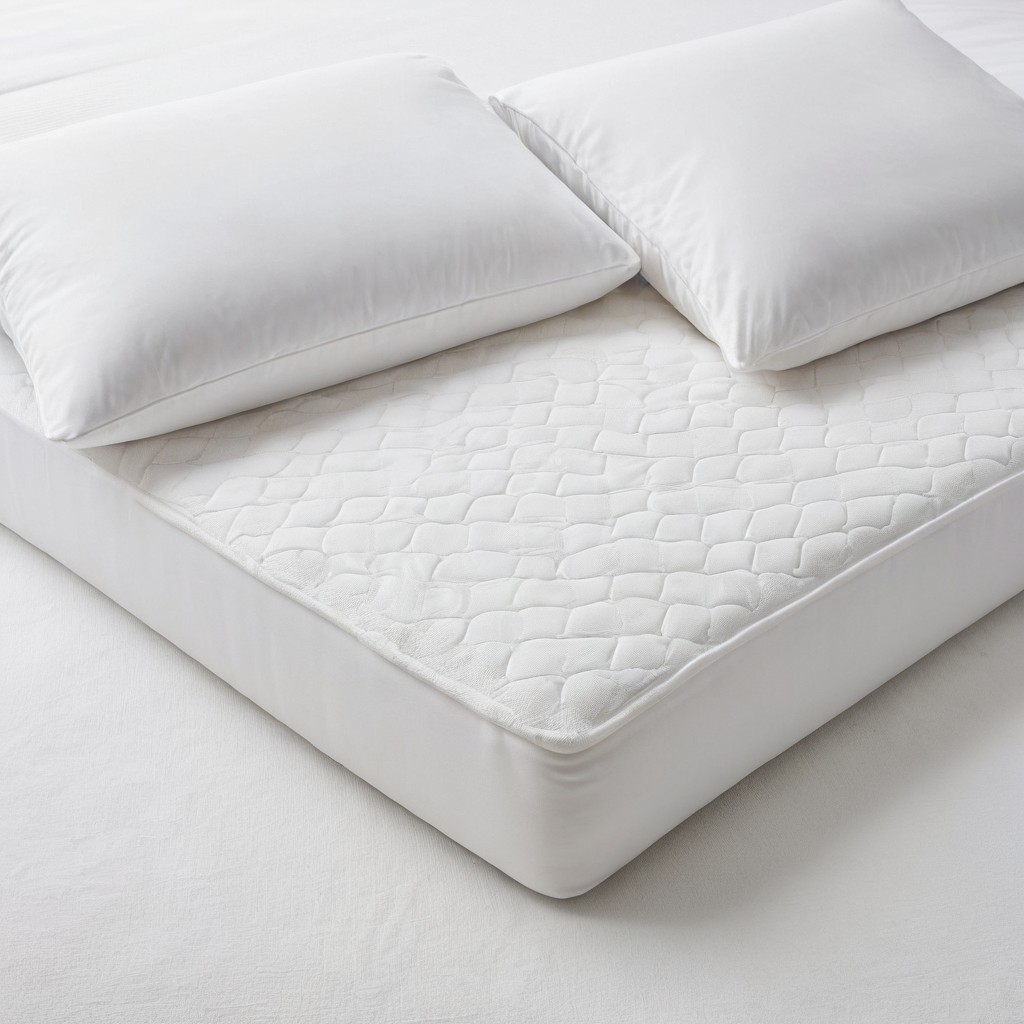
The factory in Foshan quoted $95 FOB for a queen pocket-coil hybrid, roll-packed, with a knitted ticking that looked like the $600 one in the showroom. The buyer ran the numbers, priced it at $399, and placed a deposit on 300 units. Four weeks later the mattress arrived at the port of Los Angeles and the customs broker sent a one-line email that ended the business: the entry had been flagged for antidumping, and the cash deposit CBP demanded was not 25% or 30%, it was the China-wide entity rate of 1,731.75% of entered value. The goods were, in the strictest sense, importable. They were also four hundred and eleven thousand dollars more expensive than the quote. Nothing about the transaction was fraudulent, misdeclared or unusual. The buyer simply did not know that among the world's consumer categories, the one that people sleep on is the one where a Chinese factory can sell you a perfectly good product that the United States has spent seven years and nine trade cases making commercially impossible to bring in.
Sleep products are the strangest category in cross-border sourcing, because the regulatory wall is not on the product's materials, its chemistry or its electrical safety. It is on the tariff line. Mattresses from China have been under an antidumping duty order since 16 December 2019, at rates that no margin survives. Every subsequent trade action in the sector has widened the wall rather than narrowed it, to the point where virtually the entire global mattress supply base is now under order somewhere. And that is where most buyers stop and conclude the category is closed.
It is not closed. It is split. The same factory in Foshan that cannot ship you a finished queen mattress for anything resembling a workable price can ship you a three-inch gel topper, a shredded memory foam pillow, a quilted pad, a waterproof encasement, sheets, a duvet and a comforter with no antidumping exposure whatsoever — because the order's scope deliberately stops at a short, specific exclusion list, and the most commercially valuable line in that list is this: a mattress topper with a height of four inches or less is not a mattress. Everything in the sleep-products category that is not a mattress is ordinary hardgoods sourcing with ordinary rules. Everything that is a mattress is a duty problem with a design and documentation problem bolted onto it.
This guide works both halves. First, the duty architecture and what it actually permits. Then the rules that decide whether the item can be sold once it clears: the two federal flammability standards, the labeling and recordkeeping they impose, the fiberglass barrier that became the category's biggest liability, the bed-rail standard, Amazon's insurance rule of 2 November 2026, and the state recycling fees that now add real money to every unit sold in four US states.
Nine Subcategories, Nine Different Sets of Rules
The word \"sleep products\" describes at least nine supply arrangements that share factories, materials and buyers but almost nothing else. Sorting your intended product into one of them is the first decision, because the duty position, the testing burden and the retail channel all follow from it.
| Subcategory | What it covers | US classification | Duty position from China | The rule that really bites |
|---|---|---|---|---|
| 1. Finished mattresses | Innerspring, pocket coil, memory foam, hybrid, latex; adult and youth | 9404.21.00 (cellular rubber or plastics), 9404.29.10 and 9404.29.90 (other materials) | MFN free, but under AD/CVD order. 57.03% for the one exporter with its own rate; 1,731.75% China-wide; plus Section 301 List 3 at 25% | 16 CFR 1632 and 1633 flammability, prototype testing, imported-set labeling, state recycling fees |
| 2. Mattress toppers | Memory foam, latex, down, quilted toppers of 4 in or less | 9404.21 or 9404.29 depending on core, or 9404.90 if not a mattress form | Outside the mattress order if 4 in or less. MFN free on the 9404.21/29 lines plus List 3 at 25% | The four-inch definition. Height is a scope fact, and CBP decides it, not your listing copy |
| 3. Mattress pads, protectors and encasements | Quilted pads, waterproof fitted protectors, full zippered bed bug encasements | Usually 9404.90 or 6302 depending on construction | No mattress order exposure; MFN 4.4%, 5.3%, 6% or 7.3% by construction, plus List 3 at 25% | 16 CFR 1632 applies to mattress pads; pads with chemical flame retardant require the letter \"T\" on the label |
| 4. Bedding textiles | Sheet sets, pillowcases, duvet covers, comforters, quilts, blankets, bed skirts | 6302.21, 6302.31 bed linen; 9404.40 quilts, bedspreads, eiderdowns and duvets | No order exposure; MFN 4.4% on a cotton duvet, 12.8% on a man-made-fibre comforter, plus List 3 at 25% | Fibre content, country of origin and RN number labelling; \"rayon from bamboo\", never \"bamboo\" |
| 5. Pillows and cushions | Memory foam, shredded foam, down and down-alternative pillows, bolster and reading cushions | 9404.90.10 (cotton shell), 9404.90.20 (other), 9404.90.81, 9404.90.96 | No order exposure; MFN 5.3% to 7.3%, plus List 3 at 25% | Down and feather content labelling by species and percentage; foam certification if you market on it |
| 6. Crib, toddler and juvenile sleep | Crib mattresses, toddler mattresses, bassinet pads, juvenile weighted blankets, bed rails for children | 9404.21/29 with the crib or toddler statistical break-out | Same mattress order exposure as adult product — the order covers youth mattresses regardless of size | Children's product rules: third-party testing at a CPSC-accepted lab, Children's Product Certificate, crib dimensional requirements, and the Safe Sleep for Babies Act ban on inclined sleepers and crib bumpers |
| 7. Adjacent sleep hardware | Adjustable bed bases, bed frames, headboards, mattress supports | 9404.10.00 mattress supports; 9401/9403 for frames and bases | Mattress supports MFN free; frames and bases vary by material, plus List 3 and any steel or aluminium derivative duties | Motor and mains electrical safety for adjustable bases, plus California TB 117-2013 if an upholstered headboard is sold into California |
| 8. Adult portable bed rails | Clamp-on and bed-frame-mounted safety rails for adults | Classified by construction, commonly 9403 or 7326 hardware | General tariff position with List 3 exposure; no mattress order | Mandatory federal standard at 16 CFR 1270, applying to units manufactured after 21 August 2023 — and classified as a sleep product by Amazon for insurance purposes |
| 9. Sleep technology | Smart mattresses and covers with sensors, sleep trackers, heated mattress pads, adjustable-base apps | 9404 lines plus electronics classification for the control unit | Carries the mattress order if the core is a mattress | FCC authorisation for radio devices, plus the EU's revised Product Liability Directive for anything with firmware or AI |
Read the fourth column of that table twice. It explains, without any editorialising, why the sleep-products category on Amazon and Shopify is dominated by toppers, pillows and protectors at the entry level, and why the finished-mattress listings you see are backed either by domestic manufacturing or by importers large enough to buy from the handful of exporters carrying their own antidumping rate.
The Anti-Dumping Wall and What It Actually Permits
Antidumping is not a tariff rate you can look up and add to a model the way you add Section 301. It is an order against a class of merchandise from a country, with company-specific rates, cash deposits collected at entry, and administrative reviews that can change what you owe retroactively, up to six years after the fact. For mattresses, the order and its successors are the defining commercial fact of the category.
| Action | Date | Origins covered | Rates that matter |
|---|---|---|---|
| Antidumping duty order on mattresses from China | 16 December 2019 | China | Healthcare Co., Ltd at 57.03%; the China-wide entity at 1,731.75% on an adverse-facts-available basis, applying to every exporter-producer combination not specifically listed |
| Countervailing duty investigation on mattresses from China | Initiated 24 April 2020 | China | A second, parallel deposit obligation; importers of Chinese mattresses face AD and CVD cash deposits simultaneously |
| Orders on eight origins (Cambodia, Indonesia, Malaysia, Serbia, Thailand, Turkey, Vietnam and China) | 2020-2021 | Eight countries | Vietnam-wide entity at 668.38%; separate rate at 144.92%. The rerouting workaround the industry expected after the China order closed within eighteen months |
| Petitions against twelve origins | 28 July 2023 | Bosnia and Herzegovina, Bulgaria, Burma, India, Indonesia, Italy, Kosovo, Mexico, the Philippines, Poland, Slovenia, Spain and Taiwan | The whole mattress supply chain, named at once. India was alleged at about 61% in the petition itself |
| Orders on India, Kosovo, Mexico and Spain | 10 September 2024 | Four countries | Ordered at the calculated rates; the supply-base narrowing continued |
| Section 301 tariff on the 9404 lines | Continuing | China | List 3 at 25% on the mattress and bedding headings, layered on whatever the MFN rate is — which on the mattress subheadings is free |
| Uncovered innerspring units order | 19 February 2009 | China | Separate order covering bare innerspring units — the component route around the mattress order is itself ordered, which is why it is excluded from the mattress scope |
Three consequences follow, and they are the operating instructions for the whole category.
First: the China-wide rate is not a tariff, it is a prohibition in the shape of a number
At 1,731.75%, a $95 FOB queen mattress demands a cash deposit of roughly $1,645 per unit at entry. This is not a penalty anyone absorbs. It is the mechanism by which Commerce makes a class of goods unimportable when the exporters being examined do not cooperate, and it applies automatically to any shipment from any exporter not on the short list of companies with their own rate. The single rate-carrying exporter in the original order sits at 57.03%. Even that number, on top of a 25% Section 301 tariff, on top of freight and the merchandise processing fee, turns a $95 factory price into roughly $193 of landed cost before a single marketplace fee — workable at a $599 retail price for an operator with capital and a customs broker, and fatal for anyone who assumed the quote was the cost. And because antidumping duties are assessed in annual administrative reviews of what the goods actually were, not of what your invoice said, the rate can be re-liquefied after the fact. A misclassified mattress is not only expensively entered. It is expensively entered for years.
Second: the exclusion list is the opportunity, and the key line is four inches
The scope covers all types of mattresses regardless of size, thickness or material composition, including innerspring, non-innerspring and hybrid construction, adult and youth alike, and only the mattress is covered where it is imported as part of a set or with furniture mechanisms. Then come the exclusions, and they are specific: futon mattresses, airbeds including inflatable mattresses and waterbeds, goods covered by the uncovered innerspring units order, and mattress toppers having a height of four inches or less.
That last line carries an entire product strategy. A removable-layer accessory that supplements a mattress and measures four inches or less in height is not merchandise described by the order. A topper at five inches is a scope question, which is to say a customs fight with your name on it, because there is no amnesty for good intentions and no value threshold at which CBP stops caring about a duty the order makes an importer responsible for. Two operational rules follow. Keep the specification, drawing and packing list consistent at a stated height with measurement points you can actually defend — foam plus cover, uncompressed. And if the read is genuinely close, request a scope ruling before the first shipment rather than after the first assessment, because the ruling is the only document that binds the agency.
Third: the category's margin lives in the pieces, not the bed
Once the mattress is removed from the plan, sleep products become ordinary sourcing. MFN duty on the 9404.21 and 9404.29 mattress lines is free, which is a detail most buyers get backwards — the reason to avoid Chinese mattresses is not the MFN rate. On the bedding side the MFN rates are real but modest: 4.4% on a cotton duvet or cotton quilt under 9404.40.10, 12.8% on the man-made-fibre version under 9404.40.90, 5.3% on a cotton-shelled pillow and 6% on other pillows under 9404.90.10 and 9404.90.20, 4.4% and 7.3% on the further 9404.90 breaks, and in the Chapter 63 bed linen headings a similar single-digit band. Section 301 List 3 adds 25% on top of every one of them. There is no antidumping order on toppers, pads, pillows, sheets, duvets or comforters, and that is precisely why they are where the category's gross margin sits.
The economics are also kinder for a less obvious reason: pieces compress. A queen mattress roll-packs to roughly 0.42 CBM, which fills a 40-foot container with about 160 units; a three-inch topper packs to about 0.108 CBM, which fills the same container with about 620. Freight cost per unit at 40-foot container economics lands near $4.50 on the topper and near $20 on the mattress, and that gap is charged against a $26 product rather than a $95 one. Density, not markup, decides who makes money in this category.
Flammability: Two Standards, Seven Label Elements and Three Years of Records
A mattress sold in the United States must meet two federal flammability standards, and they test different things in different ways. Neither is optional, neither can be satisfied by the factory's general reputation, and both attach a documentation obligation that survives the sale.
| Standard | What it tests | How it is tested | Pass criterion |
|---|---|---|---|
| 16 CFR 1632 — Standard for the Flammability of Mattresses and Mattress Pads (FF 4-72, amended) | Resistance to a smouldering ignition source — the burning cigarette | Prototype testing of six surfaces. Three mattresses where both sides can be tested, six where only one side can. Smooth, tape-edge and quilted or tufted locations all tested where present | No surface characterises as failing after the specified cigarette exposures; any failing location rejects the prototype |
| 16 CFR 1633 — Standard for the Flammability (Open Flame) of Mattress Sets | Behaviour of the complete mattress set under an open flame | Full-scale burn of the set as it will be sold — mattress alone, or mattress with foundation, matching the intended configuration | Peak rate of heat release not above 200 kW at any time in the 30-minute test, and total heat release not above 15 MJ in the first ten minutes |
The import consequence is in the labelling, because an imported mattress set must carry all seven of these elements: the name of the foreign manufacturer and the name of the importer; the complete physical address of the foreign manufacturer including country, plus the complete physical address of the importer or of the US location where records are kept if different; the month and year of manufacture; the model identification; the prototype identification number for the set; a certification that the mattress complies with the standard; and a statement identifying whether the manufacturer intends the mattress to be sold alone or with a foundation. Mattresses and mattress pads must also bear a permanent, accessible and legible label with the month and year of manufacture and the location of the manufacturer, and a pad containing chemical flame retardant must carry the letter \"T\" prominently, with instructions on protecting it from treatments that degrade the flame resistance.
Then come the records. Prototype test results and details must be kept, including the prototype identification number, ticking classification where known, test room conditions, cigarette locations, the number of relights at each location, pass or fail at every location, the name and signature of the tester, and the date, plus a photograph of the bare surface tested with the prototype number and a designation of which parts were sheeted and which were bare. These are retained for three years. For mattresses designed or intended primarily for children twelve and younger, the picture hardens further: testing must be done at a CPSC-accepted third-party laboratory, at the established intervals, covering Parts 1632 and 1633 along with the applicable phthalates and lead requirements, with a Children's Product Certificate on file. Crib mattresses additionally sit under the crib standards at 16 CFR 1219 and 1220 for full-size and non-full-size cribs, which set the dimensional envelope — a full-size crib mattress must be at least 27 1/4 inches by 51 5/8 inches and no more than six inches thick — because a mattress that leaves a gap is an entrapment hazard, not a comfort problem. And since 8 July 2026, where a certificate of compliance exists it must be transmitted with the customs entry under the CPSC's mandatory eFiling programme, which puts the certificate data in the hands of the importer of record rather than the factory.
The fire barrier is the real liability, and it is not the foam
To pass 1633, most foam mattresses use a barrier layer — a fabric or nonwoven that intumesces or chars under flame — wrapped around the foam core. For years the cheapest barrier that worked was a glass-fibre scrim, and a glass-fibre scrim is fine until the cover fails. When the ticking tears, or the zipper fails, or the customer unzips the cover to wash it, fibre can migrate out of the mattress into a bedroom, at which point the product stops being an inexpensive mattress and becomes an indoor contamination remediation project. That risk produced years of consumer complaints, formal CPSC scientific testing of glass fibres released from mattresses with the FOIA release published in February 2025, and a broad reformulation by the industry: Zinus moved to a carbon-rayon sleeve in early 2025, and most major brands now advertise the barrier composition on the product page, in some cases reversing years of non-disclosure.
The regulatory floor is rising to meet it. California's AB 1059, signed on 8 October 2023, bans the sale and distribution of new mattresses, juvenile products and upholstered furniture containing textile fibreglass from 1 January 2027, and removes the exemption that previously spared adult mattresses from the restriction — which means the largest US state moves from partial coverage to none at all in one step, and a mattress that ships nationally on a California-inclusive listing has to meet the standard whether or not the buyer is in California. The practical consequence for a sourcing programme is that the barrier is the first line item in the specification, and the evidence is a written declaration of composition plus a physical check. Cut a mattress open. If you cannot see the barrier layer, cannot identify its material, and cannot get the factory to state it in writing, you are buying an unquantified contamination risk with the highest remediated-cost profile of any hardgood defect.
Adult Portable Bed Rails, Sleep Adjacency and the Rest of the Category
The sleep-products category on Amazon includes adult portable bed rails, and that is not a formality. The CPSC issued a mandatory rule for them at 16 CFR 1270, published in July 2023 and effective for units manufactured after 21 August 2023, after a documented history of deaths and entrapment injuries involving rails that released from the bed, created gaps against the mattress, or were incompatible with the bed frame they were clamped to. A rail is not a piece of bent tube. It is a regulated product whose performance and warning requirements exist because people have died in the gap between the rail and the mattress, and a $9 factory quote from a hardware shop with no test file is a quote for a product you cannot legally place on a US marketplace.
Two other adjacency risks are worth knowing before they become someone else's recall. The Safe Sleep for Babies Act, signed in May 2022, banned inclined infant sleepers and crib bumpers from manufacture and sale, so an attractively cheap infant lounger or a padded crib side is not a margin opportunity, it is a prohibited product regardless of what the factory's catalogue says. And juvenile weighted blankets — the fast-growing gift item, sold with a cute pattern and a five-pound fill — are children's products under CPSIA when marketed to children: third-party testing, a Children's Product Certificate, and safer-market decisions to take once you have read the injury data. If the intended user is a child, assume every general-use assumption you made about the adult version is void.
Amazon's Insurance Rule of 2 November 2026
The commercial gate at the top of this category changed on a published date. Amazon's commercial liability insurance requirements were updated with effect from 2 November 2026, and the change matters most to sellers who assumed the rule did not apply to them.
| Element | Pre-November 2026 position | From 2 November 2026 |
|---|---|---|
| When insurance is required | Gross proceeds above $10,000 in any one month | Always, for listings in the enhanced-safety categories — the sales threshold disappears for those products |
| Which sleep products are caught | Not specifically named | Sleep products, listed as mattresses and adult portable bed rails, inside the eleven enhanced-safety categories |
| Minimum cover | $1M per occurrence and in the aggregate | Unchanged in amount — $1M per occurrence and in the aggregate — but now unconditional for the category |
| Policy form | Commercial general liability | Occurrence form with products and completed operations included, and a deductible no higher than $10,000 |
| Sellers based in mainland China | Generally market-placed | New policies must be placed through the Amazon Insurance Accelerator |
| Consequence of non-compliance | Enforcement below threshold was rare | Listings in the enhanced-safety categories can be deactivated until a compliant policy is on file |
The list of eleven categories is worth reading in full, because it is broader than the toys-and-supplements shorthand: children's products; consumable and ingestible products; fire-related products; general household devices including small kitchen appliances; home medical devices; lithium battery products; outdoor power and heating equipment; personal safety equipment; sleep products (mattresses and adult portable bed rails); transport-related products including tyres; and water and marine safety products. A seller launching a $29 memory foam topper has, for the first time, a compliance obligation that does not depend on volume. Budget the policy premium in the launch model — it is a fixed cost of being in this category in 2026, not a scale-triggered one.
Where Sleep Products Are Actually Made
Sleep products are not one cluster. They are six or seven, each with a different specialism and a different negotiation posture, and the fastest way to destroy a relationship with a Nantong bedding house is to ask it to build a pocket-coil mattress.
| Cluster | Province | What it is actually good at | What to watch |
|---|---|---|---|
| Nantong / Haimen, Dieshiqiao | Jiangsu | Home textiles at national scale — bedding sets, quilts, sheets, pillows. Dieshiqiao is one of the largest home-textile trading bases in the country, and Nantong's output is measured in the majority share of world bedding-set production | Enormous trading-company layer on top of the factories. Ask for the production licence, not the trading licence |
| Haining | Zhejiang | Home textiles and warp-knitted fabric — mattress ticking, jacquard knits, mattress covers and decorative textiles | Fabric quality varies enormously by GSM and by yarn; always quote the ticking separately from the mattress |
| Pinghu | Zhejiang | Down and feather products — duvets, down pillows, feather cushions | Fill power and species claims. Demand the composition statement and cut a pillow open |
| Shaoxing, Keqiao | Zhejiang | Fabric at the widest range of price points in China — the market that supplies much of the bedding industry's textile input | Recycled and virgin yarn are sold side by side; the price difference is the composition difference |
| Shengfang, Langfang | Hebei | Foam, sponge and mattress production — one of the oldest foam and mattress bases in the north | Foam density claims sit behind almost every quality complaint; weigh the core, do not trust the datasheet |
| Shunde Longjiang, Foshan | Guangdong | Beds, bed frames, upholstered furniture and complete mattress manufacturing for export | The most export-fluent cluster, which also means the most polished quotations and the most aggressive FOB pitching |
| Dongguan | Guangdong | Memory foam, gel foam and topper production with the deepest moulding and cutting capability | Chemicals and certification — CertiPUR-US and OEKO-TEX paperwork is available, but often recycled from another customer's model |
Two practical notes. First, the bedding clusters and the mattress clusters are different supply chains with different minimums: a Nantong bedding house will quote 300 sets, a Foshan mattress line will not open for less than a container. Second, the certification story in this category is unusually well developed, which cuts both ways — CertiPUR-US for foam, OEKO-TEX Standard 100 for textiles, GOTS for organic cotton, GRS for recycled polyester, FSC for wood frames. A certificate is evidence for the model it names, and nothing else. Ask for the certificate number and check it against the issuing body's portal, and check that the model designation on the certificate is the model you are buying.
The Specification Sheet That Decides Quality
Mattress and bedding specifications are easy to inflate and easy to verify. Write these lines, in this order, and buy against them rather than against adjectives.
| Specification line | Entry grade | Good grade | How to verify |
|---|---|---|---|
| Base foam density | 1.5-1.8 lb/ft³ conventional | 2.5-3.0 lb/ft³ high-resilience | Cut a 10 cm cube, measure and weigh it. The number you calculate is the number you bought |
| Memory foam density | 2.5-3 lb/ft³ | 4-5 lb/ft³ | Same measurement. A 5 lb topper at 3 lb cost is the single most common substitution in the category |
| Firmness / indentation load deflection | Undisclosed | Stated ILD range, typically 10-14 for toppers, 28-36 for support cores | Ask for the batch test sheet, then verify by hand-loading with a known weight |
| Coil count and gauge (hybrid, pocket coil) | 500-700 queen, 13-15 gauge | 800-1,000 queen, 13 gauge, individually pocketed | Cut the side open; count one row, multiply, and measure the wire with a caliper |
| Edge support | None, or a thin glued foam rail | Encased coil perimeter or a high-density poured rim | Sit on the edge. A mattress that collapses by more than 15% of its height loses half its usable surface |
| Ticking | 120-160 g/m² knit | 180-300 g/m² jacquard knit, or Tencel blend | Ask for the fabric spec sheet with GSM and composition, then compare against a swatch |
| Fire barrier | Undisclosed glass-fibre scrim | Rayon-silica or carbon-rayon nonwoven, declared in writing, fibreglass-free | The declaration plus a physical inspection of the barrier layer in a cut sample |
| Cover closure | Non-opening, or a short zipper | Full perimeter zipper for toppers where the cover is meant to be washed | Test the zipper 50 times on the sample; the first failure mode reported by customers is the zip, not the foam |
| Sheet weave and construction | Microfibre at 75-90 g/m² | Cotton percale or sateen at 110-140 g/m², or a genuine bamboo-rayon blend | Weigh a cut square; check the fibre label against the composition statement |
| Thread count (if claimed) | Marketing figure built from multi-ply yarn | A stated construction — yarn size and ply — that explains the figure | There is no legal definition of thread count. A 600 count built from two-ply 300 doubles the number and not the cloth |
| Down and feather fill | Unstated ratio and species | Stated percentages and species, with a fill power figure — 550-650 FP is standard, 700-800 FP is premium | Weigh the fill of one unit and compare against the stated fill weight; open the corner seam |
| Organic and recycled claims | Verbal or a PDF with no number | A certificate number verifiable against GOTS, GRS or OEKO-TEX records for the named model | Check the number against the issuing body's portal, and check the product scope on the certificate |
Two labelling rules belong on this sheet because they are the ones buyers get wrong. Fibre content, country of origin and the manufacturer's RN number are mandatory on textile bedding under the Textile Fiber Products Identification Act and its rules at 16 CFR Part 303, and down products must state the composition and species. And a bamboo-based viscose sheet may not be sold as \"bamboo\" — the required description is \"rayon from bamboo\", a point the FTC enforced against major retailers in 2009, and one that still appears in listings every week. Marketing a bamboo-rayon sheet as antibacterial bamboo fibre is the fastest route from a good launch to a substantiation request you cannot answer.
2026 FOB Benchmarks
Illustrative factory-gate prices from the mainland-China clusters above, for orders in the low thousands and excluding tooling, artwork and certification costs. Use them to sanity-check a quotation, not as a quotation.
| Product | Specification | FOB (USD) | Typical MOQ | Note |
|---|---|---|---|---|
| Crib mattress | 6 in, foam core, waterproof cover, meets 16 CFR 1219 dimensional rule | $14-24 | 300-500 | Children's product: third-party testing and CPC required |
| Queen memory foam mattress, 8 in | Roll-packed, 2.5 lb base foam | $78-115 | 1 container | AD/CVD exposure — model the deposit before the quote |
| Queen pocket-coil hybrid, 10 in | 800 coil, knitted ticking, edge support | $110-165 | 1 container | AD/CVD exposure; 1633 testing on the set |
| Queen latex mattress, 8 in | Dunlop or Talalay core, organic-cotton cover | $190-260 | 1 container | Latex is largely imported into China from Southeast Asia; margin is thin at origin |
| Queen gel memory foam topper, 3 in | 3-4 lb density, washable cover, full zip | $22-32 | 500-1,000 | Outside the mattress order at 4 in or less. The category's best risk-adjusted entry |
| Queen memory foam topper, 2 in | 2.5-3 lb density, no cover | $14-20 | 500 | A commodity; compete on bundle and brand, not price |
| Quilted mattress pad, queen | Microfibre fill, elasticated skirt | $7-11 | 500-1,000 | 16 CFR 1632 applies; \"T\" label if chemically treated |
| Waterproof mattress protector | TPU laminate, fitted, machine washable | $6.50-12 | 1,000 | Return-driven category winner: cheap, light, hard to break |
| Shredded memory foam pillow, queen, 2-pack | Adjustable fill, washable cover | $7-12 | 500-1,000 | Highest review velocity in the category at low landed cost |
| Contour memory foam pillow | Dense moulded foam, ventilated | $4.50-8 | 1,000 | Mould tooling amortises fast at this price |
| Down-alternative pillow | Microfibre fill, cotton shell | $5-9 | 1,000 | MFN 5.3% where the shell is cotton |
| White goose down pillow | 600 fill power, cotton shell, stated down/feather ratio | $16-30 | 300-500 | Verification is fill weight and species, not fill power marketing |
| Microfibre sheet set, queen, 4-piece | 75-90 g/m², brushed | $6-10 | 1,000 | Chapter 63 classification; the volume entry to the category |
| Cotton sateen sheet set, queen, 4-piece | 300 thread count, single-ply yarn | $17-26 | 500 | Verify the yarn construction, not the count |
| Bamboo rayon sheet set, queen | 60/40 bamboo viscose and cotton, sateen | $15-24 | 500 | Must be described as \"rayon from bamboo\" |
| Brushed microfibre comforter, queen | 200 g/m² fill, box-stitched | $11-17 | 500 | 9404.40.90 at 12.8% MFN if the shell is man-made fibre |
| Cotton duvet cover set, queen | 300 thread count, percale | $14-22 | 500 | Fibre label, origin and RN number are mandatory |
| Goose down duvet, queen | 600 fill power, baffle-box construction | $48-85 | 200-300 | Fill weight is the specification that matters; weigh one unit |
| Weighted blanket, 15 lb, 48 x 72 in | Glass-bead fill, 7-layer construction | $24-40 | 300-500 | Children's versions are children's products under CPSIA |
| Heated mattress pad, queen | Controller, over-temperature protection, UL/ETL | $20-34 | 500 | Electrical safety testing is the critical path, not the textile |
| Adult portable bed rail | Clamp-on, meets 16 CFR 1270 | $8-15 | 500 | Cannot be sold without the test file; not a hardware-shop item |
| Adjustable bed base, queen | Twin motor, wired remote, ETL listed | $210-340 | 1 container | Freight is the model; this is a bulky, heavy, low-density product |
| Bed skirt, queen | Microfibre, 15 in drop | $3.50-6 | 1,000 | Attachment economics: bundle it, never ship it alone |
| Pillowcase pair, cotton, 300 thread count | Single-ply sateen, envelope closure | $3.50-6 | 1,000 | Classic attach-rate product for a bedding listing |
Two Worked Landed-Cost Models
One model for the business the duty architecture permits, and one for the business it does not. Both use illustrative freight and fee inputs, and both are meant to be rebuilt with your own quotes before you commit capital.
Model A: queen gel memory foam topper, 3 inch
| Line | Basis | Per unit |
|---|---|---|
| FOB China | 620 units, washable cover, roll-packed | $26.00 |
| Ocean freight and destination charges | 0.108 CBM per unit, about 620 units in a 40-foot container at an illustrative $2,800 all-in | $4.52 |
| MFN duty | 9404.21 or 9404.29 — free | $0.00 |
| Section 301 List 3 | 25% of entered value | $6.50 |
| Merchandise processing fee | 0.3464% of entered value on a formal entry, above the per-entry floor | $0.09 |
| Broker and entry fees | Illustrative $150 per entry across 620 units | $0.24 |
| Inland drayage to the fulfilment centre | Illustrative $450 per container | $0.73 |
| Landed cost | $38.08 | |
| Retail price | Typical listing position | $89.99 |
| Referral fee | 15% | $13.50 |
| Fulfilment and storage | Large-bulky tier and its storage schedule, illustrative | $10.00 |
| Advertising | Target cost per order | $6.00 |
| Contribution | $22.41 (24.9% of revenue) |
The instructive number in this model is not the margin. It is the freight line. At 0.108 CBM per unit and a $26 FOB, moving the same topper as an LCL shipment at an illustrative $95 per CBM costs about $10.26 per unit — more than double the container figure, and 39% of the factory price. On a bulky, low-density product, container consolidation is worth more than any negotiation you will ever have with the factory. The second instructive number is the $6.50 of Section 301 duty, which exists because the product comes from China and would drop to zero from a non-List-3 origin — a trade-off worth modelling rather than assuming, because moving origin costs you the cluster's density advantage in foam and compression, which is where the real cost sits.
Model B: queen pocket-coil hybrid mattress
| Line | Basis | Buying from the rate-carrying exporter | Buying from anyone else |
|---|---|---|---|
| FOB China | Roll-packed, 0.42 CBM per unit | $95.00 | $95.00 |
| Ocean freight and destination charges | About 160 units per 40-foot container at an illustrative $3,200 | $20.00 | $20.00 |
| Antidumping cash deposit | 57.03% versus the 1,731.75% China-wide rate | $54.18 | $1,645.16 |
| Section 301 List 3 | 25% of entered value | $23.75 | $23.75 |
| Merchandise processing fee | 0.3464% of entered value | $0.33 | $0.33 |
| Landed cost before state fees | $193.26 | $1,784.24 | |
| State mattress recycling fee | Collected at retail: $18.00 per unit in California from 1 April 2026, $22.50 in Rhode Island and Oregon | $18.00 | $18.00 |
| Realistic retail position | Where the incumbents price a comparable imported hybrid | $499-599 | There is no price at which this clears. The product is not importable by this route |
Those two columns are the whole argument of this guide. A finished mattress from China is a real business only for an importer who can buy from an exporter with its own rate, has the working capital to fund a five-figure cash deposit per container, has a broker who will classify it correctly, and can sell at a price where $193 of landed cost is survivable. For everyone else, the same freight container full of toppers, pillows, protectors and sheet sets produces a workable business with no cash-deposit exposure, less testing burden, fewer state fees and a much higher review velocity. The category is not closed. It is routed.
The state fees deserve their own line in the model because they are collected, not paid: California's mattress recycling fee rose to $18.00 per unit on 1 April 2026, Rhode Island's to $22.50, and Oregon stands at $22.50 per unit, with Connecticut in the same high-teens band — a per-unit charge on every mattress, foundation and futon sold into those states, regardless of size or type, with regulated sellers carrying registration and reporting obligations through the state programmes. On a $39 topper none of this applies, because it is not a mattress. On a $499 mattress in California it is $18 of price you cannot keep.
The Ten-Test Verification Battery
Sleep products fail in specific, predictable ways, and each of these tests is designed to surface a failure while it is still cheap. Run them on samples before the production order, and photograph everything.
- Cut the product open. A topper or pillow gets one deliberate cut. Weigh and measure the foam core and calculate the density yourself. Compare it with the datasheet. Substituted density is the most common defect in the category and the easiest to prove.
- Identify the fire barrier in writing. Ask for the barrier composition by material and supplier, and require a declaration that the product is fibreglass-free. A factory that will not name the barrier is a factory that is using the cheapest one.
- Demand the prototype test file, dated and signed. Parts 1632 and 1633 reports for the exact prototype, with the ticketing classification, the test room conditions and the failure record. A certificate of conformity that references a model number different from yours is not evidence for your product.
- Test the zipper and the cover to destruction. Fifty open-and-close cycles, then a wash cycle where the cover is washable. The zip is the first thing customers break and the first thing they write about.
- Confirm the roll-pack recovery number. Ask how many days to nominal thickness after unpacking, and test it: unroll a sample, measure at 1 hour, 24 hours, 72 hours. A topper that never recovers its stated height generates returns and one-star reviews with photographs.
- Weigh the fill. For a duvet or pillow, weigh the fill from one opened unit against the stated fill weight, and compare the down and feather percentages against the label. The classic defect is a fill weight 10-20% below specification on a product sold on loft.
- Check every certificate number against the issuing body. CertiPUR-US, OEKO-TEX Standard 100, GOTS, GRS — take the number, look it up, and confirm that the certified model is the model you are buying, not a sibling product the factory certified years ago.
- Audit the labels against the regulation, not the artwork. Fibre content, country of origin, RN number, care instructions, and for a mattress set the seven required elements. Misbranded merchandise is a seizure risk and a marketplace suspension risk, and it costs nothing to fix before production.
- Run a compression and transit test. Pack a sample the way the factory will ship it, move it by courier, then unpack and inspect. Carton damage, torn vacuum bags and creased foam are a freight-planning problem that shows up as a damage rate on your returns report.
- Ask for the spare-parts and replacement-unit route. The ability to buy ten replacement toppers or a hundred replacement covers at factory cost is what converts a defect wave from a full-refund disaster into a partial-loss event. A supplier who cannot sell you parts is a supplier who has not thought about the second year.
Compliance File: What Has to Exist Before the First Sale
| Requirement | Where it applies | What you need in the file |
|---|---|---|
| Flammability — 16 CFR 1632 and 1633 | Mattresses and mattress pads; sets under open flame | Prototype test reports with prototype identification numbers, pass records for all six surfaces, photographs, retained three years |
| General Conformity Certificate | Consumer products subject to a CPSC standard, including mattresses | A GCC issued on the basis of a test or a reasonable testing programme, naming the product and the standard |
| Children's Product Certificate | Mattresses and sleep products for children twelve and younger | Testing at a CPSC-accepted third-party lab at the required intervals, plus a CPC before the product is sold |
| Crib standards — 16 CFR 1219 and 1220 | Full-size and non-full-size crib mattresses | Dimensional compliance — full-size mattresses at least 27 1/4 in by 51 5/8 in and no more than 6 in thick — plus the applicable testing |
| CPSC eFiling | Entries carrying a certificate of compliance, mandatory since 8 July 2026 | Certificate data transmitted with the customs entry; the importer of record owns this obligation, not the factory |
| Textile labelling | Sheets, pillowcases, comforters, pads and any textile bedding | Fibre content, country of origin, RN number, care instructions; down products stating species and composition percentages |
| Adult portable bed rails — 16 CFR 1270 | Units manufactured after 21 August 2023 | Test records and the required warnings; do not sell without the file |
| Prop 65 | Anything sold into California with a listed chemical exposure route | Either a substantiated exposure assessment or the required warning; flame retardants and foam components are the usual triggers |
| State recycling fees | California, Connecticut, Rhode Island, Oregon | Registration and reporting where you are a covered seller, and a fee collected and remitted per unit — $18.00 in California from 1 April 2026, $22.50 in Rhode Island and Oregon |
| EU GPSR responsible person | Any sleep product placed on the EU market | A named EU-based responsible person with an address on the product and the listing |
| EU flammability and crib standards | EU mattress sales, and cot mattresses specifically | EN 597-1 and EN 597-2 ignition testing for mattresses, EN 16890 for cot mattresses, plus fibre labelling under Regulation (EU) 1007/2011 |
| UK fire safety | Mattresses and upholstered sleep furniture sold in the UK | Compliance with the Furniture and Furnishings (Fire) (Safety) Regulations 1988 ignition requirements, with BS 7177 where the product is supplied for contract use |
One further timing note that matters more in sleep products than in most categories, because the goods are bulky, container-dependent and seasonal. Chinese New Year 2027 falls on 6 February and the disruption starts in mid-January, when migrant labour begins leaving and lines stop taking new orders — a container of toppers that was meant to arrive in March has to be ordered in late December and produced before the middle of January. If the plan is a spring bedding season launch, the purchase order decision happens in 2026.
What to Actually Do
The category resolves into four positions, and only one of them is a start-from-zero position.
- Toppers, pads, protectors and pillows: enter here. Outside the mattress order, modest MFN rates, cheap to ship, high review velocity, one insurance obligation and one flammability standard to understand. This is where a new seller in sleep products should spend their first twelve months, and where the density arithmetic rewards container consolidation immediately.
- Bedding textiles: enter here if you can fight on brand. Sheet sets, duvets and comforters are a labelling and substantiation business with a commodity price floor. The margin comes from design, bundle structure and honest fibre claims, not from factory negotiation.
- Finished mattresses: only with a rate-carrying exporter, capital and a broker. The AD deposit is a working-capital line, the 1633 testing is a fixed cost, the state fees are collected not earned, and the freight is brutal. Enter with a domestic-assembly or non-subject-origin plan, or do not enter.
- Children's sleep products and bed rails: only with the test file in hand. The rules are not theoretical, the injuries are documented, and the certificate is the product. A cheap crib mattress without a CPC is not a bargain, it is a liability with a delivery date.
Sleep products look like a comfort category and behave like a compliance one. The buyer in the opening story did not fail at sourcing — the sample was good and the price was real. They failed at the one question that decides this category before any other: not what the factory will sell you, but what the tariff line, the scope language and the test file will let you sell. Answer that first, and the rest of the category is ordinary, well-tooled, profitable hardgoods sourcing with unusually good freight economics and a customer who buys the same product again every four years.
This guide is informational and reflects published 2026 market parameters and regulatory timelines; it is not legal, customs or compliance advice. Anti-dumping and countervailing duty scope, rates and cash-deposit treatment are company-specific and change through administrative reviews and Federal Register notices; classification, flammability and labelling obligations depend on the exact product and construction; state fee schedules and marketplace requirements change on published dates. Verify your own classification, entry treatment, testing obligations and channel rules with a licensed customs broker, a compliance testing laboratory and a lawyer before relying on any figure in this article.