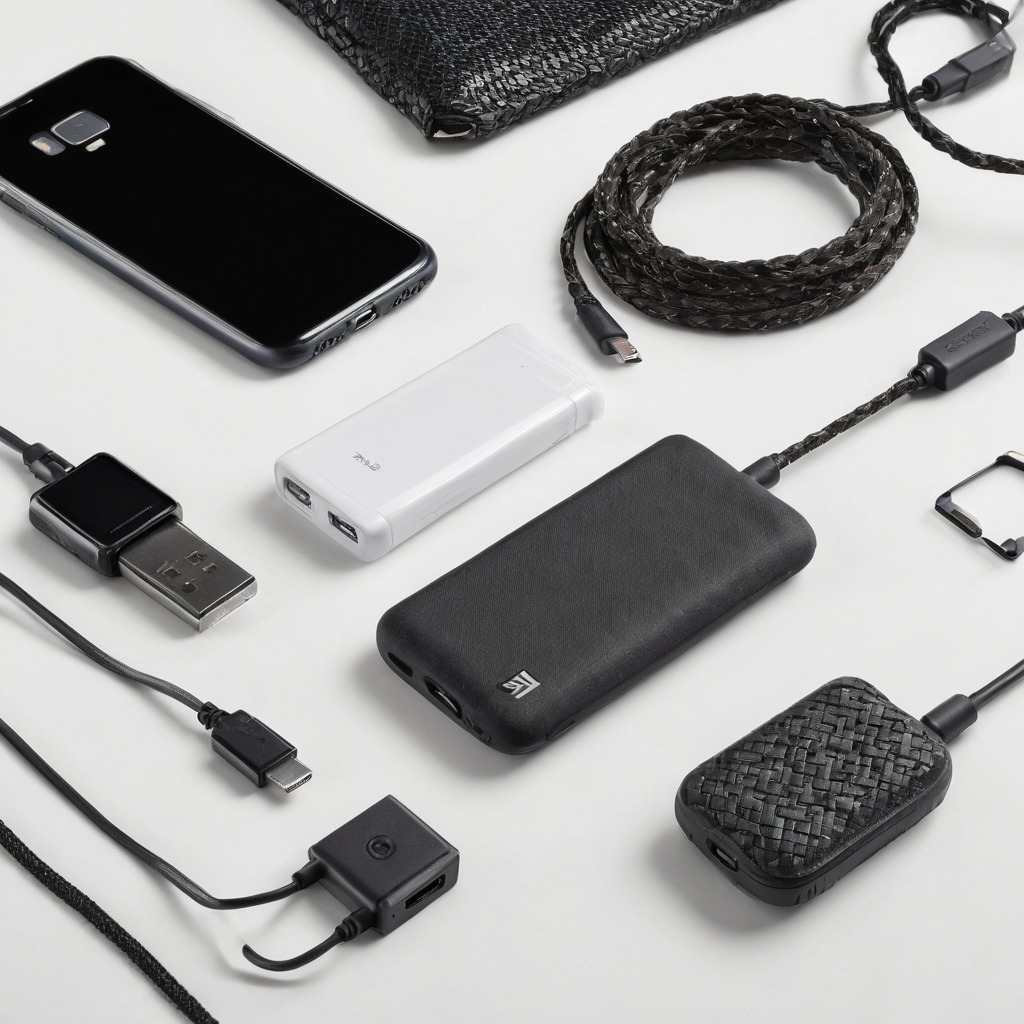
In March 2026, a friend who had just quit his corporate job to sell on Amazon asked me to sanity-check his first big order: 20,000 units of what he called his "premium fast-charging lineup" — a 20W GaN wall charger, a 2-meter braided USB-C cable, and a 10,000mAh power bank, sourced from a Shenzhen trading company that promised "factory direct, 14-day production." The samples charged his iPhone from 20% to 80% in 32 minutes — impressive. He wired the deposit, the container landed in June, and he launched at $19.99 for the charger, $12.99 for the cable, and $29.99 for the power bank. Sales took off — for two weeks. Then the reviews turned: the "20W" charger took 2.5 hours to charge a phone; the "braided" cable died at the connector after a month; the power bank showed 10,000mAh on the sticker but delivered 3,200mAh of real capacity and ran hot; and one customer posted a teardown photo showing a 5W controller board inside the 20W shell. His return rate hit 18%, Amazon suppressed the charger listing over a fake UL mark on the box, and his entire $180,000 launch was dead by August. The root cause wasn't a single bad supplier — it was a category where the product's true specs live inside the power circuit, the battery cells, and the plastic compound, and where the certification logos on the box are the most faked artwork in e-commerce. That story is why this guide exists.
Mobile phone accessories are one of the highest-velocity categories in cross-border e-commerce: a $0.40 TPU case retails at $14.99, a $1.20 GaN charger at $29.99, a $0.60 braided cable at $12.99, a $6 power bank at $39.99 — and the category turns over constantly because phones, ports, and charging standards change every year (USB-C is now the universal port; GaN and 100W+ fast charging are the 2026 baseline; Qi2 wireless charging is rolling out). The accessory is often the first product a new seller launches — it is cheap, light, and fast to source — and it is also the category where the gap between the spec on the listing and the spec in the box is the widest in e-commerce. This guide maps the clusters, the real 2026 FOB prices, the compliance stack, and the verification protocols that separate a real factory from a rebrander.
Why China Still Wins Phone Accessories (And Where the Margins Live)
China's phone-accessory advantage is the Shenzhen ecosystem — the only place on earth where the chip design, the injection molds, the battery cells, the braiding machines, and the packaging are all within a 30-kilometer radius. Huaqiangbei, Shenzhen's famous electronics street, is the planet's largest electronics market, where a new accessory concept can be reverse-engineered, sourced, and prototyped in days. The vertical chain — GaN power chips from domestic fabs, USB-C controller ICs, lithium cells from Dongguan and Huizhou battery plants, TPU resin, tempered-glass furnaces — is why a 20W GaN charger costs $1.00–3.50 FOB, a braided USB-C cable $0.30–1.20, and a 10,000mAh power bank $3.50–9.00: price points Vietnam, India, and Mexico cannot match at the same speed or quality.
The margin structure that makes phone accessories attractive in 2026:
- TPU phone case, basic (Huizhou / Shenzhen): $0.30–0.90 FOB, retails $9.99–19.99 — the highest-volume accessory on earth; the margin lives in design, not materials
- Magsafe-compatible case with magnets (Huizhou / Shenzhen): $0.80–2.50 FOB, retails $14.99–24.99 — the 2026 premium tier; watch magnet strength and alignment
- Tempered glass screen protector, 9H (Huizhou): $0.15–0.80 FOB, retails $6.99–12.99 for a 3-pack — verify the glass is actually glass
- Privacy / matte screen protector (Huizhou / Shenzhen): $0.30–1.50 FOB, retails $9.99–16.99 — the niche with real differentiation
- USB-C to USB-C braided cable, 1–2m (Shenzhen / Dongguan): $0.30–1.20 FOB, retails $9.99–16.99 — check the AWG gauge and the E-mark chip
- Lightning / USB-C cable, nylon (Shenzhen): $0.25–1.00 FOB, retails $7.99–14.99 — the commodity anchor
- 20W GaN wall charger (Shenzhen Bao'an): $1.00–3.50 FOB, retails $16.99–29.99 — the 2026 baseline; UL/FCC file required for Amazon
- 65W GaN multi-port charger (Shenzhen): $3.50–9.00 FOB, retails $29.99–49.99 — the laptop-charging tier with the real power-circuit risk
- 10,000mAh power bank, slim (Shenzhen / Dongguan): $3.50–9.00 FOB, retails $24.99–39.99 — UN 38.3 and capacity testing are mandatory
- 20,000mAh power bank with display (Shenzhen): $6.00–14.00 FOB, retails $39.99–59.99 — the tier where fake capacity stickers are most common
- Wireless charger 15W Qi2 (Shenzhen): $2.00–7.00 FOB, retails $19.99–34.99 — Qi certification is the marketing claim that matters
- Car phone mount, magnetic (Shenzhen / Dongguan): $0.80–3.00 FOB, retails $12.99–24.99 — the mechanical tier; test the adhesive and the grip
- Adjustable phone stand, aluminum (Shenzhen / Yiwu): $1.00–4.00 FOB, retails $12.99–24.99 — the margin king of the desk tier
- TWS earbuds, entry (Shenzhen): $2.50–8.00 FOB, retails $19.99–39.99 — battery, RF, and audio testing required
- Budget mixed lot (Yiwu): $0.10–2.00 FOB — fine for testing niches, terrible for margin at volume
The catch: phone-accessory margins are only real if your return rate stays under 5% — and returns in this category are driven by spec failure, not aesthetics. A customer who bought a "20W" charger that charges at 5W, a "10,000mAh" bank that delivers 3,200mAh, or a "9H glass" protector that scratches in a week is not leaving a "not my style" review; they are leaving a one-star review with a teardown photo, and the listing dies. A $0.20 saving on the controller board, $0.50 on the battery cells, or $0.10 on the TPU compound costs the factory pennies and costs you the listing — in the fastest-moving category on Amazon, where competitors reprice daily and a suppressed listing is gone for good.
China's Phone Accessory Clusters: Who Makes What, and Where to Source
Phone accessories are the most Shenzhen-centric category in Chinese manufacturing, with a few satellite clusters for cases, glass, and batteries. Match your product to its cluster and you get factory-direct pricing with real quality control; mismatch it and you're paying a trading company's markup for a rebranded product. Here's the map:
| Cluster | Specialty | FOB Range (2026) | Typical MOQ |
|---|---|---|---|
| Shenzhen (Guangdong) | The electronics capital of the world and the default for anything with a circuit: Huaqiangbei is the planet's largest electronics market; Bao'an and Longhua host the GaN charger, power bank, cable, wireless charger, and earbud factories; Futian and Nanshan add the design and engineering layer. The fastest prototype-to-production cycle on earth — 14-day turnarounds are real for simple accessories | $0.20–14.00 | 500–5,000 pcs |
| Huizhou (Guangdong) | The phone case capital — the world's densest case-molding ecosystem, producing a staggering share of the planet's TPU, PU, and hard cases, plus screen protectors and glass processing. The default for cases, glass, and any accessory where the product IS the plastic or the glass | $0.15–2.50 | 1,000–10,000 pcs |
| Dongguan (Guangdong) | The manufacturing belt — injection-molded cases, braided cables, connectors, and the battery plants (ATL and a dense supplier network) that feed the power-bank and earbud industries. The default for cables at scale and for anything with a lithium cell | $0.20–9.00 | 1,000–10,000 pcs |
| Guangzhou (Guangdong) | The trading and wholesale layer — massive phone-accessory markets where Shenzhen and Huizhou goods are resold with 30–60% markups. Fine for mixed orders, trend discovery, and low-volume tests; go factory-direct for volume | $0.20–8.00 | 100–2,000 pcs |
| Yiwu (Zhejiang) | The budget tier — low-end cases, stands, lanyards, and mixed lots for cash-and-carry test orders. Quality and compliance are minimal; treat it as a trend lab, not a supply chain | $0.05–2.00 | 50–1,000 pcs |
Two trading layers sit on top of these clusters and deserve a warning label. The first is Shenzhen's Huaqiangbei and Guangzhou's wholesale markets — enormous bazaars where cluster goods are resold at 30–60% markups; fine for trend-spotting and cash-and-carry test orders, terrible for margin at volume. The second is the trading company that claims to be "the factory" while forwarding orders to a real factory across town. In phone accessories this matters more than in most categories because the entire product is hidden: the controller board, the battery cells, the glass hardness, and the certificate are invisible until the charger is teared down or the listing gets audited. A middleman has no incentive to verify any of it. When you find a candidate supplier, always confirm the production floor exists — a video call onto the actual SMT line or injection workshop settles it in five minutes.
The Lanes: Cases & Glass, Cables, Power, and Audio
Phone accessories split into four sourcing lanes with very different risk profiles. Most sellers should enter through lane one and graduate deliberately:
- Cases and screen protectors — the lowest-risk entry: no electronics, light compliance (Prop 65 for plastics, general product safety), fast production, and unlimited design differentiation. The failure modes are yellowing TPU, weak magnets, and fake "glass."
- Cables and chargers — the power circuit enters the picture: real wattage, controller boards, E-mark chips, and the full FCC/UL/CE certification stack. This is where the certification-faking problem lives.
- Power banks and earbuds — lithium batteries add UN 38.3 transport testing, Amazon gating, and the highest safety stakes in the category; a swelling cell is a recall, not a return.
- Wireless charging and smart accessories — Qi certification, RF compliance, and the engineering layer; the fastest-growing premium tier in 2026.
New sellers should start with lane one — cases and glass have the lightest compliance load, the fastest cash cycle, and the gentlest learning curve — and graduate to powered products only with a testing budget allocated and a factory that has done FCC/UL/UN 38.3 before.
The Compliance Stack: US, EU, and Platform Rules
United States
- FCC Part 15. Chargers, wireless chargers, and anything with a radio or a switching power supply need FCC Part 15 compliance with a searchable FCC ID on the product. A serious factory has the grant on file; a rebrander prints a fake ID on the box — verify every ID at the FCC database before you order.
- UL 62368-1. Wall chargers are effectively required to carry UL (or equivalent NRTL) certification for Amazon and for buyer trust. Verify the UL file number online — fake UL marks are the single most common certification fraud in the category, and Amazon suppresses listings for them.
- Battery rules. Power banks and anything with a lithium cell need UN 38.3 transport test reports, are gated on Amazon (sell-approval plus documentation), and must follow IATA/IMDG rules for air and sea freight. A carrier that rejects your battery shipment mid-season is a supply-chain event.
- California Prop 65. Lead, cadmium, and phthalates in cases, cables, and plastics trigger Prop 65 warning requirements. Test the actual materials; the classic surprise is leaded pigments in printed cases and phthalates in soft PVC parts.
- Qi certification. Wireless chargers that display the Qi logo must be Qi-certified by the Wireless Power Consortium — uncertified chargers cause interference and heat complaints, and the logo claim itself is a compliance risk.
- USB-IF certification. To honestly claim "USB-IF certified" for cables and chargers, the product must be tested and listed with USB-IF. Many sellers quietly drop the claim after testing — and many factories print it without the file.
- Product claims. "Fast charging," "20W," "10,000mAh," "9H," and "military-grade" are claims that regulators and competitors both police. Every claim must trace to a test report; a claim without a file is a suppression risk.
European Union
- CE. Chargers and powered accessories need CE marking under the Low Voltage Directive (LVD) and EMC Directive, with a full technical file — the EU equivalent of the FCC/UL stack. The common failure is a "CE" logo with no technical file behind it.
- RoHS. Electronics sold in the EU must comply with RoHS restrictions on lead, cadmium, mercury, and other hazardous substances — including in cables and chargers.
- REACH. Phthalates and PAHs in cases, cables, and soft plastics are restricted under REACH; test the actual materials for the EU market.
- GPSR. Since December 2024, every product sold in the EU needs an EU responsible person and traceable labeling — phone accessories are squarely in scope. Budget ~$500–1,000/year for the EU rep service.
- EU Battery Regulation. Since August 2023, the Battery Regulation (2023/1542) has been phasing in new requirements for batteries — including labeling, due-diligence, and (from 2027) digital battery passports for portable batteries in devices. Power banks are squarely in scope; a compliant supplier already has the documentation.
- UK. Post-Brexit, accessories sold into Great Britain need UKCA marking (or CE accepted under current transition rules), UK REACH alignment, and GPSR-equivalent labeling obligations.
Platform Rules (Amazon, Walmart, TikTok Shop)
- Amazon gates lithium-battery products (power banks, earbuds, anything with a cell) — approval requires UN 38.3 reports and often invoices. Plan 2–4 weeks of lead time for gating before launch.
- Chargers and wireless chargers are increasingly audited for FCC ID and UL file verification; listings without verifiable certification get suppressed the moment the category is audited.
- Counterfeit-branded accessories (Apple, Anker, Spigen, Belkin, OtterBox, Samsung, Ugreen) trigger immediate suspension and legal exposure. Never source branded accessories without written authorization — sell your own brand and compete on verified spec.
- TikTok Shop and Walmart enforce the same certification and battery documentation with their own gating flows; a compliance file built once covers all three.
⚠️ The Fake Certificate Problem
In phone accessories, the certification logo on the box is part of the product — and it is the most-faked part of it. Real FCC IDs are searchable in the FCC database and name the exact grantee and product; real UL listings have a file number you can verify at UL's Product iQ; real Qi certifications are listed by the Wireless Power Consortium; real UN 38.3 reports come from accredited labs and name the exact cell and pack. Before you place an order, verify every certificate independently: look up the FCC ID, check the UL file number, confirm the Qi listing, and ask for the UN 38.3 report with the lab's name. A supplier who "lost" the paperwork or sends a scanned PDF with a different company's name on it is telling you everything you need to know. Budget $200–1,000 per SKU family for your own third-party testing through an accredited lab — it is the cheapest insurance in the category, and it makes your listings suppression-proof in the fastest-moving marketplace on earth.
The Verification & QC Protocol: Six Tests That Separate Serious Factories from Rebranders
Quality in phone accessories lives in the power circuit, the battery cells, the glass, and the plastic compound — none of which your listing photos can show. Run these six tests on samples, then spot-check production units:
- The power test. Use a USB power meter (or an electronic load) to measure real voltage and current across the full charging curve — 0%, 50%, and 90% battery levels — and compare against the claimed wattage. This is the test that catches the category's signature fraud: a 5W controller board inside a "20W" shell, or a 20W charger that drops to 5W after 30 seconds of heat. A $0.20 saving on the board at the factory is the difference between a charger that delivers 20W and one that delivers 5W.
- The battery test. Run a full discharge test to verify real capacity against the sticker — a "10,000mAh" bank that delivers 3,200mAh is a 3,200mAh bank — plus overcharge, over-discharge, and swelling checks on the cells. Capacity stickers lie in this category more than anywhere else, and a swelling cell is a safety recall waiting to happen.
- The glass test. Verify the screen protector is actually tempered glass (hardness and shatter tests) with a real oleophobic coating, and test fit, touch sensitivity, and the adhesive on the actual phone model. "9H tempered glass" is routinely 2H plastic film with a glass-sounding name.
- The case test. Run UV yellowing tests on white and clear TPU (the compound, not the sample), drop tests from pocket height, and flex-cycle tests on the hinge and button areas. The plastic compound is the entire customer experience for a case.
- The cable test. Check the wire gauge (AWG) against the spec — 28AWG data wire can't carry 100W — plus bend-cycle tests at the connector (the #1 cable failure), connector retention force, and current-carrying tests with an electronic load. Verify the E-mark chip is present and functioning for USB-C power delivery.
- The certification test. Verify every FCC ID in the FCC database, every UL file number at UL Product iQ, every Qi listing at the WPC, and every UN 38.3 report with the issuing lab. Then XRF-screen the plastics for lead and cadmium (Prop 65/REACH) and confirm the technical files exist for the CE mark.
The 8-Step Phone Accessories Sourcing SOP
- Pick your lane. Start with cases and screen protectors — no electronics, light compliance, fast cash cycle. Graduate to cables and chargers with a testing budget and a certification-verification habit, and to power banks and earbuds only with a UN 38.3-capable factory and Amazon gating lead time planned. Skip counterfeit-branded accessories entirely.
- Match the product to its cluster. Electronics (chargers, power banks, cables, earbuds, wireless) to Shenzhen; cases, glass, and plastic products to Huizhou; cables at scale and batteries to Dongguan; budget tier to Yiwu. A supplier outside the right cluster is either a trader or paying someone else's overhead.
- Vet the factory. Business license, export history, brand customers, ISO 9001 (and ISO 14001 for coating-heavy operations), a video call onto the actual SMT line or injection workshop, and the names of their controller-IC, cell, resin, and glass suppliers. In Shenzhen, confirm the line exists — the city is full of offices that forward orders to other people's factories.
- Order 2–3 samples from 2+ factories and test them for a week. Power test (real wattage across the curve), battery discharge test, glass hardness and fit test, case UV and drop tests, cable bend and gauge tests, and certification verification on every logo printed on the box.
- Run the compliance tests on the samples. FCC and UL for chargers (verify the IDs online), UN 38.3 for anything with a cell, Qi for wireless chargers, Prop 65/REACH for plastics — through an accredited lab, on the samples, now rather than after the container lands.
- Negotiate MOQ smartly. Combine colors, case models, and cable lengths on one production run, standardize on one charger platform and one cell supplier across your whole line (fewer platforms = fewer failure modes), and own your molds for cases and stands.
- Third-party QC on every batch. Inline checks at SMT, molding, assembly, and packing, plus final random inspection at AQL 2.5 — random power-meter tests, discharge spot checks, bend-cycle tests, drop tests, and certification-label verification. Never ship powered accessories without final inspection; the failures are invisible until they're in a customer's outlet.
- Test production units for compliance and keep the file. Send production units — not samples — for the certifications that matter for your market, verify every certificate online (FCC ID, UL file, Qi listing, UN 38.3 report), and build the compliance file (EU responsible person, technical files, test reports) before you launch. Then run the 60-day playbook: design in week 1, sample in week 2–3, test in week 3–4, production in week 4–6, QC in week 6–7, on the water by week 8 — and you're selling while your competitors are still waiting for quotes.
Mobile phone accessories are the fastest, highest-velocity margin engine in cross-border e-commerce — the cluster density, the FOB prices, the 14-day production cycles, and the annual phone-release rhythm are all there, and the category rewards sellers who move fast. But more than almost any other category, the product is invisible: the controller board, the battery cells, the glass hardness, the TPU compound, and the certificate's validity are the entire customer experience, and every one of them is a place where a fast-buck supplier will quietly save a fraction of a dollar at your expense. The sellers who win in accessories aren't the ones who found the cheapest quote; they're the ones who ran the power test, discharged the battery, bent the cable, dropped the case, and verified every FCC ID and UL file online — and finished the compliance file before the container sailed. Do that, and the 70–85% gross margins this category offers become yours to keep — at the speed Shenzhen was built for.