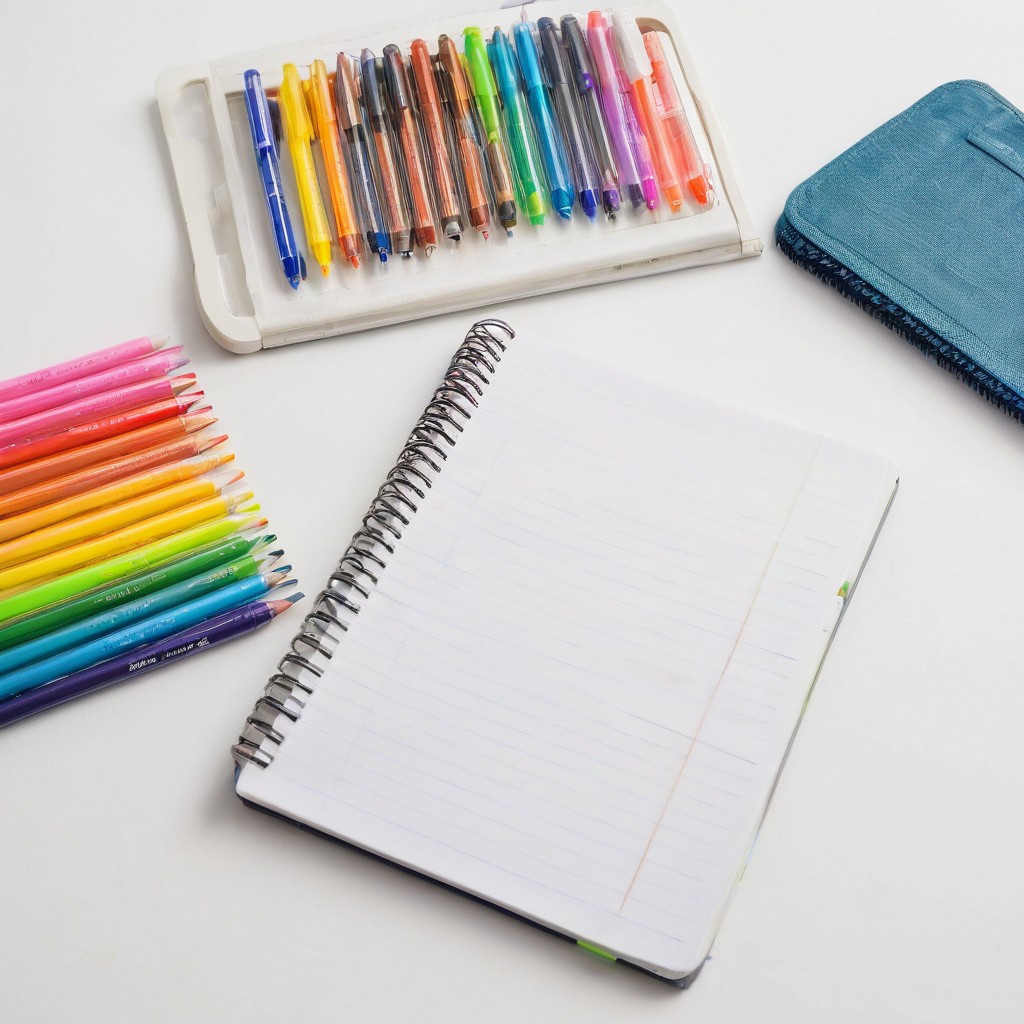
In February 2026, an Amazon seller I consult for ordered 60,000 units of what he called his "premium back-to-school lineup": 0.5mm gel pens with rubber grips, spiral notebooks, and 24-count colored pencil sets, sourced from a Guangzhou trading company that claimed to be a factory. The samples were flawless — smooth ink, crisp paper, a satisfying click on the retractable pen. He booked his container for late June, timed to the July back-to-school surge, and launched at $9.99 for the pen 6-pack and $6.99 for the notebooks. Sales exploded for three weeks. Then the reviews turned: the ink skipped and smeared on cheaper paper; the "100gsm" notebooks bled through two pages and shed spiral binding by week three; the colored pencils snapped at the core; and one mother posted an XRF photo showing lead in the yellow paint of the pencils her 6-year-old was chewing. His return rate hit 16%, Amazon suppressed two listings over the "non-toxic" claim, and a distributor who had committed to 20,000 units walked when the CPSIA test report turned out to be a PDF with a different company's name on it. The root cause wasn't a single bad factory — it was a category where the quality lives in ink chemistry, paper weight, and plastic compounds that no listing photo can show, and where the seasonal window punishes a single bad container harder than any other product. That story is why this guide exists.
Office and school supplies are one of the most dependable categories in cross-border e-commerce: a $0.06 gel pen retails at $1.99, a $0.50 notebook at $6.99, a $1.80 stapler set at $14.99 — and the products are consumables, which means the customer who likes your pen buys it again every semester. The category's anchor is the back-to-school window: July–September in the US (plus a January spring-semester bump), August–September in Europe, and a year-round office-procurement stream underneath. The margins are real, the repeat purchase is real, and the SKU family structure is almost unlimited — ink color, tip size, paper size, ruling style, cover design, bundle composition. But it is also a category where the product is hidden inside the packaging: the ink that dries out in month two, the paper that bleeds, the mechanism that dies after 200 clicks, the lead that shouldn't be in the paint, and the counterfeit Western brand logo that ends your listing. This guide maps the clusters, the real 2026 FOB prices, the compliance stack, and the verification protocols that keep you out of the failure modes.
Why China Still Wins Office & School Supplies (And Where the Margins Live)
China's stationery advantage is the same ecosystem story as every other category, but with two twists: the consumable base is enormous, and the cluster density is extreme. Ningbo alone — the Capital of Chinese Stationery — accounts for roughly one-fifth of China's total stationery output, hosts Deli Group (founded 1981, the largest stationery manufacturer in Asia, operating twelve factories across four industrial zones) and Beifa Group (the largest pen manufacturing company in Asia), and produces more than 10,000 stationery varieties from low-end to high-end. Wenzhou's pen cluster — which brands itself the Pen Capital of China — pushes out billions of ballpoint, gel, and rollerball pens and their metal components every year. Yiwu's International Trade City District 3 hosts 6,000+ stationery stalls covering 20,000+ products, fed by factories from Ningbo, Wenzhou, Shantou, and Guangzhou. That vertical chain — resin and ink chemistry, injection molds, metal pen tips, assembly, packaging — is why a gel pen costs $0.04–0.12 FOB, a spiral notebook $0.35–0.90, and a 24-count colored pencil set $0.80–2.20: price points Vietnam, India, and Mexico cannot match at the same quality.
The margin structure that makes stationery attractive in 2026:
- Gel pen 0.5mm, rubber grip (Ningbo / Wenzhou): $0.04–0.12 FOB, retails $1.99–3.99 per pen or $6.99–9.99 per 6-pack — the highest-volume writing instrument on Amazon
- Ballpoint pen, BIC-style (Wenzhou / Ningbo): $0.03–0.08 FOB, retails $1.49–2.99 per pen, $4.99–7.99 per 10-pack — the commodity anchor of the category
- Retractable gel pen with grip, 0.5mm (Ningbo): $0.10–0.25 FOB, retails $7.99–12.99 per 6-pack — the premium tier with the mechanism risk
- Spiral notebook A5, 80 sheets (Ningbo / Guangzhou): $0.35–0.90 FOB, retails $4.99–9.99
- Composition notebook, 100 sheets (Ningbo): $0.30–0.70 FOB, retails $3.99–7.99 — the US back-to-school staple, sold by the millions every July
- Sticky notes 3x3", 5 pads of 100 (Ningbo / Guangzhou): $0.15–0.40 FOB, retails $2.99–6.99
- Highlighter, chisel tip, 12-pack (Ningbo / Wenzhou): $0.60–1.50 FOB, retails $7.99–12.99
- Whiteboard markers, 12-pack (Ningbo / Cixi): $0.80–2.00 FOB, retails $8.99–14.99 — huge office-procurement volume
- Mechanical pencil 0.5mm, 24-pack (Ningbo / Wenzhou): $1.00–2.50 FOB, retails $9.99–15.99
- Stapler + staple set (Ningbo Cixi / Yuyao): $0.80–2.50 FOB, retails $9.99–19.99
- Desk organizer, mesh or acrylic (Ningbo / Yiwu): $1.50–6.00 FOB, retails $14.99–34.99 — the margin king of the desk category
- Pencil case, zip canvas or EVA (Yiwu / Shantou): $0.40–1.50 FOB, retails $6.99–14.99
- Colored pencils, 24-count (Ningbo Beilun): $0.80–2.20 FOB, retails $8.99–19.99 — watch the core bond and the paint chemistry
- Kids' art set, markers + crayons + pencils (Shantou / Ningbo): $1.50–4.00 FOB, retails $12.99–24.99 — full CPSIA stack required
- Promotional / gift pen sets (Wenzhou): $0.30–1.20 FOB, retails $7.99–19.99 — the corporate-gifting niche
The catch: stationery margins are only real if your return rate stays under 5% — and returns in this category are driven by functional failure, not aesthetics. A customer who buys a pen that skips and smears, a notebook that bleeds and sheds its binding, or a pencil set with lead in the paint is not leaving a "not my style" review; they are leaving a one-star review with a photo, and they are never buying from you again. A $0.005 saving on ink, $0.02 on paper, or $0.01 on the plastic compound costs the factory pennies and costs you the listing — inside a seasonal window where there is no time to reorder.
China's Stationery Clusters: Who Makes What, and Where to Source
Stationery is among the most cluster-concentrated categories in Chinese manufacturing, and the clusters are unusually specialized — pen people do pens, paper people do paper, and the two rarely overlap. Match your product to its cluster and you get factory-direct pricing with real quality control; mismatch it and you're paying a trading company's markup for a rebranded product. Here's the map:
| Cluster | Specialty | FOB Range (2026) | Typical MOQ |
|---|---|---|---|
| Ningbo (Zhejiang) | The Capital of Chinese Stationery — roughly one-fifth of national output and the deepest vendor density in the category. Home to Deli (Asia's largest stationery manufacturer) and Beifa (Asia's largest pen maker). Beilun district specializes in art pens and paper goods (colored pencils, oil pastels, highlighters); Cixi and Yuyao do medium and small pen manufacturing plus folders, pen holders, staplers, and whiteboards. The default starting point for nearly everything | $0.03–6.00 | 1,000–10,000 pcs |
| Wenzhou (Zhejiang) | The Pen Capital of China — writing instruments above all: ballpoints, gels, rollerballs, and fountain pens, plus the metal pen components (tips, springs, clips) and promotional/gift pen assembly. The default for anything that writes, especially at scale, and for corporate and promotional pen programs | $0.03–1.20 | 5,000–50,000 pcs |
| Yiwu (Zhejiang) | The one-stop wholesale bazaar — International Trade City District 3 has 6,000+ stationery stalls and 20,000+ products, from core essentials to novelty, licensed, and seasonal stationery, and hosts the China Stationery and Gift Fair every June. Fine for mixed-kit assembly, novelty lines, and low-volume test orders; the stalls resell cluster goods at 30–60% markups, so negotiate or go factory-direct for volume | $0.05–4.00 | 100–2,000 pcs |
| Guangzhou (Guangdong) | The paper and premium-office cluster — Yide Road and Huangsha districts are the specialized galaxy of paper products, premium office supplies, and educational tools, deeply embedded in the Pearl River Delta's export ecosystem. Also the densest trading-company layer in the category; verify the floor before you trust the quote | $0.15–8.00 | 500–5,000 pcs |
| Shantou (Guangdong) | The novelty and kids' lane — children's stationery, art kits, pencil cases, scented markers, and toy-adjacent products, sitting on top of the Shantou toy-manufacturing ecosystem. The default for kids' and art sets, with the full children's-product compliance stack attached | $0.20–4.00 | 1,000–5,000 pcs |
| Shanghai | The design layer — modern, fashionable, and licensed stationery: M&G (Morning Glory) is headquartered here, alongside design studios that develop branded and character-licensed products. The default when the product IS the design; expect higher costs and IP diligence | Design-dependent | Negotiated |
Two trading layers sit on top of these clusters and deserve a warning label. The first is the Yiwu International Trade City and Guangzhou's Yide Road markets — enormous wholesale bazaars where cluster goods are resold at 30–60% markups; fine for cash-and-carry test orders and mixed-kit assembly, terrible for margin at volume. The second is the trading company that claims to be "the factory" while forwarding orders to a real factory in a different city. In stationery this matters more than in most categories because the entire product is hidden inside the packaging: the ink, the paper, the plastic compound, and the certificate are invisible until the pen fails or the listing gets audited. A middleman has no incentive to verify any of it. When you find a candidate supplier, always confirm the production floor exists — a video call onto the actual assembly line settles it in five minutes.
The Lanes: Writing Instruments, Paper, Desk, and Kids' & Art
Stationery splits into four sourcing lanes with very different risk profiles. Most sellers should enter through lane one and graduate deliberately:
Lane 1: Consumables — Pens, Pencils, Sticky Notes (Lowest Risk, Fastest Entry)
Ballpoints, gel pens, mechanical pencils, sticky notes, and refills. High volume, low unit price, and the repeat-purchase engine of the category. The failure modes are ink chemistry and mechanism quality, both of which are cheap to verify with a writing test and a cycle test. Margins are thinner per unit than desk products, but the volume and the semester-based repeat behavior are the best in the category.
Lane 2: Paper & Notebooks (Volume, Seasonal, Paper-Quality-Critical)
Spiral notebooks, composition books, loose leaf, planners, and sticky notes. The back-to-school volume play — composition notebooks alone sell in the tens of millions every July–August in the US. The failure modes are all in the paper: real GSM, brightness, acid-free chemistry, bleed-through, and binding strength. Enter with a paper spec sheet and the willingness to reject the first sample batch; paper is the most spec-inflated component in the category.
Lane 3: Desk Organization & Office Equipment (Higher Margin, SKU Breadth)
Desk organizers, staplers, paper clips, whiteboards, dry-erase accessories, and electronic desk items (calculators, electric sharpeners, desk lamps — which cross into electronics compliance). Margins are the best in the category and design differentiation is real, but the SKU breadth explodes and electronic items add FCC/CE/RoHS. Enter only with a compliance budget and a factory that has shipped the specific product type before.
Lane 4: Kids' & Art Supplies (The Fastest-Growing Layer — and the Heaviest Compliance)
Colored pencils, crayons, markers, paint sets, kids' pencil cases, and art kits. The fastest-growing segment of 2025–2026, driven by parents upgrading from commodity school supplies — and the layer with the full children's-product compliance stack: CPSIA lead and phthalates, CPSC small parts, ASTM D-4236 art-materials labeling in the US; REACH, EN 71-3, and GPSR in the EU. Enter only with the chemical-testing budget and a factory with proven kids'-product export history.
The Compliance Stack: US, EU, and Platform Rules
Compliance in stationery splits cleanly by audience: adult office products carry a light load, children's and art products carry a heavy one. The certificates are also among the most-faked documents in the category — every claim below is verifiable online, and you should verify all of them before paying a deposit.
United States
- CPSIA — lead and phthalates. Any product designed or intended primarily for children 12 and under must comply: lead in paint and surface coatings capped at 90 ppm, total lead content at 100 ppm, and eight restricted phthalates (including DEHP, DBP, BBP, DINP, DIBP) capped at 0.1%. This covers kids' stationery, art supplies, and pencil cases — and it is the single most common suppression trigger in the category. Children's products also need permanent tracking labels (manufacturer, date/lot, production location) on the product and packaging, and the CPSC's small-parts rule bans anything that fits in a 3-year-old's choke tube.
- ASTM D-4236 (LHAMA) — art materials labeling. Art materials sold in the US must be evaluated by a toxicologist and labeled under the Labeling of Hazardous Art Materials Act if they present chronic health hazards — and carry the "conforms to ASTM D-4236" statement either way. This covers colored pencils, markers, paints, and crayons; a "non-toxic" claim without the ASTM D-4236 evaluation behind it is an FTC and CPSC exposure.
- California Prop 65. Lead in paint and plastics, phthalates, and DEHP in PVC erasers and binder covers trigger Prop 65 warning requirements. Test the actual materials; the classic surprise is leaded yellow and orange pigments in pencils and crayons.
- FCC. Electronic desk items — calculators, electric sharpeners, desk lamps, and anything with a radio — need FCC Part 15 certification with a searchable FCC ID. A serious factory has the data on hand; a rebrander does not.
- Product claims. "Non-toxic," "acid-free," "archival," and "eco-friendly" are advertising claims that regulators and competitors both police. Every claim must trace to a test report or a material spec; a claim without a file is a suppression risk.
European Union
- REACH. Plain stationery mostly escapes CE, but REACH restrictions hit hard: phthalates in plastic erasers and pencil-case PVC, and PAHs (polycyclic aromatic hydrocarbons) in rubber and soft-plastic parts — the classic failure is a scented eraser that fails PAH screening on the first lab test. Ask for test reports on the actual materials, not a generic "we are REACH compliant" sentence.
- EN 71-3. For kids' stationery and art products, the migration of heavy metals (lead, cadmium, chromium, etc.) from accessible parts is capped under EN 71-3 — the EU's functional equivalent of the CPSIA lead rules. Same materials testing, different standard and limits.
- GPSR. Since December 2024, every product sold in the EU needs an EU responsible person and traceable labeling — stationery is squarely in scope, including adult office products. Budget ~$500–1,000/year for the EU rep service.
- CE / RoHS for electronics. Calculators, electric sharpeners, and desk lamps need CE (LVD + EMC) and RoHS conformity like any other electronics — a "CE marked" budget calculator with no technical file is a customs risk.
- UK. Post-Brexit, stationery sold into Great Britain needs UKCA marking (or CE accepted under current transition rules) for the electronic items, UK REACH alignment, and GPSR-equivalent labeling obligations.
Platform Rules (Amazon & Walmart & eBay)
- Amazon gates many school and office subcategories — approval can require invoices and, for kids' and art products, the compliance documentation. Plan 2–4 weeks of lead time for gating before launch.
- Kids' stationery listings are routinely audited for CPSIA documentation; listings without a test report and tracking-label photo get suppressed the moment the category is audited.
- Counterfeit-branded stationery (Bic, Pilot G2, Sharpie, Paper Mate, Moleskine, Pentel, Crayola, Faber-Castell) triggers immediate suspension and legal exposure. Never source branded stationery without written authorization — sell your own brand and compete on verified spec.
- Back-to-school is a compressed window: listings that get suppressed in July miss the entire season. Compliance files and approved listings should be finished in May, not July.
⚠️ The Fake Certificate Problem
In stationery, the paperwork is part of the product — and it is the most-faked part of it. Real CPSIA test reports come from accredited labs (CPSC-accepted third-party labs for children's products) and name the exact product, model, and lab; real ASTM D-4236 evaluations are issued by a toxicologist and accompany a Labeling of Hazardous Art Materials statement; real REACH and EN 71-3 reports are issued by accredited laboratories and reference the applicable standards. Before you place an order, verify every certificate independently: ask for the lab name and report number, then confirm the report exists with the lab or check it online. A supplier who "lost" the paperwork or sends a scanned PDF with a different company name on it is telling you everything you need to know. Budget $300–1,500 per SKU family for your own third-party testing through an accredited lab — it is the cheapest insurance in the category, and it makes your listings suppression-proof inside the tightest seasonal window of the year.
The Verification & QC Protocol: Five Tests That Separate Serious Factories from Rebranders
Quality in stationery lives in the ink, the paper, the mechanism, and the plastic compound — none of which your listing photos can show. Run these five tests on samples, then spot-check production units:
- The writing test. Measure actual line length per pen against ISO 12757 (ballpoint) and ISO 14145 (gel) — the international standards for writing performance — plus start-up behavior, skip frequency, drying time, and smudge resistance. This is the test that catches the category's signature fraud: dye-based ink substituted for pigment-based ink, which skips, feathers, and fades in weeks. A $0.005 saving on ink at the factory is the difference between a pen that writes for 2,000 meters and one that dies at 400.
- The paper test. Verify real GSM against the spec (a "100gsm" notebook that measures 70gsm is a 70gsm notebook), brightness, pH/acidity (acid-free and archival claims), bleed-through and feathering with the actual pens you're selling, and spiral-binding pull strength. Paper is the most spec-inflated component in the category, and the customer experience is literally written on it.
- The mechanism test. Run retraction-cycle tests on click pens (a good mechanism survives 20,000+ cycles), cap torque and clip strength, drop tests on mechanical pencils, and stapler action tests. The mechanism is the first thing to fail in cheap stationery — and the fastest way to a "stopped working" review.
- The chemical test. XRF screening for lead in paint and surface coatings (the yellow, orange, and red pigments are the classic culprits), lab analysis for phthalates and PAHs in erasers and soft-plastic parts, and VOC checks on markers, glue, and scented products. For US kids' and art products, the test must come from a CPSC-accepted third-party lab; for the EU, an ISO 17025-accredited lab under REACH and EN 71-3.
- The packaging test. Blister seal strength, carton compression, FBA-ready dimensions and barcode verification, and — for children's products — the CPSIA tracking label placement. A packaging failure in July destroys the back-to-school window, and a barcode that doesn't scan at FBA inbound is a lost container.
The 8-Step Office & School Supplies Sourcing SOP
- Pick your lane. Start with consumables — pens, pencils, sticky notes — where the compliance load is light and the failure modes are cheap to test. Graduate to desk organization for margin, and to kids' and art supplies only with a chemical-testing budget allocated ($300–1,500 per SKU family) and a factory that has done CPSIA/EN 71 before. Skip counterfeit-branded stationery entirely, and treat electronic desk items as an engineering project, not a sourcing project.
- Match the product to its cluster. Pens and writing instruments to Ningbo and Wenzhou; paper and notebooks to Ningbo and Guangzhou; novelty, seasonal, and mixed kits to Yiwu; kids' and art supplies to Shantou and Ningbo Beilun; design-led and licensed product to Shanghai studios. A supplier outside the right cluster is either a trader or paying someone else's overhead.
- Vet the factory. Business license, export history, brand customers, ISO 9001 (and ISO 14001 for printing and coating-heavy operations), a video call onto the actual assembly line, and the names of their ink, resin, and paper suppliers. In Yiwu and Guangzhou, confirm the line exists — the markets are full of offices that forward orders to other people's factories.
- Order 2–3 samples from 2+ factories and test them for a week. Writing test (line length, skip, drying time), paper test (GSM, bleed-through, binding), mechanism test (cycles, cap torque), chemical screening (XRF for lead, phthalate/PAH lab analysis), and packaging inspection. The sample that looks great in the showroom is not the sample that survives week six of a school semester.
- Run the compliance tests on the samples. CPSIA lead/phthalates and ASTM D-4236 for US kids' and art products, REACH/EN 71-3 for the EU, FCC for electronic items — through an accredited lab, on the samples, now rather than after the container lands.
- Negotiate MOQ smartly. Combine ink colors, tip sizes, and packaging variants on one production run, standardize on one mechanism platform across your whole line (fewer mechanisms = fewer failure modes), own your molds for pens and mechanisms, and bundle consumables with desk products to lift average order value.
- Third-party QC on every batch. Inline checks at molding, assembly, and packing, plus final random inspection at AQL 2.5 — random writing tests, paper spot checks, mechanism cycle tests, chemical spot screening, packaging, and labeling. Never ship stationery without final inspection; the failures are invisible until they're in a student's backpack.
- Test production units for compliance and keep the file. Send production units — not samples — for the certifications that matter for your market, verify every certificate online (CPSC-accepted lab reports, ASTM D-4236 evaluations, REACH/EN 71-3 reports), and build the compliance file (EU responsible person, tracking labels, test reports) before you launch. Then run the back-to-school calendar: plan in January–February, place orders by March, produce April–May, ship June–early July, and you own the window instead of chasing it.
Office and school supplies are one of the most dependable margin engines in cross-border e-commerce — the cluster density, the FOB prices, the consumable repeat purchase, and the annual back-to-school demand are all there, and the SKU family structure turns a September customer into a January customer and a January customer into a next-September customer. But more than almost any other category, the product is invisible: the ink chemistry, the paper weight, the mechanism cycles, the plastic compounds, and the certificate's validity are the entire customer experience, and every one of them is a place where a fast-buck supplier will quietly save a fraction of a cent at your expense. The sellers who win in stationery aren't the ones who found the cheapest quote; they're the ones who ran the writing test, weighed the paper, cycled the mechanism, screened the pigments, and verified the certificates online — and finished the compliance file in May so July belonged to them. Do that, and the 60–75% gross margins this category offers become yours to keep — every semester.