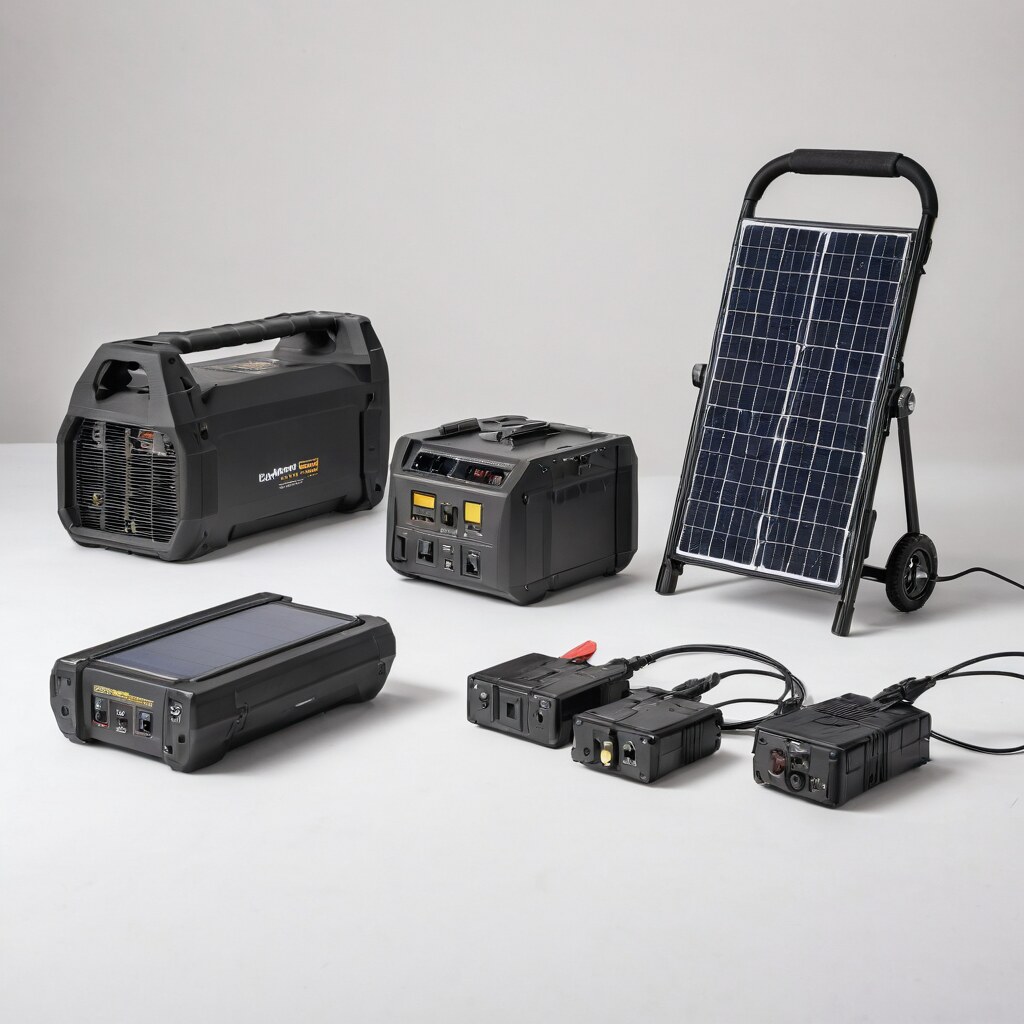
In February a seller I work with took delivery of 600 portable power stations — 1,024Wh LiFePO4, 1,000W pure sine, 200W solar-ready — from a Shenzhen factory he had found through a sourcing agent. The FOB was right, the samples were genuinely good, and the first 140 units sold through in six weeks at a 41% gross margin. Then, on March 10, Amazon ran its mandatory enforcement date for the new portable power supply policy and every one of his ASINs went down. His UL 2743 report was real but had been issued to the factory's own brand, the model number on the report did not match the model number on his nameplate, and the UN 38.3 document was a cell-level report from the cell maker — not the pack-level test with a BTS that Amazon's TIC verifier requires. He had 460 units in FBA, storage fees accruing on frozen inventory, two months of re-testing in front of him, and a Q4 season disappearing. He told me the line that should be printed on every sourcing agent's wall: "I ran a beautiful product through a compliance process that was designed to keep me out." Power stations are the highest-ticket product most e-commerce sellers will ever import, and 2026 is the year the category's compliance floor turned into a cliff — but the same complexity is why the margins exist, and this guide is the playbook for doing it without his mistakes.
What makes portable power stations so attractive is that everything about them is big: a 1,024Wh station that costs you $170 FOB sells for $599-699 at retail, a 2kWh expandable unit that costs $380 FOB sells for $1,299, and a $70 folding solar panel sells for $249. Gross margins of 55-70% are normal before freight, duty and advertising, the average order value lifts your Amazon account's whole economics, and demand is structural rather than fashionable: hurricane and wildfire seasons (June-November), winter storm and grid-reliability anxiety (December-February), camping and overlanding (spring through fall), and a holiday gifting window in which a $300-600 "practical gift" is one of the few categories that does not discount in December. Analysts put the global portable power station market at roughly $4-5 billion in 2026 with double-digit to low-20% annual growth and North America taking about 40% of global revenue, and the China share of supply is close to total: the cells, the inverters, the BMS boards, the pack assembly, the folding panels and the firmware all come out of the same four corridors. The catch is that this is also the category where a single compliance omission force-delists a listing, one thermal incident becomes a CPSC file, and a two-dollar cell swap turns a $600 product into a liability with your name on it.
Why 2026 Is a Different Category (Three Things Changed)
If you sourced power stations in 2023 or 2024, whatever you learned is now partly obsolete. Three structural changes landed inside fourteen months and they are the reason this category now rewards serious operators and punishes tourists:
- Amazon moved portable power into TIC direct verification — and enforced it on March 10, 2026. The policy published on December 10, 2025 ended seller self-certification for the whole portable power supply category. You cannot upload a PDF report to Seller Central any more. An Amazon-recognized TIC (Testing, Inspection, Certification) institution must verify the authenticity of your reports, the consistency between report, listing and physical product, and your label and manual compliance — and then submit the verification result directly to Amazon. For portable power stations (defined as rechargeable battery devices with AC and DC outputs, up to a 20kWh rated capacity), the required set is ANSI/CAN/UL 2743 plus UN 38.3. For power banks (USB-output units) it is one of three combinations: UL 2056, or IEC/UL/CSA 62368-1 with 62133-2, or 62368-1 with UL 2054 — always plus UN 38.3. Portable car jump starters sit under a separate policy, which is why some sellers have moved into that aisle.
- The tariff step landed on January 1, 2026 — non-EV lithium-ion batteries went from 7.5% to 25%. Section 301 duties on lithium-ion batteries that are not for electric vehicles quadrupled at the start of the year, which is a direct hit on the most expensive line in your BOM and on the finished station's HS classification. Combined with the suspension of de minimis treatment for China-origin parcels, the old escape hatch — small air parcels at low declared value — is closed. Freight planning in this category now means ocean, DG paperwork and a landed-cost model that shows the duty explicitly.
- Sodium-ion arrived, and with it a new set of claims to audit. CATL's Naxtra sodium-ion cells are in mass production with roughly 175 Wh/kg, better cold-weather behavior than LFP (over 90% capacity retention at -40°C and usable power at -50°C), and commercial-scale deployment across energy storage and vehicles in 2026. Translation for importers: expect "sodium-ion" power stations to appear in the 2027 catalogues, expect a wave of premature marketing claims in 2026, and know that sodium-ion cells carry their own transport classification (UN 3551 and UN 3552) with their own IATA state-of-charge provisions that were still being phased in for 2026. Whoever sells you the first sodium-ion station should be able to show you the transport documents for sodium chemistry, not lithium.
Where China Builds It (Cluster Map by Component, Not by Product)
Power stations are not one supply chain — they are five, stacked. The mistake almost every new buyer makes is to shop "power station suppliers" as a single vendor category, when the product you receive is the sum of a cell maker, an inverter designer, a BMS firmware house, a pack assembler and a housing tool shop. Know which layer each factory actually owns, because the layer they outsource is the layer nobody is testing:
- Shenzhen — the brain: inverters, BMS boards, firmware and the brand ecosystem. The Pearl River Delta is where the category's intelligence lives. Every major Chinese brand in the space has engineering here — EcoFlow, Jackery's Hello Tech, BLUETTI, Anker's eufy/Anker SOLIX teams, Zendure — and the same ecosystem of inverter designers, BMS houses, PCBA suppliers and app/firmware shops that serves those brands will build an ODM unit for you. Shenzhen is where you find the inverter topologies (pure sine output stages, high-frequency switching, 1-3kW transformerless designs), the BMS with MPPT charge control and communication buses, the AC pass-through and UPS transfer logic, and the smartphone app. If your prospective factory has no engineering in Shenzhen and no inverter design of its own, it is buying inverters from someone who does.
- Dongguan — the hands: pack assembly, tooling, housings, high-volume final assembly. The mass-production layer of the Delta: automated cell sorting and welding lines, BMS installation, pack encapsulation, injection-moulded and aluminium housings, fan and heatsink integration, ageing racks and final test. Dongguan (and the adjacent Huizhou and Foshan belt) is where a station becomes a boxed product, and the processes that matter most — weld quality, cell matching, thermal interface, insulation and creepage distances — live here. This is also where the testing labs cluster (Songshan Lake's battery laboratories), which is not a coincidence: the DG and safety evidence you need comes from labs within an hour of the assembly lines.
- The cell corridor — CATL (Ningde, Fujian), EVE Energy (Huizhou, plus its Jingmen, Hubei base), BYD (Shenzhen), Gotion High-Tech (Hefei), CALB (Changzhou), REPT/Ruipu (Wenzhou), Sunwoda and BAK (Shenzhen), Lishen (Tianjin). LiFePO4 prismatic cells are the industry's default for stations because of cost per Wh, cycle life and thermal behavior; cylindrical 18650/21700 NMC cells still appear in lighter, cheaper and power-tool-adjacent units. Cell tier is the single highest-leverage variable in the BOM: an A-grade cell from a top-four maker with QR traceability to the batch is roughly 80-85% of the story, and "we use CATL or EVE cells" is the most repeated sentence in Chinese power station sales decks. Demand the cell datasheet, the cell maker's UN 38.3 test summary for the cell, and the physical QR code photographed off the pack inside your sample.
- The solar belt — Shenzhen (folding and flexible panels), Jiangsu (Changzhou), Zhejiang (Ningbo) and the glass/cell heartland. Portable folding panels are an assembly trade: monocrystalline cells (from the tier-ones — Longi, JinkoSolar, Trina and the Jiangsu-Zhejiang panel belt), encapsulation under ETFE or PET, hinged aluminium or fabric-and-EVA construction, junction boxes and MC4 or proprietary connectors, all assembled close to the module supply in Jiangsu and Zhejiang, with the high-mix, small-batch folding and flexible SKU work concentrated in Shenzhen. The panel's 2026 reality check: rated wattage is a lab number, and the real-world output that decides your reviews is the panel's efficiency in the unit's MPPT voltage window, its angle tolerance, and whether the connector is proprietary (a replacement-part and complaint disaster) or standard.
- Yiwu and the accessory tier — cables, adapters, cases, harnesses, spare parts. The consumables and after-sales parts that decide your return rate and your review scores. Cheap, fast and worth sourcing separately rather than paying ODM prices: Anderson and XT60 harnesses, AC adaptors (which must themselves be certified for the destination market), car charging cables, carry bags and replacement fuses.
The practical consequence: a genuine power station factory is vertically integrated on the pack and the BMS and buys cells from a tier-one, while a trading company is a warehouse with a logo. Ask for a video walk of the cell sorting and welding line, the inverter SMT line, the ageing racks and the pack test station — and ask which of those four you will not be allowed to see, because that answer is your supply chain risk report.
The 2026 Product Map and FOB Benchmarks (Fifteen Tiers)
Capacity and inverter power define the tier, and the FOB price is the most reliable signal of what is actually inside. Typical 2026 export-factory ranges from Guangdong and Zhejiang suppliers, with realistic retail multipliers (roughly 3-4x FOB on the large tiers once freight, duty, hazmat fees, FBA fees and advertising are counted):
| Tier | Typical 2026 FOB | Realistic retail | What decides the tier |
|---|---|---|---|
| 200-300Wh camping box, 300W | $55-85 | $199-299 | Modified vs pure sine; LiFePO4 vs NMC; whether the BMS locks charging below 0°C |
| 500Wh, 500-600W | $95-135 | $349-449 | Cell grade, MPPT input window, USB-C PD 100W output |
| 1,000Wh, 1,000W | $150-215 | $549-699 | The volume tier: A-grade LFP cells, pure sine, real UL 2743 file |
| 1,000Wh, 2,000W inverter | $200-285 | $699-899 | Continuous vs peak ratings, surge capability, heatsink and fan quality |
| 1,500Wh, 1,800-2,400W | $240-345 | $899-1,199 | Pass-through UPS transfer time, thermal margin, app quality |
| 2,000Wh, 2,200-3,000W | $320-460 | $1,199-1,599 | Balancing quality, expansion ports, whether the cells are truly new |
| 3,000Wh+ wheeled, 3,600W | $520-780 | $1,899-2,499 | UL 2743's 2025 wheeled >25 kg drop requirement; freight class; DG storage |
| Expandable battery module (2-5kWh) | $260-520 | $899-1,799 | Protocol compatibility; the second-order compliance question (stationary storage) |
| Portable fridge / 12V station bundle | $180-320 | $599-999 | Compressor (Danfoss-style vs commodity), duty cycle, 12V socket quality |
| 60W folding panel | $22-40 | $99-149 | Cell efficiency grade, real vs rated output, connector type |
| 100W folding panel | $55-85 | $199-299 | ETFE vs PET lamination, IP rating claim, stand rigidity |
| 200W folding panel | $110-165 | $399-549 | Bypass diodes, shading tolerance, MPPT voltage match |
| 400W folding panel / 2-panel kit | $230-330 | $699-999 | Waterproof junction boxes, cable gauge, real-world heat derating |
| 200-300Wh handheld station/power bank hybrid | $35-58 | $129-199 | Category determination: power bank or station decides your standard set |
| LiFePO4 home battery module, 5-10kWh | $800-1,900 | $2,500-5,000 | Different product, different rules: stationary storage standards, permits, installation code |
Two warnings on reading that table. First, the retail multipliers are only achievable with a real compliance file and honest specs — the 60-70% gross margin evaporates the moment Amazon suspends the ASIN for a missing UL 2743 report, and a single thermal incident or counterfeited safety mark costs more than the margin on a container. Second, the last row is not this category: a 5-10kWh home battery module looks like a big power station on Alibaba and behaves like a completely different regulated product. If your marketing drifts from "portable backup" to "home energy storage system," you have walked into stationary storage rules, permitting, installation codes, utility interconnection and rebate programs. Market the product you certified.
The Four Faked Numbers (And How Each One Is Faked)
Every category has its signature lies. Power stations have four, and each one is worth real money over a container:
- Capacity. The games are: quoting milliamp-hours at the cell's 3.7V nominal and then converting to a 5V-equivalent number that inflates the figure; quoting a pack's nominal energy while ignoring the 10-20% that inverter efficiency and BMS cutoffs make unreachable; and quietly using a lower-capacity cell of the same physical size. A "1,024Wh" station that delivers 780Wh of AC output through a 500Wh load test is not lying about the cells — it is lying about the product. Your benchmark: measured usable AC energy divided by claimed capacity, and it should be above 0.82 for a good unit.
- Cycle life. "6,000 cycles" is a cell-level figure measured under perfect laboratory conditions to 80% capacity at moderate temperature and shallow depth of discharge. It says nothing about the pack's balance quality, the BMS's cutoff accuracy or the thermal design. A pack with mismatched cells and a weak balance circuit can degrade to 70% in 400 real cycles even with genuine A-grade cells. Cycle-life claims are marketing until the factory shows you its cycle-test log for the specific pack, with cell batch numbers.
- Inverter output. The industry's standard trick is to print the peak number as the headline. "2,000W" often means a 1,000-1,200W continuous inverter with a 2-4 second 2,000W peak — fine for a kettle, fatal for a fridge compressor or a circular saw, which draw 2-3x their nameplate at startup. The second trick is the waveform: modified sine wave units sold as "pure sine." Modified sine kills this category's highest-value use cases (CPAP machines, medical devices, laptops with switching supplies, anything with a motor) and produces 15-30% total harmonic distortion that you can measure in two minutes with a sub-$200 power meter.
- Cell grade. "A-grade LiFePO4" is the most abused phrase in the industry. Grade B cells are cells that failed something — usually capacity matching or internal resistance — and they are widely available, physically identical, and 30-50% cheaper. The verification is not a document, it is a physical act: open a sample and photograph the QR codes on the cells, then send those batch codes to the cell maker's channel partner and ask them to confirm the batch was sold as A-grade. Factories that resist this are answering the question.
Two more spec traps worth a sentence each. Low-temperature charging protection is the single most underrated quality difference in North American and Canadian market reviews: charging a LiFePO4 pack below 0°C causes lithium plating and permanent capacity loss, and a good BMS locks charging out until the pack warms up while a cheap one lets the customer destroy the pack in one cold morning. And self-consumption — the BMS's parasitic drain and the inverter's idle draw — decides whether the station is still charged when the customer pulls it out in a storm, which is the number-one one-star review reason in this category.
The US Compliance Stack, In the Order It Will Stop You
Forget the marketing order of the compliance file. This is the sequence in which things actually break:
- UL 2743 (ANSI/CAN/UL 2743, Portable Power Packs) — the gate. The correct standard for a station with AC inverter output (UL 2056 is the power-bank standard Amazon will also list; UL 2743 is the technically right one for stations and is what Amazon names for the category). It tests electrical safety (overcharge, over-discharge, overcurrent, short circuit, reverse connection protection), thermal safety (temperature rise, thermal abuse, thermal runaway behavior, flame retardancy with a UL 94 V-2 or better enclosure requirement), and mechanical safety (drop, vibration, impact, housing strength). The 2025 revision added a 0.5-metre single-drop test for wheeled units over 25 kg, precisely because the big units are handled on ramps and tailgates. The test cycle runs roughly 2-4 weeks; the certification itself is the expensive part — suppliers quote five figures for initial UL 2743 certification plus an annual factory-surveillance fee, which is exactly why the file becomes yours only if you pay for it or contract it in the PO.
- UN 38.3 at pack level, with the BTS. UN 38.3 is the transport test every lithium battery in the world must pass: altitude simulation (T.1), thermal cycling (T.2), vibration (T.3), shock (T.4), external short circuit (T.5), impact/crush (T.6), overcharge (T.7) and forced discharge (T.8). Two failure modes matter commercially. First, a cell-level report from the cell maker covers the bare cell, not your assembled pack with its BMS, wiring harness and housing — Amazon's TIC verification and good freight forwarders both want the pack-level report for the product as shipped. Second, the report comes with a Battery Test Summary (BTS) document; a UN 38.3 report without the BTS is a common rejection. Note also that any change that could affect a UN 38.3 result — a cell change, a >20% capacity change, a pack reconfiguration — technically requires re-testing. Your supplier's "cell upgrade" between sample and mass production is a compliance event, not an improvement.
- FCC Part 15 for anything with a radio or switching electronics. Your inverter is a switching power stage and any app-connected unit has a Bluetooth or Wi-Fi module. Emissions compliance is either a self-declaration under Part 15B or a certification with an FCC ID for the intentional radiator. Verify the FCC ID in the FCC's public database, not on the label — the fake FCC ID is standard practice in this category.
- Label, manual and consistency. This is what actually kills listings in DV review, and it is free to fix. The reports must come from an ISO 17025 accredited laboratory within the last 12 months; the model number, nameplate, BOM and the Amazon detail page must match exactly; the manual and all warnings must be in the destination language (English for the US); the UL 2743 hazard warnings must be present; and the seller's product images must show all sides plus close-ups of the label and hazard marks. The five most common rejection reasons are: a lab that is not properly accredited or recognized, mismatched model data, an expired report, a missing UN 38.3 alongside a present UL 2743, and non-compliant labels or manuals. Every one of those is a paperwork discipline problem, not a testing problem.
- Landed cost: 25% Section 301 duty, hazmat freight and hazmat storage. Non-EV lithium-ion batteries now carry a 25% Section 301 rate, and the finished station's classification and duty exposure needs your customs broker's input before you price the product. Then add DG freight, a hazmat-compliant 3PL, insurance, and the hazmat review that Amazon runs on battery products before your inbound shipment is even accepted. Amazon also runs random re-verification on in-sale ASINs, so a file that was compliant at launch must stay compliant — reports expire after 12 months, and your listing dies quietly on the anniversary.
The EU Stack (It Is Not a Copy of the US Stack)
Europe is a different problem set: you self-declare more and prove more continuously. CE marking for a station is the combination of the EMC Directive 2014/30/EU (the inverter and charge controller are the EMC risk), the Low Voltage Directive 2014/35/EU (you output mains-level AC, so insulation, creepage, grounding and abnormal-operation safety all apply), and RoHS 2011/65/EU. Then the battery-specific layer:
- Battery Regulation (EU) 2023/1542 applies to you as the importer. Batteries must be CE marked under the regulation; the importer's name, registered trade name and postal address must appear on the battery (plus web and email where available); the EU Declaration of Conformity and the Annex VIII technical documentation must be kept for ten years and produced on demand to national authorities. Rechargeable portable batteries need a capacity label (from 18 August 2026), and portable device batteries must be removable and replaceable by the end user with commercially available tools from 18 February 2027 — a real design constraint for stations whose packs are currently welded in.
- The 5 kg classification trap. Under the regulation, "portable battery" is defined around batteries under 5 kg that are not purpose-built for industrial or EV use, and larger packs fall into other categories. A 1kWh station pack often sits right at the line; a 2kWh+ pack usually crosses it. Compliance advisors increasingly read high-capacity power stations and any unit sold as home backup above 2kWh as industrial batteries, which pulls in carbon footprint declaration obligations and, from 2027, the battery passport. Do not guess this from a blog: get a written classification opinion from your lab, because the label, the registration duty and the data obligations all change with it.
- EPR registrations per member state, plus WEEE. Battery extended producer responsibility is registered country by country (Germany's BattG/Stiftung EAR system, France, Italy, Spain and the rest), and the take-back and reporting obligations are the seller's, not the factory's. This is a real recurring cost and a real reason some sellers restrict EU sales to two or three markets rather than all 27. GPSR also applies: you need an EU-established responsible person named for the product, and marketplace compliance checks increasingly ask for it.
- UKCA for the UK, plus the same transport file. Post-Brexit the UK wants UKCA marking for electrical safety and EMC; CE remains widely accepted in practice for many categories but the label duplication is a real cost. Maritime transport documentation (IMDG) applies to every ocean shipment into European ports.
Dangerous Goods Is Your Real Logistics Constraint
Everything about how this category ships is decided by the chemistry, and sellers who learn this after the PO lose money in three places: freight, storage and returns.
- Classification first. A station with its pack installed ships as UN 3481, lithium ion batteries contained in equipment. The moment you ship spare packs separately — or ship a station with the pack removed for freight-cost reasons — you are shipping UN 3480, lithium ion batteries, which is cargo-aircraft-only, forbidden on passenger aircraft, capped at 30% state of charge, subject to a 35 kg net-per-package limit in air mode, and requires a Shipper's Declaration, Class 9 label, DG training and an MSDS. Sodium-ion variants have their own numbers (UN 3551/3552). Ask your forwarder to confirm in writing which classification your cartons will sail under.
- Air is not a plan. The 2026 IATA provisions extended reduced state-of-charge requirements to lithium-ion batteries packed with equipment (Special Provision A331) and lowered the SoC threshold for smaller cells, which means air shipments keep getting more restrictive and more expensive just as the freight economics for a 12-25 kg carton were already bad. Ocean freight is the mode for this category; the only air you should ever pay for is samples and the occasional emergency re-supply, and those need the same DG paperwork.
- Storage and last mile decide your 3PL choice. Battery products require hazmat-rated storage with the right fire separation and permits; many general 3PLs will not accept lithium above certain Wh thresholds at all. Domestic carriers accept UN 3481 shipments with the proper marks, but the last-mile economics on a 25 kg DG carton are meaningfully worse than a normal parcel. Get your 3PL's lithium policy in writing before you book the container, and confirm whether they can handle returns — because in this category, a defective return with a swollen pack is not a normal RMA, it is a regulated shipment.
- Returns and refurb are the hidden margin killer. Do not plan to return lithium to China; the DG cost and paperwork are prohibitive and often exceed the product's value. Budget a US 3PL for triage, a spare-parts programme (AC adaptors, cables, fuses, fans) and a local disposal/recycling path for unrecoverable units. Sellers who ignore this discover that a 4% defect rate becomes a 4% margin loss they cannot recover.
The Nine-Test Verification Battery
Before the PO, run your shortlisted samples through this. It takes one to two weeks, costs a few hundred dollars in equipment and a couple of units destroyed, and it settles the factory tier better than any audit document:
- Cell QR traceability and pack teardown. Open a sample, photograph the cell QR codes, note the cell maker and model, and confirm the cells match the datasheet the factory sent. Send the batch codes to the cell maker's authorized channel to confirm A-grade sale. Then examine the weld quality on the nickel strips, the insulation between the pack and the housing, and whether the pack is mechanically restrained or rattling on foam.
- Load-bank capacity audit. Discharge the station through its AC output into a known resistive load while logging voltage, current and time, and compare measured usable energy against the nameplate. Then repeat on the DC output. Above 82% of nameplate is a good unit; below 70% is a different product than the one you bought.
- Inverter quality test. Measure total harmonic distortion with a power quality meter (a modified sine unit will show up immediately), confirm the continuous rating by loading it at its claimed continuous watts for 30 minutes, and then test surge behavior with a motor load — a fridge, an induction motor, or a circular saw that draws 2-3x its nameplate at startup. Watch the temperature and listen to the fan while you do it.
- BMS behavior test — including the cold. Verify over-discharge cutoff at the specified voltage, overcharge protection, balance behavior across several cycles, and the low-temperature charging lockout: put the unit in a freezer or a cold box below 0°C, connect a charger, and confirm the BMS refuses to charge. A unit that charges below freezing will produce warranty claims in every northern market.
- Thermal-rise test. Run the station at 80-100% of its continuous rating for one hour in still air and record the surface temperature at the inverter heatsink, the pack area and the AC outlet panel, plus the exhaust temperature. Compare against UL 2743's accessible-surface temperature limits and against your own comfort expectation: a unit that puts a hot spot where a hand goes is a product-liability problem waiting for a review.
- Drop, vibration and enclosure test. The 1-metre drop series (one per axis) for the hand-carry tiers and the 0.5-metre drop for wheeled units over 25 kg — then check for cell dislodgement, cracked LCDs, deformed housings and rattle. Add a temperature soak for the housing material: ABS that has been substituted for a cheaper grade deforms in a hot car and cracks in a cold one.
- Pass-through and UPS transfer test. If you market it as a UPS or pass-through capable unit, measure the transfer time with a scope or a dedicated tester. Under 20 ms protects a desktop PC; 30-50 ms does not protect much, and the marketing claim should match the measured number.
- MPPT solar input audit. Feed the unit from a real panel and a programmable DC source, and map its actual input window: minimum start voltage, maximum voltage, maximum current, and the real-world charging power at under-voltage and over-temperature conditions. Then confirm the panel you plan to sell with it lands inside that window — the most common review complaint in this category is a "compatible" panel that charges at a third of its rated rate.
- Compliance-file verification. Demand the UL 2743 report with the laboratory's accreditation and scope, the UL file number, the pack-level UN 38.3 report and the BTS, the FCC ID (verified in the FCC database), the EU DoC and the EMC/LVD/RoHS reports, the battery regulation registration details, and the GPSR responsible person. Then verify each one independently: call the lab to confirm the report number, look up the FCC ID, confirm the model strings appear identically everywhere. In this category the certificate is half the product, and the fakes are profitable enough to be industrial.
One extra audit that pays for itself in a single container: the counterfeit-mark check. Counterfeit UL and ETL marks are a federal-level problem in the US — CBP seizes shipments carrying them and the importer is the responsible party, not the factory. Compare the mark on your sample against the current official mark artwork, verify the file number with the certification body, and add a clause to the PO that any shipment with a non-conforming safety mark is a rejected shipment at the factory's cost.
QC, Testing and the Terms That Prevent a Recall
Power station QC is a data problem more than an inspection problem. The defects that end listings are not visible scratches — they are a slightly mismatched cell batch, a BMS that drifts, a fan that was not seated, and a firmware version nobody logged. Contract the following into the PO:
- Design-level control. Signed pre-production samples sealed at both ends, and written approval required for any change to cell maker or model, cell grade, BMS supplier, firmware version, inverter board revision or housing material. The silent substitution between sample and mass production is the industry default, and it invalidates your UN 38.3 and UL 2743 file at the same time.
- Pack traceability. Cell batch and QR records per production run, kept for the life of the product and available on request — this is the single document that lets you trace a field failure to a batch instead of recalling a quarter.
- 100% functional test with logged data. Every unit: capacity discharge check, AC and DC output verification, full charge cycle, fan and thermal check, pass-through test, firmware version recorded by serial number. Demand the log file, not the summary. The factories that can produce a serial-numbered test log are a different tier from the ones that cannot.
- Ageing and burn-in. A 24-72 hour ageing rack run at the factory. This catches the infant-mortality failures that generate 90% of DOA complaints, and it is precisely the step that gets cut when your order lands in peak season alongside a bigger buyer's.
- AQL inspection by a third party. AQL 2.5 final random inspection on the finished, packaged goods (not at the sub-assembly stage), with a DG packaging check: carton strength, terminal protection, internal blocking, the Class 9 label and battery mark, and the MSDS/DG documents travelling with the shipment.
- After-sales engineered in. Spare parts kit per container (AC adaptors, car cables, fuses, fans, a few BMS boards), a documented firmware update path, and a support script your team can run over chat to triage the top five complaints — nothing charges, no AC output, one output port dead, fan noise, app disconnect. In a $600 average order value category, a support script is a margin defence.
IP, Marks and the Copycat Clock
Power stations carry an IP burden that most hardgoods categories do not, and it runs in both directions. On the infringement side: the category's leading brands — EcoFlow, Jackery, BLUETTI, Anker, Zendure — have design patents, registered designs and trademark portfolios they police actively, and a lookalike enclosure, a copied display layout or a listing that borrows their imagery will draw a takedown fast. Before tooling, run clearance searches (USPTO for design patents and trademarks, EUIPO for registered community designs) on the enclosure shape, the display bezel, the handle design, the product name and the packaging. On the protection side: own your moulds and tooling in writing in the contract, register your trademark in every sales market before launch, and file design protection on the enclosure and interface identity. The anti-copy moat that matters most in this category is not legal though — it is the safety file plus the review base, because a copycat cannot obtain your UL 2743 report and cannot buy 2,000 verified reviews in a week.
The 8-Step Power Station Sourcing SOP
- Decide the compliance lane before the product. Station or power bank? Under or over 100Wh, 300Wh, 1,000Wh? Wheeled and over 25 kg? Marketed as portable backup or as home storage? Each answer changes the standard set, the label, the freight classification and the EU battery category. Write the lane down first; it drives everything else, and retro-fitting it after tooling is the most expensive mistake in the category.
- Write the full spec, then get quotes against it. Capacity with the measurement condition, inverter continuous and peak ratings with waveform, cell maker/model/grade, BMS functions (including low-temperature charge lockout and balance spec), charging inputs and MPPT window, outputs and USB-C PD ratings, pack weight, housing material with flame rating, firmware and app scope, certification scope with the lab named. Send the identical spec to 3-5 factories and compare like for like — a quote without a spec is a number with an opinion attached.
- Match the layer to the vendor and vet the factory inside it. Ask every shortlist which of the five layers they own — cells, inverter, BMS, pack assembly, tooling — and demand the business licence, export history with brands you can call, the UL 2743 or equivalent file they actually hold, and a live video walk of the sorting, welding, SMT, ageing and pack-test stations. Traders outsource every layer and cannot show you any of them.
- Order samples from two factories and run the nine-test battery. Destroy one sample in the teardown and one in the drop and thermal series, keep the best unit sealed as the reference standard, and score the vendors on measured capacity ratio, THD, thermal margin, cold-charge behavior and file completeness. This week is what separates a $170 purchase order from a $170,000 mistake.
- Clear the IP and lock the certification ownership. Run the design and trademark searches, then decide who owns the safety file: your brand on the UL 2743 and UN 38.3 reports, in your name, with the report's model number matching your nameplate and your listing exactly. If the factory owns the file, you are renting your listing.
- Lock the compliance file with the PO, not after it. US: UL 2743 with the UL file number, pack-level UN 38.3 with BTS, FCC compliance or FCC ID, English labels and manual with all required hazard warnings, and a TIC-verification-ready document package. EU: CE with EMC/LVD/RoHS reports, the EU DoC, battery regulation compliance including CE-marked battery, importer identity and per-country EPR registration, GPSR responsible person, WEEE, and IMDG maritime transport documentation. Put the lab and the standards in the contract, tested on production units, and set a calendar reminder 11 months out for report renewal.
- Contract QC, materials and the dangerous-goods terms. Sealed pre-production samples, written approval for any component change, cell batch traceability, 100% serialised functional test logs, ageing and burn-in, AQL 2.5 third-party final inspection with a DG packaging check, spare-parts kit, and a rejection clause covering non-conforming safety marks. Weight and dimension tolerances are a freight-cost term too — a packaging change that adds 800 g to a carton is a real number on a 600-unit container.
- Plan the calendar with the demand waves and the compliance clock. The category's demand structure is fixed: hurricane and wildfire season drives June-November, winter storm and grid anxiety drives December-February, camping drives spring to fall, and Black Friday through January is the gifting peak. Certification takes 12-20 weeks for a new UL 2743 file on top of sample and tooling time, so a Q4 launch means starting the compliance path in the spring, booking production slots by July, and shipping ocean freight by September. Freight that lands in December is a warehouse bill, and a compliance file that is one model number out of alignment is a dead listing — in this category, the calendar and the paperwork are the same discipline.
Portable power stations are the perfect illustration of what 2026 e-commerce rewards and punishes. The demand is real and structurally growing, the average order value is five to ten times the typical hardgood, the margins in the honest tiers are the best in hardgoods, and China's supply chain — CATL and EVE cells, Shenzhen inverters and BMS firmware, Dongguan pack assembly, the Jiangsu-Zhejiang panel belt — makes the whole product possible at prices no other country can approach. But this is also the category where a report with the wrong model number kills a listing on a fixed enforcement date, where a 25% Section 301 duty quietly erases a margin you thought you had, where a modified-sine inverter and a B-grade cell hide behind the same spec sheet as the real thing, and where the freight, the storage, the returns and the disposal are all governed by dangerous-goods rules that do not care how good your listing is. The sellers who win this aisle in 2026 are the ones who treat certification as an operating cost paid before the PO, measure capacity and waveform instead of believing the box, buy cells from a named tier-one with traceable batches, and build the dangerous-goods plan before the container sails. Do that and you own one of the highest-margin, most defensible products in hardgoods. Skip it and you are the cautionary tale at the start of the next seller's guide.