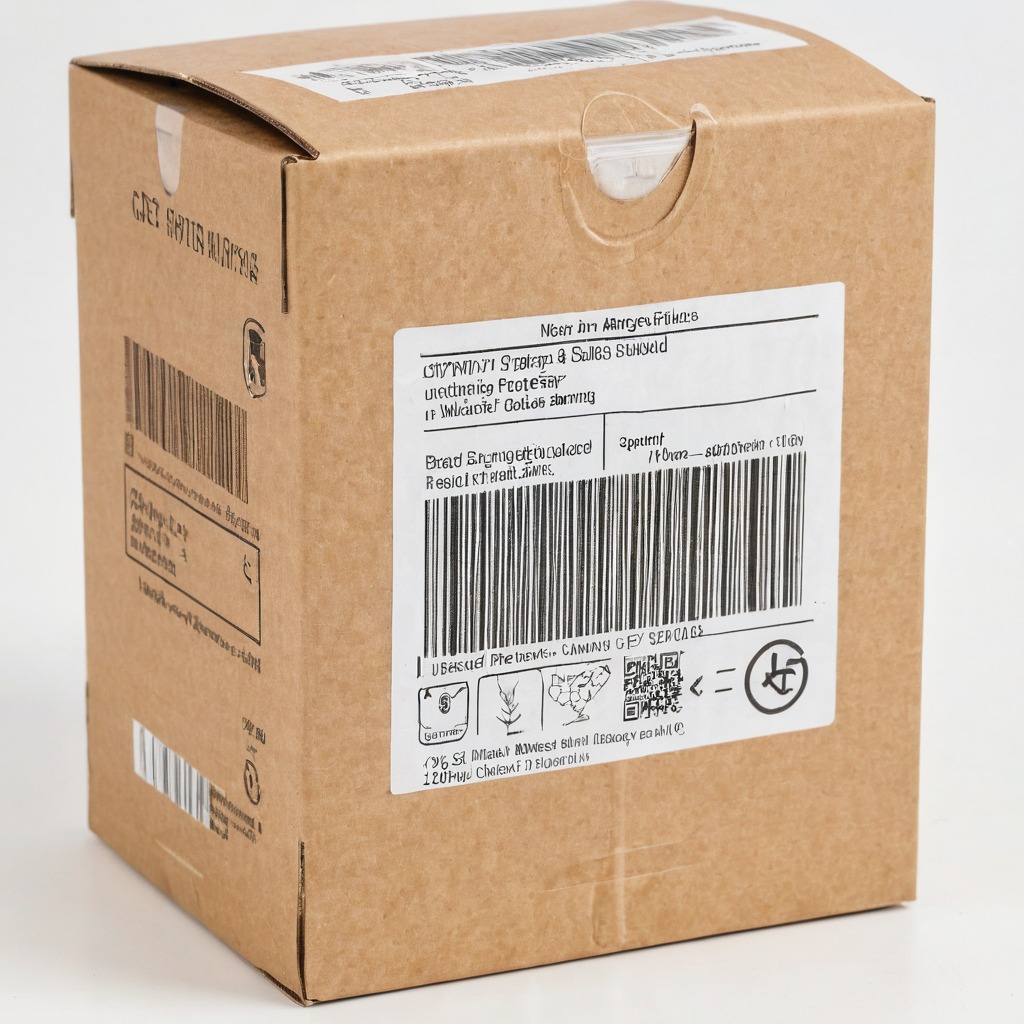
In March 2026, an Amazon seller I know had 3,000 units of a kitchen gadget seized at the Port of Los Angeles. The product was fine. The quality was perfect. The problem? The product label listed the country of origin in 8-point font — four points smaller than the 12-point minimum required by U.S. Customs regulations. The entire shipment was flagged, held for 28 days, and ultimately re-labeled at a cost of $4,200 — plus $2,800 in demurrage fees while the container sat at the port. He could have avoided all of it with a ¥4 roll of 12-point font labels applied in Shenzhen.
Labeling compliance isn't the sexiest part of importing from China. It doesn't make your product photos pop. It doesn't help your Amazon conversion rate. But it's the difference between a shipment that clears customs in 24 hours and one that costs you $7,000 in surprise fees — or worse, gets destroyed at the border with no compensation.
This guide covers every labeling and packaging requirement that matters for importers sourcing from China in 2026 — organized by market (US, EU, UK, Amazon FBA) — with the exact Chinese-language templates you need to communicate requirements to your supplier.
U.S. Labeling Requirements: The Non-Negotiable Five
If your product enters the United States, five labeling requirements apply to virtually every consumer goods shipment. Miss any one of them, and your shipment can be detained, re-exported, or destroyed.
1. Country of Origin Marking (19 CFR § 134)
This is the most commonly violated labeling requirement — and the easiest to fix before your goods leave China.
⚠️ Country of Origin Rules at a Glance
- Requirement: Every imported product (or its retail packaging) must be marked with its country of origin in English — "Made in China," "Product of China," or simply "China."
- Placement: Must be "conspicuous" — visible to the ultimate purchaser without disassembling the product. For retail products, the outer retail packaging qualifies if the end consumer sees it before purchase.
- Font size: At minimum, must be "legible" and in a "reasonable size." In practice, CBP enforces 12-point font or larger for retail packaging, 8-point minimum for inner pack labels. Handwritten, smudged, or otherwise unclear markings will be rejected.
- Permanence: Must be "permanent" — stickers that peel off easily, ink that rubs off, or markings that can be removed without visible trace will fail. For metal or ceramic products, use etching, engraving, or permanent adhesive labels. For textiles, use sewn-in labels.
- Penalty: Goods not properly marked are assessed a 10% marking duty (on top of all other duties) plus potential seizure. The 10% duty is NOT refundable — even if you fix the marking later.
Common pitfalls for China-sourced products:
- The "Made in PRC" dodge: Some Chinese suppliers try to use "Made in PRC" instead of "Made in China." While PRC is technically an abbreviation, CBP officers may view it as an attempt to obscure origin. Use "Made in China" to avoid ambiguity.
- Stickers that fall off in transit: If your supplier applies cheap adhesive labels at the factory and they peel off during ocean freight in a humid container, you arrive at the port with unmarked goods. Use permanent adhesive or integrate origin marking into the printed packaging artwork.
- Multi-component products: If your product has multiple components from different countries, the "substantial transformation" test applies. If a Chinese factory assembles components from 5 countries into a new product, "Made in China" is usually correct. But if you simply pack Japanese components into a box in China, the origin may be Japan. When in doubt, consult a customs broker before printing labels.
2. FDA Labeling (Food, Cosmetics, Dietary Supplements, Medical Devices)
If your product falls under FDA jurisdiction — and many Amazon products do, including food-contact items, cosmetics, and baby products — FDA labeling requirements are separate from and stricter than general customs marking. The FDA can detain your shipment even if CBP clears it.
FDA Labeling Requirements by Product Category
| Product Type | Key Labeling Requirements |
|---|---|
| Food-contact items (kitchen tools, water bottles, lunch boxes) | Must list: manufacturer/packer/distributor name and U.S. address, material composition ("stainless steel," "silicone," "BPA-free"), care instructions. Any food-contact claim ("food-grade silicone") must be substantiated with FDA-compliant testing. If the product contains multiple materials touching food, each must be listed. |
| Cosmetics (makeup, skincare, hair products) | Must list: ingredients in descending order of predominance, net quantity of contents (in both US customary and metric units), manufacturer/packer/distributor with U.S. address, and any required warning statements (e.g., "Avoid contact with eyes"). Ingredient names must use INCI (International Nomenclature of Cosmetic Ingredients) standard names — Chinese suppliers often list non-standard names that trigger FDA rejections. |
| Dietary supplements | Must include: Supplement Facts panel (specific format required by 21 CFR 101.36), list of dietary ingredients, serving size, manufacturer/distributor with U.S. address, and the disclaimer: "These statements have not been evaluated by the Food and Drug Administration. This product is not intended to diagnose, treat, cure, or prevent any disease." Mislabeling supplements is the #1 cause of FDA warning letters to Amazon sellers. |
| Medical devices (masks, pulse oximeters, therapy devices) | Must include: FDA establishment identifier, 510(k) number if Class II, unique device identifier (UDI), manufacturer name and address, and intended use statement. Non-compliant labeling = automatic detention at the port. |
The FDA address requirement catches more sellers than any other rule: you must list a U.S. street address for the manufacturer, packer, or distributor. A P.O. box is not sufficient. If you don't want your home address on your products, use a registered agent service ($50–200/year) or your 3PL's address (with their written permission, and make sure they forward any FDA correspondence).
3. CPSIA Tracking Labels (Children's Products — 15 U.S.C. § 2063)
If your product is designed or intended primarily for children 12 or under, CPSIA requires a permanent tracking label on the product itself AND on the packaging. This is not optional. This is not replaceable with a sticker your supplier can forget to apply.
⚠️ CPSIA Tracking Label Requirements (Mandatory for All Children's Products)
The tracking label MUST include ALL of the following, in English, permanently affixed:
- Manufacturer name (your company or your supplier's company — whichever is the "manufacturer" for CPSIA purposes)
- Production date (month and year minimum; "July 2026" or "07/2026")
- Production batch/lot number (so you can trace defective products to a specific production run)
- Manufacturing location (city and country — "Shenzhen, China" is sufficient)
- Cohort information (any additional information that helps identify the specific source of the product — a SKU or purchase order number)
Placement: The label must be on the product itself (sewn-in, etched, or permanently printed — not a removable sticker) AND on the packaging. If the product is too small for a label (e.g., a small toy part), it can be on the packaging only, but this exception is narrow.
Penalty: Products without tracking labels are considered "misbranded" and can trigger a mandatory CPSC recall. Civil penalties: up to $120,000 per violation, with a $17.5 million maximum for a related series of violations.
Real-world application: If you import baby teething toys from a factory in Shantou, every teether needs a sewn-in or permanently printed label with: Your Company Name, 07/2026, Batch #BT-0726-A, Shantou China, SKU #TEETH-001. The retail box must carry the same information. Work this into your production specification BEFORE the factory prints packaging artwork — retrofitting tracking labels after production is expensive and often results in sloppy, non-compliant solutions.
4. Proposition 65 (California — OEHHA Warning Labels)
Proposition 65 (the Safe Drinking Water and Toxic Enforcement Act of 1986) requires businesses selling products in California to provide a "clear and reasonable warning" if their products contain any of the 900+ chemicals on the Prop 65 list.
Who this applies to: Any seller who ships products TO California or sells products that COULD be shipped to California. If you sell on Amazon and use FBA, Amazon warehouses are in California — your products are almost certainly sold into California.
The 2026 Prop 65 warning requirements (updated August 2024):
- Warning text must include: The ⚠️ warning symbol (black exclamation point in yellow triangle), the word "WARNING" in bold capital letters, the specific chemical(s) of concern (e.g., "lead," "phthalates," "BPA"), and a link to the Prop 65 website: www.P65Warnings.ca.gov.
- Placement: On the product or its retail packaging (packaging alone is acceptable for most consumer products), visible before purchase, in a font "no smaller than the largest type size used for other consumer information" on the label — but in practice, minimum 6-point font.
- Language: English is required. If the product label includes information in other languages, the warning must be in those languages too.
Does YOUR product need a Prop 65 warning? The short answer: almost certainly yes if it's made in China and contains any of the following:
| Product Type | Common Prop 65 Chemicals Found | Warning Likely Needed? |
|---|---|---|
| Jewelry (especially costume, metal) | Lead, cadmium | Yes |
| Soft plastics, PVC items, vinyl | Phthalates (DEHP, DBP, BBP, DINP, DIDP, DnOP) | Yes |
| Ceramic dishes, mugs, pottery | Lead (in glazes), cadmium (in bright colors) | Likely |
| Painted toys, children's products | Lead (in paint), phthalates (in soft plastic parts) | Yes |
| Food containers, water bottles | BPA, lead (in some stainless steel), phthalates | Test first |
| Electronics, cables, chargers | Lead (in solder), phthalates (in wire insulation), flame retardants | Likely |
| Clothing, textiles, bags, wallets | Lead (in zippers, buttons, faux leather), phthalates (in synthetic materials) | Test first |
⚠️ The Prop 65 Bounty Hunter Problem
Prop 65 is enforced through "private attorney general" lawsuits. Law firms scan Amazon listings and send "60-day notices of violation" — a pre-lawsuit demand letter. The typical settlement demand is $5,000–15,000 per product, and they file hundreds of these per month. You don't need to be wrong to get sued — you need to not have the warning posted. The safest approach: if your product is made in China, assume it needs a Prop 65 warning, test to confirm, and include the warning preemptively. The cost of testing ($100–300 per material) and adding the warning label (< $0.01 per unit) is trivial compared to a $12,000 settlement.
5. FTC Fiber and Care Labeling (Textiles, Apparel, and Fabrics)
If you import any textile product — clothing, bedding, towels, fabric toys, or home textiles — the FTC Textile Fiber Products Identification Act requires specific labeling:
- Fiber content by percentage, in descending order of predominance (e.g., "100% Cotton" or "65% Polyester, 35% Cotton")
- Country of origin (this is IN ADDITION to the CBP country of origin requirement — the FTC rule requires "Made in China" on the fabric label specifically)
- Manufacturer or RN (Registered Identification Number) — you can use your company name or apply for a free FTC RN number at rn.ftc.gov
- Care instructions — washing, drying, ironing, bleaching, and dry-cleaning instructions, in that order
Care labels must be permanent (sewn-in), in English, and remain legible for the useful life of the product. Chinese suppliers often use generic care symbols (the washing tub, triangle, iron symbols) which are acceptable internationally — but the FTC also requires the English text explanation.
EU Labeling Requirements: CE, WEEE, and the GPSR
The European Union has its own — and increasingly strict — labeling regime. Post-Brexit, UK requirements have diverged. If you sell in both markets, you need two labeling systems.
CE Marking (EU)
The CE mark is the EU's declaration that your product meets all applicable EU health, safety, and environmental requirements. It's required for most consumer products imported into the EU, including toys, electronics, machinery, medical devices, and personal protective equipment.
CE marking requirements for labels:
- The CE logo: Must exactly match the official CE marking proportions (the C and E must maintain the correct semicircle geometry). Many Chinese suppliers use an "Export" CE mark ("China Export") that looks almost identical but isn't valid. The genuine CE mark has the C and E closer together with specific spacing.
- Placement: On the product itself if possible; on packaging and accompanying documents if the product is too small. Must be visible, legible, and indelible.
- Required accompanying information: Manufacturer name and address (an EU address is strongly recommended post-GPSR), model/serial number, and the EU Declaration of Conformity (which doesn't need to be on the label but must be available on request).
⚠️ GPSR — The 2024 Rule That Changed Everything
The General Product Safety Regulation (GPSR) took full effect December 13, 2024, replacing the old GPSD. The key new labeling requirement: every consumer product sold in the EU must now display the name AND address (postal and electronic) of an EU-based "Responsible Person" on the product or its packaging. This person is legally responsible for the product's safety in the EU market. Without an EU Responsible Person listed on the label, your shipment can be rejected at customs — regardless of whether your product has a valid CE mark.
Practical implication: If you're a US-based Amazon seller shipping to EU FBA, you need either: (a) an EU subsidiary/office, (b) an authorized representative service ($200–800/year), or (c) your freight forwarder/customs broker to serve as your Responsible Person (many now offer this). Their EU address must appear on your product label.
WEEE Marking (EU — Electronics)
If your product is electronic (has a battery, plug, or circuit board), the Waste Electrical and Electronic Equipment (WEEE) Directive requires the crossed-out wheelie bin symbol on the product. Manufacturers must also register with each EU country's WEEE registry and display their WEEE registration number. Non-compliance fines vary by country but can reach €100,000 per product category.
UKCA Marking (UK — Post-Brexit)
The UKCA (UK Conformity Assessed) mark replaced CE marking for the UK market. However, the UK government has repeatedly extended the transition period — as of mid-2026, CE marking is still accepted for most products until at least 2027. But the direction is clear: eventually UKCA will be mandatory. If you're printing packaging artwork now, include both the CE mark AND the UKCA mark to future-proof your packaging. The UKCA mark follows similar placement rules as CE marking.
EU Language Requirements
EU member states can require labeling in their official language(s). In practice:
- Germany: Mandatory German labeling for product descriptions, safety warnings, and user instructions.
- France: Mandatory French labeling (Loi Toubon — all consumer information must be in French).
- Italy, Spain, Netherlands, Poland: National language strongly recommended; customs may reject products without it.
- Nordic countries: Multi-language Nordic labeling is common (Swedish, Norwegian, Danish, Finnish).
Amazon's solution: Amazon now requires "multi-country" FBA listings for EU — product detail pages must include safety information in the languages of all countries where the product is listed. This extends to the physical labels on the product. If your label is English-only, list only in English-speaking EU countries (Ireland). If you want to sell in Germany, France, Italy, and Spain via Pan-EU FBA, your labels need at minimum the safety warnings in those four languages.
Amazon FBA Labeling & Packaging Requirements
Amazon has its own separate labeling requirements that exist on top of all the regulatory requirements above. These aren't government regulations — but failure to meet them will get your inventory rejected at the FBA receiving center, returned to you at your expense, or destroyed.
1. FBA Barcode Labels (FNSKU)
Every unit sent to Amazon FBA must have a scannable FNSKU (Fulfillment Network Stock Keeping Unit) barcode on the outside of the product packaging. Key requirements:
- Barcode type: Code 128 or standard UPC/EAN. Code 128 is preferred for FBA — it's more scannable and encodes the FNSKU directly.
- Placement: On a flat, non-curved surface, not over a seam or fold. Must cover any existing manufacturer barcode (Amazon scans the FNSKU, not the UPC).
- Size: Minimum 1 inch by 2 inches (25mm × 50mm) for the label area. The barcode itself must be at least 1 inch wide.
- Print quality: Thermal transfer or laser printed on white label stock. Inkjet-printed labels that smudge in humidity are the #1 cause of FBA barcode rejections from China-sourced products.
- Label content: Must include the FNSKU (starting with "X00"), the product title, and the product condition (e.g., "New").
The Barcode-Scannability Test (Before Your Goods Leave China)
Have your Chinese supplier send you a video of them scanning 10 random units from your production batch using a barcode scanner app on their phone. If ANY of the 10 fail to scan cleanly on the first try, the labels need to be re-printed or re-applied. Amazon's receiving centers use high-speed conveyor scanners — a barcode that's "mostly" scannable at low speed will fail at 15 feet per second on an Amazon conveyor. Each failed scan delays your inventory check-in by days or weeks.
2. Poly Bag Suffocation Warning (Amazon Requirement)
Any poly bag with an opening of 5 inches or larger (measured flat) MUST have a suffocation warning printed on the bag. The warning must be in English, in a font size of at least 10 points for the body text and 14 points for the heading. Amazon's required text:
WARNING: PLASTIC BAGS CAN BE DANGEROUS. TO AVOID DANGER OF SUFFOCATION, KEEP THIS BAG AWAY FROM BABIES AND CHILDREN.
Do not use in cribs, beds, carriages, or playpens. This bag is not a toy. Discard immediately after opening.
This warning must be printed or stamped directly on the bag — stickers are not acceptable (they peel off). If your poly bags arrive from China without the suffocation warning printed on them, Amazon FBA will reject them.
3. Boxed Units and Over-Boxing
If your product comes in a retail box, that box must meet Amazon's "SIOC" (Ships In Own Container) standards if you're not over-boxing it. For most China-sourced products, over-boxing — placing the retail box inside a plain corrugated box — is the safer approach:
- The outer box must be a 6-sided box (no gaps, no flaps that can open in transit)
- Minimum 200# burst strength corrugated cardboard (ECT-32 equivalent, commonly called "BC flute" or "double-wall" in China-based packaging terms — specify clearly)
- Inner contents must not move more than 1 inch in any direction (use dunnage, air pillows, or kraft paper — not loose peanuts, which Amazon prohibits)
- The FNSKU label goes on the outer box, not the retail box (unless the outer box IS the retail packaging)
4. Expiration-Dated Products
If your product has an expiration date (food, supplements, cosmetics with active ingredients, medical devices), Amazon requires:
- Expiration date printed in the format MM-DD-YYYY or MM-YYYY on BOTH the individual unit AND the outer case pack
- Minimum shelf life of 90 days remaining at the time of FBA receipt
- Products with expiration dates must use FBA's "FIFO" (first-in, first-out) inventory setting — any lot with a closer expiration date ships first
5. Case Pack and Carton Labeling (Shipping to FBA)
Each carton sent to Amazon FBA requires TWO labels:
- FBA shipment label (SPD label): Generated in Seller Central when you create your shipment plan. Contains the shipment ID, destination FBA warehouse address, and a unique scannable barcode. One per carton, placed on the outside, not over a seam.
- Carton content label: Required for each case pack. Must list: FNSKU, quantity in the carton, and a scannable barcode. Can be the same label as the FBA shipment label if it includes this information.
Critical detail: If your supplier in China is applying the FBA shipment labels, you're sharing your FBA destination warehouse address with them — which means they know exactly where your inventory is going and how much you're shipping. For higher-value products, consider shipping to a 3PL first, then having the 3PL apply FBA labels and forward to Amazon.
The Pre-Shipment Labeling Audit: Your 25-Point Checklist
Before any shipment leaves China, your supplier must send you photos confirming each of these 25 points. This isn't excessive — it's the difference between inventory that checks into FBA in 3 days and inventory that gets rejected and sits in "FC Processing" for 3 weeks.
25-Point Pre-Shipment Labeling Audit Checklist
- Country of origin ("Made in China") clearly visible on product or retail packaging — YES / NO
- Country of origin font size is 12pt minimum (retail packaging) — YES / NO
- Country of origin is permanent (etched/sewn/printed, not a peelable sticker) — YES / NO
- FNSKU barcode applied to every unit — YES / NO
- FNSKU covers any existing UPC barcode — YES / NO
- FNSKU barcode scanned successfully on 10 random units (video proof) — YES / NO
- Poly bag suffocation warning printed on bag (if opening ≥ 5 inches) — YES / NO
- Poly bag suffocation warning font ≥ 10pt — YES / NO
- CPSIA tracking label on product (if children's product) — YES / NO / N/A
- CPSIA tracking label includes: manufacturer, date, batch#, location, cohort — YES / NO / N/A
- Prop 65 warning present (if applicable) — YES / NO / N/A
- FDA-compliant labeling (if food/cosmetic/supplement) — YES / NO / N/A
- FDA label includes U.S. address (not P.O. box) — YES / NO / N/A
- FTC care label sewn in (if textile) — YES / NO / N/A
- CE mark present and correctly proportioned (if EU-bound) — YES / NO / N/A
- EU Responsible Person name + address on label (GPSR) — YES / NO / N/A
- UKCA mark present (if UK-bound, recommended even during transition) — YES / NO / N/A
- WEEE symbol present (if electronic) — YES / NO / N/A
- EU multi-language safety warnings (if Pan-EU FBA) — YES / NO / N/A
- Expiration date in MM-DD-YYYY format (if applicable) — YES / NO / N/A
- Amazon FBA shipment label applied to each carton — YES / NO
- Carton content label on each case pack (FNSKU + qty) — YES / NO
- Outer carton is 6-sided, no flaps, ≥ 200# burst strength — YES / NO
- No loose packing peanuts used (Amazon prohibits) — YES / NO
- Photos of ALL labels are clear, well-lit, and legible — YES / NO
How to use this checklist with your Chinese supplier: Send the checklist (translated into Chinese) with your purchase order. Require that the supplier sends photos of each applicable point before releasing the shipment. If anything is wrong, they fix it in China — where re-labeling costs ¥0.50–2.00 per unit — rather than at a U.S. 3PL where it costs $1.00–3.00 per unit, or worse, at the port where it costs $3.00–8.00 per unit plus demurrage.
Chinese-Language Labeling Brief for Your Supplier
Most labeling failures happen because the supplier doesn't understand what you need. Here's the exact message to send in Chinese (alongside English) when placing your order:
标签要求确认 / Labeling Requirements Confirmation 请确认以下标签要求并在发货前提供照片证明。未满足要求导致的退货或重新贴标签费用由贵方承担。 Please confirm the following labeling requirements and provide photo proof before shipping. Any returns or relabeling costs caused by unmet requirements are the supplier's responsibility. 1. 产地标记: 每件产品或零售包装上必须标明 "Made in China",字体≥12pt,永久性标记(印刷/缝制/刻印,不可使用可撕标签) Country of Origin: "Made in China" on each unit or retail packaging, ≥12pt font, permanent (printed/sewn/etched; no peelable stickers) 2. FNSKU条码: 每件产品必须贴有FNSKU标签(Code 128格式),覆盖原始UPC条码,用热转印/激光打印机在白底标签上打印 FNSKU Barcode: FNSKU label (Code 128 format) on each unit, covering original UPC, thermal/laser printed on white label stock 3. 塑料袋警示: 包装袋开口≥5英寸的,必须在袋子上印刷窒息警告文字(不能用贴纸),字体≥10pt Poly Bag Warning: For bags with opening ≥5 inches, suffocation warning must be PRINTED on the bag (NOT stickers), font ≥10pt 4. 产品标签: [根据产品类别列出具体要求] Product-specific labels: [list specific requirements based on product type] 5. 发货前请拍摄以下照片发送给我: Before shipping, please send photos of: - 产品上的产地标记 (Country of origin on product) - FNSKU标签清晰照片 (Clear FNSKU label photo) - 塑料袋警示文字 (Poly bag warning text) - 外箱上的FBA发货标签 (FBA shipment label on outer carton) - 外箱内的装箱标签 (Carton content label) 确认以上要求无问题后,请回复"已确认"。谢谢! Please reply "Confirmed" after verifying all requirements. Thank you!
When Labeling Goes Wrong: Real Failure Patterns and Costs
Failure Pattern #1: The CPSIA Tracking Label Omission
A children's toy importer shipped 5,000 plush animals to Amazon without CPSIA tracking labels. The products cleared customs (CBP only checks country of origin, not CPSIA compliance) and checked into FBA. Six months later, a CPSC spot-check flagged the missing labels. Amazon suppressed the listing and destroyed all remaining FBA inventory. The seller lost $22,000 in product cost + $8,000 in Amazon fees + the ASIN's ranking history. Prevention: If your product is for children under 12, CPSIA tracking labels are NOT optional. Include them in your packaging artwork file — never as an afterthought.
Failure Pattern #2: The Poly Bag Suffocation Warning That Wasn't
A kitchenware seller received 3,000 silicone spatulas in poly bags from China. The bags were perfect — except the suffocation warning was a sticker, not printed. Amazon's receiving center rejected the entire shipment. The seller had two choices: pay Amazon $0.50/unit to relabel (total: $1,500) or have the inventory returned ($800 freight + $1,200 re-labeling at a 3PL). They chose the 3PL route. Total delay: 4 weeks. Prevention: In your poly bag specification, add one sentence: "Suffocation warning must be PRINTED directly on the bag, not applied as a sticker."
Failure Pattern #3: The EU Responsible Person Gap
An EU FBA seller imported 1,000 units of an electronic gadget from Shenzhen with full CE marking — but no EU Responsible Person address on the label. Post-GPSR enforcement kicked in at German customs. The shipment was held for 21 days while the seller scrambled to find an EU authorized representative, update the Declaration of Conformity, and submit revised documentation. By the time the shipment cleared, the seller's FBA inventory had stocked out for 2 weeks and the ASIN lost its Best Seller badge. Prevention: Secure your EU Responsible Person BEFORE printing packaging artwork. Add their EU address to your label artwork file. Update your DoC to list them.
Building a China-Side Labeling Process That Works
The best labeling compliance system is one your Chinese supplier can execute without you micromanaging every shipment. Here's the process:
Step 1: Create a Labeling Master Document
Build a single PDF (in English + Chinese) that contains: every label design (FNSKU template, country of origin layout, warning label text), placement instructions (exact position on the product/box with diagrams), material specifications (label stock, adhesive type, print method), and photo requirements (exactly what angles and close-ups you need before shipping). Update this once and re-use it for every order. This document becomes part of your purchase order terms — non-compliance = supplier bears rework costs.
Step 2: Apply Labels in China (Not at a 3PL)
For 95% of products, labeling should happen at the Chinese factory, not at a U.S. 3PL. Chinese labor costs for labeling are ¥20–30/hour ($2.75–4.15). U.S. 3PL labeling costs are $15–25/hour. The math is obvious. The only exception: when you're shipping to multiple markets with different compliance requirements, it sometimes makes sense to label generically in China and apply market-specific labels at a 3PL per destination.
Step 3: Verify Before Every Shipment
No exceptions. The supplier sends photos of labels on 10 random units from the production batch. You (or your sourcing agent) review the photos against the 25-point checklist before authorizing shipment. If the supplier resists sending photos, that's a red flag for labeling quality. This process adds 30 minutes to your workflow and prevents weeks of customs delays.
Step 4: Build a Compliance Calendar
Labeling regulations change. FDA updates its labeling guidance. Prop 65 adds new chemicals to the list every year. The EU introduces new directives. Set quarterly calendar reminders to review your labeling master document and check for regulatory updates. A 15-minute review every 3 months beats a $10,000 customs detention.
The Bottom Line
Product labeling and packaging compliance isn't complicated — but it is detailed, it's mandatory, and the consequences of getting it wrong are vastly more expensive than the cost of getting it right. The difference between a shipment that clears customs in 24 hours and one that sits at the port for 3 weeks is often nothing more than a correctly sized "Made in China" label and a printed suffocation warning on a poly bag.
The most successful importers I work with treat labeling not as an afterthought to be dealt with when the goods arrive, but as a core part of the product specification — designed into the packaging artwork from day one, communicated to the supplier in their language, and verified with photographic proof before the container door closes. Do that, and you'll never fund a customs broker's surprise invoice.
Want a Complete Compliance Checklist for Your Product?
Our China Sourcing Master Guide includes a 40-page compliance module with: product-specific labeling checklists for 25+ categories, Chinese-language supplier brief templates, a Prop 65 chemical database by product category, and a quarterly regulatory update tracker. Plus 35+ other in-depth sourcing guides.
Get the Guide →