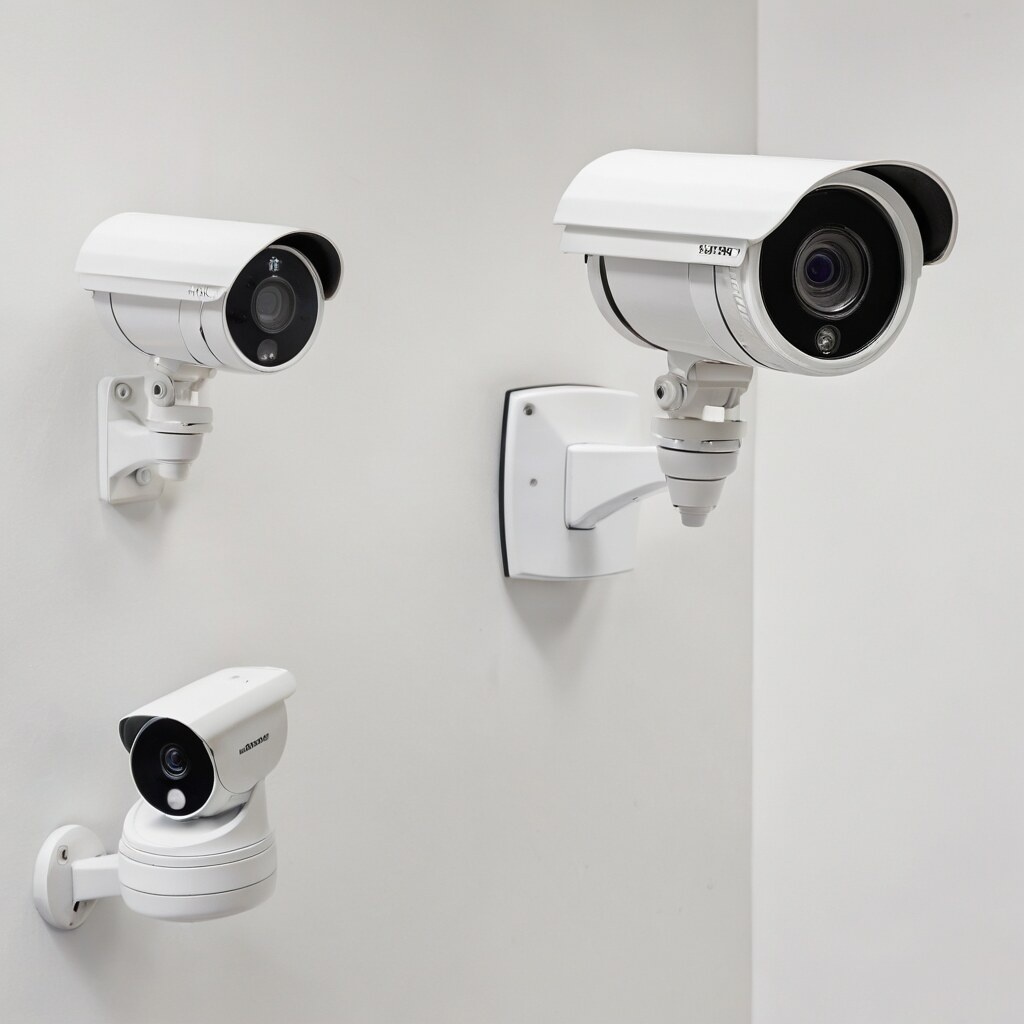
In April a seller I work with had 34 live camera ASINs. By the end of June he had 9. Nothing was wrong with the products: 2K outdoor Wi-Fi cameras, a solar PTZ unit, two doorbell SKUs, all selling steadily at a 38% gross margin, with a supplier he had visited in Shenzhen twice. The first sweep took out eleven listings for a missing FCC ID on the compliance page. The second took out nine more because the FCC ID he submitted belonged to the Wi-Fi module inside the camera — a module vendor's grant — and not to the finished device Amazon was selling, which is a distinction the platform treats as a false declaration rather than a clerical error. The third wave was the interesting one: a commercial property manager who had been about to place a $41,000 order asked for a Section 889 attestation and a chip-level BOM, and pulled out when the answer involved a HiSilicon SoC. Three different failures, one root cause: he had bought a camera when what he needed to buy was a camera plus a compliance chain with his own name at the front of it. Security cameras are the most attractive electronics category left in hardgoods — the market is roughly $9.8 billion in 2026 heading toward $17.7 billion by 2031, average selling prices hold up better than in almost any other gadget aisle, and subscriptions turn a $39 camera into a $120 lifetime customer — but 2026 is the year the category's compliance floor turned into a cliff, and this guide is the playbook for crossing it without his mistakes.
The demand side is genuinely good. Home security is one of the few consumer electronics categories that behaves like a utility: buyers replace a camera when it dies, add a second one when a package goes missing, and hand the category a permanent tail of demand from both anxiety and habit. North America is the largest region and the most Amazon-concentrated, which means the platform's compliance sweeps are effectively your regulator. Pricing has a wide, honest spread — a $21 indoor pan/tilt camera with 34,000 reviews sits in the same best-seller list as a $159 solar pan-tilt-zoom unit — so there is room for a small brand with a real product to take a position without winning a price war. And the supply side is a genuine advantage for anyone willing to learn it: China builds virtually every camera sold at retail outside the enterprise tier, from the SoC and the image sensor to the lens, the housing, the app backend and the cloud relay. The catch is that this is the category where the regulator, the marketplace, the commercial buyer and the tariff regime all changed their minds inside eighteen months, and where the product's real quality is invisible until you open it, point it at a dark room, and capture its packets.
Why 2026 Is a Different Category (Four Things Changed)
If you sourced cameras in 2023 or 2024, your playbook is now partly obsolete. Four structural changes landed in a compressed window and they define what a camera brand has to be in 2026:
- The FCC closed the component loophole and put accountability in the United States. On July 23, 2026 the Commission released its Third Report and Order and Third Further Notice of Proposed Rulemaking (FCC-26-50A1). Four pieces matter commercially. First, it prohibits the authorization of devices that incorporate logic-bearing hardware components produced by entities on the Covered List — the rule that shuts the door on a camera built around a covered vendor's chip and sold under someone else's brand. Second, it applies the marketing rules to online marketplaces and requires marketplaces to display FCC IDs at the online point of sale, with compliance dates staggered six months after Federal Register publication for marketplaces that sell, take title to, or physically handle devices, and nine months for qualifying third-party listings where the marketplace does not take title. Third, it requires every applicant for certified equipment to identify a legally liable party located within the United States — a rule that turns the classic "the factory holds the certificate" arrangement into a real exposure. Fourth, it adopts term limits on equipment authorizations and a streamlined revocation procedure. Separately, a June 26, 2026 Public Notice prohibits the continued importation and marketing of any covered equipment added to the Covered List in 2024 or earlier, generally effective ten days after Federal Register publication. If you have been treating the FCC ID as a line in a supplier's spreadsheet, 2026 is the year that line acquired a plaintiff's lawyer attached to it.
- NDAA Section 889 turned a chip choice into a sales channel. Section 889(a)(1)(A) bars federal agencies from procuring covered equipment; 889(a)(1)(B) bars agencies from contracting with any entity that uses covered equipment as a substantial or essential component of any system — including equipment in parts of the business that have nothing to do with government work. The covered video surveillance vendors are Huawei, ZTE, Hytera, Hikvision and Dahua, together with their subsidiaries, affiliates and OEM relabels. Practical translation for a retail brand in 2026: the schools, hospitals, municipalities, multifamily property managers, logistics operators and federal subcontractors who buy cameras in dozens rather than ones all send an 889 attestation question before a PO, and the test they run now is silicon-deep — the SoC on the board, not the logo on the housing. A camera platform built on HiSilicon silicon is a liability in that conversation no matter whose brand is on the label, and it is why chip-level BOM disclosure has become a normal request in this category.
- Cybersecurity became a product requirement with dates on it. Three regimes now apply to a Wi-Fi camera sold into the EU and UK. The Radio Equipment Directive's cybersecurity delegated regulation (EU 2022/30) became mandatory on 1 August 2025, with the EN 18031 family as the harmonised route — in practice a camera must demonstrate no universal default credentials, protected network interfaces, secure update mechanisms, confidentiality of stored and transmitted data, and resistance to abuse. The Cyber Resilience Act (EU 2024/2847) started its Article 14 reporting obligations on 11 September 2026: a manufacturer that becomes aware of an actively exploited vulnerability must file an early warning within 24 hours and a full notification within 72 hours through ENISA's Single Reporting Platform, with a final report within 14 days of a fix; severe incidents follow a one-month final-report clock; penalties reach EUR 15 million or 2.5% of worldwide turnover, and the duty applies to products already on the market. The rest of the CRA's obligations — secure-by-design, vulnerability management, technical documentation, CE marking — apply from 11 December 2027, and an importer that sells under its own brand is treated as the manufacturer. The UK's PSTI regime adds minimum security requirements for connectable products plus a statement of compliance. In other words: buy a camera without a contracted firmware-maintenance and vulnerability-disclosure path in 2026 and you have bought a future regulatory event, not a SKU.
- The tariff stack was rewritten twice inside one year. On February 20, 2026 the Supreme Court held that IEEPA does not authorize tariffs, invalidating the fentanyl and reciprocal duties; CBP stopped collecting them for entries from February 24, and refunds of tens of billions of dollars have been flowing back to importers through litigation at the Court of International Trade. To replace the revenue the administration imposed a 15% surcharge under Section 122 of the Trade Act of 1974 from February 24 for a maximum of 150 days, which expired by operation of law on July 24, 2026, and on the same day a new Section 301 action imposed 10-12.5% ad valorem duties across 60 jurisdictions. What survived all of it untouched is the original China Section 301 architecture — the 25% lists where most cameras, camera parts and consumer electronics accessories sit. The practical consequence for a camera importer: your duty line is now a monthly variable, not an annual assumption, and any quote's landed cost is only valid for the tariff regime in force at signature. Confirm the stack with your customs broker at every PO, and if you imported Chinese electronics in 2025, ask whether you have an IEEPA refund claim.
Where China Builds It (Cluster Map by Layer, Not by Product)
A camera is not one factory's product. It is an image sensor, a lens, a SoC running someone's firmware, a wireless module, a power supply, a housing, and — the layer everybody forgets — a cloud service and an app that decide whether the product still works in three years. Know which layer each factory owns, because the layer they outsource is the layer nobody is testing:
- Hangzhou — the industry's centre of gravity. Hikvision and Dahua are headquartered here, with Uniview and EZVIZ in the same orbit, and the surrounding ecosystem of component suppliers, tooling shops, firmware engineers and former employees is why Hangzhou is where serious video engineering lives in China. It is also where the Covered List risk lives: this cluster's engineering depth and its national-security problem are two sides of the same coin. Buying from a Hangzhou ODM is not illegal for a US retail brand, but you must know exactly which entity you are contracting with, whether any affiliate appears on the Covered List, and what silicon the design uses — because a commercial customer's attestation will ask, and a marketplace or customs review may too.
- Shenzhen — the consumer export belt, and where your Amazon camera will actually come from. Shenzhen (with Dongguan immediately north and Huizhou alongside) is where the retail-grade category is built: Wi-Fi indoor and outdoor cameras, battery and solar cameras, video doorbells, floodlight cameras, baby monitors and NVR kits, assembled by hundreds of ODM and OEM factories at MOQs a small brand can live with. It is also where the brain is: the SoC vendors' design houses and distributors (HiSilicon, SigmaStar, Rockchip, Ingenic, Fullhan on the Chinese side; Novatek and Ambarella from Taiwan and the US), the image sensor supply, the Wi-Fi module and PCB houses, the P2P/relay-server and app developers who sell white-label apps by the thousand, the injection-molders, and the accessory tier — microSD, PoE injectors, junction boxes, mounting arms, solar panels. If you want a two-week sample cycle, an English app and an Amazon-ready SKU, this is the cluster you are shopping in, and this is where the FCC-ID handling habits (borrowed IDs, module-level grants, mismatched model strings) are worst.
- Ningbo, Yuyao and Zhongshan — optics. Lenses and camera modules concentrate in Zhejiang and Guangdong: Sunny Optical's heartland around Yuyao and Ningbo, Union Optech and the Zhongshan module belt. This is where "glass lens" versus "plastic lens" is decided, and lens quality is the single most under-appreciated variable in the entire BOM — the same sensor with a good glass lens and a cheap one produce visibly different images at night, and the difference costs a few dollars at most. Ask for the lens specification, not the word "HD".
- Dongguan, Foshan and the die-casting belt — housings and mechanics. Die-cast aluminium and injection-molded housings, gaskets and seals, pan-tilt gearboxes and stepper assemblies, potting and conformal coating, bracket and hardware stamping. This is where IP ratings are real or fake: an IP66 claim lives or dies on the gasket groove design, the screw-sealing pattern and the cable gland, not on the label. It is the cheapest layer to get wrong and the most expensive to warranty.
- Fujian (Fuzhou, Xiamen) and the second-tier OEM belt — volume and cost. A large, capable OEM base outside the Hangzhou giants, building mid-tier cameras, NVRs and doorbells for the export market at aggressive prices. Product quality here varies enormously between factories that do their own firmware and factories that resell a reference design; this is where "we are a camera factory" needs the most proof.
- The battery and solar tier — the fastest-growing sub-category's weak point. Battery cameras and doorbells pull in the lithium pack supply chain (Shenzhen and Dongguan pack houses, cells from EVE, Sunwoda, BAK and the cheaper tier-two cell makers) and the folding solar panel belt. This layer is where a beautiful camera becomes a compliance file: UN 38.3 at pack level, charging temperature behaviour, and the honest answer to "how many days per charge at real traffic".
The practical test of a camera supplier is a single question: which of these six layers do you own? A real manufacturer owns the firmware and the assembly and buys silicon and optics from named suppliers. A trading company owns none of them, which is fine if you know you are buying from a trader — the failure mode is thinking you have a manufacturer's engineering behind you when you have a sales office with a WeChat account.
The 2026 Product Map and FOB Benchmarks (Fifteen Tiers)
Typical export-factory ranges from Guangdong and Zhejiang suppliers in 2026, with realistic retail positioning. Retail multiples in this category run roughly 2.5-3.5x FOB once shipping, duty, FBA fees, advertising and returns are counted — thinner than power stations, which means the subscription and accessory attachment are where the margin actually lives:
| Tier | Typical 2026 FOB | Retail Position | What Decides Quality |
|---|---|---|---|
| 1080p indoor pan/tilt Wi-Fi camera | $7-11 | $19.99-29.99 | Sensor generation, pan/tilt gearbox noise, app quality |
| 2K indoor pan/tilt (dual-band) | $10-15 | $29.99-39.99 | Real 2K sensor (not 1080p upscaled), 5 GHz support |
| 2K outdoor Wi-Fi bullet (hardwired) | $13-19 | $39.99-59.99 | Gasket design, real IP66, IR distance honesty |
| 4K outdoor Wi-Fi camera | $20-30 | $69.99-99.99 | True 8MP sensor, bitrate headroom, Wi-Fi stability at distance |
| 4K PoE turret or bullet (ONVIF) | $22-32 | $89-129 | ONVIF conformance, PoE class, third-party NVR compatibility |
| Dual-lens PTZ with auto-tracking | $28-45 | $99-179 | Whether tracking is on-device or a cloud trick, motor life |
| Battery Wi-Fi camera + solar panel | $25-40 | $79-149 | Pack-level UN 38.3, events-per-day claim, low-temperature charging |
| 4G LTE solar PTZ (SIM, no Wi-Fi) | $45-65 | $149-229 | Carrier band support per market, data cost, APN handling |
| Floodlight camera (2K, dual-purpose light) | $25-38 | $79-139 | Lumen accuracy, wiring options, siren dB, heat management |
| Wired video doorbell (1080p-2K) | $10-16 | $39.99-69.99 | Transformer compatibility, chime integration, night clarity |
| Battery video doorbell + chime | $16-26 | $59.99-99.99 | Battery cycle claim, cold-weather behaviour, mount theft resistance |
| Dual-camera doorbell (package + person) | $25-38 | $99-169 | Second sensor resolution, package-detection accuracy |
| 4-channel NVR + 4 x 2K cameras | $75-110 | $249-349 | NVR firmware quality, HDD exclusion, app parity with cameras |
| 8-channel NVR + 8 x 4K PoE cameras | $180-260 | $599-899 | Channel-density claims, PoE budget, cable quality, install kit |
| Dedicated baby monitor (2.4 GHz, own screen) | $22-35 | $69-119 | No-cloud design, latency, screen and battery quality, privacy claims |
Two pricing notes that decide whether this category is a business or a hobby. First, the accessory attachment is the real margin: a microSD card, a solar panel, a second camera, a PoE injector bundle and a mount can add 15-25% to average order value at 50%+ margin, and they cost almost nothing to stock. Second, the subscription question has to be answered before you price anything. A cloud-plan camera competes on hardware price against rivals whose business model is the plan; a local-storage-first camera can charge more for the hardware and claim "no monthly fee" — but only if the local path genuinely works when the internet does not, which is test number six in the verification battery below and the most commonly failed claim in the whole category.
The Five Numbers That Get Faked (And How to Test Each One)
Camera marketing has evolved a specific vocabulary of exaggeration, and it is remarkably consistent across the Shenzhen export belt because the spec sheets are copied from each other. Here is the honest version of each claim, and the test that settles it:
| Claim | What It Usually Means | The Test |
|---|---|---|
| "4K" | A 4-5MP (2K) sensor upscaled, or 4K at 12-15fps instead of 30 | Count actual pixels on a captured frame; read the reported frame rate and bitrate from the stream |
| "AI human/vehicle detection" | A PIR sensor or simple pixel-delta motion alarm, sometimes with a cloud-side label | 48-hour false-positive count: pets, rain, headlights, swaying branches; then check whether detection works with the internet unplugged |
| "30m night vision" | Recognisable faces at 8-12m, silhouettes beyond; IR hotspot and dome reflection on pan/tilt units | Photograph a face chart at 5m, 10m, 15m and 25m in a genuinely dark room, then read a licence plate at 10m |
| "No monthly fee / local storage" | Recording exists but playback, rich notifications or person-recognition are paywalled | Unplug the router, trigger motion, then try to review the clip from the app; if you cannot, the claim is false |
| "6 months battery" | Events-per-day assumptions of 5-10; real suburban traffic is 40-100 wake events | Run a 7-day timed test at a real installation with logging; compute events/day and extrapolate honestly in the listing |
Two further traps sit outside the spec sheet entirely and they are the ones that produce the angriest reviews. The first is the app and the relay server. Most consumer cameras talk to a cheap cloud relay through a white-label app that a Shenzhen developer licenses to dozens of brands; if that developer's business ends, or the relay's certificate changes, the camera becomes a paperweight and your reviews say so for years. Ask, in writing, who hosts the relay, what the app's maintenance commitment is, whether the camera supports ONVIF/RTSP so a third-party NVR can still use it, and what happens to a customer's recordings if the service stops. The second is the local network reality — a camera that only supports 2.4 GHz, or that drops off the network when the router reboots, or that requires the phone to be on the same subnet for setup, generates support tickets that eat the margin on a $29 product. Both are cheap to fix in the design and impossible to fix after the container.
The US Compliance Stack, In the Order It Will Stop You
Forget the order the factory presents the file in. This is the sequence in which things actually break your listing or your shipment:
- FCC authorization and the FCC ID — the gate, and the item Amazon removes listings over. A Wi-Fi camera is both an unintentional radiator (the digital circuitry — the SDoC route) and an intentional radiator (the radio, which requires certification and an FCC ID). Sellers in the surveillance category have had dozens to hundreds of ASINs removed in single sweeps because an FCC ID was missing from the compliance page, unverifiable in the FCC database, or belonged to the module vendor rather than to the finished device. The July 2026 Order tightens the whole arrangement: certification applicants must identify a legally liable party in the United States, term limits apply to authorizations, and marketplaces must display FCC IDs at the point of sale on a schedule that runs six to nine months from Federal Register publication. Your job: obtain the FCC ID for the finished device, look it up yourself in the FCC's public equipment database, confirm the grantee and the model string, and make sure the same model string appears on the nameplate, the report, your listing and your Amazon compliance entry. Then diarise the renewal date, because a lapsed or superseded grant reads as non-compliance on the date it lapses, not the date you notice.
- NDAA Section 889 and the Covered List — the segment killer. Covered video surveillance equipment produced by Huawei, ZTE, Hytera, Hikvision and Dahua falls under the Section 889 prohibitions, extending to subsidiaries, affiliates and OEM relabels, and the 2026 FCC action added a prohibition on authorizing devices containing logic-bearing components from Covered List entities. For a retail brand the consequences are commercial rather than criminal: an entire buyer segment (public sector, healthcare, education, large property management, federal subcontractors) becomes unreachable, and increasingly the question arrives during a routine marketplace or distributor review. The response is documentation: a chip-level BOM, a written declaration from the factory identifying the SoC, module and sensor vendors, and — if you want to sell into that segment — a design that uses a non-covered silicon platform from the start.
- Electrical safety and the battery file. Consumer cameras and their power supplies are tested to UL 62368-1 (the successor to 60950 and 60065); commercial CCTV equipment has its own specification in UL 2044, which matters if you intend to sell to integrators. Every external adapter you ship must itself be certified and marked for the destination market — the adapter is the most commonly uncertified component in a camera box. Battery cameras and doorbells additionally need UN 38.3 test evidence at pack level with the Battery Test Summary, and any lithium battery shipped as a spare part becomes a dangerous-goods shipment. Finally, verify the safety mark: counterfeit UL and ETL marks are a CBP seizure issue and the importer, not the factory, is the responsible party. Compare the mark against the certification body's official artwork and confirm the file number with the body directly.
- Privacy and biometric law — the fastest-growing liability in this category. Illinois BIPA carries a private right of action for facial recognition and similar biometric processing, Texas CUBI and Washington's law add state exposure, and some cities restrict face recognition in places of public accommodation entirely. If your camera or its cloud service performs facial recognition, person identification or biometric categorisation, you are in a regulated space that your supplier will not warn you about; if it does not, make sure the app's onboarding does not quietly enable it. Layer on the general privacy stack: California's CCPA/CPRA duties, the California connected-device security law and Oregon's equivalent, plus the FTC's insistence that "encrypted", "secure" and "no subscription" claims be literally true. And decide where video is stored and who can see it before you print the box, because "cloud" in the marketing copy is a data-processor relationship you have to paper.
- Duty and classification — the moving line. Cameras, camera parts and most consumer electronics accessories sit in the original China Section 301 lists at 25%. The IEEPA duties were struck down by the Supreme Court on February 20, 2026 and collection stopped February 24; the 15% Section 122 surcharge that replaced them expired by operation of law on July 24, 2026, and a new Section 301 action imposing 10-12.5% ad valorem duties across 60 jurisdictions took effect the same day. Model the duty at PO time with your customs broker rather than carrying forward a number from last year, confirm whether your HTS code carries an exclusion, and if you imported in 2025 check whether you have an IEEPA refund claim — the CIT has been moving faster than expected on liquidations.
The EU and UK Stack (It Is Not a Copy of the US Stack)
Europe asks for less paperwork at the border and more proof continuously. For a Wi-Fi camera the CE file is the Radio Equipment Directive 2014/53/EU (radio, EMC and safety together), plus RoHS and REACH — and then three layers that most Chinese factories have never heard of:
- RED cybersecurity (mandatory since 1 August 2025). Delegated Regulation 2022/30 activates the cybersecurity, personal-data and fraud-protection articles of the RED, with the EN 18031 series as the harmonised standard path. The practical evidence set: no universal default passwords, protected network interfaces and access control, secure update mechanisms with integrity protection, confidentiality of personal data in transit and at rest, and resilience against abuse of network resources. A camera is the archetypal product this rule was written for, and a test report that predates the standard's adoption will not satisfy a market-surveillance authority or an EU marketplace questionnaire.
- The Cyber Resilience Act, which started ticking on 11 September 2026. Article 14 reporting obligations are live: actively exploited vulnerabilities trigger an early warning within 24 hours and a full notification within 72 hours through ENISA's Single Reporting Platform, with a final report within 14 days of a corrective measure; severe incidents follow a one-month final-report clock. The obligation covers products already placed on the market and can extend to a vulnerability in a third-party component inside your product. The full CRA obligations — secure by design, vulnerability handling, technical documentation, CE marking, support-period security updates — apply from 11 December 2027, and a seller who puts its own brand on the device is the manufacturer. Translate this into a procurement requirement now: an SBOM or component list, a committed support period, a vulnerability-disclosure channel, and a contractual obligation on the factory to tell you immediately when it learns of an exploited flaw.
- GPSR, WEEE, batteries and the AI Act. The General Product Safety Regulation has required an EU-established responsible person for products on the market since 13 December 2024, plus traceability information on the product and packaging — the single most common reason a European marketplace blocks a listing. WEEE registration and take-back apply per member state, RoHS and REACH apply to the finish and the solder, and the Battery Regulation applies where you ship a rechargeable pack. On AI: the AI Act's transparency obligations apply from 2 August 2026, while the high-risk obligations for stand-alone Annex III systems — which include remote biometric identification and biometric categorisation — were deferred to 2 December 2027 by the Digital Omnibus. That deferral is a design window, not a reprieve: if your roadmap has face recognition or person identification, design the documentation, logging and human-oversight machinery now, while the hardware is still a prototype.
- The UK is its own jurisdiction. UKCA marking, plus the Product Security and Telecommunications Infrastructure regime, which since April 2024 requires connectable products to have no universal default passwords, a public vulnerability-disclosure route, and a published minimum security-update period, with a statement of compliance. The UK also restricts Hikvision and Dahua equipment in sensitive government sites, which is a signal about the direction of procurement rules you should read carefully if that segment is in your plan.
Dangerous Goods, Logistics and Returns
Cameras are a normal-cargo product until they contain a battery, and the fastest-growing half of the category contains a battery. Get the modes right before the PO:
- Classification. A battery camera or doorbell ships as UN 3481, lithium ion batteries contained in equipment, when the pack is installed. Spare packs or any SKU shipped with the battery out of the device become UN 3480, which is cargo-aircraft-only, forbidden on passenger aircraft, capped at 30% state of charge, and requires a Shipper's Declaration, Class 9 labels, DG training and an MSDS. Mains-powered cameras carry no such constraint, which is one reason the hardwired tiers are the easiest to scale internationally.
- Air for samples, ocean for stock. Cameras are small and dense, which tempts sellers into air freight — and that works for samples and launch quantities until you include battery SKUs, at which point the DG surcharge and state-of-charge handling can cost more than the freight. Plan the calendar around ocean for anything seasonal and reserve air for validation and replenishment.
- Storage and returns. Battery SKUs need a 3PL that will accept them; consumer cameras generate a specific return pattern — fogged domes, cameras that will not reconnect to Wi-Fi after a router change, app login failures, and mounts that stripped during installation — so budget a spare-parts kit (adapters, mounting screws, gaskets, a few PSUs) and a support script covering those four failures. A five-minute reset script is worth more margin than a five-dollar price cut.
The Nine-Test Verification Battery
Before the PO, run shortlisted samples through this. It costs an afternoon and a few units, and it separates a real camera factory from a reference-design reseller more decisively than any audit report:
- Teardown and BOM truth. Open a sample and photograph the board: identify the SoC, the image sensor, the Wi-Fi module, the regulator and the power supply, and compare them line by line against the datasheet the factory sent. Note the lens construction (glass versus plastic) and the number and type of IR LEDs. This is where you discover that the "4K Sony sensor" is neither 4K nor Sony, and where you find out whether a covered-vendor chip is on the board before a customer does.
- Resolution, frame rate and bitrate audit. Pull the stream over ONVIF/RTSP, record the reported resolution, frame rate and bitrate, then decode a single frame and count pixels to detect upscaling. Test in daylight and at night, because many cameras quietly halve the frame rate in low light and some drop the resolution.
- Low-light and IR test. In a genuinely dark room, shoot a face chart and a licence plate at 5, 10, 15 and 25 metres, note where identifiable detail stops, and check the IR pattern for hotspots and, on pan/tilt units, bounce off the dome. Then test the "colour night vision" mode for its real illumination requirement.
- Wireless, network and interoperability test. Confirm 2.4 GHz and 5 GHz support, measure usable range through two interior walls, power-cycle the router and time the reconnect, and check behaviour on a crowded channel. Then the professional test: add the camera to a third-party NVR or an open-source recorder over ONVIF/RTSP. If it only works inside the vendor's own app, you are buying a closed ecosystem with a hard expiry date.
- Cloud data-path and privacy audit. Packet-capture the setup and streaming: where does the camera register, where does media flow, is it direct peer-to-peer with a relay fallback, is the traffic encrypted end-to-end or terminated at the relay, and what credentials does the app store where. Check for mandatory account creation, 2FA support, and a firmware update mechanism with signed images. This is the test that answers the question a lawyer or a large customer will ask you, and it is also the test that tells you whether the app vendor could see your customers' video.
- Offline continuity and the subscription truth test. Unplug the router, trigger motion at the camera, and then try to view the recording from the app. If the local path fails, "no monthly fee, local storage" is marketing fiction and your reviews will say so. Repeat with the cloud plan active to see exactly what the subscription buys, and write your listing copy from what you measured.
- Power, battery and environmental test. Verify every adapter is certified and correctly marked, run the camera continuously for 48 hours and log surface temperatures, and for battery SKUs run a seven-day timed test at a realistic installation to compute real events-per-day performance. Then test the IP claim for real — a spray test on a sealed unit followed by an internal inspection is the only honest IP66 check — and do a temperature soak on a doorbell in direct sunlight, which is where cheap plastics and thin gaskets give up.
- Alarm accuracy and audio test. Log 48 hours of detection events and count the false positives from pets, rain, headlights and foliage; measure the real detection range and field of view; check whether person/vehicle classification runs on the device and continues without the cloud; and test two-way audio for latency, echo and volume at the doorbell rather than at the phone.
- Compliance file verification. Look up the FCC ID in the FCC database and confirm the grantee and model; confirm the US liable party named in the certification; verify the UL or ETL file number with the certification body and compare the mark artwork; obtain the UN 38.3 pack-level report with its Battery Test Summary for battery SKUs; collect the RED test report with EN 18031 evidence, the EU Declaration of Conformity, the GPSR responsible person's details and the WEEE registration; check ONVIF conformance in the ONVIF database rather than on the box; and ask for the SBOM and support-period commitment now, because the CRA obligations are already live in reporting terms. Anything that cannot be independently verified should be treated as absent.
QC, Contract Terms and the Things Worth Writing Down
Camera QC is mostly about the invisible end of the process — firmware versions, sealing, and whether the lens you sampled is the lens in the container. Contract the following into the PO:
- Sealed golden samples plus a no-substitution clause. The camera hardware is a stack of parts that all look identical from the outside: SoC, sensor, lens, Wi-Fi module, PSU, gasket material. Name each one in the contract, require written approval for any change, and specify that a change to any of them is a new product requiring re-testing and your sign-off. Silent substitution between sample and mass production is the industry default, and in this category it is also a compliance event.
- Firmware and serial-number traceability. A firmware version logged against every serial number, with the source of the build and the release notes. This is what lets you respond to a vulnerability report in hours instead of weeks — which, since September 2026, is a regulatory timetable rather than a customer-service preference.
- 100% functional test with logged data. For every unit: boot, image capture, IR illumination, motion detection, SD card write and playback, Wi-Fi association, two-way audio, factory reset, and a firmware version record. Ask for the log file per serial, not a summary. The factories that can produce it are a different tier from those that cannot.
- 48-72 hour burn-in. The step that catches infant-mortality failures, dome fogging and LED bleed — and the first step to be cut when your order lands in peak season next to a bigger buyer's.
- Sealing and IP sampling. Pull 2 units per 1,000 for a spray test and internal inspection. IP failures are design failures and they appear in reviews as water ingress months after the sale, at which point you own a recall decision.
- AQL 2.5 third-party inspection on finished, packaged goods, with a packaging check that covers adapter certification marks, label language, and the presence of the correct FCC ID, CE marking and responsible-person information on the box.
- The app and cloud commitment. This is the clause almost nobody writes and everybody regrets. Specify the relay/app vendor, the maintenance commitment and support period, the notice period for any cloud shutdown, the data-export plan for existing customers, the camera's continued operation on ONVIF/RTSP without the vendor cloud, and a source-code or escrow arrangement for the relay if the vendor disappears. A camera line dies on the day the app is abandoned, not on the day the hardware breaks.
IP, Marks and the Copycat Clock
Cameras carry more design and interface IP than most hardgoods. On the risk side: the category leaders — Ring, Arlo, Eufy, Wyze, Reolink, Tapo — hold design patents, registered designs and trademark portfolios that are actively policed, and a lookalike housing, a copied app layout or a listing that borrows their imagery draws takedowns quickly. Run clearance searches on the enclosure shape, the mount design, the product name and the packaging before tooling, and note the small-print traps: "ONVIF compliant" is a testable claim that has to be true in the ONVIF conformance database, and a counterfeit UL, ETL or FCC mark is an enforcement problem rather than a quality problem. On the protection side: own your moulds and your firmware build in writing, register your trademark in every market before launch, and file design protection on anything distinctive — the mount, the bezel, the light ring. The durable moat in this category is not legal anyway: it is the compliance file (a verified FCC ID, a clean NDAA silicon statement, a RED/CRA evidence set) plus a review base. A copycat cannot buy your compliance chain, and in 2026 that chain is the product.
The 8-Step Camera Sourcing SOP
- Decide the lane before the product. Consumer retail, commercial/NDAA segment, or both? Mains-powered, battery, or 4G? Cloud subscription, local-first, or hybrid? Wi-Fi only or ONVIF/PoE for the integrator channel? Each answer changes the silicon you can use, the certification set you need, the app architecture you can accept and the freight you will pay. Write the lane down first — retrofitting an NDAA-clean silicon platform or a battery DG path after tooling is the most expensive mistake available in this category.
- Write the full spec and quote against it. Sensor model and size, SoC platform, lens construction and field of view, resolution at day and night, frame rate and bitrate at each, IR type and rated distance, detection type (on-device, cloud, or PIR) with stated accuracy, storage options including offline behaviour, wireless bands, ONVIF/RTSP support, app architecture and who hosts the relay, power supply specification, IP rating with the test method, battery capacity and rated events per day, and the certification scope with named laboratories. Send the identical spec to 3-5 factories; a quote without a spec is a number with an opinion attached.
- Vet the layer, not the catalogue. Ask each shortlist which of the six layers they own — silicon sourcing, optics, firmware, housing, assembly, app/cloud — then demand the business licence, export records with customers you can contact, the certifications they actually hold (not their partner's), evidence of the SoC platform in the box, and a live video walk of the SMT line, the aging rack and the IP test station. A reseller cannot show you any of those four.
- Sample from two factories and run the nine-test battery. Destroy one unit in the teardown, keep one sealed as your reference standard, and score the vendors on measured resolution, real low-light range, detection false-positive rate, offline recording behaviour, cloud data path, and file completeness. One week here is what separates a $14 purchase order from a $140,000 recall.
- Clear IP and lock the certification ownership. Run the design and trademark searches, then decide who appears on the FCC ID, the UL/ETL file, the UN 38.3 report and the EU Declaration of Conformity. They must be your brand, your model strings and your name as the liable party — the factory holding the file means you are renting your listing, and since the July 2026 Order the FCC has been explicit that a legally liable party must be identified in the United States.
- Lock the compliance file into the PO, not after it. US: verified FCC ID with matching model string and named US liable party, UL 62368-1 evidence for the unit and its adapters, UN 38.3 plus Battery Test Summary for battery SKUs, English labels and manual, and a declared silicon statement for NDAA-sensitive customers. EU/UK: RED test report including EN 18031 cybersecurity evidence, EU DoC, GPSR responsible person, WEEE and RoHS/REACH, a CRA-ready vulnerability and SBOM commitment with a defined support period, and UKCA plus PSTI compliance for the UK. Put the standards and the laboratories in the contract and set a calendar reminder for renewal dates.
- Contract QC, firmware and the after-sales kit. Sealed golden samples, no-substitution clause at component level, serialised test logs, 48-72 hour burn-in, IP sampling, AQL 2.5 final inspection, spare-parts kit, the app and cloud commitments described above, and a support script for the four classic failures. Weight and carton tolerances belong in the contract too — cameras are usually freighted at a fixed cost per cubic metre, so a packaging change is a real number on a 3,000-unit order.
- Plan the calendar around the sweeps. The category's demand structure is a spring installation season, a summer moving and rental season, and a Q4 gifting peak where a $39 doorbell is one of the easiest gifts to buy. Certification and the FCC ID file need to be done two quarters before you need stock, Amazon sweeps happen on the platform's schedule rather than yours, and a compliance file that is one model string out of alignment is a dead listing on the day the sweep runs. Book production by July for Q4, ship ocean by September, and treat the compliance calendar as production planning — because in this category it is.
Security cameras are the rare category where the demand is permanent, the margins are honest, and the barrier to entry is knowledge rather than capital. Nothing about a $14 FOB camera is difficult to build — which is exactly why the differentiation has moved to everything around it: the verified FCC ID that survives a sweep, the silicon statement that opens the commercial segment, the cybersecurity evidence that satisfies European market surveillance, the offline recording behaviour that makes "no monthly fee" true, and the firmware-maintenance commitment that decides whether the product still exists in three years. The sellers who win this aisle in 2026 will not be the ones with the cheapest source; they will be the ones who understood that they were never buying a camera, they were buying a chain of accountability with a lens on the end of it. Build that chain deliberately, test the five numbers nobody tests, and pick silicon you can defend in writing — and you own one of the best repeat-purchase categories left in e-commerce. Skip it and you are the cautionary tale at the start of the next seller's guide.