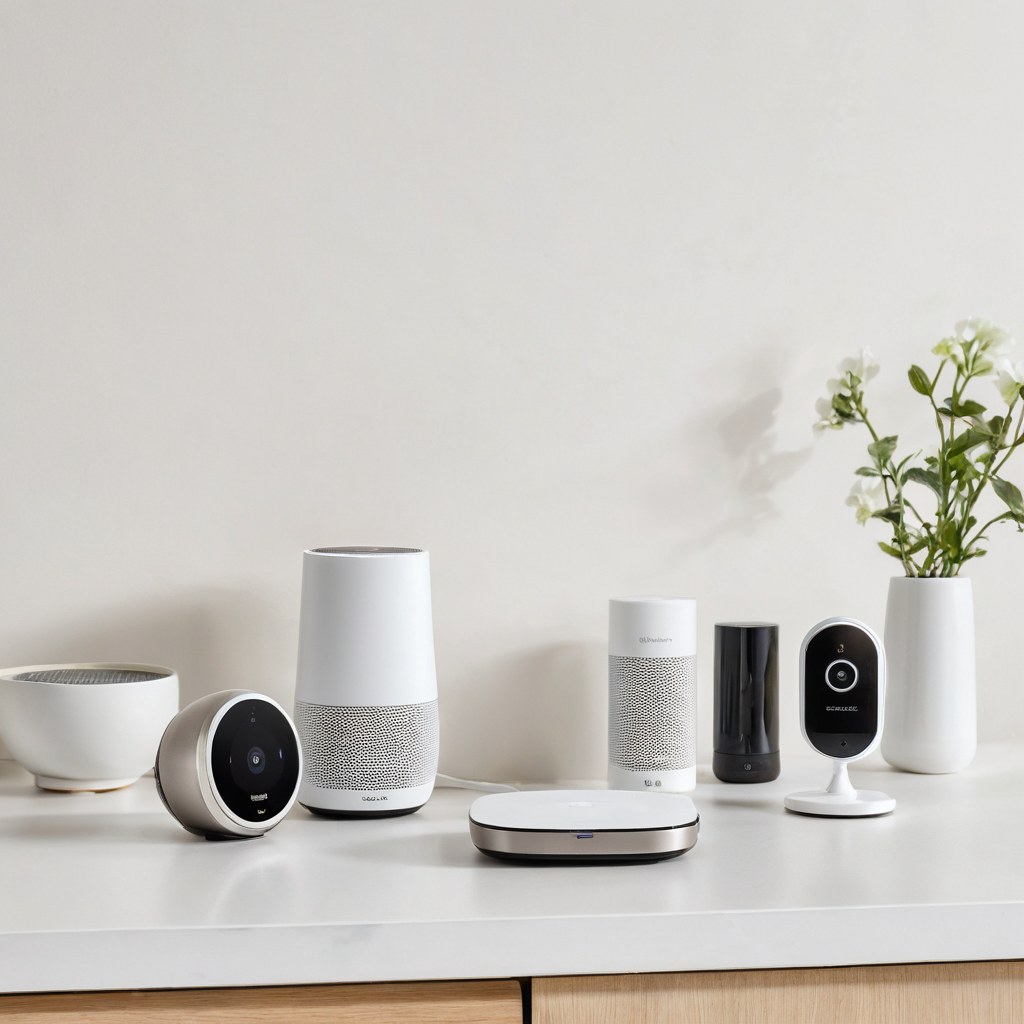
In July 2026, a client who had spent two years building a successful LED lighting brand on Amazon asked me to audit his expansion into smart home: 10,000 units of a "2K HD" Wi-Fi security camera, 8,000 smart plugs, and 3,000 video doorbells, sourced from a Shenzhen trading company that promised "Tuya-based, certified, ready to launch in 30 days." The samples were impressive — the camera streamed crisply to his phone in the demo room, the plug paired in nine seconds, and the doorbell's night vision looked great. He wired the deposit, the container landed in September, and he launched at $39.99 for the camera, $16.99 for the plug, and $89.99 for the doorbell. The first 300 orders produced the reviews that define this category: the camera's "2K" sensor was actually 720p upscaled in firmware and dropped the Wi-Fi connection every time a microwave ran; the plug got warm enough at 8A continuous that one customer posted a photo of a scorched outlet; and the doorbell battery died every four days, with a two-way audio lag so bad customers thought it was broken. His return rate hit 17%, and a privacy-focused tech blog took the camera apart, found it phoning home to a server outside the US, and published a piece titled "The $39 Camera That Exports Your Driveway." The listing died within a month. The root cause wasn't one bad supplier — it was a category where the product's true specs live inside the radio module, the firmware, the power circuit, and the cloud backend, and where "certified" printed on the box is often just artwork. That story is why this guide exists.
Smart home is the fastest-growing hardware category in e-commerce: the global market is projected to pass $200 billion in 2026, and China manufactures and — increasingly — designs the overwhelming majority of the world's smart plugs, cameras, sensors, doorbells, locks, hubs, speakers, thermostats, and robot vacuums. The margins are the best in consumer electronics — a $2.00 smart plug retails at $16.99, a $9.00 indoor camera at $39.99, a $35.00 smart lock at $129.99 — because the hardware cost is low and the perceived value is "smart." But this is also the category with the widest gap in e-commerce between the promise on the listing and the physics in the box: connectivity, firmware, power handling, battery life, imaging, and data privacy are all invisible at purchase time, and each one is a place where a fast-buck supplier saves a fraction of a dollar at your expense. This guide maps the clusters, the real 2026 FOB prices, the compliance stack (which changed materially in 2025 with the EU's new cybersecurity rules), and the verification protocols that separate a real factory from a rebrander.
Why China Still Wins Smart Home (And Where the Margins Live)
China's smart home advantage is vertical integration: the Wi-Fi/BLE/Zigbee/Thread modules, the PCBA, the injection molds, the camera sensors, the lithium cells, the firmware developers, and the cloud platforms are all within a few hundred kilometers of each other. Shenzhen alone hosts the module vendors (Espressif, Realtek, and the module houses that package them), the SMT lines, the mold shops, and the firmware studios that take a reference design to a branded product in weeks. Hangzhou adds the cloud and camera brain — Hikvision and Dahua are the world's two largest surveillance manufacturers, Alibaba's cloud and AI ecosystem sits on the same axis, and Tuya Smart is the IoT platform behind a large share of the world's white-label smart devices. The result is a supply chain where a branded smart plug costs $1.50–4.00 FOB, a 2K Wi-Fi camera $6.00–14.00, and a Matter-certified hub $6.00–15.00 — price points that no other manufacturing country can match at the same speed, because no other country has the module, firmware, and cloud stack in the same time zone.
The margin structure that makes smart home attractive in 2026:
- Wi-Fi smart plug, 10A (Shenzhen / Ningbo–Cixi): $1.50–4.00 FOB, retails $12.99–19.99 — the entry product of the category; the margin lives in the app experience and the brand, not the hardware
- Matter/Thread smart plug (Shenzhen): $3.00–7.00 FOB, retails $19.99–29.99 — the 2026 interoperability tier; CSA certification is the marketing claim that matters
- Wi-Fi smart bulb, RGB (Shenzhen / Zhongshan): $1.80–4.50 FOB, retails $14.99–24.99 — smart lighting's entry SKU; verify the radio, not just the LED
- Motion / door-window sensor (Shenzhen): $1.20–3.50 FOB, retails $9.99–19.99 — the cheapest smart device on earth and the easiest to get right
- Indoor 2K pan-tilt Wi-Fi camera (Shenzhen / Hangzhou): $6.00–14.00 FOB, retails $29.99–49.99 — the category's biggest seller; verify the sensor is actually 2K
- Battery video doorbell (Shenzhen): $12.00–25.00 FOB, retails $49.99–99.99 — imaging plus battery plus privacy in one product; the hardest entry-level SKU
- Smart lock, fingerprint semi-automatic (Zhongshan / Shenzhen): $25.00–60.00 FOB, retails $129.99–299.99 — the premium tier; mechanical reliability and battery life decide the reviews
- Smart speaker, basic Wi-Fi (Shenzhen / Dongguan): $4.00–10.00 FOB, retails $29.99–49.99 — audio, mic array, and voice-assistant certification required
- Smart hub / Matter border router (Shenzhen): $6.00–15.00 FOB, retails $39.99–69.99 — the architecture play; one hub ecosystem locks in repeat sales
- Smart thermostat (Shenzhen): $8.00–20.00 FOB, retails $49.99–99.99 — HVAC compatibility testing is the hidden engineering cost
- Robot vacuum, basic LiDAR (Suzhou / Shenzhen): $55.00–90.00 FOB, retails $199.99–399.99 — the electro-mechanical tier; motors, LiDAR, and battery all fail independently
- Robot vacuum, mopping flagship (Suzhou): $120.00–200.00 FOB, retails $499.99–899.99 — the category's margin king and its most complex supply chain
- Smart air purifier (Foshan Shunde): $25.00–50.00 FOB, retails $129.99–249.99 — appliance compliance (electrical, filter claims, sometimes medical-adjacent claims)
- Smart scale (Shenzhen): $2.00–6.00 FOB, retails $19.99–39.99 — the easiest branded smart device to launch profitably
- Budget mixed lot (Yiwu): $0.50–3.00 FOB — fine for trend-testing, terrible for margin and compliance at volume
The catch: smart home margins are only real if your return rate stays under 6% — and returns in this category are driven by invisible engineering failures, not aesthetics. A customer whose camera drops the connection, whose plug runs hot, whose doorbell battery dies in four days, or whose device "phones home" is not leaving a "not my style" review; they are leaving a one-star review with a teardown photo and a privacy complaint, and the listing dies. A $0.30 saving on the antenna design, $0.50 on the power supply, $0.80 on the battery, or $1.00 on the sensor costs the factory pennies and costs you the listing — in the fastest-growing category on Amazon, where the buyer's first question is "will this actually work with my setup?"
China's Smart Home Clusters: Who Makes What, and Where to Source
Smart home is a multi-cluster category — the electronics, the appliance, the lock, and the plug tiers each have their own capital. Match your product to its cluster and you get factory-direct pricing with real engineering depth; mismatch it and you're paying a trading company's markup for a rebranded module. Here's the map:
| Cluster | Specialty | FOB Range (2026) | Typical MOQ |
|---|---|---|---|
| Shenzhen (Guangdong) | The smart home electronics capital and the default for anything with a radio: Wi-Fi/BLE/Zigbee/Thread module vendors, SMT lines, firmware studios, and the design houses that turn a reference design into a branded product in weeks. Smart plugs, sensors, cameras, doorbells, hubs, speakers, thermostats, and scales are all here. The fastest hardware-to-market cycle on earth — 30-day turnarounds are real for simple devices | $1.20–60.00 | 500–5,000 pcs |
| Hangzhou (Zhejiang) | The camera and cloud-AI axis: Hikvision and Dahua — the world's two largest surveillance manufacturers — are both based here, along with Alibaba's cloud/AI ecosystem and Tuya Smart, the IoT platform behind much of the world's white-label smart home. The default for cameras that need real imaging engineering and for devices that want a proven cloud backend | $5.00–40.00 | 1,000–10,000 pcs |
| Foshan Shunde (Guangdong) | The appliance capital: Midea and Galanz anchor hundreds of OEM factories that make smart air conditioners, purifiers, dehumidifiers, water heaters, and kitchen appliances. The default for anything that is an appliance first and smart second — where electrical safety and appliance compliance dominate the engineering | $20.00–120.00 | 500–2,000 pcs |
| Suzhou (Jiangsu) | The robot vacuum capital: Ecovacs — the company that invented the category — and Dreame are both based here, surrounded by the motor, LiDAR, brush, and battery supply chain. The default for robot vacuums and smart cleaning devices at any price tier | $55.00–200.00 | 500–2,000 pcs |
| Zhongshan (Guangdong) | The lock and lighting cluster: Xiaolan town makes a large share of China's locks — increasingly smart locks with fingerprint, face, and app control — and Guzhen town is the lighting capital for smart bulbs. The default for smart locks and smart lighting hardware | $1.80–60.00 | 500–5,000 pcs |
| Ningbo–Cixi (Zhejiang) | The plug and socket capital of the world: Cixi molds a staggering share of the planet's plugs, sockets, and power strips, and has layered Wi-Fi/BLE connectivity onto them. The default for smart plugs and smart power strips at scale — the mold and UL-tooling depth is unmatched | $1.50–8.00 | 2,000–20,000 pcs |
| Dongguan (Guangdong) | The audio and enclosure belt: smart speakers, soundbars, and voice devices, plus the injection-molding and battery plants that feed the wider smart home industry. The default for anything with a speaker, a mic array, or a large plastic enclosure | $4.00–30.00 | 1,000–10,000 pcs |
| Qingdao (Shandong) | Haier's smart appliance ecosystem — the world's largest appliance brand — and its OEM network. The default for white goods with smart controls and for buyers who want appliance-grade quality and certification infrastructure | $30.00–150.00 | 500–2,000 pcs |
| Yiwu (Zhejiang) | The budget tier — low-end smart plugs, bulbs, and mixed lots for cash-and-carry test orders. Quality, firmware, and compliance are minimal; treat it as a trend lab, not a supply chain | $0.50–3.00 | 50–1,000 pcs |
Two trading layers sit on top of these clusters and deserve a warning label. The first is Shenzhen's Huaqiangbei and the online marketplaces that mirror it — enormous bazaars where cluster goods are resold at 30–60% markups; fine for trend-spotting and cash-and-carry test orders, terrible for margin at volume. The second is the trading company that claims to be "the factory" while forwarding orders to a real factory across town — or, worse, buying white-label Tuya devices and slapping your logo on them without your knowledge. In smart home this matters more than in most categories because the entire product is hidden: the radio module, the power supply, the sensor, the firmware, and the cloud backend are invisible until the device is on a customer's network — and a middleman has no incentive to verify any of it. When you find a candidate supplier, always confirm the production floor exists — a video call onto the actual SMT line or assembly workshop settles it in five minutes, and asking the name of their module supplier (Espressif, Realtek, or a Tuya-certified module house) tells you immediately whether you're talking to an engineer or a reseller.
The Lanes: Plugs & Sensors, Cameras & Doorbells, Locks, Appliances, and Robot Vacuums
Smart home splits into five sourcing lanes with very different risk profiles. Most sellers should enter through lane one and graduate deliberately:
- Smart plugs, bulbs, and sensors — the lowest-risk entry: simple radios, standardized modules, light compliance (FCC Part 15, UL 62368-1 for the plug, California Title 20 standby power), and fast production. The failure modes are RF range, standby power, and thermal — all testable with a few hundred dollars of equipment.
- Cameras and video doorbells — imaging, batteries, and the privacy layer enter the picture: real sensor resolution, night vision, two-way audio, UN 38.3 for battery models, and the data-residency and consent questions that regulators and tech media now police. This is the lane where the category's most visible disasters happen.
- Smart locks — mechanical and access-control risk: lock cores, fingerprint sensors, battery life, emergency key override, and the reliability expectations of a product people trust with their front door. UL 294 (access control) and physical-security testing are the differentiators.
- Smart appliances — appliance-grade electrical safety dominates: motors, compressors, heating elements, and the full UL/CE appliance certification stack. The margin is good but the engineering and certification cycle is long.
- Robot vacuums — the full electro-mechanical engineering project: motors, LiDAR, navigation firmware, batteries, and water-tank mopping systems, all of which fail independently. Highest margin, highest complexity, and the lane where a bad first launch is the most expensive.
New sellers should start with lane one — plugs, bulbs, and sensors have the lightest compliance load, the fastest cash cycle, and the gentlest learning curve — and graduate to cameras and locks only with a testing budget allocated and a factory that has done FCC/RED and battery certification before. Save robot vacuums for the second year.
The Compliance Stack: US, EU, and Platform Rules
United States
- FCC Part 15. Every smart home device with a radio — which is every smart home device — needs FCC Part 15 compliance with a searchable FCC ID on the product. A serious factory has the grant on file; a rebrander prints a fake ID on the box — verify every ID in the FCC database before you order.
- UL 62368-1. Anything that plugs into the wall — smart plugs, hubs, chargers for doorbells and robot vacuums — is effectively required to carry UL (or equivalent NRTL) certification for Amazon and for buyer trust. Verify the UL file number online; fake UL marks are the most common certification fraud in the category.
- California Title 20 standby power. Smart plugs, power strips, and other always-on devices are covered by California's appliance-efficiency rules, which cap standby power draw. A device that idles at 1.5W instead of the allowed 0.5W is both a compliance violation and an energy-label embarrassment — measure standby draw on every sample.
- Battery rules. Doorbells, locks, cameras with battery models, robot vacuums, and anything with a lithium cell need UN 38.3 transport test reports, are gated on Amazon, and must follow IATA/IMDG rules for air and sea freight. A carrier that rejects your battery shipment mid-season is a supply-chain event.
- California Prop 65. Lead, cadmium, and phthalates in plastics, cables, and electronics trigger Prop 65 warning requirements — including for devices sold nationwide via Amazon. Test the actual materials; the classic surprise is leaded solder or phthalates in soft-touch coatings.
- Matter certification. To display the Matter logo — the 2026 interoperability badge that says your device works with Apple, Google, Amazon, and Samsung ecosystems — the product must be certified by the CSA and carry a Matter Device Attestation. Uncertified "Matter-compatible" claims are a suppression risk.
- Wi-Fi Alliance certification. To honestly claim Wi-Fi certification, the product must be tested and listed with the Wi-Fi Alliance. Many sellers quietly drop the claim after testing — and many factories print it without the file.
- Camera and privacy rules. Cameras and doorbells with two-way audio implicate state wiretap-consent laws (several states require both parties' consent to record audio); products must ship with clear privacy disclosures and data-handling documentation. And for the US federal market specifically, NDAA Section 889 bans federal agencies from procuring certain Chinese surveillance equipment — a ban that has spread to state and enterprise procurement and shapes what US buyers will and won't touch. Verify where the device's cloud data lands, and be able to document it.
- Product claims. "2K HD," "10A rated," "works with Alexa," "Matter certified," and "military-grade" are claims that regulators, platforms, and competitors all police. Every claim must trace to a test report or certification; a claim without a file is a suppression risk.
European Union
- CE under the Radio Equipment Directive (RED). Every smart home device with a radio needs CE marking under RED 2014/53/EU with a full technical file — the EU equivalent of the FCC stack. The common failure is a "CE" logo with no technical file behind it.
- RED Article 3.3 cybersecurity (EN 18031). Since August 2025, the EU has enforced new cybersecurity requirements for radio equipment — network-security hardening, personal-data and privacy protections, and fraud/ financial-loss protections — under delegated regulations backed by the EN 18031 standard series. In practice this means smart devices must demonstrate secure default credentials, encrypted communications, secure updates, and vulnerability handling. This is the single biggest compliance change for smart home in 2025–2026, and most low-cost suppliers are not ready — ask for the cybersecurity documentation up front.
- RoHS. Electronics sold in the EU must comply with RoHS restrictions on lead, cadmium, mercury, and other hazardous substances.
- REACH. Phthalates and PAHs in plastics and soft-touch materials are restricted under REACH; test the actual materials for the EU market.
- GPSR. Since December 2024, every product sold in the EU needs an EU responsible person and traceable labeling — smart home devices are squarely in scope. Budget ~$500–1,000/year for the EU rep service.
- EU Battery Regulation. Battery-powered devices (doorbells, locks, robot vacuums) fall under Regulation 2023/1542 — labeling, due-diligence, and, from 2027, digital battery passports for portable batteries in devices. A compliant supplier already has the documentation.
- WEEE. Electronic devices sold in the EU must be registered under national WEEE schemes for e-waste take-back; your EU responsible person typically handles this.
- UK. Post-Brexit, devices sold into Great Britain need UKCA marking (or CE accepted under current transition rules), UK RED, UK REACH alignment, and GPSR-equivalent labeling.
Platform Rules (Amazon, Walmart, TikTok Shop)
- Amazon gates battery-powered devices and increasingly audits smart home listings for FCC ID and UL file verification; listings without verifiable certification get suppressed the moment the category is audited.
- "Works with Alexa" requires Amazon's certification program, and "Works with Google Home" requires Google's — a device that claims compatibility without certification is a suppression risk, and an uncertified voice device can fail the certification check after launch.
- Camera and doorbell listings are increasingly reviewed for privacy disclosures; listings that promise cloud features must describe the data handling, and buyer questions about "where does my video go?" are now common.
- Amazon requires UFI (Unique Facility Identifier) and brand registration for private-label electronics; plan the documentation before launch, not after.
- Counterfeit-branded devices (Ring, Nest, Wyze, TP-Link, Philips Hue clones with copied logos) trigger immediate suspension and legal exposure. Never source branded devices without written authorization — sell your own brand and compete on verified spec.
- TikTok Shop and Walmart enforce the same certification and battery documentation with their own gating flows; a compliance file built once covers all three.
⚠️ The Fake Certificate Problem
In smart home, the certification logo on the box is part of the product — and it is the most-faked part of it. Real FCC IDs are searchable in the FCC database and name the exact grantee and product; real UL listings have a file number you can verify at UL's Product iQ; real Matter certifications are listed by the CSA; real Wi-Fi certifications are listed by the Wi-Fi Alliance; real RED files name the notified body and the EU responsible person; and real UN 38.3 reports come from accredited labs and name the exact cell and pack. Before you place an order, verify every certificate independently — and for the EU, ask specifically for the EN 18031 cybersecurity documentation, because most low-cost suppliers cannot produce it, and that single document now separates a compliant smart device from a non-compliant one in the EU. Budget $300–2,000 per SKU family for your own third-party testing through an accredited lab — it is the cheapest insurance in the category, and it makes your listings suppression-proof in the fastest-growing marketplace on earth.
The Verification & QC Protocol: Seven Tests That Separate Serious Factories from Rebranders
Quality in smart home lives in the radio, the firmware, the power circuit, the battery, and the cloud backend — none of which your listing photos can show. Run these seven tests on samples, then spot-check production units:
- The RF and connectivity test. Measure real Wi-Fi range, connection stability, and onboarding time across the actual deployment — a smartphone on the same network, a device in the next room, a device behind a wall. The #1 return reason in smart home is pairing failure and dropped connections; a device that pairs in 40 seconds instead of 9 is a device that gets returned. Test reconnection after a router reboot and after a power outage, and test with a crowded 2.4GHz band — the real world your customers live in.
- The app and firmware test. Evaluate the onboarding flow, OTA update capability, cloud vs local response latency, and what data the device sends where. Run a packet capture during setup and normal use — "privacy by design" is now a sales feature and a compliance requirement, and a device that phones home to a server in another country is a legal exposure in some markets and a tech-blog exposé everywhere else. Verify the firmware can be updated securely and that updates are actually delivered.
- The power and thermal test. Measure standby draw against California Title 20 limits, and run continuous-load temperature tests on smart plugs at their rated current — the category's worst-case failure is a melting outlet, and a plug rated 10A that runs hot at 8A continuous is a fire risk, not a quality issue. Use a thermal camera on the enclosure and the outlet prongs; this is the test that separates a $3 plug from a $1.50 plug.
- The battery test. Run a full discharge test to verify real capacity against the spec, plus field-life testing on battery devices — a doorbell that dies every four days is the category's most famous one-star review. Verify the cell supplier, the UN 38.3 report, and the charging circuit's behavior at low temperature.
- The imaging test. Verify actual sensor resolution against the claim — a "2K HD" camera running a 720p sensor upscaled in firmware is the category's signature fraud — plus night vision quality, field of view, two-way audio latency, and motion-detection reliability (both false positives and false negatives). Test in low light and against a busy scene; the demo room always looks good.
- The build and safety test. Drop tests on the actual enclosure, thermal cycling, ingress checks for outdoor-rated devices, and connector and hinge cycle tests for locks and doorbells. For smart locks, test the mechanical core: emergency key override, fingerprint sensor reliability across 1,000 presses, and battery-death behavior (a lock that locks you out when the battery dies is a product you can't sell).
- The certification and data test. Verify every FCC ID in the FCC database, every UL file number at UL Product iQ, every Matter listing at the CSA, every Wi-Fi listing at the Wi-Fi Alliance, the RED technical file and EN 18031 documentation for the EU, and every UN 38.3 report with the issuing lab. Then XRF-screen the plastics for lead and cadmium (Prop 65/REACH) and confirm the privacy disclosures describe the data handling truthfully.
The 8-Step Smart Home Sourcing SOP
- Pick your lane. Start with smart plugs, bulbs, and sensors — simple radios, light compliance, fast cash cycle. Graduate to cameras and doorbells with a testing budget and a privacy-and-battery plan, to locks with a mechanical-testing budget, and to appliances and robot vacuums only with appliance-grade certification lead time planned. Skip counterfeit-branded devices entirely.
- Match the product to its cluster. Radios, modules, and firmware to Shenzhen; cameras and cloud engineering to Shenzhen/Hangzhou; appliances to Foshan Shunde; robot vacuums to Suzhou; locks to Zhongshan; plugs and sockets to Ningbo–Cixi; audio to Dongguan; budget tier to Yiwu. A supplier outside the right cluster is either a trader or paying someone else's overhead.
- Vet the factory. Business license, export history, brand customers, ISO 9001, the names of their module suppliers (Espressif, Realtek, Tuya-certified module houses), their app/cloud backend (their own, Tuya, or a third party), their certification files (FCC IDs, UL numbers, Matter/Wi-Fi listings, UN 38.3 reports), and a video call onto the actual SMT line. In Shenzhen, confirm the line exists — the city is full of offices that forward orders to other people's factories.
- Order 2–3 samples from 2+ factories and test them for a week. RF range and reconnection, onboarding time, app behavior and packet capture, standby power and thermal, battery discharge, imaging truth, drop and cycle tests, and certification verification on every logo printed on the box. This is the week that decides whether your launch survives.
- Run the compliance tests on the samples. FCC Part 15 and UL 62368-1 for plugged devices, RED with EN 18031 cybersecurity documentation for the EU, UN 38.3 for anything with a cell, California Title 20 standby for always-on devices, Matter/Wi-Fi certification for the interoperability logos, Prop 65/REACH for the materials — through accredited labs, on the samples, now rather than after the container lands.
- Negotiate MOQ and platform strategy smartly. Standardize on one module platform and one app/cloud backend across your whole line — fewer platforms mean fewer failure modes, one app to maintain, and one certification stack to renew. Combine SKUs and colors on one production run, own your molds, and negotiate firmware customization as a separate line item so you're never locked into a trading company's white-label app.
- Third-party QC on every batch. Inline checks at SMT, assembly, and packing, plus final random inspection at AQL 2.5 — random RF, thermal, battery, and imaging spot checks, plus certification-label verification on the actual production units. Never ship smart devices without final inspection; the failures are invisible until they're on a customer's Wi-Fi network.
- Test production units for compliance and keep the file. Send production units — not samples — for the certifications that matter for your market, verify every certificate online (FCC ID, UL file, Matter listing, Wi-Fi listing, UN 38.3 report), build the compliance file (EU responsible person, technical files, EN 18031 documentation, privacy disclosures) before launch, and then run the 90-day playbook: module selection in week 1, sample in week 2–4, test in week 4–6, certification in week 6–8, production in week 8–10, QC in week 10–11, on the water by week 12 — and you're selling while your competitors are still waiting for quotes.
Smart home is the fastest-growing margin engine in consumer electronics — the module ecosystem, the FOB prices, the 30-day production cycles, and the Matter-era interoperability shift are all there, and the category rewards sellers who treat it like the engineering business it is. But more than almost any other category, the product is invisible: the radio module, the firmware, the power supply, the battery, the sensor, and the cloud backend are the entire customer experience, and every one of them is a place where a fast-buck supplier will quietly save a fraction of a dollar at your expense — or hand you a data-privacy complaint you can't answer. The sellers who win in smart home aren't the ones who found the cheapest quote; they're the ones who ran the RF test, watched the packet capture, measured the standby draw, thermal-imaged the plug, discharged the battery, verified the sensor resolution, and checked every FCC ID, UL file, and Matter listing online — and finished the compliance file before the container sailed. Do that, and the 60–80% gross margins this category offers become yours to keep — at the speed Shenzhen was built for.