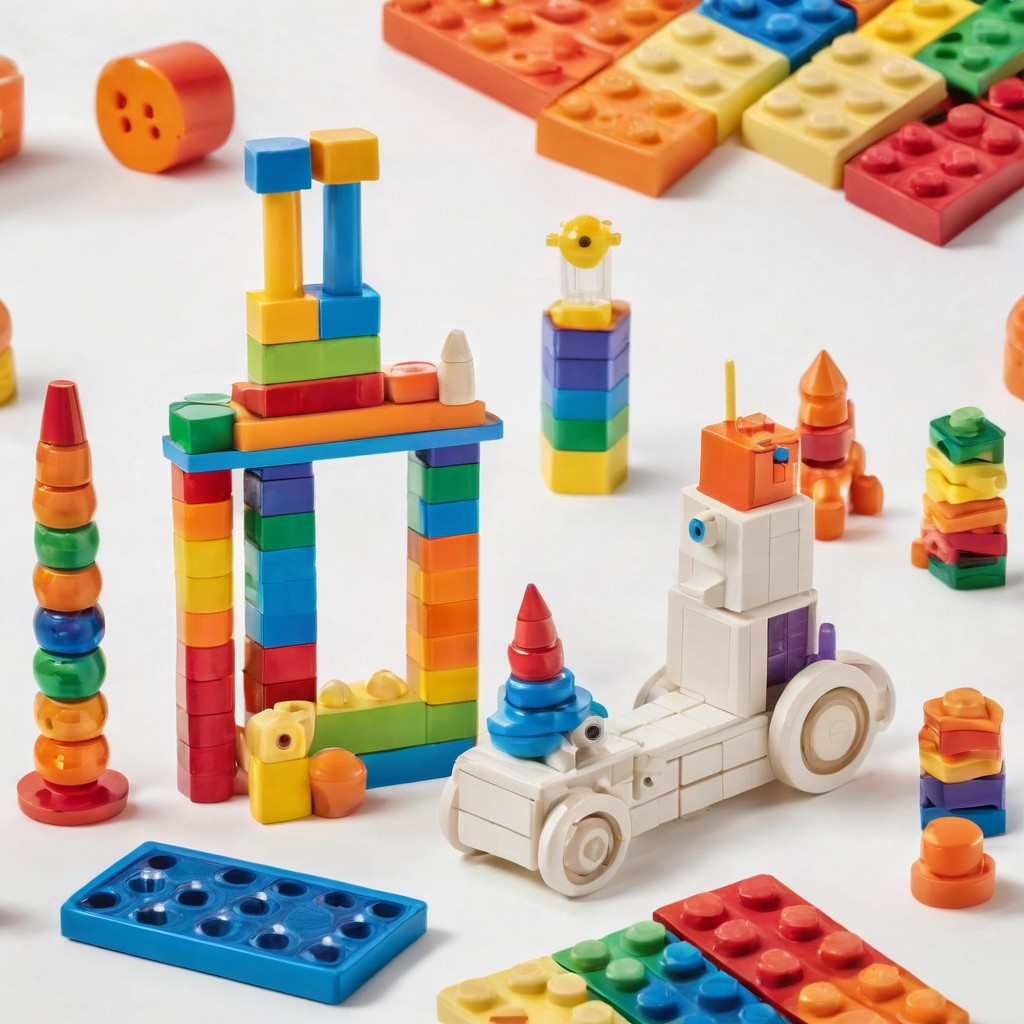
In 2025, a seller I know launched a magnetic tile set on Amazon — 80 pieces, strong magnets, bright ABS plastic, a $9.80 FOB price from a Guangdong factory he found on Alibaba, and a listing he had written around "STEM learning," "brain development," and a photo of a smiling six-year-old building a castle. The first container sold through in eleven weeks. The second container never made it to the warehouse: Amazon suspended the listing for an invalid Children's Product Certificate, and the CPSC-accepted lab report his factory "sent over" turned out to be a photocopy of a different company's test with his brand name pasted into the header. He spent four months and roughly $7,000 re-testing, re-listing, and re-filing — and his re-launch then hit a second wall when a competitor's design-patent claim froze his new packaging. He told me the whole saga in one sentence: "I thought a toy was the easiest product in the world to import. It turned out to be the most regulated thing I have ever sold." He is right — and he is also right that the category is worth it. Educational and STEM toys are the most recession-resistant aisle in children's retail, they carry some of the best margins in toys, and China makes almost all of them. This guide is the playbook for doing it without his mistakes: mapping the three supply ecosystems, benchmarking real 2026 FOB prices across ten tiers, decoding the age-grading, magnet, battery, and wood compliance traps, and delivering the material and 8-test verification battery that separates a genuine educational toy factory from a trader with a certificate printer.
STEM and educational toys are where the toy industry's growth actually lives in 2026. The overall toy market has been flat-to-down since the post-pandemic correction, but the learning segment keeps compounding: industry trackers put the global STEM/educational toy market in the mid-teens to low-twenty-billions of dollars and growing at high single digits, and the buying pattern is structural, not cyclical. Parents treat an educational toy as a category of spending that survives recessions — a $29.99 busy board or a $49.99 magnetic tile set is framed as child development, not entertainment, which is exactly why the aisle holds its price while action-figure and impulse categories discount. The Amazon data tells the same story: the toy sub-categories with the steadiest rank performance and the lowest return rates in 2025-2026 have been building sets, magnetic tiles, wooden learning toys, coding and robot kits, science kits, and Montessori-style products — all of them sourced overwhelmingly from China. And the economics are attractive across the board: a $1.80 FOB wooden puzzle retails at $14.99, a $9 FOB magnetic tile set at $39.99, a $22 FOB coding robot at $89.99 — 60-80% gross margins before returns, with return rates in the single digits when the product is honestly built. The catch is the compliance and the QC: this is the category where a 2-cent magnet, a $0.30 paint job, or a mislabeled age grade can turn a 4.7-star listing into a stop-sale, a customs hold, or a class-action headline.
Why China Wins Educational Toys (And Where Each Capability Lives)
Educational toys look like three different industries — woodworking, injection molding, and consumer electronics — and China is the only country with all three in one export corridor. The supply chain splits into three ecosystems that a smart buyer treats as separate vendor pools, because a wooden puzzle factory and a coding robot factory share almost nothing except the word "toy" on their business licenses:
- Yunhe County (云和), Lishui, Zhejiang — the wooden toy capital. Yunhe brands itself as China's wooden toy capital and it is not hyperbole: the county's factories mill and finish a large share of the world's wooden puzzles, building blocks, stacking toys, shape sorters, abacuses, and Montessori materials. The district's depth is in the wood itself — linden, birch, rubberwood, and pine, kiln-dried, sanded, and finished with the low-VOC, lead-free paint lines that export buyers demand — plus the laser-cutting and edge-rounding that keep a wooden toy splinter-free. A serious Yunhe export factory will show you its dust collection, its finishing line, and its formaldehyde and paint-test documentation as a matter of routine, because every serious buyer asks. Adjacent Zhejiang woodworking (including parts of Dongyang and the Wenzhou orbit) supplies the same district's raw material and subcontracting.
- Chenghai District (澄海), Shantou, Guangdong — the injection-molded toy floor. Chenghai produces a large share of China's toy exports and it is the home ecosystem for plastic educational toys: building block sets, magnetic tiles (with the magnets sourced separately), marble runs, STEM construction kits, gears-and-gadgets sets, and the mass-market novelty tier of science kits. The district's strength is tooling speed and cost — a new block or tile mold that takes 12 weeks and $8,000 in Shenzhen might take 6 weeks and $4,000 in Chenghai — plus the sheer density of plastic grades, pigments, and sub-assembly (gears, wheels, hinges) within one industrial park.
- Shenzhen and Dongguan — the electronics ecosystem. Anything with a circuit board — coding robots, robot kits, electronic learning tablets, talking readers, sound-and-light science kits — is built in the Pearl River Delta's consumer-electronics belt, where the same SMT lines, Li-ion pack makers, and firmware houses that build earbuds and smart home devices also build toy electronics at toy price points. Shenzhen concentrates the design houses, the voice/ASR module makers, and the Bluetooth SoC ecosystem; Dongguan concentrates the higher-volume assembly, the injection molding, and the battery pack lines. This is the ecosystem where you can find a genuine $25 FOB app-controlled coding robot and a $7 learning tablet — and also where the $2 "STEM" toys with no real electronics are assembled.
The practical sourcing consequence: the factory type must match the product type. A buyer sourcing wooden Montessori toys from a Chenghai plastics trader, or a coding robot from a Yunhe wood shop's trading arm, is paying a 30-50% stack for a product the vendor does not actually make — and inheriting QC risk the vendor cannot control. Match the sub-category to its cluster, then vet the factory inside that cluster.
The 2026 Product Map and FOB Benchmarks (Ten Tiers)
The category spans a huge price range, and the FOB price is the single most reliable signal of what is inside. Typical 2026 export-factory ranges, with realistic retail multipliers (roughly 4-8x FOB for toys once freight, fees, and advertising are included, before returns):
| Tier | Core cluster | Typical 2026 FOB | Typical retail |
|---|---|---|---|
| Wooden puzzles & shape sorters (3+) | Yunhe | $0.80–2.50 | $9.99–16.99 |
| Wooden block sets & stacking toys | Yunhe | $2.50–6.00 | $19.99–39.99 |
| Montessori wooden materials & busy boards | Yunhe (+ Shenzhen for electronics add-ons) | $4.00–15.00 | $24.99–59.99 |
| Magnetic tile / magnetic building sets | Chenghai / Guangdong + Ningbo magnets | $5.00–12.00 (60–110 pc) | $29.99–59.99 |
| Building block sets & STEM construction (plastic) | Chenghai | $3.00–10.00 | $19.99–49.99 |
| Marble runs & gears/gadgets sets | Chenghai / Dongguan | $3.00–12.00 | $19.99–49.99 |
| Kids' science & experiment kits | Chenghai / Shantou (plastic) + Shenzhen (electronic kits) | $2.00–8.00 | $14.99–34.99 |
| No-screen coding toys & card-coding robots | Chenghai / Shenzhen | $6.00–14.00 | $29.99–69.99 |
| App/Bluetooth coding robots & robot kits | Shenzhen / Dongguan | $12.00–35.00 | $59.99–149.99 |
| Electronic learning tablets & talking readers | Shenzhen | $6.00–18.00 | $29.99–79.99 |
Two benchmark warnings. First, the FOB range for a given tier is wide because the internals vary wildly: a $6 "coding robot" can be a wind-up car with three buttons, while a $22 one has real sequence programming, sensors, and a rechargeable Li-ion pack — the price difference is engineering, not markup. Second, the retail multiplier on cheap items is deceptive: a $1.50 wooden puzzle that retails at $14.99 looks like a 10x product, but the freight, the CPC and testing amortization, the packaging, and the Amazon fees land hardest on the cheapest units — the margin per unit is often better on the $9 FOB magnetic tile set than on the $1.50 puzzle.
The Compliance Stack: Age Grading Is the Whole Game
Educational toys carry the heaviest compliance load in children's retail, and the load is switched on by one legal determination: is this a children's product? Under US law the test is whether the product is intended primarily for children 12 and under — and "intended" is read from the totality of the evidence, including the packaging, the advertising, the age grading on the box, the way it is displayed in the marketplace, and whether it is "recognized as being collected or used by children." Marketing a toy as educational, showing children using it, and listing it in the toy category is about as unambiguous a children's-product signal as exists. The practical rule of the category: if you want the educational margin, you accept the toy stack — and the toy stack is not optional paperwork, it is the product's license to exist.
- The US children's product file. For every SKU aimed at kids: a Children's Product Certificate (CPC) issued by the importer/manufacturer based on testing at a CPSC-accepted third-party lab (a full children's toy test program typically runs $2,000–6,000 per SKU, more with electronics); compliance with CPSIA lead limits (90 ppm in paint and surface coatings, 100 ppm in accessible substrate) and phthalate limits (the permanent ban on eight phthalates above 0.1%); the ASTM F963-23 safety standard (which now covers button-cell accessibility and magnetic requirements in the toy standard itself); and the CPSIA tracking label — the permanent, distinguishing mark with the manufacturer, date, and batch/country info that must be on the product and packaging. Small parts are judged with the 16 CFR 1501 choke-test cylinder: anything that fits, for toys under 3, is a violation — which is why "3+" is a design decision, not a sticker.
- Electronics, batteries, and the radio layer. Toys with circuits trigger FCC obligations: most digital-only toy electronics need a Part 15B Supplier's Declaration of Conformity; anything with Bluetooth, Wi-Fi, or another intentional radiator needs an FCC ID through a certified lab — and a child-directed product cannot use the cheapest "we self-declared it" shortcut. Battery toys add the pack rules: UN 38.3 for lithium cells, and UL 2054/UL 1642 (or UL 4200A where button cells are involved) as the accepted battery-safety references. Button-cell and coin-cell products are the 2024-2026 enforcement hotspot: the Reese's Law rulemaking (16 CFR 1263, keyed to UL 4200A) requires tool-required, child-resistant battery compartments, and toys have their own button-cell accessibility requirements inside ASTM F963-23 — an accessible button cell without a screw-secured, lockable compartment is a stop-sale, full stop.
- The magnet layer — the one most sellers miss. Magnetic tiles and magnetic building sets are judged by the flux index, the measure of magnetic field strength at the surface: children's magnetic toys must meet the ASTM F963-23 magnetic requirements (accessible magnets at or below the flux index, or too large to be swallowed), and the separate 16 CFR 1262 rule covers loose high-powered magnet sets marketed for general use — the ones that caused the swallowed-magnet injury wave. The trap is in the sourcing: Chinese factories routinely upgrade magnet strength on request ("stronger is better for the build"), and a tile set that tests fine at 20 pieces can fail at the flux-index line when the factory quietly switches magnet grades between orders. The magnet spec — grade, pull force, flux-index test result — belongs in the contract, and the factory's certificate for one batch does not certify the next one.
- The wood layer. Wooden toys look like the safest possible product and hide the two most-faked documents in the category: the paint report and the formaldehyde declaration. Lead in paint is the classic: cheap finishing lines still use lead-bearing paint or contaminated recycled pigment, and the CPSIA 90 ppm surface-coating limit is enforced with XRF testing at import. Formaldehyde comes from the adhesives in composite wood — MDF, plywood, and particleboard — which in the US are regulated under CARB/TSCA Title VI for the board itself (and show up in EN 71-9 limits in the EU), while solid wood is far less of a concern. The verification is a materials question, not a paper question: specify solid wood or compliant composite, demand the finishing-line paint spec, and test.
- The EU stack. Selling into Europe adds EN 71 (all parts, including EN 71-3 migration limits for heavy metals in materials and EN 71-9 for organic chemical compounds), EN 62115 for electric toys, the RED (Radio Equipment Directive) for anything with radio, RoHS and REACH for materials and chemicals, and the GPSR — the General Product Safety Regulation — which requires an EU-based responsible person whose name and address are on the product and who can be reached by market surveillance authorities. The Battery Regulation (EU) 2023/1542 adds the sustainability/removability layer for battery toys, and CE marking ties the whole file together. As in the US, the file is per-SKU, per-factory, and per-version: a new colorway, a new app version, or a new battery vendor re-opens the file.
- The connected-toy layer. Coding robots and learning tablets with apps or microphones inherit the privacy stack: COPPA in the US (with the post-2025 enforcement reading voice recordings of children as sensitive data requiring verifiable parental consent), GDPR-K in Europe, and the marketplace's own requirements for connected children's products. The cheapest way out is architectural: no microphone, no account, no cloud — a robot that teaches sequence with buttons and cards needs none of it, and "no app, no WiFi, nothing collected" is both the safest compliance position and a genuinely marketable one for parents.
The age-grade decision is the single most expensive choice in the category, which is why it comes first in the SOP below. Design deliberately for 3+ (no small parts, no accessible button cells, no swallowable magnets) or for an older band with the test evidence to back it — and never let the marketing drift: a product with an adult or 14+ compliance file that is advertised with cartoon children and "perfect for curious kids" has handed a regulator the one fact they need, and Amazon's category enforcement is exactly the mechanism that will find it.
Hidden Specs: Wood, Magnets, Batteries, Plastic, and Paint
In educational toys the reviews are written by materials, not by features. The five material decisions below are where 4.7-star listings and 22%-return listings diverge, and each one is contractible:
- Wood species and construction. Specify the wood (linden, birch, or rubberwood are the export standards; pine is cheaper and softer, MDF is a red flag for anything a child will chew or that will see moisture). Specify kiln-dried (prevents warping, cracking, and mold in transit), solid wood over composite where possible, and edge-rounding and sanding finish — the splinter and rough-edge complaints are the #1 review killer in wooden toys.
- Paint and finish. Water-based, lead-free, low-VOC, and third-party tested to the 90 ppm CPSIA limit and EN 71-3 migration limits. The factory's paint supplier and the finishing line matter as much as the paint itself — contaminated recycled pigment is how "lead-free" paint fails.
- Magnets. Grade, pull force, flux index, and magnet-embedment quality (a magnet that pops out of a tile during play is a swallowed-magnet incident waiting to happen). Specify nickel-plated neodymium with a documented flux-index test result per batch, and contract that magnet grade changes require written approval.
- Batteries and compartments. Screw-secured, tool-required battery doors as a design default; no accessible button cells; protected Li-ion packs (protection IC, not bare cells) for rechargeable products; UN 38.3 documentation per shipment. For the toddler band, prefer no batteries at all — a wooden busy board or a push-and-pull toy needs zero electronics to be a bestseller.
- Plastic grade. Virgin ABS or food-grade PP where relevant, not recycled mystery resin (recycled plastic is where phthalate and heavy-metal surprises live). Specify the grade in the contract and spot-check with XRF — the CPSIA phthalate limits are enforced at the resin level, and the factory's "we only use new material" claim is worth exactly the paper it is not written on.
The 8-Test Verification Battery
Before the PO, run every shortlisted sample through this battery. It takes a week, costs a few hundred dollars in materials and lab time, and it settles the factory tier better than any audit document:
- The small-parts and choke-tube test. Run every removable piece, and every piece that can be removed with reasonable force, through the 16 CFR 1501 / EN 71-1 small-parts cylinder. Test it the way a child would test it: after the drop test, after a week of play, and with the packaging included (loose marbles, extra magnets, and spare screws in the box count as accessible parts).
- The magnet flux check. Measure the accessible magnets' flux index against the ASTM F963-23 limit with a magnetometer or a certified lab, and re-test after the drop test — cheap magnets crack and lose their coating, and a cracked nickel coating on a swallowed magnet is the worst-case review this category can produce. Also test embedment: can a child's tooth or a pair of pliers-free hands pop a magnet out of a tile?
- The XRF paint and plastic scan. A handheld XRF analyzer (they are rentable) on every color and every plastic component: lead under 90 ppm in coatings, no cadmium or mercury surprises, and a phthalate lab test on the resin if the factory cannot show virgin-material documentation. This is the test that catches the fake paint report.
- The wood and formaldehyde check. Confirm the species and construction against the spec (solid wood vs composite), check for splinters and rough edges on every surface a hand will touch, and demand the formaldehyde documentation for any composite component — with a lab test if the factory's paper is thin. Also check the finish: water-based paint should not smell of solvent out of the box, and a solvent smell is a VOC red flag, not a "let it air out" note.
- The battery-door and charge test. A tool-required compartment that actually requires a tool (a screw, not a coin slot), survives 50 open/close cycles, and stays closed through the drop test. For rechargeables: full charge/discharge cycles, protection-IC behavior at over-discharge, and a charger that is itself certified for the destination market.
- The electronics burn-in and drop test. 72 hours of runtime cycling for any electronic toy (the failure clock in toy electronics is brutally short), then the drop test — 1 meter onto concrete, three times per axis, checking for rattling internals, dead buttons, and cracked screens. Cheap toy electronics fail the drop test at a rate that would end a phone brand; the survivors are the ones worth selling.
- The connectivity and privacy check. For anything with Bluetooth or an app: verify the FCC ID exists in the FCC database (not just on the label), run the device on a controlled network and watch what it sends and where (a "learning" tablet that phones home to a server in another jurisdiction with usage data is a COPPA incident you are about to own), and read the app's privacy policy for the "no account, no cloud" claim the listing makes.
- The compliance-file check. Demand, for every sample: the CPC with the lab name and report number, the ASTM F963 and (for EU) EN 71 report numbers, the FCC ID, the UN 38.3 summary, the UL 4200A or equivalent button-cell documentation where applicable, the magnet flux test result, and the GPSR responsible person details. Then verify each one independently — call the lab, look up the FCC ID, check the report numbers. The fakes in this category are common, the verification is free, and a certificate that cannot be verified is a certificate that does not exist.
The IP Layer: Characters, Patents, and the Copycat Clock
Educational toys are an IP minefield with a copycat clock attached. On the infringement side, the category runs on licensed and trademarked characters and protected product designs — a "STEM" figure that resembles a popular media character, a tile shape that copies a protected configuration, or packaging that borrows a rival's look will draw a takedown faster than almost any other toy sub-category, because the rights holders police it actively and Amazon's automated brand registry catches lookalikes by image. Run clearance searches (USPTO for trademarks and design patents, EUIPO for registered community designs) on the product shape, the name, and the packaging before tooling — and change anything that is close, because "close" is where suspensions live. On the protection side, this category's designs are simple enough that copycats move in weeks, so: own your molds (contract it in writing), register your trademark in every market where you sell before launch, and file design protection on the product shape and the packaging identity. The best anti-copy moat in educational toys, though, is not legal — it is the curriculum story and the review base a real product earns, which a $6 Alibaba knockoff cannot copy in a week.
QC Is a Materials-and-Counting Problem
Educational toy QC is less glamorous and more important than any other toy category, because the products are sets: a magnetic tile set missing two tiles, a science kit missing a pipette, or a wooden puzzle with a chipped piece is not a minor defect, it is a broken product — the entire value of a set is that it is complete, and the return reason "missing pieces" is the category's most common and most damaging. Contract the QC terms that prevent it: component manifests for every set (with weights — weigh-the-box is the cheapest completeness check in the industry), inline checks at printing/molding/finishing, opened-box piece counts at final random inspection (AQL 2.5), a signed pre-production sample as the color and material reference, and a spare-parts commitment (extra tiles, extra marbles, extra screws) baked into the PO for your after-sales program. Add the material spot-checks from the battery above — XRF on paint and plastic per batch, magnet flux per batch, formaldehyde documentation with every composite shipment — and you have a QC program that matches the risk.
The 8-Step Educational Toy Sourcing SOP
- Decide the age grade and the compliance lane before the product is designed. Under-3 (no small parts, no accessible batteries, no swallowable magnets — the strictest and most expensive lane), 3+, 6+, 8+, or 14+/adult ("educational" desk toys, science gadgets, and hobby electronics aimed at teens and adults avoid the children's-product stack entirely). The age decision drives the design, the factory list, the testing budget, and the marketing language, and it must be made on purpose, not inherited from a supplier's catalog.
- Write the full spec before asking for quotes. Materials (wood species, plastic grade, magnet grade and flux target, battery and compartment spec), dimensions, piece counts, paint and finish, packaging, and the age-grade label. Send the same spec to 3-5 factories and compare like for like — a quote without a spec is a number with an opinion attached, and in this category the spec is also your compliance evidence.
- Match the product to its cluster and vet the factory inside it. Wood to Yunhe, plastic and blocks to Chenghai, electronics to Shenzhen/Dongguan — then demand from every shortlist: business license, export history with named Western brand or retailer customers you can actually contact, the factory's own milling/molding/SMT and assembly capability (traders outsource everything), and a video call onto the actual production floor. Ask which famous educational toys they make — the serious factories are quietly proud of the list, and the list is checkable.
- Order 2-3 samples from 2+ factories and run the 8-test battery. A week of choke-tube, magnet, XRF, wood, battery-door, burn-in, drop, connectivity, and certificate verification settles the tier and the vendor list. Keep the passing sample under lock — it is your reference standard for production QC and your Exhibit A if a batch drifts.
- Clear the IP before tooling. Search USPTO, EUIPO, and the marketplaces for trademarks, design patents, and registered designs on the shape, the name, the character, and the packaging. Change anything close, own your molds in writing, register your trademark in your sales markets, and file design protection on the final identity.
- Lock the compliance file with the PO, not after it. CPC + ASTM F963-23 + CPSIA (lead, phthalates, tracking label) + FCC (Part 15B or FCC ID) + UN 38.3 + battery/button-cell compliance (UL 4200A / 16 CFR 1263 as applicable) + magnet flux test for the US; EN 71 + EN 62115 + RED + RoHS/REACH + GPSR responsible person + Battery Regulation for the EU — each with the testing lab named in the contract, tested on production units, not samples. And check the marketplace's category documentation requirements before the container sails: Amazon's toy-compliance enforcement is the arm that will actually stop your listing.
- Contract the QC and the materials terms. Component manifests and weigh-the-box checks on every batch, AQL 2.5 final random inspection with opened-box piece counts, per-batch XRF and magnet-flux spot checks, formaldehyde documentation with composite wood, a signed pre-production sample as the reference, and a spare-parts commitment in the PO. Contract the material grades — magnet grade, wood species, plastic grade, paint spec — and require written approval for any change: the silent material swap is how this category's worst batches ship.
- Plan the calendar and the launch together. Educational toys have two peaks — back-to-school (July-August inbound for Amazon's August-September buying window) and Q4 (October-December, with Black Friday and Christmas doing most of the year's heavy lifting) — so production slots, sea freight, and FBA inbound dates are decided 4-6 months ahead, and Q4 inventory that arrives in December is a donation to the clearance bin. Launch with the file complete: the compliance documents, the spare-parts program, and a curriculum/parent-guide asset that turns the listing into a story ("what your child learns") instead of a spec sheet — because in educational toys, the story is the product, and the story is also what makes a $9.80 FOB tile set sell at $39.99 instead of $19.99.
STEM and educational toys are the category where China's manufacturing depth and the modern parent's spending priorities line up best: a $1.80 wooden puzzle that retails at $14.99, a $9 magnetic tile set at $39.99, a $22 coding robot at $89.99 — recession-resistant demand, 60-80% gross margins, and a supply chain (Yunhe's woodworking, Chenghai's molding, Shenzhen's electronics) that makes almost all of it. But the category punishes shortcuts with a specificity that other aisles do not: the 2-cent magnet that fails the flux index, the $0.30 paint job with the fake lead report, the accessible button cell, the missing piece that turns a set into a return, and the educational marketing that drifted one sentence past the compliance file. The sellers who win in 2026 decide the age grade on purpose, spec every material, source from the real cluster, run the 8-test battery, lock the compliance file before the PO, and treat the materials — not the "STEM" sticker — as the product. Do that, and you own one of the most defensible, most repeatable aisles in e-commerce. Skip it, and you are the cautionary tale at the start of the next seller's guide.