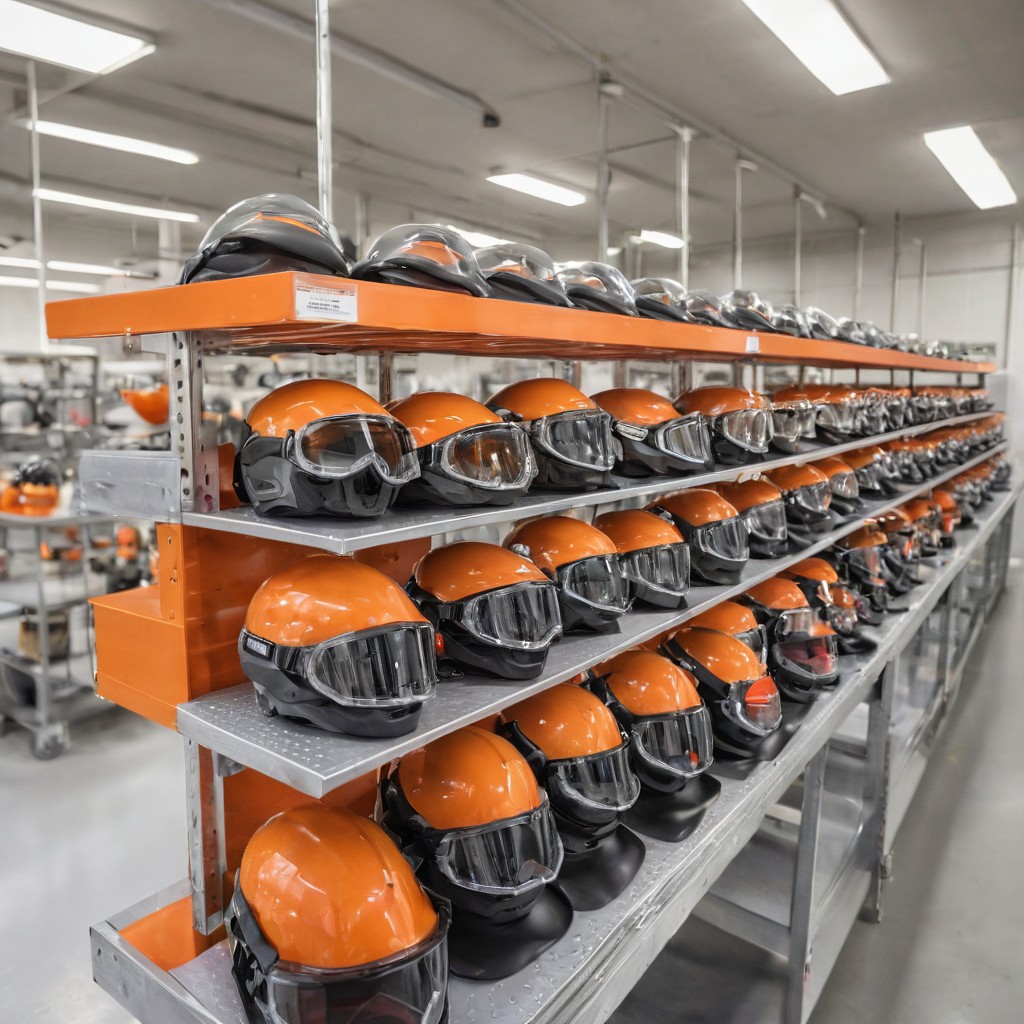
Every winter category has the same structural problem and most sellers meet it for the first time in December. The United States recorded 52.6 million skier visits in the 2025-26 season, down roughly 14 percent and about 9 million visits from the 61.6 million of 2024-25 — and the Rocky Mountain region alone accounted for 20.1 million of them, with the Northeast at 12.9 million, while season passes carried 49 percent of all visits nationally. Read as a demand signal, that is a shrinking, geographically concentrated, pass-holder market whose participants are buying fewer day tickets. Read as a buying signal, it is the opposite of bad news: the accessories, protection and snow-play hardgoods that surround those visits sell on gift cycles, replacement cycles and weather events that have very little to do with resort gate counts. The seller who understands which of those two businesses they are in, and prices the tariff line and the compliance file before the sample, is the one who survives the season. Here is the whole picture.
Winter sports has an unusual cost structure in e-commerce. It is the only major category where the selling window, the peak fulfilment surcharge window and the physical shipping constraint all land on top of each other. Amazon's 2026 peak FBA rates run from 15 October 2026 through 14 January 2027; that is precisely when every unit of winter gear moves. The 2026 Overmax handling fee applies to Extra-Large units exceeding 96 inches on the longest side or 130 inches in length plus girth; that is the shape of a ski. A pair of skis in its retail carton measures about 70.9 by 6.3 by 4.7 inches, which bills as 15.1 lb of dimensional weight against 1.6 kg of actual weight. None of that is a reason to avoid the category. It is a reason to know which end of it you are playing in before you place a purchase order.
What the 2026 Season Data Actually Says
Start with the demand side, because the numbers published this year point in two directions at once and only one of them is widely reported.
| Indicator | Reading | What it means for a sourcing plan |
|---|---|---|
| US skier visits, 2025-26 | 52.6 million, down about 14% and roughly 9 million from 2024-25 (61.6 million); 65.38 million in 2022-23 remains the record | Destination and ticket revenue is weather-exposed. Do not build inventory plans on a strong season carrying forward. |
| Regional concentration | Rocky Mountain 20.1 million, Northeast 12.9 million, then 5.8, 5.7, 4.8 and 3.2 million across the remaining NSAA regions | Two regions are more than 60% of visits. Shipping geography, not national averages, decides your inbound warehouse choice. |
| Season pass share | 49% of visits nationally on season passes; daily and multi-day tickets about 31% | Pass-holder behaviour favours consumables, upgrades and accessories over big-ticket first purchases. |
| Global winter sports equipment market | Published 2026 estimates span roughly $18.8 billion to $21.2 billion depending on scope definition, growing at 5.5% to 6.7% | Treat vendor forecasts as a sanity check, not a business case. The ranges disagree by billions. |
| Category mix | Skiing about 40% of equipment revenue in 2025; snowboarding the fastest-growing segment at roughly 6.05% CAGR; footwear the largest single product block at about 32% | Boards and boots are brand-led and heavy. The margin is in protection and small hardgoods. |
| Channel | Online retail the fastest-growing channel at about 7.05% CAGR, ahead of specialty retail | Confirms the channel shift, but nothing about unit economics. |
| China's domestic snow economy | 2,847 winter sports venues nationally by the end of 2023, up 16.1% year on year, with continued state investment in ice and snow infrastructure | This is the underrated part. Domestic demand built the mould shops, EPS lines and in-mould helmet capacity that now quote for export. |
The practical reading is this. Resort traffic is volatile and correlated with snowpack, which nobody can forecast. Small winter hardgoods are not: sleds, snow tubes, snowshoes, gaiters, hand warmers, ski socks, goggles and kids' snow toys sell when it snows in a populated area, and gift demand covers the rest. That is the layer of the category where a small importer can build a real business, and it is also the layer where the compliance load is lowest and the tariff arithmetic most favourable. The heavy end — skis, snowboards, boots, bindings — is a brand, warranty and freight business that punishes anyone without a multi-season balance sheet.
Nine Families, Nine Different Businesses
"Winter sports gear" is not a category. It is nine product families with different duty lines, different regulators and radically different shipping profiles. The table below is the map; everything after it is a detail of one row or another.
| Family | HTS line | MFN | China all-in 2026 | Shipping profile | Regulatory load | Verdict |
|---|---|---|---|---|---|---|
| Skis (alpine and cross-country) | 9506.11.20 / 9506.11.40 | Free / 2.6% | 20% / 22.6% | Oversize, dimensional weight dominates, Overmax exposure | Low (no mandatory US standard) | Avoid for a first season; brand, warranty and fit returns decide it |
| Snowboards | 9506.11.40.10 | 2.6% | 22.6% | Oversize, bulk carton | Low | Avoid as a private-label start; same reasons as skis |
| Bindings | 9506.12.80 | 2.8% | 22.8% | Small, dense | Highest liability in the category (ISO 9462 release torque) | Do not private-label without an engineering partner and insurance |
| Ski poles and accessories | 9506.19.80 | 2.8% | 22.8% | Long, light, dimensional weight punished | Low | Only as an add-on bundle, never as the hero SKU |
| Helmets | 6506.10.30 | Free | 20% | Bulky but under 1 kg, compact carton | Very high: ASTM F2040, Amazon lab-report policy, CPSIA for children's sizes, EU PPE Category II | Enter only with a testing budget and a real test file |
| Goggles and sport eyewear | Chapter 90 (eyewear) | Line-specific | MFN plus the 12.5% forced-labour duty; check List 4A status at the line | Light, small, cheap to ship, high gift velocity | EN 174 / EN 166 in the EU, UV and optical-class claims in the US | Best risk-adjusted entry point in the category |
| Snowshoes | 9506.99.50 | 2.6% | 15.1% | Moderate bulk, straps and frames | Low; watch Section 232 if the frame is aluminium and the metal is most of the value | The anomaly — best duty position in winter hardgoods |
| Sleds, toboggans and snow tubes | 9506.99.45 | 2.8% | 22.8% | Volumetric, inflatables ship deflated | Low but injury-exposed; no mandatory US performance standard | Good volume, thin margin, cold-flex quality decides returns |
| Ice skates | 9506.70.40 / 9506.70.60 | 2.9% / Free | 22.9% / 20% | Boot volume, sizing returns | Low-to-moderate; blade edge and fit liability | Only with sizing handled and a returns plan |
Two rows deserve expansion. Helmets and goggles are where a small seller can build a defensible brand, because the certificate is the product and most Alibaba sellers cannot produce it. Sleds and tubes are where a small seller gets destroyed quietly, because the product is cheap, the plastic hardens in the cold, and the first liability claim arrives with photographs of a cracked shell and a hospital record. The 2022 CPSC data counted an estimated 124,700 winter sports injuries treated in emergency departments nationally, and sledding and tubing injuries concentrate in children under 15. Whether or not a category has a mandatory standard, that is the risk profile attached to the product you are putting your brand name on.
The 2026 Duty Stack, Line by Line
Three changes in 2026 reset the arithmetic on Chinese winter hardgoods, and importers who are still working from a 2025 landed-cost sheet are carrying an error of several percentage points.
First, the IEEPA country tariffs were struck down. The litigation that ran through 2025 ended with those duties struck down in February 2026. Second, the Section 122 surcharge replaced them and then expired by operation of law. Section 122 gives the President a 150-day window with no extension option, and the 10% surcharge it produced lapsed on 24 July 2026. Third, the same day, a new Section 301 action took its place. Framed as a forced-labour measure, it applies a flat 12.5% duty to China-origin goods — 10% to origins that have committed to banning forced-labour imports — across roughly 60 countries, with no end date, no statutory rate ceiling and, critically for China, no ability to use the exclusion list. The legacy Section 301 lists from 2018 remain in force on top of it. USTR opened its second four-year review of those lists in May 2026, the comment period on lowering tariffs on non-sensitive goods ran through July 2026, and the existing exclusions were extended to 10 November 2026 — a date worth diarying if any of your lines depend on one.
For winter hardgoods, the List 4A line (9903.88.15, 7.5%) covers most of heading 9506, which is why the stack lands in the low twenties. The table below states the all-in rate by line for China-origin entries priced on 2 September 2026 under the 2026 HTS.
| Product | HTS | MFN general | Section 301 layers | China all-in | Same good, Vietnam |
|---|---|---|---|---|---|
| Cross-country skis | 9506.11.20.00 | Free | List 4A 7.5% + forced-labour 12.5% | 20.0% | 12.5% |
| Alpine skis, snowboards (other skis) | 9506.11.40 | 2.6% | List 4A 7.5% + forced-labour 12.5% | 22.6% | 15.1% |
| Ski parts and accessories | 9506.11.60.00 | Free | List 4A 7.5% + forced-labour 12.5% | 20.0% | 12.5% |
| Ski bindings (other) | 9506.12.80.00 | 2.8% | List 4A 7.5% + forced-labour 12.5% | 22.8% | 15.3% |
| Ski poles and other snow-ski equipment | 9506.19.80 | 2.8% | List 4A 7.5% + forced-labour 12.5% | 22.8% | 15.3% |
| Ski and snowboard helmets | 6506.10.30 | Free | Forced-labour 12.5% plus a 7.5% chapter 99 layer | 20.0% | 12.5% |
| Ice skates with footwear attached | 9506.70.40.00 | 2.9% | List 4A 7.5% + forced-labour 12.5% | 22.9% | 15.4% |
| Sleds, toboggans, snow tubes | 9506.99.45.00 | 2.8% | List 4A 7.5% + forced-labour 12.5% | 22.8% | 15.3% |
| Snowshoes | 9506.99.50.00 | 2.6% | Forced-labour 12.5% only — not on List 4A | 15.1% | 15.1% |
| Competition toboggans, bobsleds, luges | 9506.99.40.00 | Free | List 4A 7.5% + forced-labour 12.5% | 20.0% | 12.5% |
Read the snowshoe row twice. HTS 9506.99.50 is not on List 4A, so the only China-specific layer it carries is the new 12.5% forced-labour duty. At a $12.50 FOB pair, the difference between the snowshoe rate and the ski rate is $0.94 a pair — 6% of the FOB price recovered purely by choosing the product whose tariff line was drafted before anyone cared about snowshoes. On a 500-pair order that is $470, which is real money in a category where the whole margin is 30 to 35 percent. It also means Vietnam sourcing buys you nothing on this line: Vietnam's all-in rate on 9506.99.50 is the same 15.1%, because it carries the same 12.5% forced-labour duty and also sits outside List 4A. Diversification logic that works on skis is meaningless here.
Two further cautions before anyone builds a margin model on this table. The first is Section 232. On several lines in heading 9506 the same engine prices Canada- and Mexico-origin entries at 60% to 65% all-in, not because those countries are penalised generally but because the goods contain enough steel or aluminium to attract derivative metal duties. If your snowshoe frame, ski pole or binding is mostly metal by value, get a material breakdown by value and weight from the factory and have your broker confirm the metal-content treatment — the duty can exceed the FOB price on a metal-dense item. The second is classification drift. A "snow sled" that is really a plastic toy, a "goggle" that is really a sunglass, and a "helmet" with a visor filed as fashion headwear all land on different lines with different rates, and CBP's rulings in this area turn on construction and marketing, not on what the supplier wrote on the invoice. Classify before you quote, not after.
The Standards That Are Voluntary and the Ones That Are Not
Winter sports protection is one of the few consumer categories where the United States relies on voluntary consensus standards at the federal level and the marketplace, not the regulator, supplies the enforcement.
Helmets in the United States. There is no CPSC mandatory standard for ski and snowboard helmets. ASTM F2040 is the de facto US standard: it covers non-motorised recreational snow sports and evaluates impact attenuation against flat, hemispherical and edge anvils with a peak acceleration limit around 300 g, plus strap integrity and retention. That voluntary status does not make it optional in practice, for three reasons. First, Amazon's ski and snowboard helmet policy requires test reports from an ISO 17025 accredited laboratory showing compliance with the applicable regulations or standards, and the reports must be authentic and unmodified; helmet listings that cannot produce one get suppressed, and the bicycle helmet policy shows how strictly Amazon applies the lab-report and suspended-lab rules. Second, a helmet sized and marketed for children is a children's product: it needs a Children's Product Certificate based on third-party testing at a CPSC-accepted laboratory, CPSIA lead and phthalate compliance, and a permanent tracking label, and there are additional requirements where a helmet has small parts intended for children from three to under six years old. Third, the general CPSC framework still applies to everything — a product that creates a substantial product hazard carries a reporting duty, and section 15(b) obligations under 16 CFR 1115 run on a 24-hour clock once a defect pattern emerges. If you take one sentence from this section: the certificate is the product, and a helmet without a current test report tied to the exact model and shell size you are buying is not a cheaper helmet, it is an unshippable one.
Helmets and goggles in the European Union. These are personal protective equipment under Regulation (EU) 2016/425, and the classification drives the entire cost structure. Ski and snowboard helmets are Category II PPE: they require EU type-examination (Module B) by a notified body against EN 1077 — Class A for full coverage, Class B for the standard shell — followed by conformity to type through Module C2 (internal production control plus supervised product checks) or Module D (quality assurance of the production process), a CE mark, an EU declaration of conformity and a technical file retained for ten years. Ski goggles are assessed the same way, against EN 174 where they are treated as eye protection for skiing and snowboarding, with EN 166 as the base eye-protection standard; the classification turns on what the lens claims to protect against, and a factory that treats goggles as fashion eyewear will hand you a file that fails on the first marketplace check. The Commission published a fresh decision on new and revised harmonised standards under the PPE Regulation in June 2026, so confirm which revision your test house is testing against before paying for a report — a report against a superseded revision is a report you will pay for twice. On top of PPE, the General Product Safety Regulation obligations apply: an EU-based responsible person, traceability and the listing disclosures that go with them.
Products that carry no standard but still carry liability. Sleds, toboggans, snow tubes and snowshoes have no mandatory US performance standard and no PPE classification in the EU. That is precisely why they are the category most likely to generate a claim with no compliance defence available: there is no certificate to hide behind, so the question becomes whether the product was designed with ordinary care. A snow tube whose PVC formulation goes brittle below minus 20°C, a sled with a moulded handhold that snaps under a seven-year-old's grip, a snowshoe binding that releases at load — these are design failures, and the discovery in litigation is your purchase order, your specification sheet and the emails where the factory told you it was fine. Write the specification down. Test to it. Keep the record.
PFAS on Two Fronts: Outerwear and Wax
No regulatory development of the past three years has changed winter product sourcing as much as the per- and polyfluoroalkyl substances rules, and the reason is that both the apparel and the consumable end of the category relied on them.
| Rule | What it covers | Threshold and date | What you must do |
|---|---|---|---|
| California AB 1817 — textiles | Apparel and textile articles, with "outdoor apparel" defined to include clothing for skiing and climbing | 50 ppm total organic fluorine since 1 January 2025 | Get a total-organic-fluorine test on the finished article, not a raw-fabric statement; obtain and keep the supplier certificate of compliance |
| California AB 1817 — severe wet conditions | Outdoor apparel designed for extended protection against severe wet conditions | Exemption expires 1 January 2028; until then a "Made with PFAS chemicals" disclosure is mandatory, including on online listings | Decide now whether to reformulate or to disclose; a 2028 cliff with an 18-month product cycle means the decision lands in 2026 |
| New York ECL 37-0121 | PFAS in apparel, with the same severe-wet-condition carve-out | Outdoor apparel for severe wet conditions restricted from 1 January 2028 | Two large states with aligned dates; treat 1 January 2028 as a single hard deadline for ski outerwear |
| Colorado | PFAS in textile articles and outdoor apparel | Restriction repeal on 1 January 2028 brings severe-wet-condition outdoor apparel fully into scope | Confirms the pattern: state-level 2028 deadline, no federal pre-emption |
| FIS fluorinated wax ban | Tuning products containing fluorine, all disciplines and levels | In force since 2023, enforced by on-site fluorine testing | If you sell wax or tuning product, sell fluorine-free and say so on the label |
| Milano-Cortina 2026 | First Winter Games with PFAS wax enforcement | February 2026 | Two cross-country skiers were disqualified for fluorinated wax use — the first forever-chemical disqualifications in Olympic history |
The wax precedent matters commercially because it converted an environmental restriction into an athlete-level enforcement event with names attached. The EPA's PFAS ski wax enforcement alert, the federation ban and the Olympic disqualifications together removed the fluorinated segment of the tuning market from anyone who wants to sell to competitors or to the enthusiasts who copy them. The opportunity is the inverse: a fluorine-free wax line with a clean test report, sold honestly, has a market that is now structurally protected from the incumbent formulations.
On outerwear, the practical instruction to your factory is one sentence long: confirm in writing whether the DWR finish on the shell, the membrane and any treatment on gloves or gaiters contains intentionally added PFAS, and supply a total-organic-fluorine test on the finished article at or below 50 ppm. A C6 or C8 repellent is PFAS. "Eco" in a supplier's marketing email is not a chemistry. And "no intentionally added PFAS" does not settle the question on its own, because the California ceiling is a concentration limit measured on the finished article, and cross-contamination in a shared finishing line has produced failures.
Heated Gear, Lithium Batteries and the Cold-Weather Claim
Rechargeable hand warmers, heated gloves, heated insoles, heated socks and heated vests are the fastest-moving winter accessory segment and the one with the most documentation you cannot skip. Every one of them contains a lithium cell, which means a UN 38.3 test summary for the cell and the pack, IEC 62133-2 safety testing, transport documentation, and marketplace documentation requirements that follow the battery rather than the garment. Air freight brings state-of-charge and packaging rules; a factory that offers to "ship the batteries loose" is proposing that you break them. There is also a performance claim problem unique to this category: a hand warmer rated in milliampere-hours in a 25°C test lab behaves very differently in a jacket pocket at minus 15°C, and the negative reviews that follow are about endurance, not about price. Ask for a low-temperature discharge curve, not a capacity number, and quote the realistic runtime rather than the lab figure.
Where Winter Gear Is Actually Made
Winter hardgoods in China are more clustered than most consumer categories, and the clusters do not overlap much with the general sporting-goods trade, which means a factory that quotes you tents and yoga mats is usually not the factory that should quote you a snowshoe.
| Cluster | What it is genuinely good at | What to watch |
|---|---|---|
| Xiamen, Fujian | Sport eyewear and ski goggles. The city's optical plants have been making goggles and sport glasses for export since the 1990s, and the lens, coating and gasket supply chain sits within a few kilometres. | Optical-class and UV claims need a real EN 174 or equivalent report; coating durability is where cheap lenses fail after one season. |
| Wenzhou, Zhejiang | Eyewear frames and lens blanks at volume; the lower-cost end of the goggles market. | Price leadership often means commodity components. Test the finished goggle, not the frame. |
| Ningbo and Taizhou, Zhejiang | Snow sport hardware and soft goods: snow tubes and inflatables, plastic sleds, pads, snowboards at the value end, plus the trading houses that consolidate mixed winter containers. | This is where MOQ flexibility is best and where specification discipline is most variable. |
| Jinjiang and Quanzhou, Fujian | Footwear-adjacent hardgoods: aluminium-frame snowshoes, winter boots, injection-moulded components. The footwear supply base gives this cluster genuine engineering depth in bindings and straps. | Aluminium content pushes the Section 232 metal-derivative question to the front; get the value split. |
| Shenzhen and Dongguan, Guangdong | Heated accessories and electronics: hand warmers, heated insoles, controllers, battery packs, LED gear. Also dense, capable EPS and helmet moulding capacity. | Lithium documentation and the temptation to use untested packs. This cluster will build exactly to the spec you write, including a bad one. |
| Shandong and northern Jiangsu | Knit accessories and textiles: gloves, mittens, beanies, neck gaiters, thermal base layers, ski socks. | PFAS in DWR finishes and fibre-content labelling accuracy; the cheapest knitwear cluster is also where composition claims drift. |
| Hebei (Zhangjiakou) and Heilongjiang (Harbin) | China's domestic snow-sports industry: resorts, rental fleets and the component makers that grew up serving them. | Domestic-focused factories quote attractive prices but may have no export documentation experience at all. |
The strategic point about this map is the second-order effect of China's own snow economy. State investment in ice and snow infrastructure — 2,847 winter sports venues by the end of 2023, growing double digits — created domestic demand for helmets, boards and protection, and domestic demand paid for the tooling. A factory that bought an in-mould helmet line and an EPS press three years ago to serve Chinese resorts is now looking for export volume to keep those lines loaded. That is your negotiation position, and it is strongest between March and June, when the northern hemisphere season has ended and the lines are idle.
The Specification Sheet That Decides Quality
In a category where the product is simple and the failure modes are physical, the specification sheet is the whole negotiation. These are the specifications that separate a supplier who can build winter gear from one who can build something that looks like winter gear.
- Cold-flex performance on any PVC or TPE product. Snow tubes, sleds and inflatables must be specified to a low-temperature flex test — typically minus 25°C or colder — with the plasticiser system named. A tube that passes a room-temperature drop test and cracks at the seam in the first cold snap generates a return and, worse, an injury.
- EPS density and impact count for helmets. Ask for the EPS density in kilograms per cubic metre and whether the liner is single-impact or multi-impact. Almost every consumer helmet is single-impact: after one significant hit it must be replaced, and the listing has to say so. A factory claiming multi-impact protection at a $10 FOB price is describing something else.
- Lens optical class and coating durability for goggles. Optical class 1, UV400 as a test result not a sticker, and evidence that the anti-fog coating survives a defined abrasion or wash cycle. Ask for the specific coating process, because a factory can buy the same lens and ruin it with a cheap coating line.
- Seam sealing and waterproof rating on outerwear. A 10,000 mm / 10,000 g rating in a lab report is the floor for a ski product, and the ratings must be against the finished garment, not the fabric roll. Taped versus welded seams is a cost decision you should make consciously.
- Metal specification on poles, bindings and snowshoe frames. 6061 versus 7075 aluminium, anodising thickness, hardness and the corrosion test result — plus the value split that determines whether Section 232 metal derivative duties apply.
- Glove construction detail. Leather palm grade and thickness, insulation type and weight in grams per square metre, waterproof insert brand or specification, and whether the cuff closure is a velcro strap or a drawcord. Glove returns are almost always fit, waterproofing or wrist coverage.
- Battery documentation on anything heated. UN 38.3 test summary, IEC 62133-2 report, cell and pack supplier identified, and a low-temperature discharge curve.
- Child-safety detail on kids' snow products. Small-parts assessment, cord and drawstring compliance, and for anything marketed for children a documented CPSIA position before tooling, not after.
Indicative 2026 FOB Ranges
The following ranges are compiled from public supplier listings in September 2026 and are indicative only — they are not quotes, and MOQ, certification level, packaging and print all move the number substantially. They are useful for one purpose: telling you within twenty seconds whether a quotation you have received is in the market or is being invented for you.
| Product | Typical MOQ | Indicative FOB range | Note |
|---|---|---|---|
| Plastic roll-up snow sled | 1,000 pcs | $1.37 – $5.00 | Extreme spread reflects resin grade; the low end is a toy, not a sled |
| Inflatable snow tube (standard) | 100 – 1,000 pcs | $5.50 – $9.71 | Price moves with PVC thickness and the cold-flex specification |
| Inflatable snow tube (heavy duty, retail-spec) | 1,000 pcs | $20.83 | Double-layer base and reinforced handles; sells at $40+ |
| Ski goggles (double lens, OTG) | 1,000 pcs | $8.55 – $9.30 | Basic cylindrical lenses; spherical and photochromic cost materially more |
| Ski helmet (ABS shell, EPS liner, EN 1077 / ASTM F2040 stated) | 300 – 500 pcs | $10.50 – $16.15 | Confirm the test report names the standard revision and your model |
| Ski helmet (premium, visor, in-mould) | 500+ pcs | $15.00 – $29.00+ | Rotational-impact licensing is a real cost; an unbranded "equivalent" claim is a red flag |
| Snowshoes (aluminium frame, basic) | 1,000 pcs | ~$7.20 | Entry tier; check the binding quality, which is where these fail |
| Snowshoes (aluminium, 500-pair MOQ) | 500 pairs | $13.80 – $16.00 | Better deck, crampon and binding; the tariff-favourable product |
| Ski gloves (basic knit) | 50 – 3,000 pairs | $1.10 – $1.68 | Not a ski product; a winter accessory. Do not label them waterproof |
| Ski gloves (waterproof, insulated) | 500 pairs | $6.50 – $11.00 | The real entry point for a branded ski glove; PFAS declaration required |
| Ski gloves (premium, leather palm) | 1,000 pairs | $12.00 – $29.00 | Gore-Tex-equivalent inserts, real leather; verify the insert brand claim |
| Neck gaiter, beanie, thermal base layer | 500 – 5,000 pcs | $1.00 – $6.00 | Fibre content and DWR are the two compliance exposures |
| Rechargeable hand warmer | 500 – 2,000 pcs | $3.50 – $9.00 | Ask for the low-temperature runtime, not the mAh figure |
| Ice skates (recreational, boot attached) | 500 pairs | $12.00 – $25.00 | Sizing runs true to EU/US conversion; returns are the cost centre |
Three Worked Landed-Cost Models
The arithmetic below uses the 2026 duty rates from the table above, illustrative freight and the 2026 Amazon fee pattern. Treat the freight and fee figures as parameters to replace with your own quotes — the point is the structure, and in particular how much of a small seller's margin sits in the interaction between tariff line, dimensional weight and the peak fee window.
Model 1: snowshoes — the tariff-favourable product. 500 pairs at $12.50 FOB, sea LCL, roughly 3.3 cubic metres of cargo. Goods $6,250. Duty at 15.1% is $944. Freight and fixed entry costs about $680. Landed cost $7,874, or $15.75 a pair. At a $49.99 retail price, Amazon referral at 15% takes $7.50 and a large-bulky fulfilment fee in the peak window takes roughly $10.76, leaving about $15.98 a pair — 32% of revenue. Now run the identical product as though it were classified on the ski line at 22.6%: duty rises to $1,412, landed cost to $16.68, and the net falls to $15.05, or 30.1%. Same factory, same box, same customer — 1.9 percentage points of margin recovered from a tariff line nobody advertises.
Model 2: ski helmet — the certificate product. 500 helmets at $13.00 FOB, about 6.75 cubic metres in cartons. Goods $6,500. Duty at 20% is $1,300. Freight and entry about $1,011. Landed cost $8,811, or $17.62 a unit. At $59.99 retail, referral $9.00, fulfilment roughly $8.60, net about $24.77 a helmet — 41% of revenue. Push to a premium helmet at $29.00 FOB with a visor and an in-mould shell: landed cost rises to $37.60, retail reaches $99.99, and the net is around $38.19, or 38%. The lesson is structural: in helmets, the testing cost is fixed and the price is not, which means the premium end is easier to make work than the entry end — provided the test file actually exists.
Model 3: goggles and snow tubes — the volume products. Goggles at $8.90 FOB for 1,000 units: goods $8,900, duty $1,780, freight around $120 because they are small and light. Landed $10.80. At $34.99 with a small-standard fulfilment fee near $3.50, net is about $15.44 — 44% of revenue, the best percentage in this article and the reason goggles are where most new winter brands should start. Snow tubes at $6.20 FOB for 1,000 units: duty $1,414 at 22.8%, freight about $900 because inflatables ship deflated but still take volume, landed $8.51. At $39.99 with a fulfilment fee near $11.00, net is about $14.48, or 36%. A roll-up sled at $3.20 FOB lands at $4.53 and nets about $7.71 at $24.99 — 31%. Cheap winter plastic is a volume business with a thin per-unit margin and a high damage-claim rate. Enter it for cash flow, not for profit.
One Amazon-specific mechanic deserves its own paragraph, because it inverts the normal seasonality of inventory planning. The 2026 peak fulfilment fees apply from 15 October 2026 to 14 January 2027, and non-peak rates apply from 15 January to 14 October. In most categories, peak surcharges are a nuisance that affects a fraction of the year's sales. In winter gear they affect essentially all of them: your product's entire demand curve sits inside the more expensive window, and the units you sell in December carry a fulfilment penalty that a summer SKU never sees. Model your unit economics on peak fees, not annual averages, or the fourth quarter will look profitable in the spreadsheet and not in the bank account. The same window framing applies to inbound: winter inventory must be in the fulfilment network before the season starts, which means production finishing in August and September, sea freight booked in September, and a receiving date in early October — with a check of Seller Central for that year's published inbound cutoffs, which move.
The Season Calendar and the Chinese New Year Trap
| Window | What happens | What you should be doing |
|---|---|---|
| January – February | Northern hemisphere season peaks; factories slow for Chinese New Year (6 February 2027) with disruption starting in mid-January | Sell. Do not plan production. Place any must-have order before the first week of January, or accept a March delivery |
| March – May | Lines are idle, capacity is available, quoting is competitive, and last season's sell-through data is fresh | Sample the next season, negotiate, sign. This is the price-setting window for the whole year |
| June – July | Production for the coming season runs at 35 to 55 day lead times | Production, first-article inspection, third-party lab testing in parallel with the run |
| August – September | Balance of production, final QC, sea freight booking | Ship. Air only for a hero SKU that genuinely cannot miss the season |
| Early October | Inbound receiving before peak; Amazon's published inbound cutoffs land in this window | Confirm receiving, verify the listing, launch reviews before the rush |
| 15 October – 14 January | Peak fees apply; the entire selling season | Sell at peak fee economics planned months earlier. Reorder only if sea transit can beat the season's end |
| February – April (following year) | Season ends; residual stock becomes a cash problem, not a demand problem | Clear decisively. A ski SKU carried into April costs more in storage and repricing than the discount it avoids |
Chinese New Year 2027 falls on 6 February. The disruption is not the holiday itself, it is the four to six weeks around it: migrant workers leave in mid-January, freight capacity tightens, and factories reopening in late February need two to four weeks to return to full output. A winter order that has to be in a US warehouse by October 2027 is therefore a March-to-July 2027 production decision, with the sample approved in 2026. If you are reading this in September 2026, the honest answer for the 2026-27 season is that the window has mostly closed for sea freight of a new product — which makes this the sampling and negotiation season for 2027-28, and the air-freight season for one or two test SKUs.
The Ten-Test Verification Battery
Order these tests before the deposit on the first production run, not after. In winter protection the cost of a failed test is a season, because there is no next shipment that can arrive in time.
- Test report authenticity. The report must come from an ISO 17025 accredited laboratory (or an EU notified body for PPE), name the exact standard and revision, and show the tested model and shell size. A laminated "certificate of compliance" from the factory is not a test report, and Amazon will not accept it.
- Model-to-report traceability. Compare the model designation, photographs and dimensions in the report against the sample in your hands. The most common fraud in this category is a valid report for a different, better product.
- Cold-flex and low-temperature impact on plastics. Specify the test temperature and the pass criterion in the purchase order, and test the finished product, not the resin pellets.
- EPS density and impact attenuation for helmets. ASTM F2040 impact testing for the US and EN 1077 for the EU, plus the liner density figure your specification requires.
- Binding release torque for any ski binding. ISO 9462 and ISO 11087 define the release behaviour, and a binding that fails to release at the specified torque is a catastrophic product regardless of what it costs. Most Chinese suppliers will not indemnify a US importer, so treat bindings as an insurance-first decision.
- Goggle optical class, UV transmission and coating durability. Test the finished goggle including the coating, and check the anti-fog performance after abrasion rather than out of the box.
- Total organic fluorine on every textile article. Finished garment or glove, at or below 50 ppm, with a report from a recognised laboratory. This is the California AB 1817 number and it is also the practical answer to a retailer questionnaire.
- Waterproof and breathability on outerwear. Hydrostatic head and moisture vapour transmission against the finished garment, with the seam tape specification recorded.
- Lithium battery documentation on anything heated. UN 38.3 test summary, IEC 62133-2 report, and the identity of the cell manufacturer — not the pack assembler.
- Children's product file where applicable. CPSIA third-party testing, CPC, tracking label and small-parts assessment for anything sized for or marketed to children, established before tooling.
Red Flags Specific to This Category
- "Same as Smith / Oakley / Burton" as a product description. It means the factory reverse-engineered a mould. A copy of a protected helmet or goggle shape is a design-rights and trademark exposure on top of a quality risk, and marketplaces remove those listings in volume.
- Sub-$8 FOB helmets claiming ASTM F2040 and rotational protection. The materials and the licensing do not fit inside that price. Someone is describing a different product than the one in the carton.
- Two-week lead time in November or December. Either the goods already exist and are of unknown provenance, or the promise is not real. Both outcomes end in January.
- No test report available "until the order is placed." The report exists before production or it does not exist. Ordering it yourself costs a few hundred to a few thousand dollars and is the cheapest insurance in this article.
- PVC products with no cold-flex specification. Winter plastic is a formulation problem, not a moulding problem, and the failure mode appears after the season has started.
- Gloves or jackets described as waterproof with no hydrostatic head figure. "Waterproof" without a number is a marketing claim you will own in the returns data.
- Aluminium-framed product with no material value breakdown. Section 232 derivative metal duties can turn a $10 FOB snowshoe into a duty problem larger than its margin.
- A supplier who has never exported. Not disqualifying in itself, but the documentation gap lands on you: classification, labelling, test reports and the compliance file are your obligations as the importer of record, not theirs.
What to Actually Do
The category resolves into four positions, and the order in which they appear is the order in which a new seller should take them.
- Goggles, gaiters, socks, gloves and small winter accessories: enter here. Light, cheap to ship, low regulatory load, high gift velocity, 40% or better net margins at a competent price point, and no mandatory US performance standard to fund. This is the year-one business.
- Snowshoes and snow-play hardgoods: enter here as your second line. The tariff position is the best in the category at 15.1% all-in, the regulation is light, and the product is what people buy when the weather does something. Accept the liability exposure and write the specification accordingly.
- Helmets: enter only with a testing budget and a premium price point. The certificate is the moat, the entry tier is a trap, and the compliance file is a fixed cost you must be able to amortise across a premium price. Get the EN 1077 and ASTM F2040 reports before the tooling, not after.
- Skis, snowboards, boots and bindings: do not start here. These are brand, warranty, freight and indemnity businesses. The duty is at the top of the range, the dimensional weight punishes you, the fit returns are structural, and the two categories where a defect claim can end a company — bindings and helmets — are both in this group. If you want the heavy end, buy an existing brand or partner with an engineering firm that already owns the liability structure.
Winter sports rewards sellers who treat it as a compliance and logistics category with a short trading window. The product is simple, the factory is findable, and the price is negotiable. What is not negotiable is the tariff line you enter under, the test report that has to exist before the first sale, the fee window your entire season sells inside, and the calendar that decides whether your container arrives in October or in January. Get those four right and the category is ordinary, well-tooled, high-margin hardgoods sourcing with a customer who buys again every year — because when it snows, they have no choice but to buy now.
This guide is informational and reflects published 2026 market parameters, tariff layers and regulatory timelines; it is not legal, customs, safety-certification or engineering advice. Duty rates and each line's Section 301 or Section 232 treatment depend on the exact good, its origin, its entry date and its material content, and change through Federal Register notices, exclusions and litigation; classification is determined by CBP. Safety standards, PPE categories, CPSIA obligations and marketplace documentation policies depend on the specific product, its marketing and its intended user. FOB ranges quoted here are indicative public listing observations, not offers. Verify your own classification, entry treatment, testing obligations, insurance and channel requirements with a licensed customs broker, an accredited testing laboratory and a lawyer before relying on any figure in this article.