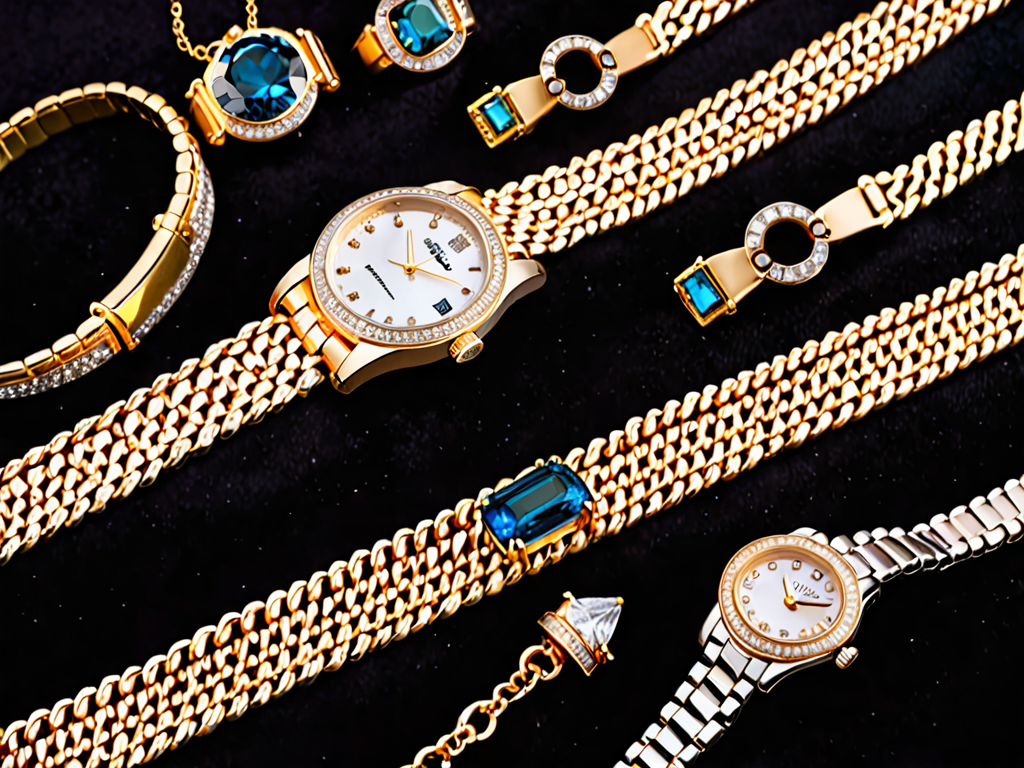
In March 2026, an Amazon seller I'll call Elena launched a "premium 14K gold" jewelry line. She had found a Guangzhou trading company on Alibaba with a 4.8-star rating and a catalog of gold chains, hoops, and charms photographed beautifully against black velvet. The price was irresistible: $4.20 per "14K gold" chain, $6.80 for "14K gold" hoop earrings. The sales rep sent certificates — a "gold content certificate" from a local inspection company, an SGS-style report with a gold percentage that looked authoritative, and assurances that hundreds of US sellers bought from them monthly. Elena ordered 3,000 pieces, split across 12 SKUs, at $14,700 FOB, and shipped them to FBA in two batches. The first 500 units sold in eleven days. Then the reviews started: "Turns my skin green." "Chain broke after a week." "This is NOT gold." A customer sent a pendant to a jeweler who acid-tested it: brass. Elena pulled the listing, but the damage was done — and then the letter arrived. A California plaintiff's firm had filed a Prop 65 lawsuit over her earrings, citing lead in the brass core. Elena's total losses: $14,700 in product, ~$6,000 in FBA fees and removal, $3,400 in legal fees to settle, and a suspended selling account for 30 days while Amazon reviewed her compliance documents — which, of course, did not exist. Elena's factory didn't "scam" her out of her deposit. They gave her exactly what she paid for and specified: a product described as "gold" with no karat specification, no plating specification, no material certificate tied to a batch, and no test report from an accredited lab. In jewelry, every one of those omissions is a landmine.
Jewelry and watches are the most claim-dense categories in cross-border e-commerce. A phone case is a phone case; a "14K gold necklace" is a legal statement about fineness, plating, and composition that regulators in three jurisdictions will hold you to. That claim-density creates a brutal paradox: jewelry has some of the highest gross margins in e-commerce (a $4.20 "gold" chain that should have cost $40 in real gold is exactly how counterfeit economics work — but so is a $42 real-gold chain that retails for $189), repeat purchase and gift-buying are structurally high, and the category is one of the largest on Amazon. Yet the failure rate for careless sellers is catastrophic: Prop 65 litigation has become an industry in California (tens of thousands of jewelry SKUs sued since 2018), the FTC enforces the Jewelry Guides with fines and injunctions, the EU restricts nickel and cadmium with mandatory testing, the UK requires hallmarking on precious metals, and Amazon gates the category and audits documentation. The margin opportunity and the compliance burden are two sides of the same coin — and the sellers who win are the ones who treat jewelry as an engineering and compliance discipline, not as "shiny products to import."
This guide covers everything you need to source jewelry and watches profitably and legally in 2026: China's 8 jewelry and watch manufacturing clusters mapped by sub-category, real 2026 FOB cost benchmarks across 25+ product categories, the complete US/EU/UK/Amazon compliance stack explained claim-by-claim, the material verification protocols that catch substitution before customers do (XRF, specific gravity, EN 1811, plating thickness, gemstone and movement authentication), the QC and inspection procedures specific to jewelry and watches, and the 8-step sourcing SOP that takes you from idea to first container. If you've read our other category guides, you know the structure. But jewelry is different in one fundamental way: in every other category, a compliance failure costs you money. In jewelry, a compliance failure costs you your account, your inventory, and quite possibly a lawsuit — and it all starts with a single word on a listing that doesn't match the metal in the box.
Part 1: China's 8 Jewelry & Watch Manufacturing Clusters — Mapped by Sub-Category
China is the world's largest exporter of jewelry (roughly $30-40 billion annually) and watches (around 80% of global watch volume by units, overwhelmingly quartz), and production is concentrated in specialized clusters that developed over 30-50 years around specific materials, skills, and trade flows. Sourcing from the origin cluster — rather than through consolidators and trading companies — typically saves 15-40% on FOB and, more importantly, gets you factories that already understand the compliance of your specific product type. Here's the map.
| Cluster | Specialization | What's Made There | What You Need to Know |
|---|---|---|---|
| Panyu (Guangzhou, Guangdong) | Fine Jewelry & Gemstone Setting | Fine gold and silver jewelry, diamond and gemstone rings, pendants, earrings, bridal sets, custom casting (lost-wax), stone setting, and OEM/ODM production for major Western jewelry brands. Panyu is widely credited with producing roughly a third of the world's fine jewelry and the majority of China's fine jewelry exports. | This is the highest-engineering, highest-compliance sub-category in Chinese jewelry. Panyu factories do serious work: 14K/18K casting, platinum, pave and micro-pave setting, rhodium plating, and CAD/CAM + 3D-printed wax patterns for custom runs. Expect real minimum orders (50-200 pieces per design), real lead times (20-45 days), and real prices — a Panyu 14K gold ring is priced by gold weight + workmanship, which is how it should be. If a "fine jewelry" factory quotes you $4 for a gold chain, it is not a fine jewelry factory. Verify: actual casting and plating lines on site, hallmarking experience, and test reports from accredited labs (SGS, Intertek, BRILLIANCE/GTI). Panyu is also where you'll find the serious gemstone setters — and where lab-grown vs. natural disclosure is a professional norm. |
| Shenzhen Shuibei (Luohu, Guangdong) | Gold, Silver & Precious Metal Jewelry | The world's largest gold and jewelry trading and manufacturing hub: gold necklaces, chains, bracelets, bangles, rings, silver jewelry, gold-plated and gold-filled lines, and the machinery (laser welding, chain machines, stamping) behind them. Shuibei's market district turns over hundreds of tons of gold annually, and its factories make a large share of the karat-gold jewelry sold globally. | Shuibei is where gold is priced like a commodity and workmanship is the only variable. The district's advantage is scale and liquidity: karat gold fabrication costs are among the world's lowest, and the depth of specialized workshops (chain makers, hollow-gold specialists, plating shops) is unmatched. For buyers, Shuibei is the origin for solid and hollow gold lines, gold vermeil, and gold-filled products — but you must specify karat, weight tolerance, and plating specs in writing, because the same market also feeds the counterfeit trade. Verify the factory's gold source (legitimate refineries), demand XRF batch reports, and check your delivered weight against the agreed weight per piece — underweight gold is one of the most common silent thefts in the industry. |
| Yiwu (Zhejiang) | Costume & Fashion Jewelry | Fashion earrings, necklaces, bracelets, rings, hair accessories, brooches, body jewelry, seasonal and party jewelry, and thousands of small fashion accessories — in base metals (copper, zinc alloy, stainless steel), resin, acrylic, and fabric. Yiwu's International Trade City is the world's largest wholesale market for small commodities, and its jewelry districts feed Amazon, eBay, Etsy, and TikTok Shop sellers worldwide. | Yiwu is the volume engine: MOQs start at 100-500 pieces, prices are in cents, and the variety is overwhelming. This is where the 'fast fashion' jewelry economics live — a $0.15 earring that retails for $9.99. But Yiwu is also where the compliance failures concentrate: zinc alloy jewelry with lead and cadmium, nickel-heavy posts, and plating that tarnishes in weeks. If you source costume jewelry, treat every material claim as unverified until tested: XRF screening for lead/cadmium is mandatory, nickel release (EN 1811) testing for posts and clasps is non-negotiable for the EU, and 'nickel-free' and 'hypoallergenic' are claims you must be able to prove. Also check the jewelry-specific Amazon rules: costume jewelry with 'gold' or 'silver' in the title is an FTC problem even at Yiwu prices. |
| Wuzhou (Guangxi) | Synthetic Gemstones | Cubic zirconia (CZ), synthetic corundum (ruby and sapphire), synthetic spinel, synthetic emerald, and other lab-created stones in every cut and color — plus the cutting and polishing industry that serves jewelry factories worldwide. Wuzhou is the world's largest synthetic gemstone production and trading base, producing the vast majority of the world's CZ. | If your product has 'diamonds' that are actually CZ (which is perfectly legal — if disclosed), Wuzhou is where they come from. Key disciplines: (1) disclosure — FTC rules require that simulants be clearly named (cubic zirconia, moissanite) and never implied to be diamond; (2) quality grading — CZ varies enormously in cut quality, color, and durability, so specify stone size (mm), cut, and color grade, and inspect for chips and windowing; (3) setting quality — a beautiful stone in a weak setting is a returns machine. For buyers moving upmarket, Wuzhou also handles synthetic corundum and spinel that can carry 'lab-created ruby/sapphire' claims — again, legal if disclosed, illegal if not. |
| Henan (Zhengzhou, Xuchang, Changzhi) | Lab-Grown Diamonds & Moissanite | Lab-grown diamonds (HPHT and CVD methods) and moissanite — rough and polished stones, plus mounted jewelry. Henan is the world's largest lab-grown diamond production base; Chinese HPHT producers (led by companies like Zhongnan Diamond and Huanghe Whirlwind) grow a substantial share of the world's lab-grown diamond supply, and moissanite production is also heavily concentrated in the region. | Lab-grown diamonds are the fastest-growing segment in jewelry — and the most disclosure-sensitive. The FTC ruled in 2018 that lab-grown diamonds must be called exactly that (never 'diamond' alone, never 'natural'); the EU and UK have similar rules, and the GIA/IGI grading reports that matter for resale value only cover properly disclosed stones. Sourcing from Henan gets you the world's best HPHT economics: a 1-carat lab-grown diamond that would cost $800-1,200 retail can be sourced for a fraction of that at the rough stage. But the market also has a counterfeit problem in reverse: undisclosed lab-grown stones sold as natural (the seller's risk, not yours), and glass or CZ sold as moissanite. Demand a grading report from an accredited lab (IGI, GIA, or a reputable Chinese lab like NGTC) for every stone above ~0.3 carat, and verify moissanite with a diamond tester plus a loupe check for the double refraction that separates moissanite from CZ. |
| Zhuji (Zhejiang) | Freshwater Pearls | Freshwater pearl farming, processing, and jewelry: necklaces, bracelets, earrings, and loose pearls in white, cream, pink, lavender, and dyed colors. The Zhuji area (centered on the Shanxiahu pearl market) produces the vast majority of the world's freshwater pearls and hosts China's largest pearl trading market. | Pearls are a natural product with a quality spectrum that ranges from $0.10 to $100+ per pearl, and Zhuji is where you learn the grading vocabulary: luster, surface quality, shape (round, near-round, baroque), size (mm), and color. Critical disciplines: (1) dyed vs. natural color — 'natural color' claims require verification, and dyed pearls must be disclosed; (2) nacre thickness and treatment — some pearls are bleached or coated, and the FTC requires treatment disclosure; (3) matching — a necklace's value is in the match, so specify acceptable size and color variation and inspect the stringed piece, not just the loose pearls. Zhuji factories are experienced exporters and will work with low MOQs on freshwater pearls — a great entry point for new jewelry brands. |
| Sihui & Jieyang (Guangdong) | Jade Carving & Jade Jewelry | Jadeite and nephrite jade carving, bangles, pendants, beads, and jade-set jewelry. Sihui (the 'jade capital' of China's jadeite trade) and Jieyang (a major jade carving and trading center) process a large share of the world's jadeite, including high-end carved pieces. | Jade is a category where authenticity and treatment disclosure are everything: jadeite is graded by color (imperial green being the pinnacle), translucency, and texture, and the market is full of treated stones (acid-bleached and polymer-impregnated 'B jade', dyed 'C jade') that are worth a tiny fraction of untreated stone. If you sell jade in Western markets, you need: (1) a grading report from a reputable lab (e.g., NGTC, GIA, or AGL) identifying jadeite vs. nephrite vs. serpentine lookalikes; (2) explicit treatment disclosure — 'treated' jade must be labeled as such; (3) a supplier who can document origin and treatment history. The Chinese domestic jade market is enormous and sophisticated — work with established Sihui/Jieyang exporters who are used to Western documentation demands, and avoid 'too good to be true' bangles that are almost certainly B/C jade. |
| Shenzhen–Guangzhou–Tianjin (Watch Axis) | Watches & Movements | Quartz fashion watches, mechanical watches, watch cases and straps, and movements: Shenzhen (with the surrounding Pearl River Delta) is the world's watch manufacturing capital, producing a large share of the world's quartz watches and watch components; Guangzhou is home to movement manufacturers (including the Pearl movement factory); Tianjin is where Seagull makes its famous mechanical movements — one of the world's few vertically integrated movement manufacturers and the producer of the ST19 chronograph and the 1963 line; Hangzhou also produces movements used globally. | The watch axis is really three supply chains: (1) quartz fashion watches ($3-25 FOB) — Shenzhen assembly, where the movement (Japanese Miyota/Seiko vs. Chinese PC21-style) and the crystal (mineral glass vs. sapphire) determine both price and your claim risk; (2) mechanical watches ($30-150+ FOB) — Seagull-powered pieces that are a legitimate, growing niche on Amazon and Etsy, where 'automatic' and 'mechanical' claims must be true and the movement must be disclosed; (3) smart watches — Shenzhen's wearable ecosystem (see our electronics sourcing guide) with FCC/CE, battery (UN38.3), and data-privacy obligations on top. Verification for watches: tear down the case back on a sample, photograph the movement and its markings, confirm the movement brand/model in the spec, and test water resistance claims (a '5ATM' watch should survive a pressure test, not just a label). |
Part 2: 2026 FOB Cost Benchmarks — 25+ Jewelry & Watch Categories
The table below gives realistic 2026 FOB benchmarks from origin-cluster factories. Treat these as planning ranges, not quotes: gold and silver prices move daily (gold spent most of 2026 above $3,300/oz), so precious-metal prices are set by the metal market plus workmanship, while base-metal fashion jewelry is priced by labor and plating. MOQs and margins assume direct factory sourcing, not trading-company markups.
| Category | 2026 FOB Range | Typical MOQ | Typical US Retail | Key Notes |
|---|---|---|---|---|
| Costume earrings (Yiwu, base metal) | $0.08 – $0.60 | 200–1,000 | $6.99 – $14.99 | XRF lead/cadmium screening mandatory; nickel release test for EU; posts must be stainless or coated. |
| Costume necklaces & sets (Yiwu) | $0.15 – $2.50 | 200–500 | $7.99 – $19.99 | Clasp quality is the #1 returns driver; specify clasp type and test pull strength. |
| Stainless steel jewelry (316L) | $0.50 – $5.00 | 100–500 | $9.99 – $29.99 | 'Surgical steel' / 'hypoallergenic' claims need verification; 316L vs 304 matters for nickel content. |
| 925 sterling silver (Panyu/Shuibei) | $1.50 – $12 (light) / $12 – $60 (heavy) | 50–200 | $24.99 – $99+ | Priced on silver weight + workmanship; verify 925 fineness by XRF and check delivered weight per piece. |
| Gold-plated & gold-filled (Shuibei) | $2 – $25 | 100–300 | $19.99 – $79 | Plating thickness (micron) and base metal must be specified; FTC requires accurate 'gold-plated' vs 'gold-filled' naming (gold-filled = 5%+ gold by weight, mechanically bonded). |
| 14K/18K solid gold (Panyu/Shuibei) | Metal price + $3–15/g workmanship | 30–100 | 3–6x metal cost | Price follows the gold fix; workmanship varies by complexity. Hallmarking required for UK; XRF batch reports standard. |
| CZ rings & studs (Wuzhou stones) | $0.80 – $6 | 200–500 | $12.99 – $39.99 | Specify stone size (mm), cut, and color grade; 'cubic zirconia' must be named in listings — never implied diamond. |
| Moissanite rings (Henan) | $8 – $45 | 50–200 | $99 – $499 | Fast-growing engagement-alternative niche; verify stone with diamond tester + double-refraction loupe check; disclose 'moissanite' clearly. |
| Lab-grown diamond jewelry (Henan) | $15 – $200+ (stone-dependent) | 20–100 | 3–6x FOB | IGI/GIA/NGTC report per stone above ~0.3ct; FTC requires 'lab-grown' disclosure; margin is in the setting + brand. |
| Freshwater pearl necklaces (Zhuji) | $2 – $80 (grade-dependent) | 50–200 | $29.99 – $299 | Grading (luster, surface, roundness, mm size) drives price; dyed pearls must be disclosed; check stringing quality and clasp. |
| Jade bangles & pendants (Sihui/Jieyang) | $5 – $500+ (quality-dependent) | 20–100 | 3–8x FOB | Grading report + treatment disclosure mandatory; 'B jade' (treated) must never be sold as untreated. |
| Quartz fashion watches (Shenzhen) | $3 – $25 | 300–1,000 | $19.99 – $79 | Movement (Japanese vs Chinese) and crystal (mineral vs sapphire) must be specified and verified by teardown. |
| Mechanical/automatic watches (Tianjin/Guangzhou) | $30 – $150 | 100–500 | $99 – $399 | Seagull (ST25xx, ST36, ST19) and other movements; disclose movement brand; test accuracy and power reserve. |
| Watch straps & bracelets | $0.50 – $8 | 200–1,000 | $9.99 – $39.99 | Leather straps: Prop 65 lead and phthalate testing; silicone/TPU: material verification; spring bar quality matters. |
| Smart watches (Shenzhen) | $15 – $60 | 500–2,000 | $49.99 – $199 | FCC/CE, UN38.3 battery, GPSR EU documentation, and data privacy; see our electronics guide for the full stack. |
| Body jewelry & piercings (Yiwu/Guangzhou) | $0.10 – $2 | 500–2,000 | $4.99 – $14.99 | EU: nickel release <0.2 µg/cm²/week for piercing jewelry (REACH entry 27, post-2023 limits); US: implant-grade claims need proof; this is the highest-litigation niche per dollar. |
| Children's jewelry (all clusters) | $0.15 – $4 | 300–1,000 | $6.99 – $19.99 | CPSIA: lead ≤100 ppm in any accessible part; cadmium restrictions; small-parts testing (16 CFR 1501); CPC required — this is the strictest jewelry segment. |
| Men's stainless bracelets & chains | $1 – $8 | 100–500 | $14.99 – $49.99 | Weight and finish consistency matter; 'mens jewelry' is a high-growth Amazon segment with less compliance heat than women's gold lines. |
| Jewelry boxes, displays & packaging | $0.30 – $5 | 500–2,000 | $9.99 – $39.99 | Unboxing is the jewelry brand moment; custom packaging (see our packaging guide) drives reviews and perceived value. |
| Bridal & engagement sets (Panyu) | $20 – $150 | 30–100 | $99 – $599 | Highest AOV in jewelry; stone-setting QC and hallmarking are the differentiators; consider IGI-certified lab-grown stones to control cost. |
Part 3: The Compliance Stack — Claim by Claim, Market by Market
Jewelry compliance is not one regulation — it is a stack of claim-specific rules that vary by market, by material, and by the words you use. Here is the map, market by market.
United States: FTC, Prop 65, and CPSIA
FTC Jewelry Guides (16 CFR Part 23). The FTC regulates every descriptive word in jewelry marketing. Key rules: gold claims must state fineness (karat) accurately and disclose if the item is plated, filled, or hollow; 'sterling silver' means 92.5% silver; 'gold-plated' and 'gold-filled' have specific definitions (gold-filled requires a minimum 5% gold content by weight and mechanical bonding); gemstone treatments must be disclosed; lab-grown stones must be called 'lab-grown' (never just 'diamond' or 'natural'); and simulants like CZ must be identified. The FTC has brought enforcement actions against jewelry sellers for exactly these misrepresentations — and Amazon enforces the same standard through listing suppression.
California Prop 65. This is the highest-frequency legal risk in jewelry. Prop 65 requires warnings (or compliance with safe-harbor levels) for lead and cadmium in jewelry: the lead safe harbor is 300 ppm for accessible components of jewelry (and much lower for children's jewelry and for items that can be mouthable), with cadmium restrictions for metal jewelry and surface coatings. Since 2018, tens of thousands of jewelry SKUs have been named in Prop 65 notices and lawsuits — mostly costume jewelry from China with leaded brass or cadmium-plated alloys. The enforcement pattern is systematic: plaintiffs' firms buy products, test them, and file against the seller. Your defenses: XRF screening of every component (including plating, solder, and clasps), materials certificates tied to batches, and — for the highest-risk items — third-party testing to the Prop 65 safe-harbor levels.
CPSIA (children's jewelry). If any of your jewelry is marketed for children 12 and under, it is a children's product: lead in accessible parts ≤100 ppm (with a 90 ppm paint/coating limit), cadmium restrictions, small-parts testing per 16 CFR Part 1501, tracking labels, and a Children's Product Certificate (CPC) based on third-party testing. This is the strictest jewelry segment in the US — see our CPC certification guide for the full requirements. Many sellers avoid the category entirely; the ones who do it well treat compliance as a moat, exactly as we described in our baby products guide.
European Union & UK: REACH, Cadmium, and Hallmarking
REACH nickel restriction (entry 27). Nickel release from jewelry is restricted: for products inserted into pierced ears or other pierced parts of the human body, the release limit is 0.2 µg/cm²/week (tightened from the old 0.5 limit for piercing posts — the stricter limit has applied to new piercing jewelry since 2023); for other jewelry that comes into direct and prolonged contact with the skin, the limit is 0.5 µg/cm²/week. Testing is done to EN 1811 (with EN 12472 for simulated wear on plated items). This is the single most-tested jewelry compliance item in the EU, and 'nickel-free' claims must be backed by EN 1811 reports.
Cadmium in jewelry (REACH restriction entry 23). Cadmium is restricted in metal jewelry (and its components and solders) at 0.01% (100 ppm) by weight. XRF screening covers this alongside lead.
UK Hallmarking Act 1973. In the UK, any item of gold (≥1g), silver (≥7.78g), platinum (≥0.5g), or palladium (≥1g) sold as precious metal must be hallmarked at one of the four UK assay offices (or carry an approved foreign hallmark). This is a criminal offense for the seller if missing — and it applies to online sales to UK customers. If you sell precious-metal jewelry to the UK, build hallmarking (and the assay cost, roughly $15-40 per item line) into your plan.
GPSR. As with all categories we've covered this month, the EU General Product Safety Regulation applies to jewelry and watches: an EU responsible person, traceability, and safety documentation are required for EU sales — see our GPSR guide.
Watches: The Electronics Layer
Watches add an electronics compliance layer on top of jewelry rules: quartz and smart watches need FCC Part 15 (US) and CE/RED (EU) for their electronic components; smart watches with lithium batteries need UN38.3 battery certification and IEC 62133; water-resistance claims ('3ATM,' '5ATM,' '10ATM') should be backed by ISO 22810 testing rather than printed labels; and connected smart watches trigger data-privacy obligations (COPPA if marketed to families, GDPR in the EU, and the EU Cyber Resilience Act). Leather straps need Prop 65 lead testing and REACH phthalate checks. If you sell watches with 'sapphire crystal' claims, specify and verify sapphire — mineral glass labeled sapphire is a common substitution and a false-advertising claim.
Amazon's Own Gates and Documentation
Amazon treats jewelry as a gated or partially gated category (requirements vary by marketplace): sellers typically need approval, and listings making precious-metal, gemstone, or 'nickel-free' claims are subject to documentation requests. Amazon's documentation requirements align with the FTC rules — if you claim gold, you need the testing to back the karat claim. The practical implication: build your documentation package (XRF reports, EN 1811 reports where relevant, hallmark certificates for UK, CPC for children's jewelry, GPSR files for EU) before you launch, not when Amazon asks. An undocumented jewelry account is a suspended account at the worst possible moment — Q4.
Part 4: Material Verification Protocols — Catching Substitution Before Customers Do
Jewelry is where material fraud is most profitable for the factory and most invisible to the buyer — until the reviews arrive. These protocols are the difference between a brand customers keep for decades and a listing that dies in six weeks.
Protocol 1: Gold Karat Verification (XRF + Specific Gravity)
XRF (X-ray fluorescence) analysis is the standard: it measures the elemental composition of the surface alloy and confirms karat (14K = 58.5% gold, 18K = 75%, 10K = 41.7%). Run XRF on production units — multiple pieces per batch, and on different parts of the piece (clasps and soldered joints are where base metal gets mixed in). For plated items, XRF reads the surface, so combine it with specific gravity testing (weigh in air vs. water) which measures the whole piece and catches hollow or brass-core construction. Demand the XRF report from an accredited lab (SGS, Intertek, or a reputable Chinese lab) with batch numbers — and spot-check at your own lab on arrival. Underweight verification is separate but equally important: weigh a sample against the agreed grams-per-piece spec; gold chains are routinely delivered 10-30% light.
Protocol 2: Silver Fineness (925) Verification
'925 sterling silver' means 92.5% silver. Verify by XRF on production units, and beware the two classic frauds: (1) copper-zinc alloy with a silver flash that reads as silver on the surface only — use specific gravity to confirm the whole piece; (2) underweight pieces — same weigh-check discipline as gold. Also verify rhodium plating claims if you specify them (plating thickness measurement per ASTM B487). Tarnish testing (sulfur atmosphere) on a sample tells you the true silver content faster than any certificate: real 925 tarnishes uniformly and slowly; alloy 'silver' discolors aggressively.
Protocol 3: Plating Thickness & Base Metal (Gold-Plated / Gold-Filled / Vermeil)
If you sell 'gold-plated' or 'gold-filled' or 'vermeil' (vermeil = gold over sterling silver), the FTC definitions bind you, and the durability of the piece is a function of plating thickness: quality gold plating runs 0.5-3 microns (micron = 0.001mm), and thin 'flashed' plating (0.05-0.1 micron) wears through in weeks. Specify microns in the RFQ, verify with plating thickness measurement on production samples, and test wear resistance. Gold-filled (mechanically bonded, ≥5% gold by weight) is a different, more durable product class with a different price — make sure the factory delivers the class you priced.
Protocol 4: Nickel Release & Skin-Safety Testing (EN 1811)
For any jewelry that touches skin — and especially piercing jewelry — the EU requires nickel release testing to EN 1811 (with EN 12472 wear simulation for plated items) against the REACH entry 27 limits (0.2 µg/cm²/week piercing, 0.5 µg/cm²/week prolonged contact). This test is cheap relative to the risk: a single EN 1811 report covers a material/construction family, and it is the document that makes 'nickel-free' and 'hypoallergenic' claims defensible. For the US, there is no federal nickel limit, but Amazon and consumers police 'nickel-free' claims — and the Prop 65 plaintiffs' bar tests for skin-sensitizing metals as part of their screening.
Protocol 5: Lead & Cadmium Screening (XRF, Prop 65 / CPSIA Levels)
Every costume-jewelry line should carry an XRF lead/cadmium screening on production units — including plating, solder, clasps, and posts. Target: lead <300 ppm accessible (Prop 65 safe harbor for adult jewelry; 100 ppm for children's under CPSIA), cadmium <100 ppm (REACH entry 23; stricter for children's and mouthable items). The screening is ~$20-60 per SKU family and it is the document that stops a Prop 65 lawsuit at the door. Do it before production, not after the first 2,000 units are in FBA.
Protocol 6: Gemstone Authentication (Lab-Grown vs. Natural, Treatments, Simulants)
Every gemstone claim is a compliance claim. (1) Lab-grown diamonds: require an IGI/GIA/NGTC grading report per stone above ~0.3ct and verify the stone in the finished piece matches the report (serialized laser inscription is standard on certified stones); label 'lab-grown' on the listing and invoice. (2) Moissanite: verify with a diamond tester (moissanite tests as diamond on thermal testers) plus a loupe check for double refraction — and confirm you received moissanite, not CZ sold as moissanite. (3) Treated stones: heating, irradiation, oiling, and fracture-filling must be disclosed under FTC rules — demand a treatment statement from the factory. (4) Simulants: CZ and glass must be named. (5) Pearls: dyed and coated pearls must be disclosed; request a luster/surface/roundness grade and verify color authenticity (a 'natural color' claim on dyed pearls is a misrepresentation). (6) Jade: lab report identifying jadeite vs. nephrite vs. lookalikes, plus treatment disclosure (B/C jade must be labeled treated).
Protocol 7: Watch Movement & Component Verification
'Japanese movement' is one of the most-faked claims in the watch industry. Verification: open the case back on production samples and photograph the movement; confirm the movement brand and model (Miyota, Seiko, ETA clones, Seagull ST-series, or Chinese PC21-style quartz) against the written spec; verify the crystal (sapphire is scratch-resistant and does not scratch with a steel blade; mineral glass does); confirm strap material (leather type and origin, stainless grade); and test water resistance claims with actual pressure testing (ISO 22810) rather than trusting the printed case back. For mechanical watches, run a timegrapher test (accuracy, beat error, amplitude) on samples — a Seagull ST36 should regulate to ±20s/day; a poorly assembled watch will drift far beyond that.
Protocol 8: Document Everything in the RFQ and PO
Every protocol above collapses into one discipline: put the claim, the standard, and the required evidence in the RFQ and the PO. The RFQ should state: exact material and fineness (e.g., '14K yellow gold, 58.5% Au, XRF verified, grams per piece 4.2g ±0.2g'), the test standard (e.g., 'EN 1811 nickel release <0.2 µg/cm²/week'), the required evidence (e.g., 'XRF report from SGS/Intertek/NGTC with batch number'), and the acceptance rule ('random 3-piece XRF per 500-piece batch; failure = reject batch'). A factory that can't commit to evidence-backed specs in writing is telling you everything you need to know — the same way it works in every category we've covered this month.
Part 5: QC & Inspection Protocols for Jewelry and Watches
Standard AQL inspection (see our quality control guide) applies, but jewelry and watches need category-specific checks layered on top.
Jewelry-Specific Checks
Weight check: weigh a statistical sample against the agreed grams-per-piece spec — underweight precious metal is the silent theft. Stone security: every set stone must be tight (use a loupe and a gentle push test on prongs; a loose stone in transit is a return and a 1-star review); verify prong count and setting per spec. Clasp and closure: test every clasp type (lobster, spring ring, box, magnetic) for pull strength and smooth operation — clasp failure is the #1 jewelry returns driver. Plating integrity: inspect for bare spots, blisters, and thin coverage at joints and clasps; batch-level adhesion testing on samples. Tarnish and corrosion: sulfur-atmosphere tarnish test on plated and silver pieces. Surface finish: scratches, pits, and casting porosity on polished surfaces (porosity is the classic Panyu casting defect that appears after a few wears). Earring posts: verify post material (stainless or coated, never bare nickel alloy), post straightness, and backing security. Packaging: anti-tarnish paper or bags for silver, foam inserts that hold pieces still (movement in transit causes the scratches customers blame on you), and correct labeling (fineness, hallmark where applicable, care instructions, and Prop 65 warnings if required).
Watch-Specific Checks
Timekeeping: quartz — verify seconds-hand alignment and battery function; mechanical — timegrapher test on samples (±20s/day spec). Movement verification: case-back teardown on samples against the written spec (see Protocol 7). Function checks: crown operation (screw-down crowns on divers must actually screw), date-change function at midnight, chronograph reset on mechanical chronographs. Water resistance: pressure-test samples to the claimed ATM; a '5ATM' watch that fails at 3 ATM is a returns disaster in the making. Crystal: sapphire verification (steel-blade scratch test on a sacrificial sample) and scratch inspection. Strap and bracelet: spring bar security (the #1 watch failure), leather quality and stitching, clasp operation, and sizing. Cosmetic: dial alignment, hand alignment, bezel alignment, and case finish — watches are photographed macros on Amazon; any misalignment becomes a 'defective' return.
Part 6: Amazon's Jewelry & Watch Categories — Gating, Documentation, and the Brand Opportunity
Jewelry is one of Amazon's gated categories (approval required, documentation reviewed) and one of its most brand-driven: customers don't buy 'a necklace,' they buy a look, a story, and a trust signal. That trust dynamic is why the opportunity is so large: jewelry AOVs run $25-200+, gift purchases are year-round (with massive Q4 spikes), and the same margins that attract counterfeiters reward legitimate brands — a $42 FOB sterling silver necklace retails at $99-149; a $35 FOB Seagull mechanical watch retails at $179-299. The brand moat is real: a jewelry brand with verified materials, honest claims, and a documentation package customers never see but regulators do is a brand that survives the Prop 65 sweeps and the FTC spot-checks that take out the careless sellers every year.
The tactical notes: (1) get category approval early — the documentation you need for approval (materials, testing, sourcing) is the same documentation you need for compliance, so build it once; (2) be precise with claims — use '14K gold,' 'sterling silver,' 'gold-plated,' 'lab-grown diamond,' 'cubic zirconia,' and 'Japanese movement' only when the evidence backs them; Amazon's automated review and buyer complaints both police these words; (3) treat reviews as the product — jewelry reviews mention skin reactions, tarnish, and breakage within weeks, so nickel testing, plating thickness, and clasp QC are marketing investments, not cost centers; (4) leverage Q4 and gifting — jewelry is one of the most seasonal categories on Amazon, and the winners plan inventory in July-August for Q4 (see our Q4 planning guide); (5) consider the premium lane — lab-grown diamond and moissanite engagement jewelry is the fastest-growing jewelry niche on Amazon, with IGI-certified stones providing both the compliance story and the marketing story.
Part 7: The Complete Jewelry & Watch Sourcing SOP — 8 Steps from Idea to First Container
Step 1: Decide Your Claims Before You Source
Write the listing copy first: every word that describes material, fineness, plating, stones, movement, or water resistance is a spec and a compliance obligation. Then translate each claim into a specification: '14K gold' → karat + grams per piece + XRF evidence; 'nickel-free' → EN 1811 report; '5ATM' → ISO 22810 test; 'Japanese movement' → movement brand/model + teardown photo. This one step prevents 80% of jewelry sourcing disasters.
Step 2: Source from the Origin Cluster
Match your product to the cluster map in Part 1: gold lines to Panyu/Shuibei, costume to Yiwu, CZ to Wuzhou, lab-grown to Henan, pearls to Zhuji, jade to Sihui/Jieyang, watches to Shenzhen/Tianjin/Guangzhou. A factory that specializes in your product type already has the test reports, the hallmarking relationships, and the QC habits — a trading company that consolidates from four clusters has none of that.
Step 3: Verify the Factory Beyond the Profile
Business license check (see our license verification guide), export history, existing Western-brand clients, and — for jewelry specifically — their test reports from the last 12 months and the accredited labs that issued them. Ask to see their XRF machine or the lab they use; a factory that has genuinely exported to the US/EU has a paper trail. For precious metals, confirm the gold/silver sourcing chain (refinery invoices) — this is also your anti-money-laundering due diligence.
Step 4: Order the Right Samples
Existing sample (baseline), custom sample (your spec), and — for precious metal and plated lines — a material sample for independent XRF/specific gravity testing while the custom sample goes through wear testing. For certified stones, order the stone with its grading report and verify the inscription. For watches, request a teardown sample (case back open) so you can photograph and verify the movement before committing.
Step 5: Test Before Production — Never Skip This
Third-party testing on your pre-production sample: XRF composition, EN 1811 nickel release (EU), lead/cadmium screening (Prop 65/CPSIA levels), plating thickness, and gemstone verification. For watches: timegrapher, water resistance, and battery/electrical safety. This is where design and material flaws are still cheap to fix — testing after production is how you end up with 3,000 non-compliant pieces and a choice between a discount fire sale and a lawsuit.
Step 6: Build the Documentation Package Before Shipping
Test reports with batch numbers, hallmark certificates (UK), GPSR responsible person files (EU), CPC + tracking labels (children's jewelry, US), Prop 65 warnings where applicable, Amazon category documents, and certificates of origin. The package must be complete BEFORE the container ships — an undocumented jewelry line in FBA is a suspended account waiting for an audit.
Step 7: In-Line + Pre-Shipment Inspection with Jewelry Checks
In-line at 20-30% production (materials, plating line, stone setting, weight sampling), pre-shipment at AQL 2.5 with the category-specific checklist from Part 5: weight check, stone security, clasp pull tests, plating integrity, tarnish test, movement teardown (watches), timegrapher (mechanical), water resistance (watches), packaging and labeling audit.
Step 8: Container Loading Supervision
Verify carton quality (jewelry ships in small, dense cartons — confirm they're crush-resistant and properly packed with anti-tarnish materials), palletization, and seal number. Confirm the commercial invoice and packing list match the shipped contents exactly — a mismatch between your declared and actual gold content is a customs and insurance problem waiting to happen.
Final Word: Jewelry Rewards the Verified and Punishes the Vague
Jewelry and watches are the highest-margin, most brand-defensible categories in cross-border e-commerce — and the most claim-sensitive. The margin structure is extraordinary: a $42 FOB sterling silver necklace retails at $99-149, a $4.20 costume set retails at $14.99, a $35 FOB mechanical watch retails at $179-299, and a $60 FOB lab-grown diamond ring retails at $249-499. The barriers are real too: gated categories, Prop 65 litigation, FTC claim enforcement, REACH nickel testing, UK hallmarking, and Amazon documentation audits that filter out the careless. That's exactly why the prepared seller wins. The sellers who treat jewelry like 'shiny products to import' — who trust the sales rep's certificate, skip XRF testing, leave 'gold' undefined in the spec, and hope nobody tests — are filtered out by suppressed listings, lawsuits, and reviews that say 'turns my skin green.' The sellers who do the work — exact claims, origin-cluster sourcing, production-unit verification, complete documentation, and disciplined inspection — get a category where customers pay premium prices for trust, and where that trust compounds into a brand that survives for decades.
If you remember only three things from this guide: (1) write your claims first, then source to them — every word on your listing is a spec and a compliance obligation; (2) verify materials on production units — XRF karat and alloy testing, EN 1811 nickel release, plating thickness, gemstone reports, and movement teardowns are claims until a lab report proves them; and (3) build the documentation package before the container ships, because in jewelry, paperwork isn't bureaucracy — it's the moat that keeps the counterfeiters out and the lawyers away.
Elena relaunched in July 2026 — this time with the discipline this guide teaches. She sourced her '14K gold' line from a Panyu factory with real casting lines and a hallmarking relationship, specified karat, grams-per-piece, and plating microns in writing, tested production units by XRF at SGS, and uploaded her documentation package to Amazon before the container left Guangzhou. Her gold vermeil line — gold over sterling, specified at 2 microns — launched with the FTC-correct naming from day one. The relaunch hit a 4.6-star average in eight weeks, her Prop 65 exposure is zero because every component tests under the safe-harbor levels, and she's planning her Q4 bridal collection around IGI-certified lab-grown stones. The jewelry business didn't get easier. She just stopped letting words like 'gold' mean whatever the factory wanted them to mean.