Every sourcing relationship ends eventually. The difference between a clean handover and a lost quarter is almost entirely decided in the four months before you say a word to the factory.
I have watched this go badly more times than I can count, and the pattern is always similar. A buyer reaches a breaking point — a price increase, a shipment that arrived with the wrong colour, a quality slide that three inspections failed to stop — and does the emotionally satisfying thing. They send a message explaining, in some detail, that they are moving the business.
That message feels like leverage. It is actually a starting gun. From that moment the supplier knows the relationship has a deadline, and every asset you need to continue selling — the mold, the artwork files, the packaging film, the test reports, the golden sample, the last two shipments — sits inside their building.
The rule that governs everything below: the replacement source has to be validated before the incumbent learns they are being replaced. An exit is a completed project announced at the end, not a threat used to open a negotiation.
1. Decide what you are actually leaving
Not every bad month is an exit trigger. Factories run hot before Chinese New Year, they substitute a material when a supplier runs dry, they get a new production manager who does things differently. Most of that is recoverable with a meeting, a corrective action request and a follow-up inspection.
What is not recoverable is a structural problem: a factory that cannot make your product to tolerance, a factory that has decided your account is not worth the attention, or a factory whose paperwork will not survive scrutiny at the border. Sort your complaint into one of these before you spend a quarter moving production.
| What you are seeing | Usually means | Right response |
|---|---|---|
| One bad lot, root cause identified | Process control slipped | Corrective action, re-inspection, tightened AQL on next two orders |
| Prices rising faster than your market | Cost base or currency, sometimes opportunism | Cost breakdown request, quote the same spec to two other plants |
| Repeat cosmetic defects across lots | Tool wear, masterbatch change, or an unskilled line | Tooling inspection, colour standard, likely an exit if it persists |
| Capacity denied at peak season | You are a filler account | Qualify a second source now, keep the incumbent for base volume |
| Documents look edited or inconsistent | Compliance risk that follows the goods | Exit. Do not renegotiate around a forged report |
| Communication deteriorating, staff churn | Your order is nobody's priority | Escalate to the owner once, then move |
That last row is the one buyers underrate. A factory that stops answering questions about your order has already told you something. You are not being negotiated with; you are being managed out.
2. The asset audit you do before anyone knows
Before you contact a single new factory, list everything connected to your product that exists inside the current one. Not the product — the assets. Most buyers discover halfway through a transition that something essential is not theirs, or is theirs on paper only.
| Asset | Where it usually lives | What you need before you move |
|---|---|---|
| Injection molds, blow molds, die-cast dies | Supplier floor, supplier's name on the invoice | Tooling clause in the PO, mold ownership letter, release on payment |
| Cutting dies, jigs, fixtures, test rigs | Often never invoiced at all | Written acknowledgement of ownership; budget for remaking |
| Artwork, dielines, packaging films, print plates | Supplier's design folder, sometimes their printer | Native files, printer name, plate ownership |
| Firmware, PCB files, Gerbers, BOM | Supplier's engineer, sometimes a third-party design house | Source files plus written licence to manufacture elsewhere |
| Golden sample and approved spec | In a cabinet at the factory | Your own sealed reference set, photographed and dated |
| Test reports, certificates, declarations | Issued to the factory's name and address | Copies now, understanding that they will not transfer |
Anything in the middle column that you cannot produce a document for, treat as lost. You can still move, but you are moving without it, and that changes your budget and your timeline.
3. Tooling: who owns the mold decides the exit
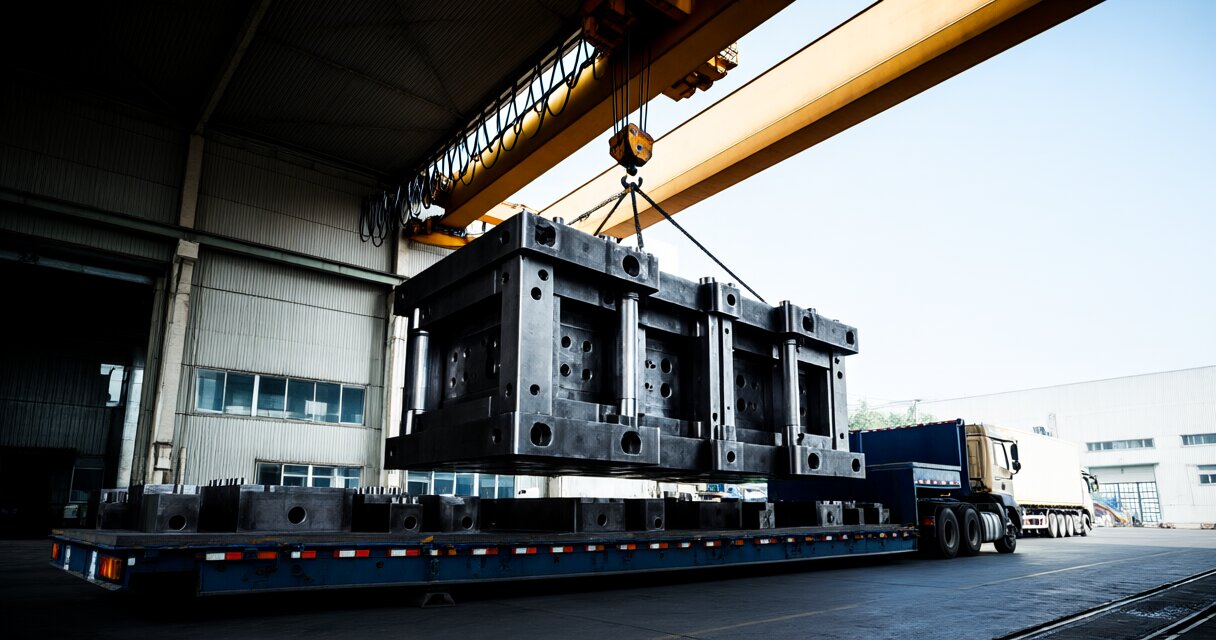
The single most common failure in a transition is a mold. A buyer pays for a tool in a quotation that says "mold cost: USD X, one-time", the tool is built, production runs for two years, and then the relationship ends. The buyer asks for the mold. The factory explains that the mold cost was amortised into the unit price, which makes the tool theirs. Or that the tool was modified at their expense. Or simply that removing it would leave them unable to support other customers.
Ownership is decided by paper, not by who paid the invoice. If your purchase order does not say the tool is your property, is identified by a tool number, and is released on request, you are asking a favour. Some factories grant it. Many price it.
If you are reading this before you have a problem, fix it now: add a tooling clause to every order that involves a tool, get a signed mold ownership letter referencing the tool number and cavity count, and keep photographs of the tool with its ID plate. It takes an email. It saves a quarter.
If you are already mid-exit, the transfer mechanics matter as much as the argument:
- Get the release in writing first. A one-page letter: tool identification, condition, release date, who arranges transport, who pays, and confirmation that all inserts, cores and spare cavities travel with it.
- Pay what you genuinely owe before you ask. Outstanding balances are the most common excuse for a frozen tool. Settling them removes the excuse and clarifies the argument.
- Inspect the tool before it leaves. Photograph cavities, cooling lines, ejector pins, date stamps and the ID plate. A mold that sat outdoors for a month arrives as scrap.
- Insure the move. A tool in a truck is cargo. If it is damaged in transit and uninsured, the argument about who pays for a replacement will outlast your product cycle.
- Fit-check at the receiving plant before you celebrate. The new factory must run the tool on their machine, at their tonnage, with their water and air. A mold that fits one press does not automatically fit the next. Ask for a first-article report from the new tool, not a verbal confirmation.
Budget for the possibility that the tool cannot be moved at all — damaged, modified beyond your drawing, or built for a machine the new plant does not have. In that case you are paying for a new tool, and the honest question is whether the old tool's cost is worth more argument than a replacement. For more on what tools actually cost and how they are quoted, see our guide to injection mold making in China.
4. What silently drifts when production moves
Buyers expect the new factory to make the same product. It rarely does, at first, and the differences are not the ones on the drawing.
Colour and masterbatch. A different compounder's masterbatch lot shifts the shade. Your old factory's "pantone 200C" was really a specific pellet from a specific supplier. Send a physical colour standard, not a code, and approve a colour chip from the new plant before mass production.
Tolerance and feel. The same drawing, cut on a different machine, by a different operator, produces parts that fit differently. A lid that closes with a satisfying click on one line can feel loose on another. This is where first-article inspection earns its cost.
Material substitution. New factory, new material broker. A flame-retardant grade becomes a cheaper flame-retardant grade, a food-contact resin becomes "equivalent". Specify the exact grade and require the material certificate with the lot.
Packaging films and print. The old factory printed your cartons on plates they own, in a print house they use. The new factory's film may be a different micron, a different finish, a different fold. Re-approve packaging artwork with a physical proof; PDFs hide a lot.
Firmware and component BOM. On electronics, an "equivalent" chip changes behaviour. Require a BOM freeze with revision number, and a functional test protocol that the new plant must pass on samples from the first run.
Every one of these is cheaper to catch at sample stage than after a container lands. The mechanics of freezing a specification are covered in our pilot run playbook — the same discipline applies to a transfer, with the old factory's approved sample as the reference.
5. The certificate problem nobody plans for
Test reports and declarations are issued against a manufacturing site. They name an address. When production moves, the site changes, and the paperwork attached to the old site does not describe the new one — even if the product is identical in every measurable way.
This matters most in categories where the importer is the one held responsible: toys, juvenile products, electricals, anything with a chemical or a radio inside. If a customs officer or a marketplace compliance team asks who manufactured the goods on the label, the answer has to match the documents in your folder.
Practically, plan for this:
- Assume you will need fresh test reports from the new site. Ask the new factory early what they already hold, and confirm whether the report covers your exact model, colourway and material.
- Confirm who is named as manufacturer on the label, the declaration and the marketplace listing, and make sure all three agree after the move.
- Keep the old reports in the file but stop presenting them as current once the site changes.
- Re-verify any certificate the new factory hands you rather than filing it — our guide to verifying test reports and certificates covers the checks that catch a document for the wrong model.
Where the exact legal requirement depends on your market and product class — and it usually does — read the current text from the regulator or your testing lab. This article is about sequencing, not a substitute for the official rule.
6. How long to dual-run
The temptation is to cut over cleanly: last order at the old factory, first order at the new one. That works only if the new factory's first production run is perfect and your sea freight arrives early. Neither is a plan.
Dual-running means placing at least one, preferably two, orders with the old supplier while the new supplier ramps. It costs you the difference between the two unit prices for a few months. It also buys you the thing you cannot buy later: a validated replacement before your stock position depends on it.
Size the overlap from arithmetic, not hope. Take your sea lead time, add your inspection and prep time, add the buffer you actually use, then add the new factory's learning curve — the second run is almost always better than the first. If that number is fourteen weeks, you dual-run for fourteen weeks plus a margin.
| Phase | Timing (typical) | What has to be true |
|---|---|---|
| Audit and asset review | Week 0–3 | You know what you own, what you owe, and what will not transfer |
| Qualify two candidates | Week 2–8 | Samples in hand, quotes comparable, capacity confirmed in writing |
| Pilot run at new plant | Week 8–14 | First article approved, packaging proof signed, compliance path agreed |
| Tool transfer (if applicable) | Week 10–16 | Release letter signed, tool fit-checked at the new press |
| Dual-run | Week 12–26 | Old plant still shipping base volume, new plant building to spec |
| Cutover and settle | Week 26+ | Last lot inspected, warranty and spare-parts position agreed, files archived |
Two things collapse this timeline: a mold that cannot be released, and certificates that cannot be re-established quickly. Everything else can be compressed with money.
7. The last order is the dangerous one
Once a factory knows you are leaving, the incentive structure changes. Your last order is the one with the least future value to them and the most downside for you. Expect at least one of these:
- A price adjustment announced after the deposit, justified by "material cost".
- Production scheduled behind other customers, with the ship date slipping quietly.
- Material substitution that would never have passed your normal checks.
- Documents — reports, packing lists, certificates — "still being prepared".
- Tooling that suddenly needs "repair" before release.
Treat the final lot as your highest-risk shipment: book a pre-shipment inspection even if you have never booked one before, verify the packing list against the PO line by line, take photographs of the loaded container, and hold the balance payment against documents rather than promises. A last order is also where you settle the questions that will otherwise resurface: who supplies warranty spares, who honours credits, who signs off on the final reconciliation.
8. Do not burn the bridge you may need
China's manufacturing clusters are smaller than they look. Toolmakers, material traders and engineers move between plants in the same industrial park, and a new supplier will sometimes call an old one to check a buyer's reputation.
So exit cleanly even when you are angry. Pay what you owe. Return borrowed samples and fixtures. Confirm in writing that no further orders are planned and that outstanding obligations are closed. Leave a contact who will still answer an email two years later.
There is a practical reason beyond goodwill. Capacity is cyclical. The factory that could not take your peak-season order this year may be the only one with space next year, and a buyer who left without a fight gets quoted. A buyer who left with one does not.
What good looks like: the new factory has passed a pilot run, the tool is released and fit-checked, the new paperwork is in the folder, two orders are running in parallel, and the old supplier still sends you a New Year greeting. That is a completed exit. Anything less is a gamble dressed as a decision.
9. Exit checklist
| # | Action | Evidence it is done |
|---|---|---|
| 1 | Classify the problem: recoverable or structural | One-page written assessment |
| 2 | Asset audit against documents | List of assets with owning document or "at risk" |
| 3 | Quote the same frozen spec to 2–3 new plants | Comparable quotes, per-unit and tooling separate |
| 4 | Confirm new plant capacity in writing | Signed capacity confirmation for your forecast |
| 5 | Pilot run and first article approval | Dated first-article report plus sealed sample |
| 6 | Tool release and transfer | Signed release letter, transport record, fit-check report |
| 7 | Rebuild compliance documents for the new site | New reports naming the new manufacturer |
| 8 | Dual-run for lead time plus buffer | Overlapping POs to both plants |
| 9 | Inspect and settle the final lot | Inspection report, reconciliation, warranty spares agreed |
| 10 | Archive everything | Spec, samples, reports, correspondence in one folder |
If you are thinking about a second source but not ready to leave, the lower-risk version of this work is simply qualifying an alternative — see our guide to building a resilient supply base. A buyer with a validated backup negotiates from a different position, and usually never has to execute the exit at all.
The Bottom Line
Leaving a Chinese supplier is a project with a legal edge, not a conversation. Sequence it: validate the replacement, audit what you own, release and move the tooling, rebuild the paperwork for the new site, dual-run long enough to absorb a bad first lot, then settle cleanly. Announce last. The cost of doing it properly is a few months of parallel production. The cost of doing it emotionally is a stockout you cannot advertise your way out of.
Switching suppliers? Use the same checklist we use.
Get our free sourcing pack — the RFQ template, factory audit checklist and supplier scorecard we use before a single deposit leaves the account.
Download the Free Sourcing Pack